 CN Sweaters
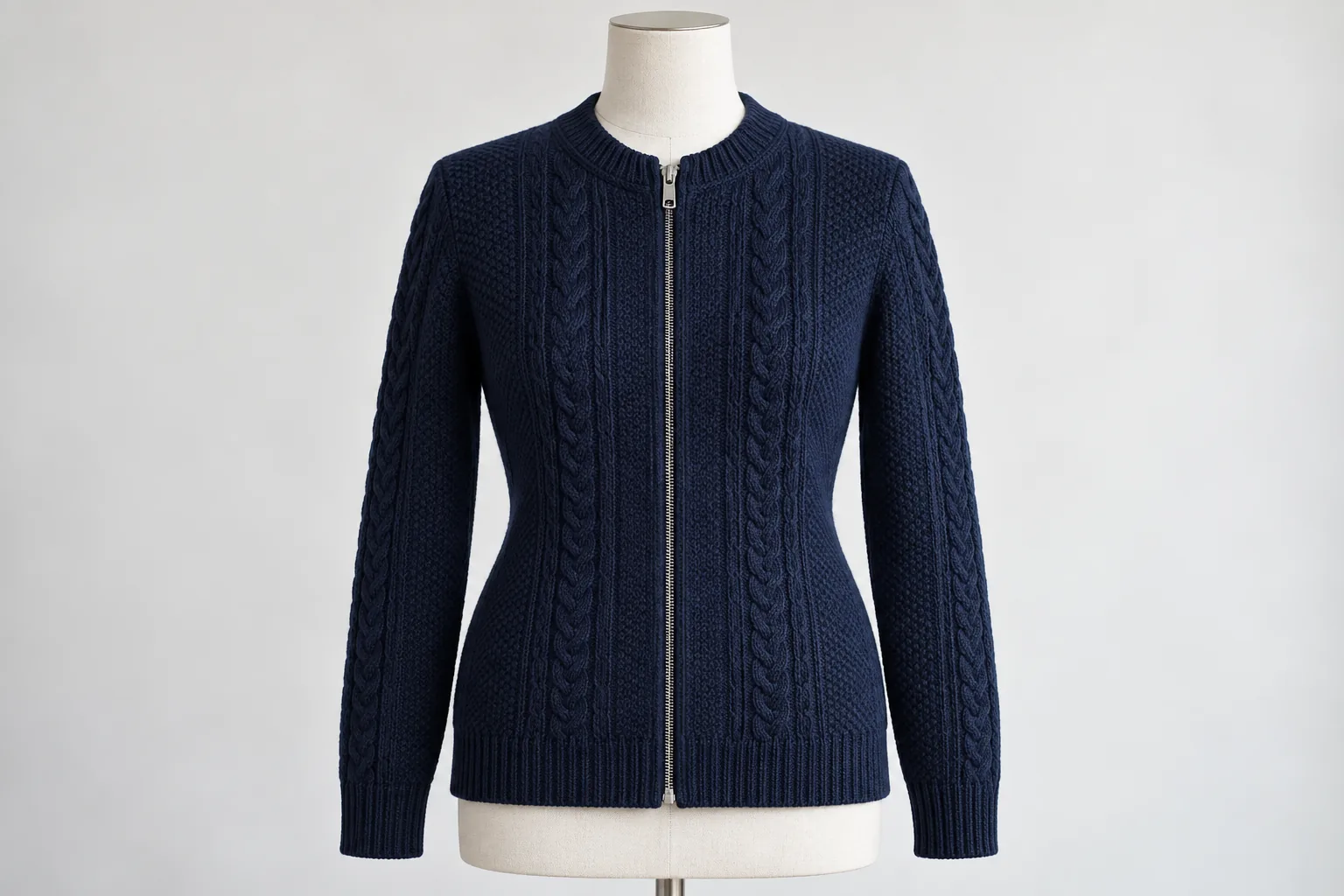
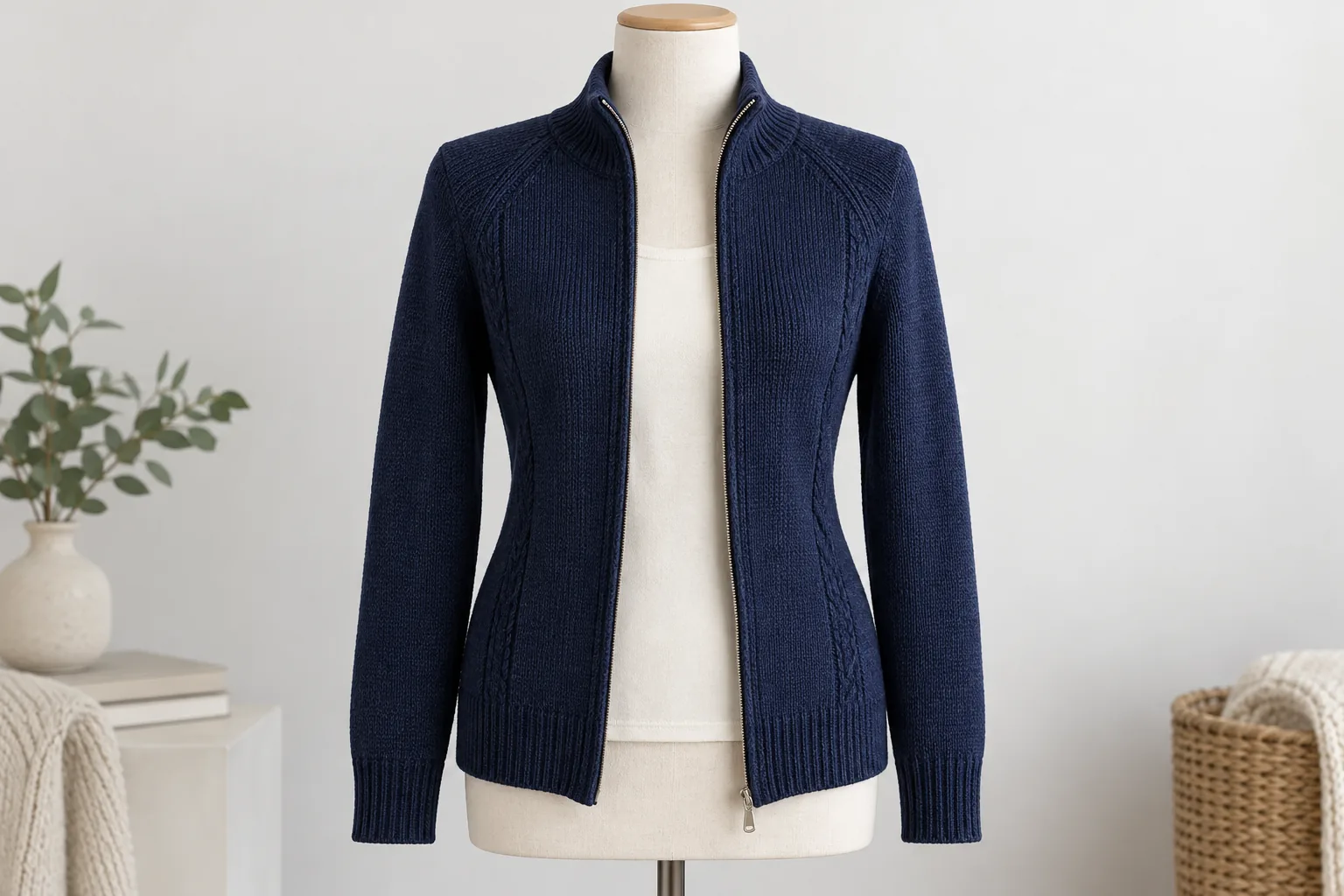
A zip cardigan can hang attractively open, then bow at the centre front or shift its waist once closed. Review bust reach, local front length and waist shaping in matched open and closed states before choosing a zipper replacement or transferring the base fit into other sizes.
Begin with matched open and closed views over the intended underlayer. Compare the front’s horizontal reach, vertical length, waist shaping and side-seam position before deciding whether the zipper or the knitted panels need changing.
Which silhouette should the zip cardigan fit create?
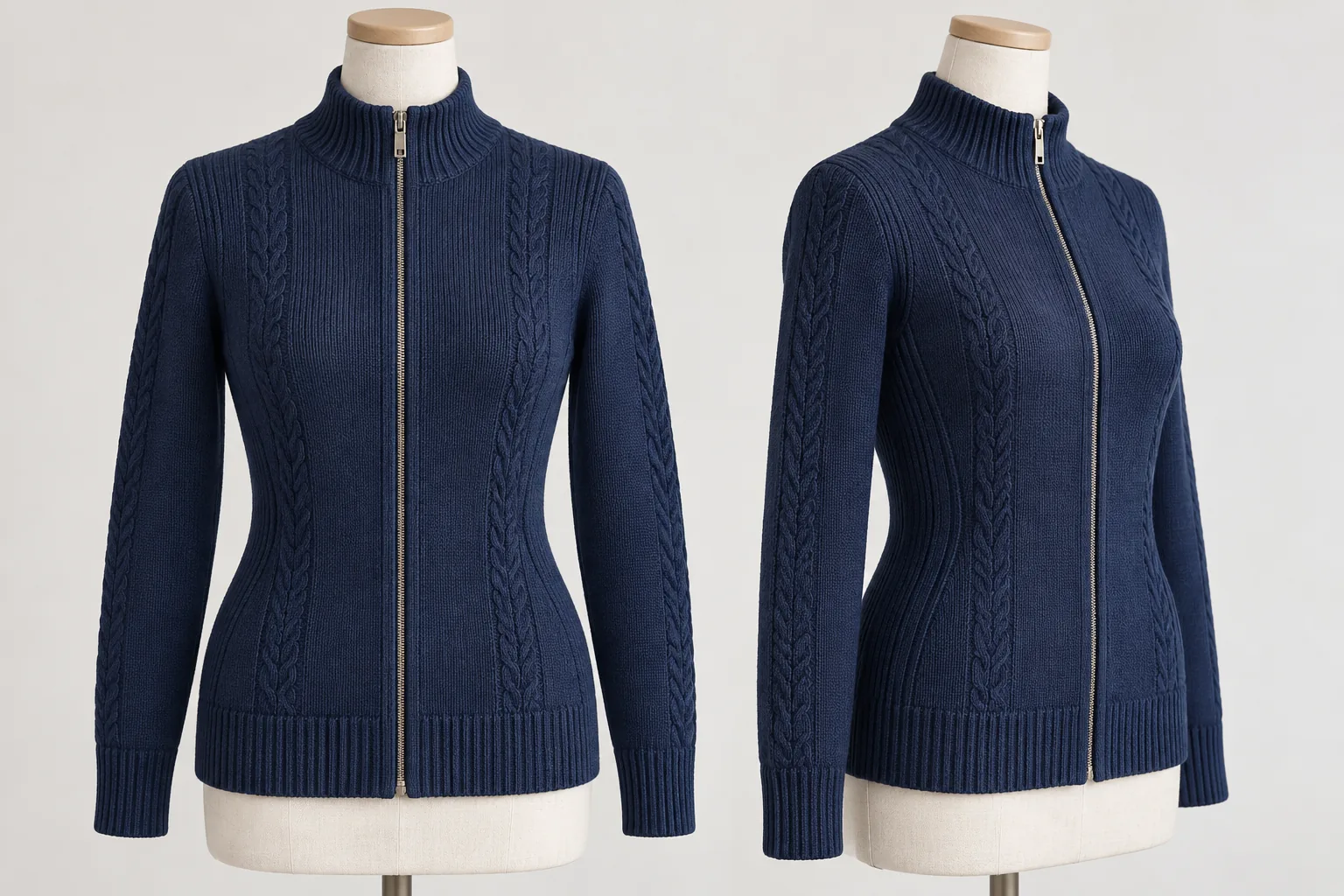
Define the bust and waist relationship for front fit
Record whether the buyer wants a close fit, a silhouette that skims the body, or a looser layer. Identify the target body block, underlayer and waist position used for the sample.
Describe the intended relationship in front, side and back views. A close waist can be deliberate, but the buyer needs to decide how the garment should look and move when closed. The word fitted does not specify the amount or location of shaping.
Retain the actual underlayer reference. A shirt placket, seam or waistband underneath can affect the visible front. Do not judge the cardigan on a bare form and then assume the same result over the intended outfit.
Define front fit in both open and closed states
Decide which zipper positions the buyer intends the product to offer. An open cardigan can reveal panel drape, while closing connects the fronts in another way.
Photograph both states before adjusting the garment. If the buyer accepts a particular partly open presentation, record the position and distinguish it from the fully closed review.
Check collar or neckline, shoulder, side seams, waist and hem as the zipper moves. Record the changing relationships before attributing a visible movement to the zipper or another component.
Where deliberate asymmetry, a curved hem or another design feature is present, make the intended geometry clear before asking inspectors to judge alignment.
Ask whether the buyer expects the same silhouette when the wearer sits. A longer fitted front may meet the waistband or underlayer differently in that position. The buyer can accept a particular seated appearance, but the fitting record should show it rather than leaving each reviewer to apply a private expectation. Preserve both the initial standing view and the returned standing view so the reviewer can distinguish temporary movement from a lasting displacement.
Bust, waist and centre-front dimensions
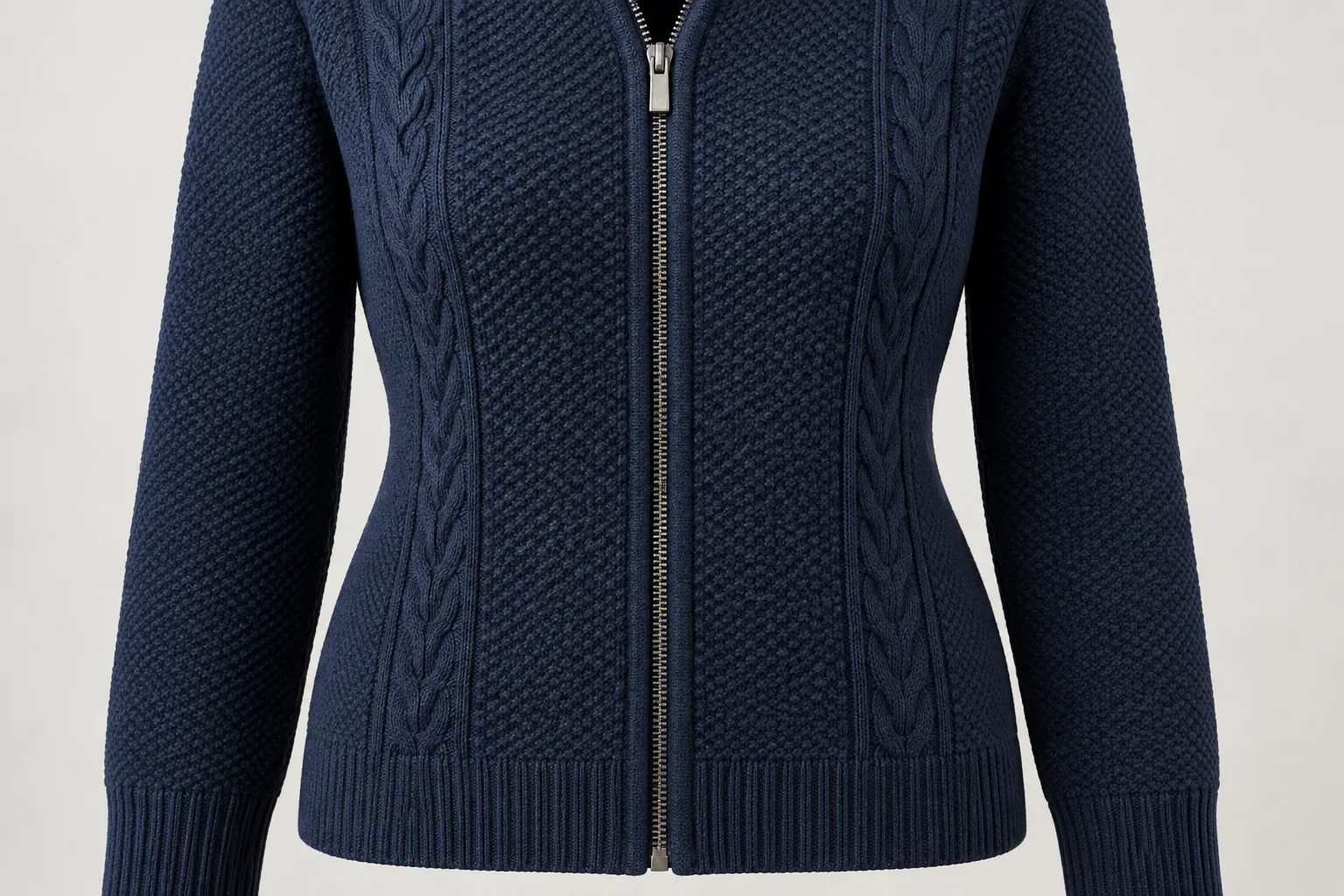
Record width and length separately for front fit
Measure the relevant bust and waist widths, front lengths, back length, side-seam shape and zipper/placket references. Retain left and right front measurements where they can expose an uneven result.
Use the measurement chart guide to show origins and laying methods. ISO 18890 provides garment-measurement terminology; the particular shaping landmarks belong in this style’s drawing.
A correct width does not prove that the front has the appropriate length over the bust. A correct total length does not identify where shaping occurs. The technician needs the relevant local references rather than a single whole-garment value.
Describe how the technician placed the sample for measurement. Pulling a shaped panel flat can conceal its natural relationship with the opposite front.
Link measurements to the knitted construction
Identify the body and front programmes, shoulder and armhole route, waist shaping, hem and any pocket or trim that shares the front panel.
| Reference group | Information to record | View or measurement | Question it answers |
|---|---|---|---|
| Bust area | Front reach, local length and intended ease | Closed front and side views | Does the front accommodate the approved body relationship? |
| Waist area | Waist position, width and shaping route | Front/back/side comparison | Is shaping located where the brief intends? |
| Centre front | Paired lengths, zipper and placket references | Open and closed records | What changes when the fronts are connected? |
| Side seam | Shape and position through bust and waist | Natural side view | Where has width or length been redistributed? |
| Shoulder and armhole | Construction and fit landmarks | Upper-body views before hem adjustment | Could an upper fit issue be moving the front? |
| Underlayer | Actual type, thickness and local features | Same outfit through the comparison | Is the tested fitting condition reproducible? |
Keep the shaping location visible in the drawing. Two fronts can have the same width at the bust and waist while distributing that change differently between the measurement lines. Ask the technician to identify the relevant programme or pattern landmarks, including any intentional side shaping. A pair of target values cannot fully describe the route between them, and a later supplier should not have to reconstruct that route from the finished photograph.
Inspecting unadjusted open and closed fronts
Review front fit from the natural open position
Place the cardigan on the approved form or wearer with the zipper open. Let it settle, then record shoulder, neckline, front length, side seam and hem.
Close the zipper normally without pulling one side into place. Note when drag, bowing or another change appears. If operation is unusually difficult, record that separately instead of forcing the component.
Check the side and back views before making a correction. A front-only photograph can hide a shifted side seam or a change in the garment’s overall position.
Use normal movement and return to rest
Select actions appropriate to the product, such as sitting, reaching and returning to an upright position. Keep the underlayer and starting zipper position recorded.
Observe whether the waist moves, the centre front bows, the hem lifts or the side seam changes position. Preserve the result before smoothing the knit.
A report should identify the garment zone and the action that produced the observation. “Uncomfortable” may be a useful starting comment, but tell the developer which body zone felt uncomfortable and what the wearer was doing at the time.
Is the fault in fit, component operation or assembly?
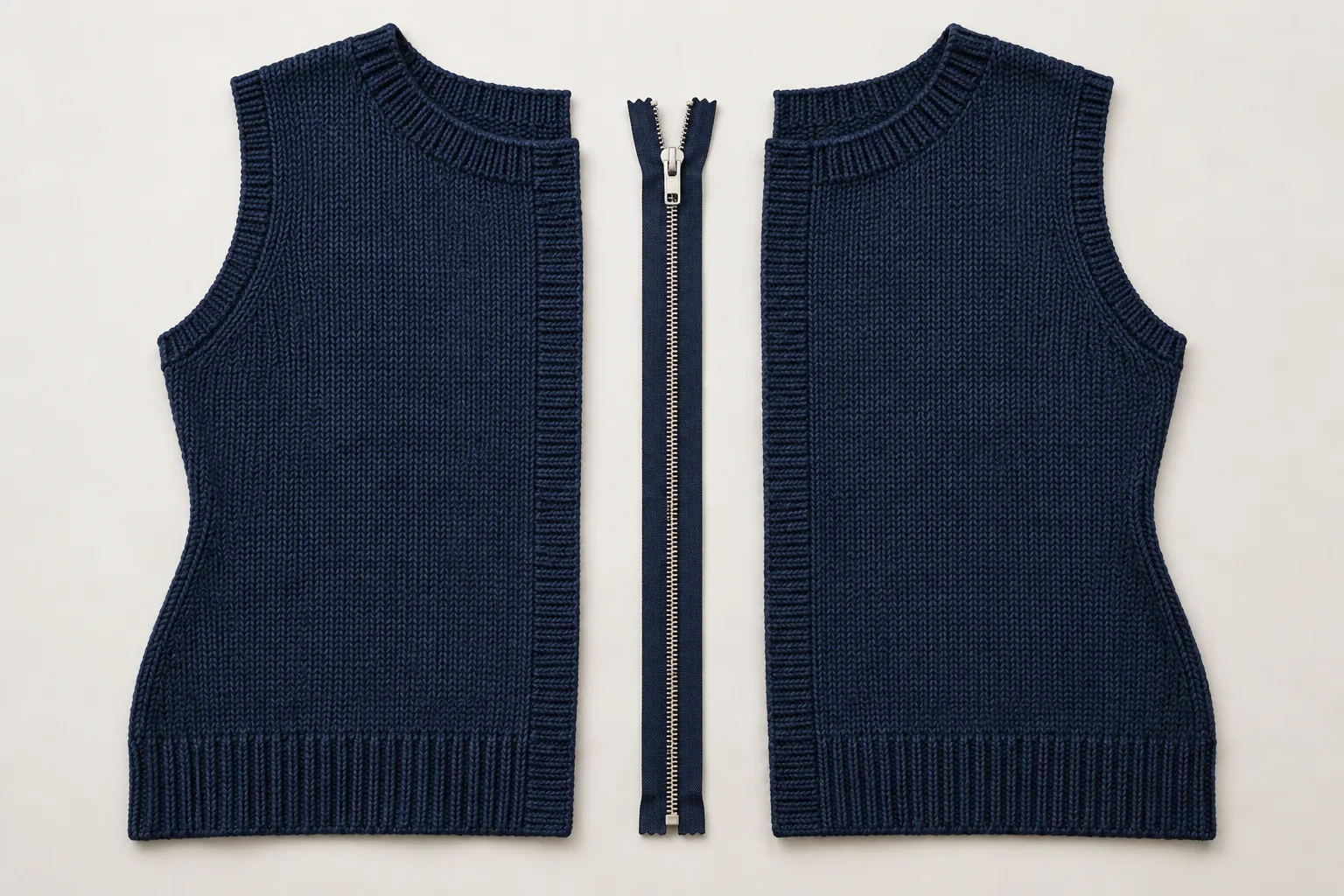
Compare what changed when the fronts closed
If the open garment hangs correctly but the closed front develops drag, compare front reach, local length, waist shaping and the actual opening construction.
The evidence may point toward fit, assembly or their interaction. Avoid declaring the zipper too long or the body too narrow from the photograph alone.
When a symptom follows only one side, preserve paired observations. Check the programme, finishing and attachment history before asking the factory to change both fronts.
Inspect operation and inside assembly independently
Record the actual zipper item, attachment references, support, facing and stops. Show accessible inside views of those components and their attachment.
ASTM D2062 addresses zipper operability. Component function and the assembled cardigan’s fit are related questions, but one does not establish the other.
A slider that travels acceptably may still sit within a poorly balanced front. Keep an operation fault on the corrective list even if a body-fit change makes it less noticeable.
If the supplier proposes another zipper or support, identify it as a construction option and compare the affected garment. Preserve the baseline so reviewers can see which input changed.
What should a corrective sample demonstrate?
Request a defined change with visible consequences
Ask the technician to explain how the proposed correction addresses the observed relationship. A change to front width, length, waist shaping, shoulder or support can affect different parts of the garment.
Keep the sample request specific: identify the open comment, changed input and observations needed to close it. If the technician makes several changes together, evaluate the revised combination and leave the isolated cause unresolved.
Record which details must remain intact. A correction that improves the waist should not silently change the neckline, pocket position or intended hem shape.
If several dimensions or assembly details must change together, ask the technician to explain their dependency. Identify the bust-width, front-length and joining references being revised, and reconcile conflicting instructions before the next sample is made.
Preserve the old and new programme or pattern references. A hand-adjusted fitting sample can demonstrate an idea, but production needs the actual revision that reproduces it.
Recheck the complete front fit sequence
Repeat the original open, closed and movement views under comparable conditions. Check the original bust, waist or front-balance comment before judging the revised sample’s overall appearance.
Then check adjacent relationships. A different front length may change the lower zipper position; redistributed width may move the side seam; another support may alter the inside hand.
Keep accepted trade-offs explicit. The buyer can choose a looser waist or another front outline, but that is a revised product target requiring a signed reference.
Record the accepted base-size correction before transferring its geometry into the grade. The size set then reviews that reference against the target range.
Preserving the accepted fit through care and grading
Compare the same front after the selected care route
Identify the treatment, drying or support, finishing and rest used for the comparison. Keep initial and final measurements at the same locations.
AATCC TM150 addresses garment dimensional change after home laundering. The responsible technical team must select product-appropriate methods and criteria.
The care-label evidence guide supports the broader care instruction. Here, compare the bust, waist, paired fronts and zipper relationship in the actual state used for fit approval.
If an operator steams or reshapes the sample, retain the earlier view and identify that correction separately from the unassisted care result.
Transfer the accepted geometry into the grade
Use the knitwear grading guide to plan the next stage. The signed base sample should identify the shaping route, measurement origins and actual zipper arrangement.
Record the intended changes to bust width, waist width and front lengths. Avoid copying a body-width increment while leaving the centre-front relationship unexplained.
When the range includes different body blocks, identify the block represented by the base sample. A successful correction on that reference cannot establish every regional or extended-size fit.
If the supplier substitutes the selected yarn or finish between base development and size-set sampling, identify that change at the start of the review. The new samples may reveal another drape or dimensional relationship even if the grade chart is unchanged. Compare the actual input records before correcting every size. If the substitute is temporary, document which findings can inform grading and which still need confirmation in the intended production route.
Which observation should change the base fitting?
| Finding | Evidence to examine | Next action | Closing requirement |
|---|---|---|---|
| Front drags only after fastening | Front reach, local length and assembly | Investigate the closure-dependent change | Matched open/closed comparison |
| Side seam shifts while zipper stays straight | Distribution of body shaping | Revisit the relevant panel geometry | Revised side/back views and measurements |
| One front finishes lower | Paired dimensions and attachment history | Correct the identified asymmetry | Equivalent left/right records |
| Fitting improves after several inputs change | Identity of the revised combination | Assess the complete new route | Full revision list and repeated fitting |
| Accepted sample contains unrecorded hand adjustment | Reproducibility | Transfer the correction into instructions | Programme or pattern confirmation |
| Buyer chooses another waist silhouette | Product intention | Approve a new target | Signed sample and updated fit brief |
Use the knitwear QC checklist for general workmanship and add the front relationships that mattered during the fitting. Inspectors need the accepted natural appearance, not only a styled campaign image.
For reorders, compare the proposed inputs against the signed base and grade records. A familiar style code does not establish that a changed yarn, zipper or shaping route reproduces the accepted fit.
Prepare the open and closed views, bust and waist measurements, zipper identity and correction history when you contact CNSweaters about a women’s zip cardigan fit.
Frequently Asked Questions
Does a bowed zipper always mean the component is wrong?
No. Front reach, local length, shaping, support and attachment can affect the assembled appearance. Compare the relevant evidence before selecting a cause.
Can the buyer approve the cardigan only while open?
Only for the use and decisions that state represents. If closed wear is offered, define and review that condition as well.
Should waist shaping be removed to solve drag lines?
That is one possible design change, not a diagnosis. Identify the cause and the product target before changing the silhouette.
Can a hand-adjusted fitting sample become the production standard?
Only after the technician records the accepted adjustment in the actual programme, pattern or assembly instruction.
What should be settled before a full size set is ordered?
Close the base fit, identify the material and zipper route, and define the measurement origins and shaping relationships that the grade must preserve.