 CN Sweaters
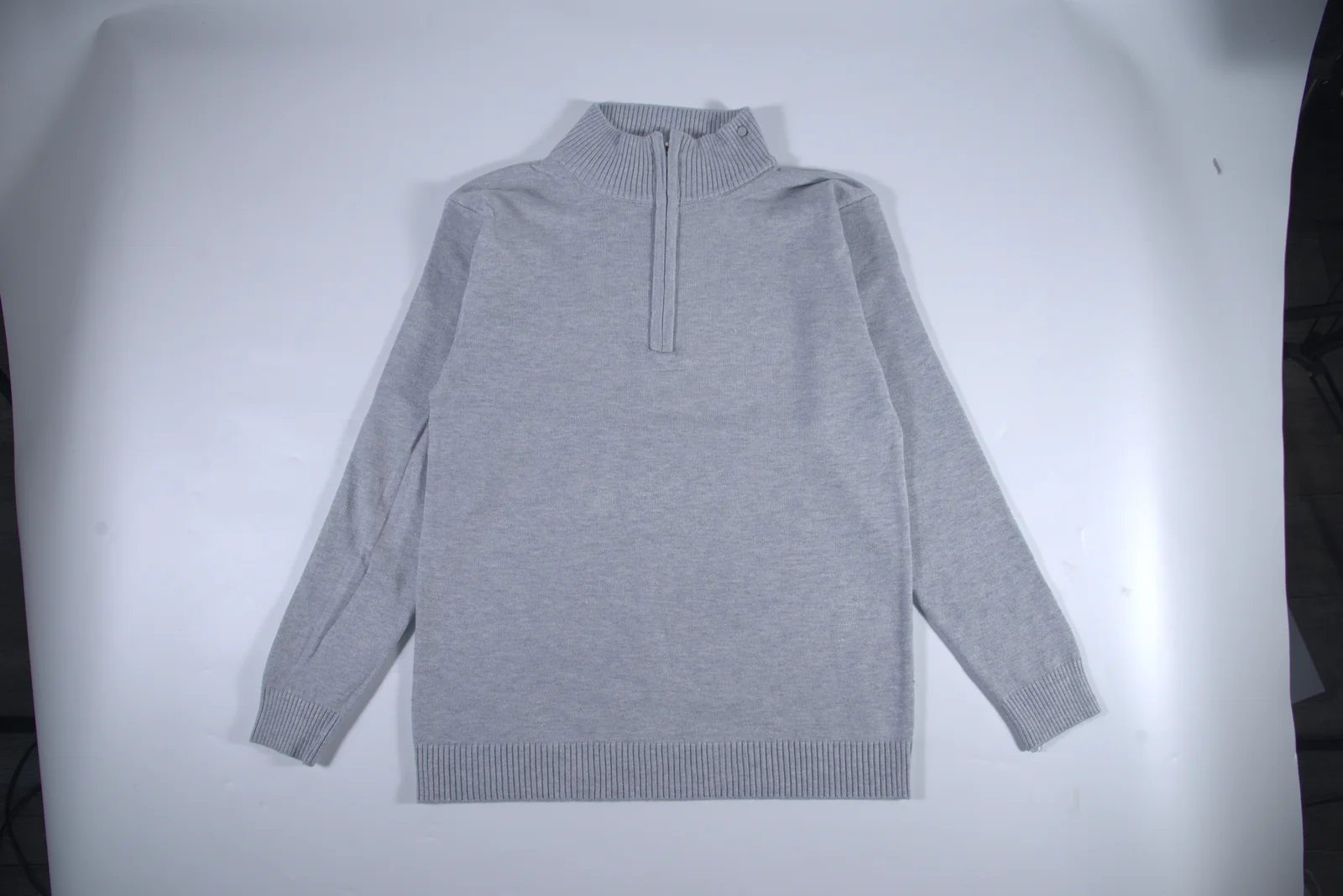
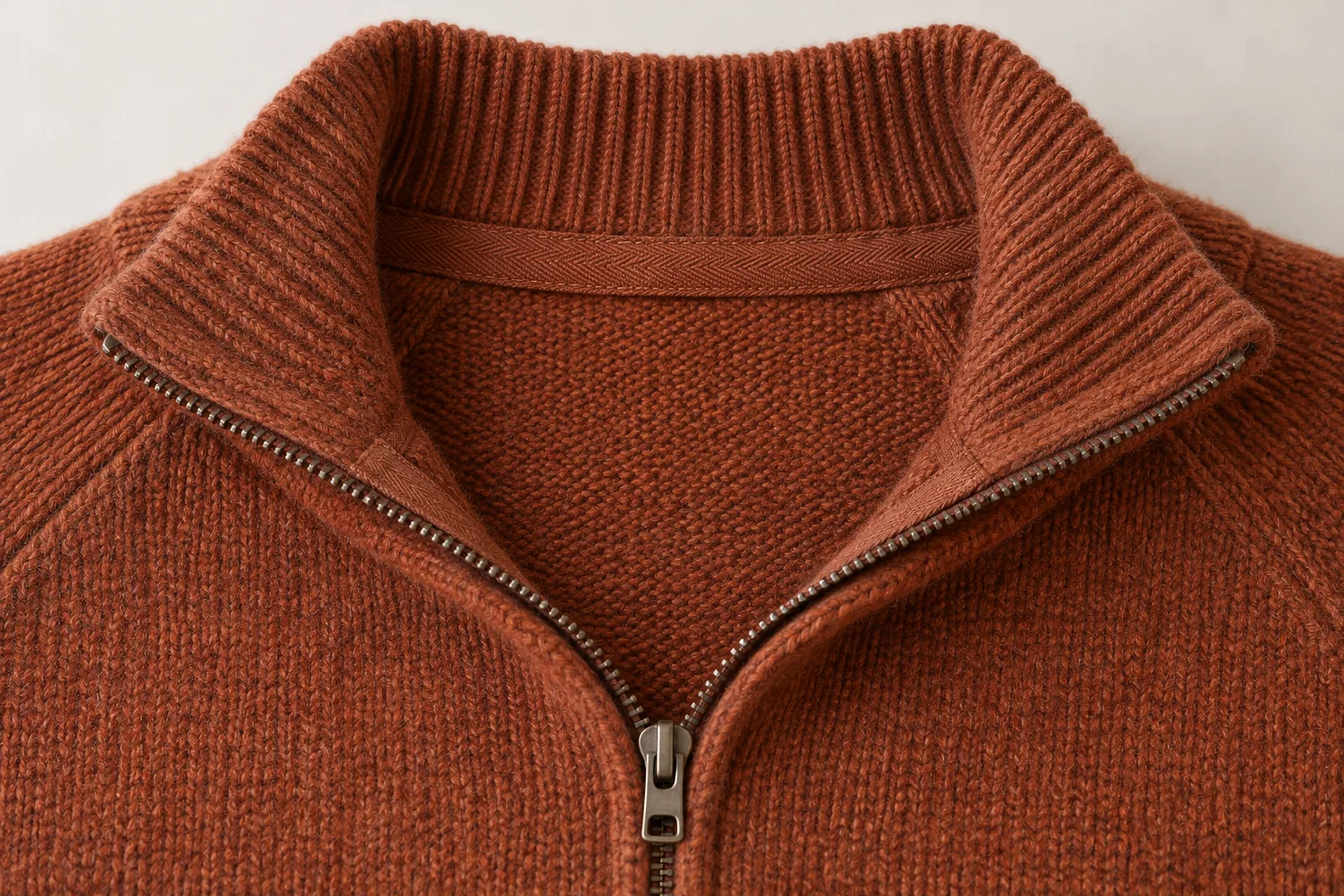
A sample comment of ‘too thick at the neck’ needs a location before the quarter-zip engineer changes the body yarn. Collar folds, zipper tape, facing and joining allowance can form a local stack. Decide whether the unwanted result is a ridge, pressure, stiffness or lost collar shape, then compare that junction’s layers.
Where does quarter-zip thickness affect the neck?
Locate quarter-zip thickness at the reported junction
Ask the reviewer to identify the location: collar edge, top stop, folded corner, back-neck join, placket side or lower end of the opening. Record the zipper position and the underlayer present during the observation.
Describe what is actually noticed. A visible ridge, difficulty folding the collar, pressure at one junction and a stiff opening are different observations. The same comment, “too thick,” can conceal any of them.
Do not compress the area by hand before photographing its natural profile. Preserve the original observation before demonstrating how a proposed adjustment might change it.
Distinguish thickness from other properties
Thickness is a measurement made under specified conditions. Bulk describes the volume or prominence perceived at a zone. Stiffness concerns how the area resists bending. A garment can change in one respect without producing the desired result in another.
Ask which property the buyer needs to change and which collar features they want to retain. A softer collar may be acceptable even if a measured thickness is similar; a thinner construction may be unacceptable if it loses the chosen stand.
How should the technician document quarter-zip thickness?
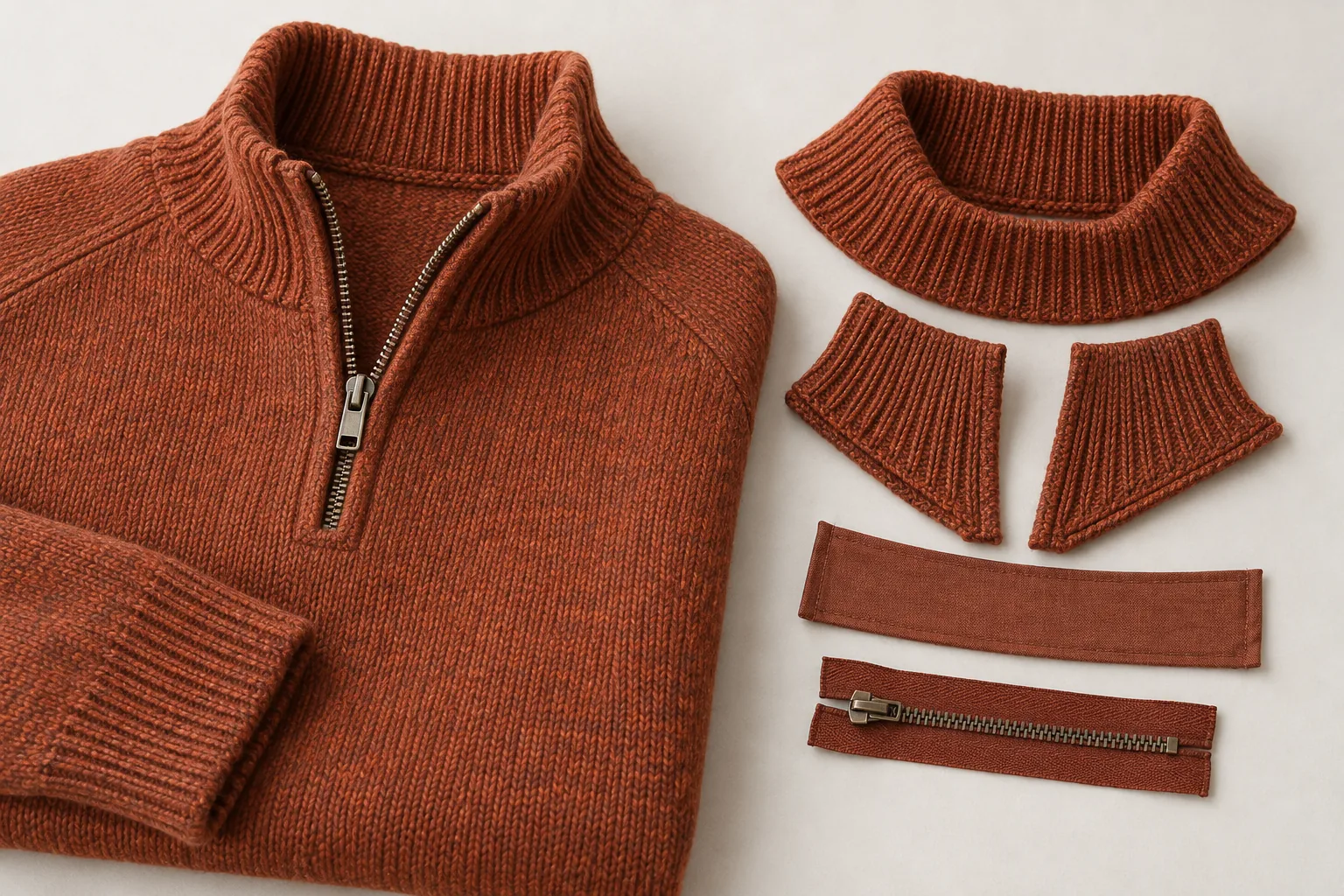
Map quarter-zip thickness at the actual junction
List the materials present from outside to inside at the point under review. Include knit layers, folds, seam or linking allowance, facing, backing, zipper tape and any protective component present in the sample.
The drawing should show where each layer begins and ends. A support that stops below the collar can create another arrangement from one extending through the top stop. Record overlap and termination rather than writing only a total number of layers.
Ask for an inside sample, section or construction photograph when the completed garment conceals the build. Do not guess the internal arrangement from a smooth external image.
Explain each layer in the quarter-zip thickness budget
Before removing material, ask which construction job that part performs. It may help shape the collar, support an attachment, cover a junction or complete the inside finish.
Use this worksheet to decide what the next prototype should compare.
| Stack area | Items to identify | Purpose to confirm | Comparison needed |
|---|---|---|---|
| Collar edge | Knit layers, fold and edge finish | Intended roll, stand or softness | Natural open and closed profile |
| Top-stop junction | Tape, facing, support and local allowances | Component positioning and inside finish | Section view and normal operation |
| Placket side | Body knit, support, tape and attachment | Stable opening with the selected hand | Bending and appearance beside the opening |
| Back-neck join | Collar attachment and any support | Neckline position and load distribution | Side/back view and movement |
| Lower placket end | Terminations and overlapping materials | Clean endpoint without local prominence | Inside detail and relaxed front view |
| Adjacent body | Yarn, gauge, stitch and finish | Reference for the surrounding knit | Comparable finished swatch and garment |
When are quarter-zip thickness measurements comparable?
Specify the measurement conditions
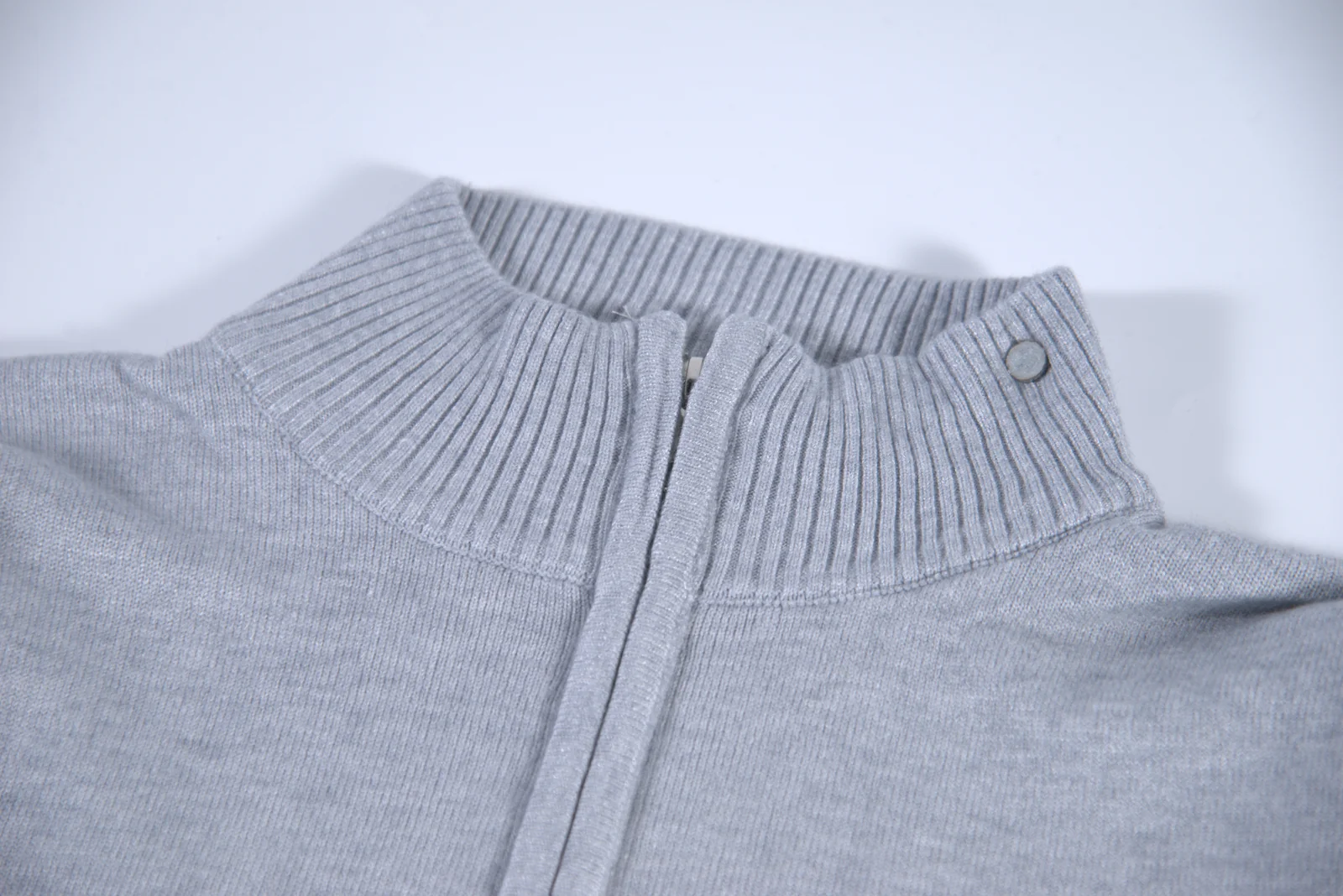
Textile thickness depends on the applied measuring pressure and specimen arrangement. Use equivalent conditions for compared values, and ask the technical team whether the method represents this irregular collar junction.
Ask the responsible team to select a method for the actual material or assembly. A convenient measurement of a uniform fabric specimen may not describe an irregular collar junction.
Record specimen location, material state, instrument or method information and the conditions required by the selected procedure. Use the selected procedure for its detailed method, and record the buyer’s separate acceptance value where required.
Where the measurement cannot reliably describe a junction, keep the physical section, profile view and agreed product observations instead of presenting a doubtful number as precise evidence.
Do not add separate layer readings and assume that the total is the thickness of the assembled junction. Folding, attachment and the selected measuring conditions can change how the materials sit together. If the buyer needs an assembled value, ask the technical team to define a suitable comparison for that object. Keep individual-material values labelled as such, so a sourcing spreadsheet does not turn them into an unsupported garment result.
Use garment landmarks to repeat the comparison
Define the exact locations for the collar, stop and placket measurements. ISO 18890 supports garment-measurement terminology; the additional layer-stack landmarks need a project-specific drawing.
Keep the same finishing and rest state for compared specimens. Label a trial measured before finishing differently from a finished sample.
Retain measurements and appearance side by side. A lower reading is useful only if it contributes to the product decision being made; it should not automatically override an unacceptable collar shape or inside finish.
Which quarter-zip thickness changes should a prototype compare?
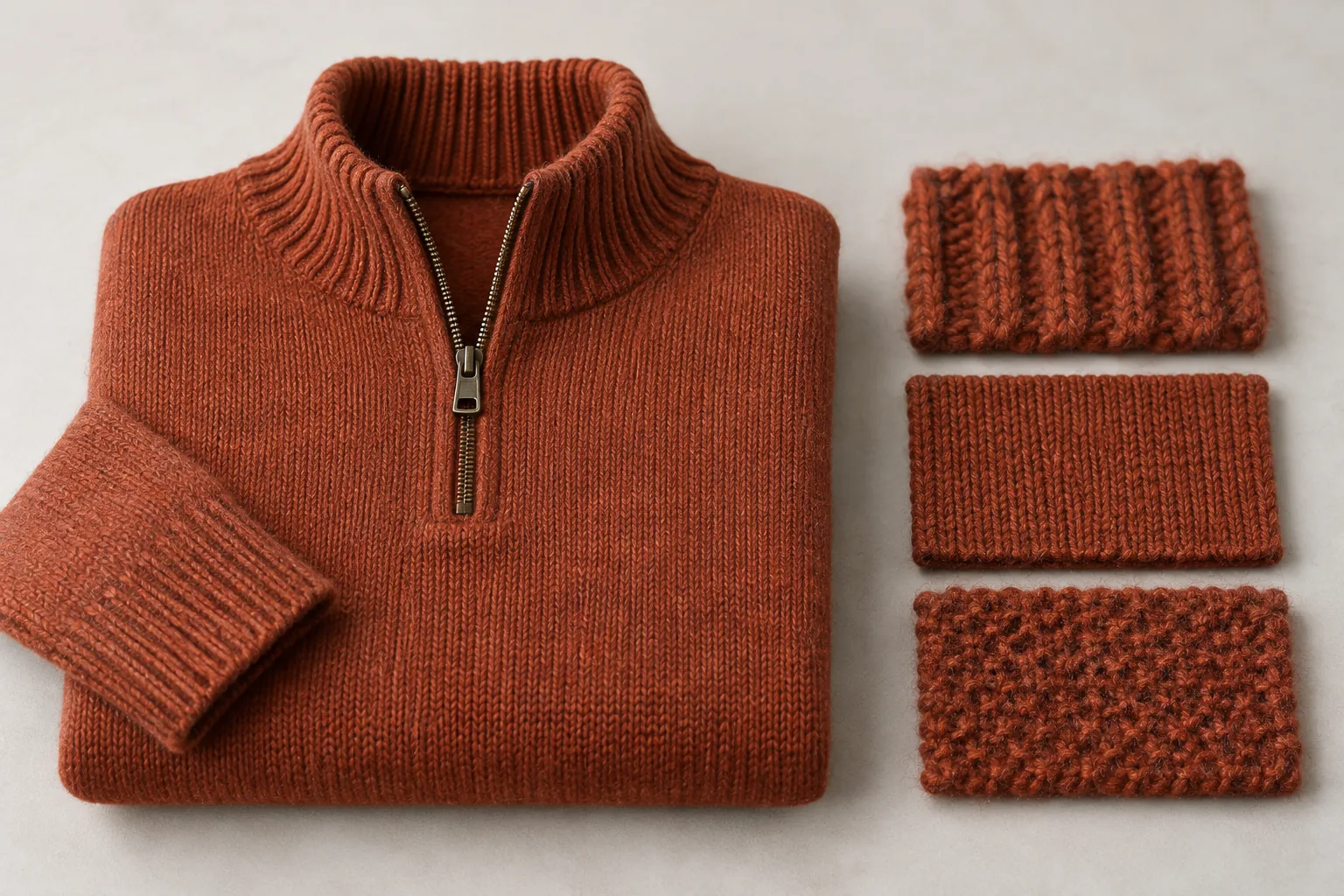
Separate a material change from a construction change
A yarn or knit change can affect the body as well as the neck. A facing or support change may be more local. Describe the intended comparison before requesting another complete sweater.
If several variables change, evaluate the revised combination and say so. Do not attribute the improvement to a single thinner component when the collar programme and finish changed too.
Check the garment after a quarter-zip thickness change
Check the original complaint, then examine the jobs performed by the altered layers. Removing a facing may reduce visible bulk while changing the inside finish; narrowing a support may alter where the collar bends.
Operate the actual zipper in the revised garment. ASTM D2062 addresses component operability, while the garment still needs its own collar and fit review.
Use the same open and closed positions as the baseline. A photograph taken at a different opening can make a revision look successful without showing the intended comparison.
How do finishing and care affect quarter-zip thickness?
Identify the finish behind the hand
Obtain the actual yarn and finish record for the prototype. Keep woollen- and other proposed yarn routes distinguishable instead of assuming that every product described as wool receives the same treatment.
If a supplier improves hand through finishing, compare the resulting collar shape, stack profile and rested appearance. An attractive body handle should not conceal a changed top-stop junction.
Review the assembled materials after the selected care
Compare the same stack locations before and after the selected route. Look at the collar edge, hidden allowances, facing position and zipper junction rather than checking only body length.
How should size changes enter the quarter-zip thickness budget?
Check the stack where geometry changes
A collar opening, placket length or support extent may change across sizes. Identify whether the layer arrangement changes with it or remains intentionally shared.
Examine the sizes at component or programme transitions. The same support compressed into a smaller area can present another junction from a larger size, but the actual sample must establish what happens in the selected construction.
Show support and facing terminations clearly. An assembler should not need to infer them from an outside photograph.
Keep approved alternatives as separate revisions. A lighter facing from one prototype combined with a collar from another may be an unreviewed arrangement, even though both parts were individually seen during development.
Ask sourcing to preserve the component description and supplier item alongside the drawing. A replacement tape or backing may share a colour and nominal width while differing in other relevant respects. Identify the substituted tape or backing item and review its effect on the local stack before treating it as equivalent. Keep any temporary substitute used during sampling outside the final bill of materials until the buyer accepts that specific substitute.
| Observation | Decision needed | Next action | Evidence to close |
|---|---|---|---|
| Number changes with different measuring conditions | Whether values are comparable | Resolve the measurement method | Recorded conditions and equivalent comparison |
| Top-stop area remains bulky after a body-yarn change | Which local layers create the junction | Review the actual section | Identified stack and targeted prototype |
| Thinner facing improves appearance but alters inside finish | Acceptability of the trade-off | Review the complete revised assembly | Signed outside and inside reference |
| Support reduction changes collar stand | Shape versus local bulk | Select or revise the support route | Same-state collar comparison |
| Care shifts a hidden layer or termination | Assembled stability | Hold the affected route | Post-care section and garment observations |
| Buyer accepts another collar hand | Product target | Sign the new construction reference | Updated layer map and limitations |
When an input changes, identify the affected layer and nearby functions. Some changes call for a local comparison; others reopen the collar or garment relationship more broadly.
Bring the section drawing, actual components, equivalent measurement conditions and open/closed prototype views when you contact CNSweaters about a wool quarter-zip construction. Specify the local layer to compare and the collar function that must remain.
Frequently Asked Questions
Is the thinnest collar always the most comfortable?
No. The product review should consider the actual shape, materials, inside finish and wearer observations. A single thickness number cannot establish universal comfort.
Can measurements from two suppliers be compared directly?
Only after confirming compatible methods, conditions, specimen locations and garment states.
Does a finer yarn solve every bulky junction?
It changes one input. The local stack may still include the same folds, allowances, facing, support and zipper tape.
Can a support layer be removed after approval?
That is a construction revision. Review the layer’s purpose and the effect of removing it in the actual assembly.
What should remain with the sealed sample?
Retain the layer map, actual component identities, finish record and the comparison conditions that explain why the chosen construction was accepted.