 CN Sweaters
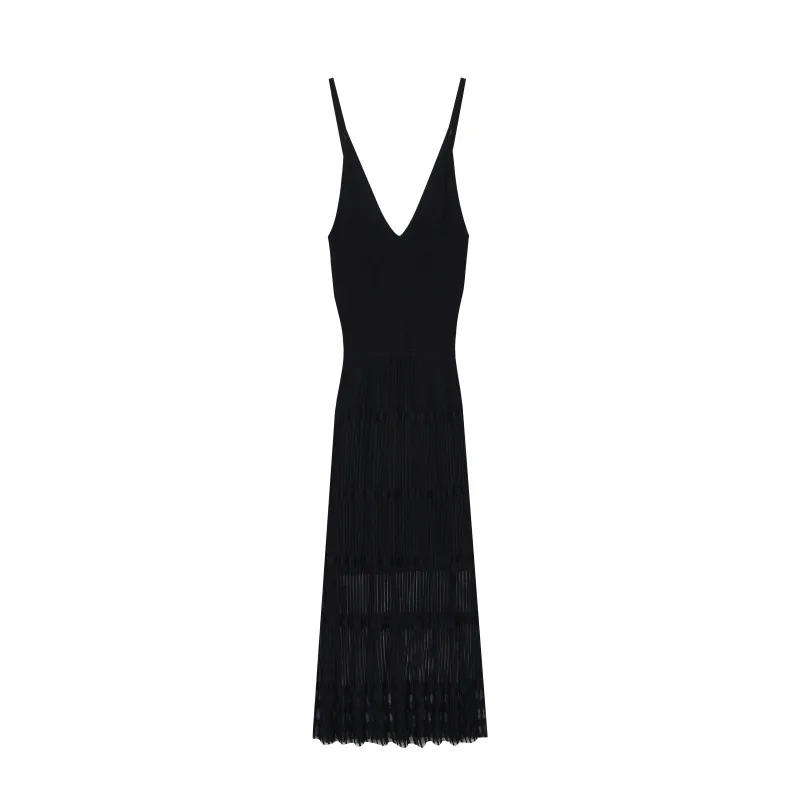
Review a V-neck knit dress’s neckline together with its body weight, shoulder construction and intended fit. Over time, the V can drop lower, one side can grow longer than the other, or the edge can start to flare. Compare the neckline in the hanging, wearing and care conditions relevant to the product.
Keep the V point, both edge lengths, shoulder support and review conditions on one sample record before selecting a correction. You can find finished references in our knit dress category.
Why a V-neck knit dress neckline drops
A sweater ends at the hip, so the shoulder carries a small load. A dress, on the other hand, may run to the knee or the ankle. Because knit stretches under its own weight, the extra length pulls down on the shoulder seam and the back neck. The V then opens up, even when the neckline trim itself has not changed.
In practice, several things can happen at once. For example, the V point may sink while the neck width stays the same. Alternatively, the shoulders may spread outward and make the whole opening look larger. Therefore we never judge the neckline from one measurement. We look at depth, width, both edge lengths and the shoulder together.
Fabric weight and gauge
Gauge and yarn set the weight that the neckline has to carry. A 12G or 14G viscose blend dress drapes well but can grow in length on the hanger. Meanwhile, a 7G wool blend is heavier per piece but often more stable. Our 70 computerized flat knitting machines cover 3G to 14G, so we can compare gauges on the same style before choosing one.
Yarn content also matters. Viscose and modal blends can produce a fluid hand, but that does not establish the assembled edge’s recovery. Compare recovery in the actual yarn blend and construction; adding a particular fiber does not guarantee the result. Our library contains 100+ yarns; confirm the available options and comparison samples needed for this design.
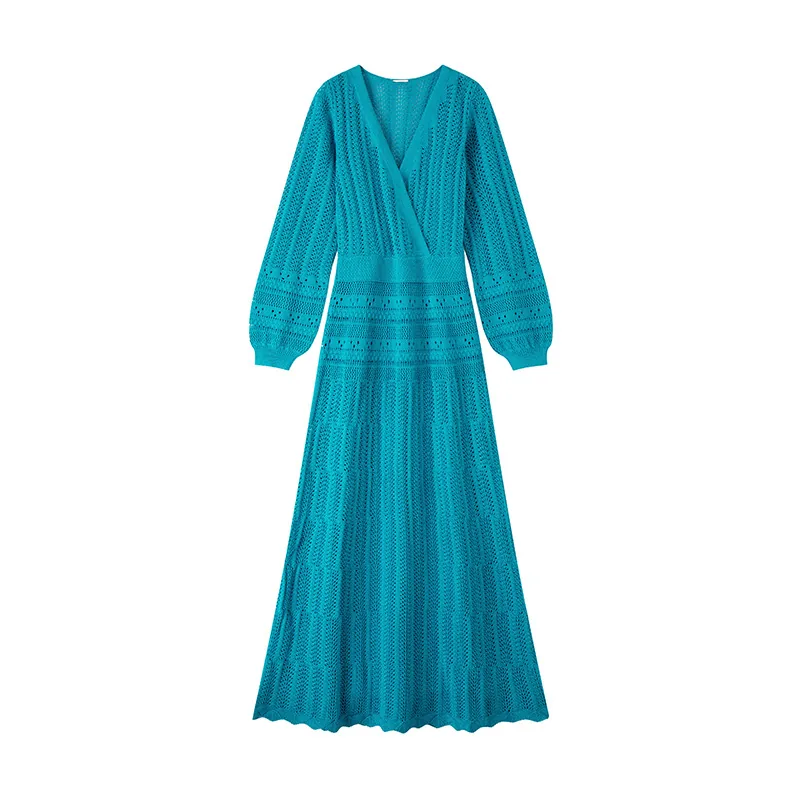
Planning the V-neck knit dress edge and shoulder
The neckline edge and the shoulder work as one system. A clean, firm edge can still fail if the shoulder seam stretches. Similarly, a strong shoulder cannot save an edge that flares. So we specify both at the same time in the tech pack.
Edge construction options for a V-neck knit dress
There are several ways to finish a V neckline on knitwear. First, a linked rib band is the most common. It sits neatly and stretches with the body. A tubular or double-layer edge adds firmness and resists rolling. A fashioned edge, knitted directly into the front panel, gives a smooth line with no seam at all.
For a heavier dress, compare proposed double-layer bands or firmer rib structures under the garment’s actual load. In addition, the V point needs its own treatment. A mitred point, a crossed point or a centered decrease each look different, and each carries load differently.
Shoulder and back-neck support
Because the shoulder carries the dress, it needs to hold its length. A linked shoulder seam with the right tension usually holds well. On long or heavy styles, we may add a knitted tape or a clear stay tape along the shoulder and back neck. This keeps the seam from stretching while the body still drapes freely.
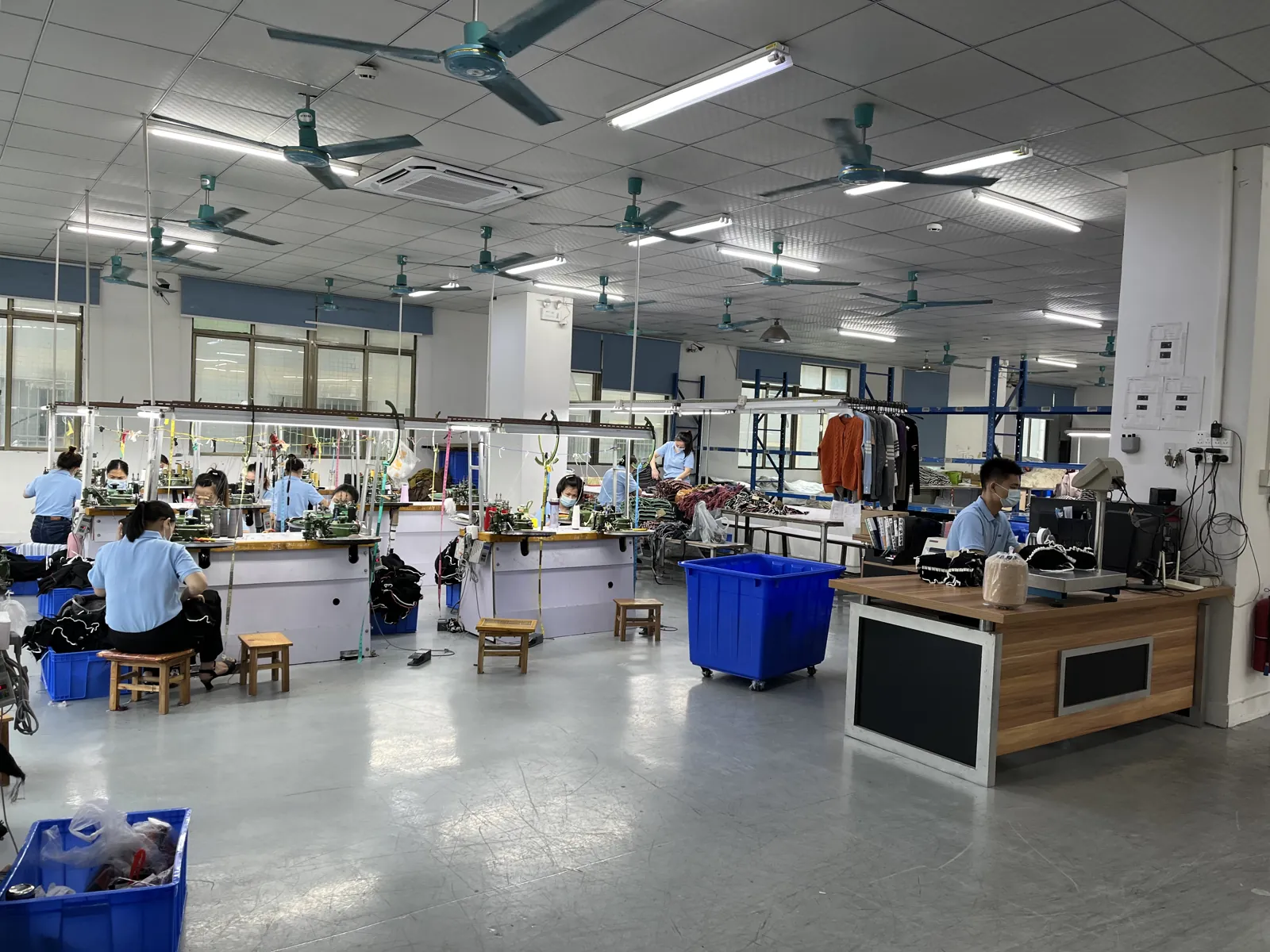
Next, our in-house linking team joins the neckline band and shoulder seams loop to loop. As a result, the seam stretches with the knit instead of cutting into it. We confirm the linking tension on the first sample and record it for bulk.
Measuring points for a V-neck knit dress
We measure the V from a fixed reference, usually the high point shoulder, down to the V point. Next, we record neck width between the two shoulder points, the left and right edge lengths, shoulder width, back-neck width and front length. Then we use the same points before and after every check.
Our measuring method follows the approach in ISO 18890, which defines garment measurement points and allows buyers and factories to agree extra points. We lay the dress flat without tension and align the back neck before measuring. Also, when the V is soft and has no sharp point, we mark the reference on the approved sample. That way every inspector measures from the same spot.
Keep left and right separate
However, an average hides asymmetry. If one side of the V grows more than the other, the V point moves off center and the dress looks twisted. Therefore we record both edge lengths separately. If the design is asymmetric on purpose, we mark that on the reference sample so nobody corrects it by mistake.
Hanging and wash checks for a V-neck knit dress
Retail and storage often mean the dress hangs for days. So we hang the sample on a standard shoulder hanger and measure it before hanging, after a set period and after a rest flat on the table. We photograph it from the same position each time. This shows us whether the neckline moves under weight and whether it recovers afterwards.
We also check the dress straight out of its polybag. A dress folded across the shoulder can look distorted when first unpacked. For that reason, we let it rest before judging the neckline, so a fold mark does not get mistaken for a real change.
Stretch and recovery of the fabric
For the fabric itself, we can refer to ASTM D2594, which covers stretch and growth of low-power knitted fabrics. It helps compare yarn and stitch options. However, a fabric result cannot approve the whole neckline, because the edge, V point and shoulder all add their own behavior.
After washing
Next, we wash, dry and rest the sample using the care route on the label. Then we measure V depth, neck width, both edges and the shoulder again. If the edge only returns to shape after heavy steaming, we treat that as a warning sign. The approved result must match the stated consumer care instructions, including any permitted pressing or reshaping.
V-neck knit dress fit review on the body
A flat table cannot show how the neckline sits on a body. Therefore we check the dress on a fit form or a fit model over the intended underlayer. We look at coverage, edge flatness, shoulder position and where the V point lands on the body.
After that, we ask for normal movements such as sitting, reaching and walking. We also check dressing and undressing. If the wearer has to pull on the V point to get the dress on, the neckline will stretch quickly in use. In that case, we may widen the neck slightly or change the edge rather than tighten it.
Grading and bulk control for a V-neck knit dress
The V does not scale in a straight line across sizes. A larger size often needs a deeper V, but not always a proportionally wider one. For this reason, we grade depth and width separately and check the smallest and largest sizes on a sample. Our guide on grading sizes for custom knitwear explains the method in more detail.
In bulk, we keep the approved yarn, gauge, stitch setting, edge structure, linking tension and shoulder support. Our QC team measures the neckline points on finished dresses from every size and color. We also hang a few dresses from the first lot and compare them with the approved sample.
For a V-neck knit dress, send the accepted V depth, shoulder width and front-neck recovery limit with the quote request. Compare those points on the size set after the declared care route; a neckline that sits correctly on the base size may open or pull on a different size. Confirm yarn and sample availability for this dress before using the site’s general MOQ and lead-time ranges as a schedule.
Conclusion
Retain the V-neck knit dress’s accepted depth, paired edge lengths and shoulder references with the care-state views. When a later sample changes, locate the affected relationship before altering the whole neckline or extending the result across sizes.
Share your dress design with us and we will propose a neckline construction before sampling.
FAQs
How deep should the V be on a knit dress?
It depends on the design and the underlayer. We measure it from the high point shoulder and confirm it on the base-size sample. Then we grade it across sizes.
Why does my V-neck knit dress neckline grow on the hanger?
Usually the shoulder and back neck stretch under the dress weight. Compare shoulder support, edge construction and the relevant measurements before choosing a correction.
Which neckline edge is best for a heavy dress?
A double-layer band or a firm tubular edge often holds best. Also, a well-linked seam keeps the band flat.
Can you make a V-neck knit dress in a fine gauge?
Yes. We knit fine gauges up to 14G. However, fine, fluid yarns need extra shoulder support to keep the V stable.