 CN Sweaters
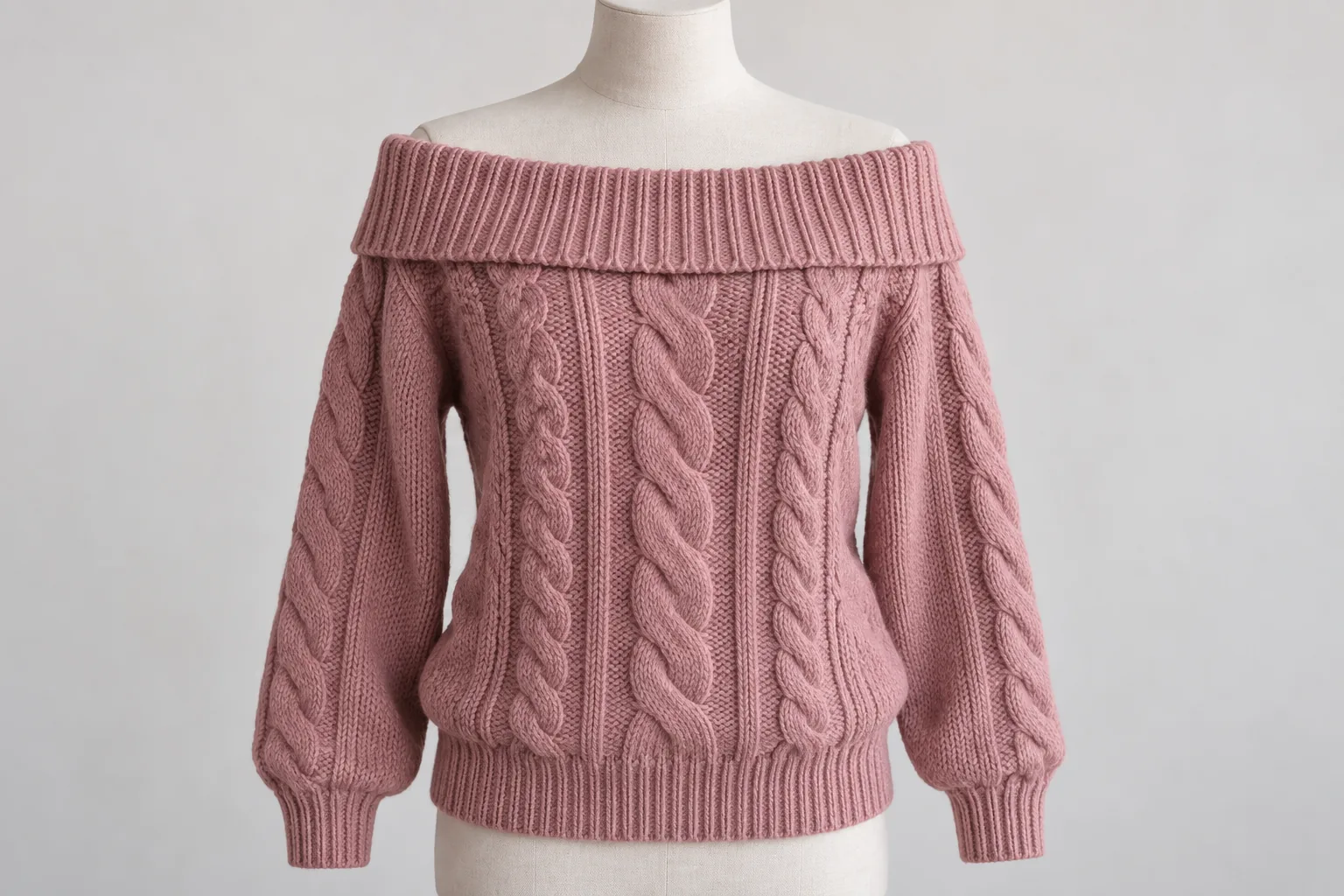
A return about an off-shoulder cable sweater slipping should first identify when the opening moved: during dressing, arm movement or later rest. The quality team can then distinguish local edge growth from the whole sweater being pulled by its sleeve. Tightening the entire edge may change entry and cable relief without solving the cause.
Which cable neckline position is the buyer approving?
Mark the intended contact line
Record the front and back neck depths, opening width and intended contact with the upper arms or shoulders. “Off shoulder” can describe a centred opening, a folded band, an asymmetric arrangement or a garment designed to be positioned differently by the wearer. Those configurations need different reference views.
Use the actual sample over the intended underlayer or on the designated form. Mark the relevant landmarks in a drawing rather than relying on a photograph alone. The garment may look centred because someone arranged the cables, not because the opening returns to that position naturally.
Define the permitted movement range
Separate the design’s allowed movement from movement that creates an unwanted result. An opening may shift slightly during reaching and return after the wearer lowers their arms. Another may remain displaced or roll into a different shape.
The buyer must say which outcome is acceptable for the product. Record the normal actions used for the review and observe the garment before correction. Do not set an arbitrary movement sequence simply because it makes one sample pass.
If the design allows asymmetric wear, name both the primary and optional positions. A retailer’s off-centre photograph should not silently change the technical reference for a centred garment. Conversely, inspection should not reject intentional asymmetry that is clearly part of the approved design.
Where should the cable neckline pattern end?
Draw a termination map
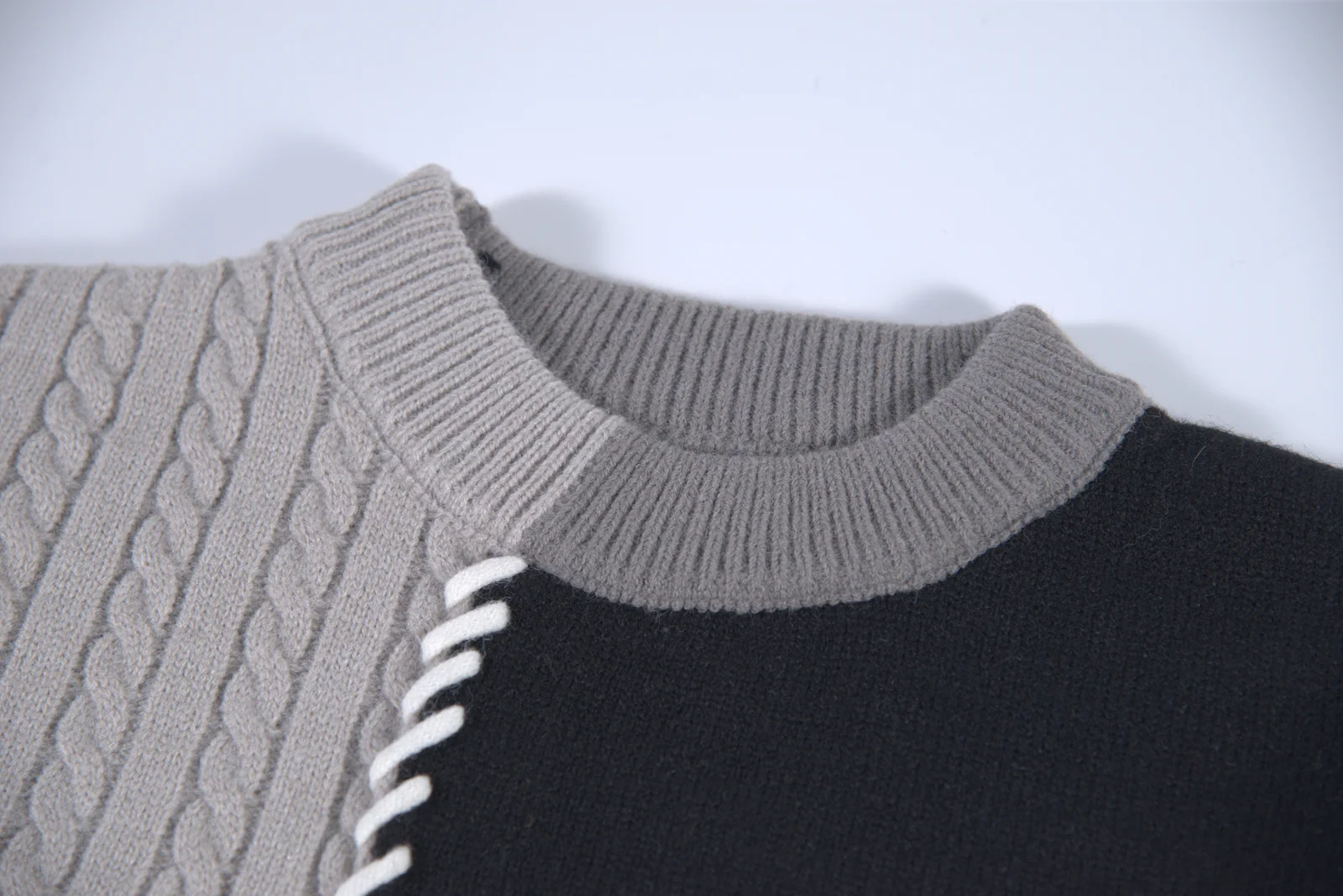
Identify the last cable crossing nearest the neckline, the background stitch between cable and edge, and any partial repeat created by shaping. Include both shoulders, the front and back opening, and the points where construction changes direction.
A cable repeat that works through the body may create unwanted bulk near an edge that must extend. The development question is whether the selected repeat, surrounding stitches and neckline construction can move together. Inspect the assembled interface rather than approving the cable swatch and neck band separately.
When left and right patterns intentionally differ, mark the orientation. A technician should not mirror an asymmetric programme merely to make the flat neckline look balanced.
Preserve the inputs that affect the opening
Record yarn item and lot, gauge, cable programme, background structure, edge stitch and attachment. Describe support or reinforcement only if present in the selected sample. A general instruction to “add elasticity” can conceal several materially different changes.
Gather these references before interpreting a cable neckline observation.
| Area | Reference needed | What to compare | Missing-reference consequence |
|---|---|---|---|
| Contact line | Intended shoulder and upper-arm position | Initial and rested worn views | Slipping cannot be judged consistently |
| Cable termination | Last crossing, repeat direction and partial motif | Left/right programme and garment | Local bulk may be blamed on the whole edge |
| Background zone | Stitch type and extent between cable and opening | Flat and gently extended appearance | Pattern and edge behaviour become inseparable |
| Neckline edge | Structure, width, attachment and support | Outside and inside continuity | A hidden construction change goes unnoticed |
| Dressing route | Entry direction and permitted handling | Starting and post-dressing condition | Wear and entry effects are mixed together |
| Material revision | Yarn, gauge, finish and sample identity | Actual inputs against the reference | Another knit is treated as equivalent |
How can the team distinguish edge growth from fit movement?
Repeat the cable neckline placement before changing it
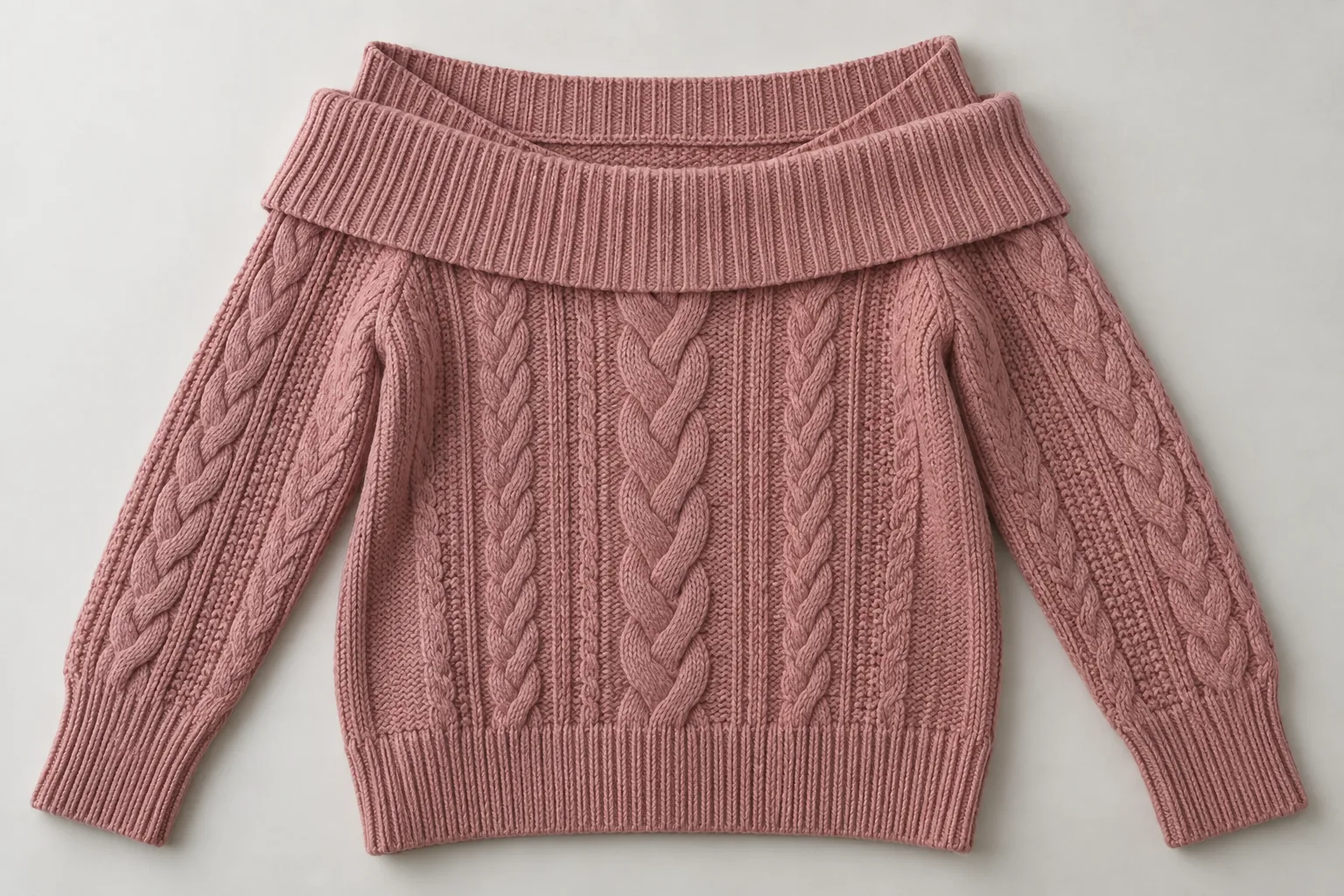
Begin with the same form or wearer, underlayer and neckline position. Observe ordinary dressing and movement separately. Let the garment settle after each stage, then compare the contact line, shoulder landmarks and nearby cable zones.
If the whole upper body moves, inspect chest fit, armhole geometry, sleeve connection and garment weight. A neck-edge correction may be ineffective when sleeve movement is pulling the entire sweater upwards.
Where the garment has a folded neckline band, preserve the fold instruction. Compare the band in its intended folded condition and record whether it stays there during the represented movement.
Measure cable neckline changes by zone
Record the opening in zones. A front edge that grows while the back remains stable may point to a local difference in geometry, programme or handling. An average circumference can hide that distinction.
Use ISO 18890 as a garment-measurement reference and agree the additional opening landmarks. The measurement chart guide can support drawings of measurement origins and laying positions.
Pair those values with close views of the edge and cable termination. A cable crossing may stand proud without changing the opening dimension; an edge may lengthen with little visible change in cable relief. These observations call for different follow-up questions.
Preserve any yarn disturbance, stretched attachment or seam roll as a visible observation. Do not label it a strength failure or a recovery failure unless an appropriate method and criterion actually support that conclusion.
What should recovery and care evidence contain?
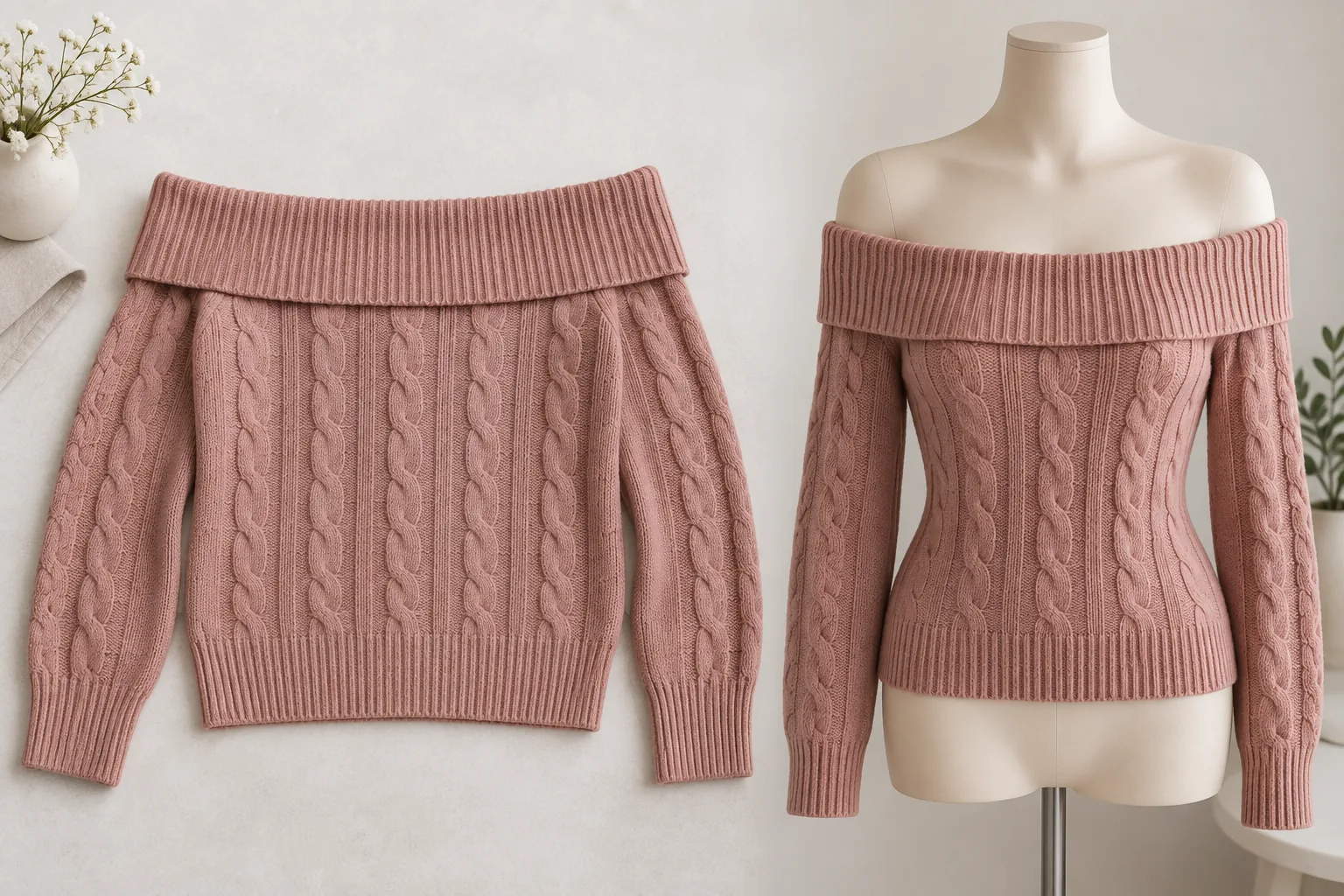
Define the cable neckline extension under review
Decide whether the question concerns entering the garment, ordinary movement, prolonged wearing or material behaviour. Each situation can load the opening differently. The test record should identify which question it answers.
ASTM D2594/D2594M addresses stretch and growth of applicable low-power knitted fabrics. Its scope does not turn an informal garment pull into a standardized neckline test. If the technical team selects a laboratory method, retain the specimen location, direction and relationship to the actual edge construction.
For a product-level observation, document the action, starting state and rest before comparison. If a reviewer restores the neckline by hand, keep images before and after the adjustment. Neither image establishes independent recovery.
Trace the cable neckline through care
The programme, edge and finishing route should remain traceable throughout the comparison. Record dimensions and views before and after the chosen care process, including any support used during drying.
Check whether a finishing step changes cable relief, edge position or the way the band folds. Preserve the rested appearance rather than approving only the immediate post-steam photograph.
How should opening risk be carried across sizes?
Grade cable neckline landmarks separately
Set rules for opening width, front/back depth, shoulder relationship and cable termination. Those rules may differ from the changes used for chest width or body length.
Review the programme at the largest and smallest selected sizes. Shaping may cut through another part of the cable repeat or bring the final crossing closer to the neckline. A numerically smooth size chart can conceal an abrupt pattern change.
Use the knitwear grading guide for the broader grade process. Add annotated cable maps where the opening intersects shaping so the same visual relationship can be checked in the physical size set.
If two sizes share an edge component, list that choice and verify its fit on both. Shared construction should be a documented decision, not a consequence of leaving the component column blank.
Provide views showing acceptable design relief and the kind of displacement that needs review. Use images to locate the inspection zone and a written criterion to specify its tolerance.
Keep first-off comments connected to programme revisions. A sample corrected by hand can help evaluate an idea, but it cannot close the production instruction until the change has been implemented in the actual knitting or assembly route.
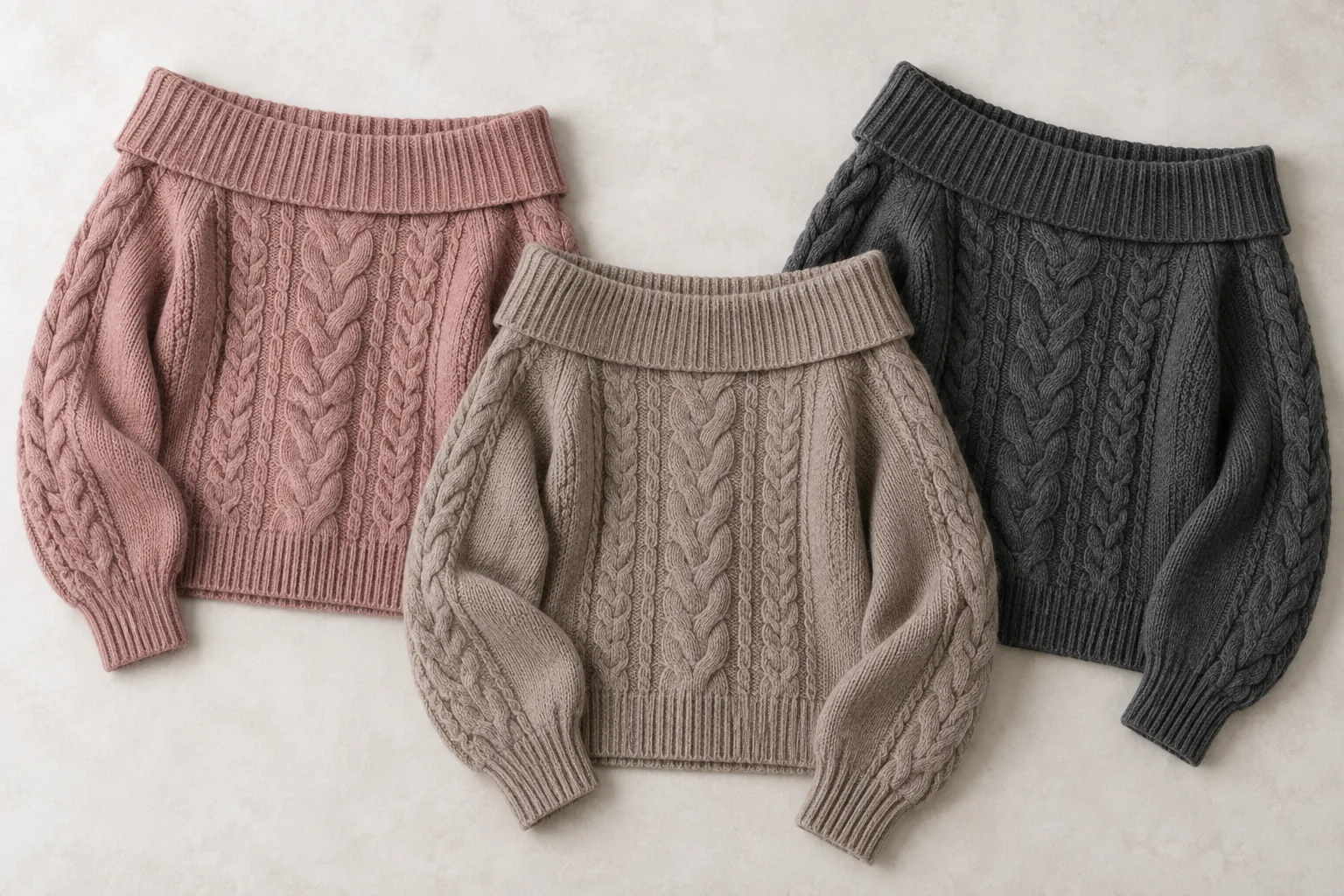
A colour approval and a neckline approval answer different questions. When a new shade enters the range, confirm its yarn item, colour lot and finish route before deciding whether the earlier neckline sample represents it. The same colour name on an order sheet does not prove that two samples were knitted and finished from equivalent inputs.
Keep visual contrast and structural movement apart
A high-contrast underlayer can make a cable edge appear less even than it did against a matching form. Repeat the comparison under the agreed viewing conditions before requesting a construction correction. Check the physical landmarks and opening measurements alongside the photographs.
If the edge position changed, capture that movement directly. If only the visibility of the cable relief changed, ask design whether the appearance remains acceptable in the intended outfit. A dye correction, a programme correction and a styling decision involve different responsibilities.
Which observations should stop a neckline release?
Choose the next check from the symptom
Use the following responses when reviewing this specific cable-to-edge relationship.
| Observation | Evidence to examine | Disposition | Closing requirement |
|---|---|---|---|
| Entire sweater rises with arm movement | Armhole, sleeve and body fit | Hold the relevant fit decision | Repeat movement after the fit correction |
| One neckline zone remains longer after rest | Local edge, attachment and starting measurements | Investigate that zone | Comparable pre-action and rested records |
| Cable crossing crowds the moving edge | Programme termination and background zone | Revise the pattern interface | Updated programme and assembled sample |
| Position changes only after dressing | Entry route and local extension | Keep entry behaviour open | Documented normal dressing comparison |
| Folded band stays correct only after arranging | Fold route, edge construction and finishing | Hold the presentation instruction | Reproducible natural placement |
| Buyer chooses another exposure | Product brief and affected sizes | Approve a design revision | Signed views and updated inspection references |
Retain the earlier sample or its controlled views until the comparison is complete. If both edge structure and cable scale changed, explain that the result represents the new combination; it cannot isolate which modification caused the improvement.
For an off-shoulder cable development review, send the intended contact line, cable termination map and unadjusted movement views when you contact CNSweaters about an off-shoulder cable sweater. Identify which opening zone changed and whether it returned after the agreed rest.
Frequently Asked Questions
Can the body swatch approve the neckline edge?
Only for the questions that swatch actually represents. A plain body area does not reproduce cable termination, attachment or the assembled opening.
Is a slipping neckline always too wide?
No. Body fit, sleeve movement, edge construction and material behaviour can all affect position. Compare the full movement sequence before reducing width.
Should the cable repeat be identical in every size?
The design may call for consistent visual placement, but shaping can require a documented programme adjustment. Check the garment rather than assuming the chart will scale cleanly.
Can photographs taken after steaming support recovery?
They can show a finishing state. They cannot by themselves show how the garment returned after dressing or movement without that intervention.
What if the retailer prefers an asymmetric styling image?
Record whether that is an approved wearing option or a photographic arrangement. Keep the technical starting position clear so inspection does not judge against two conflicting targets.