 CN Sweaters
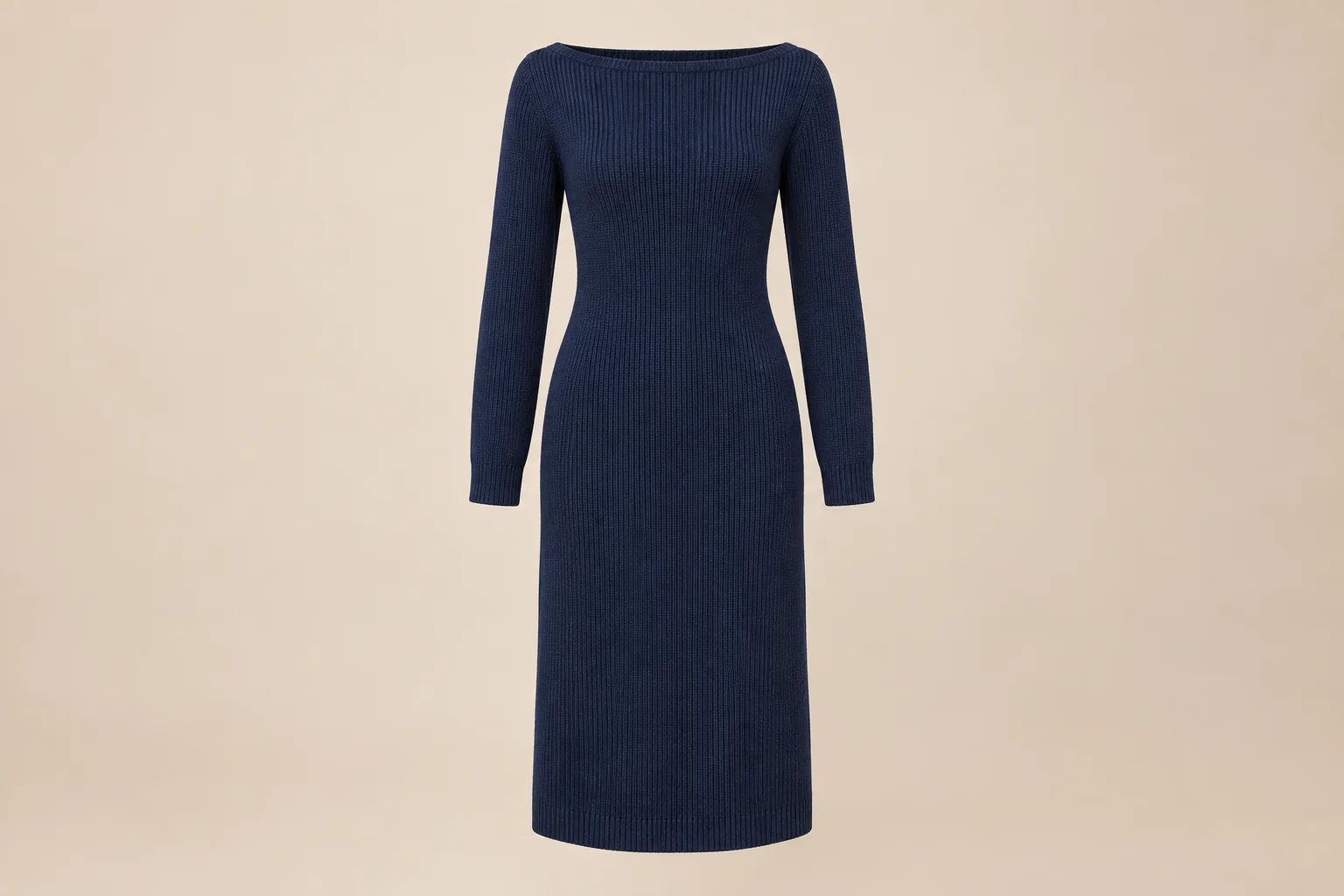
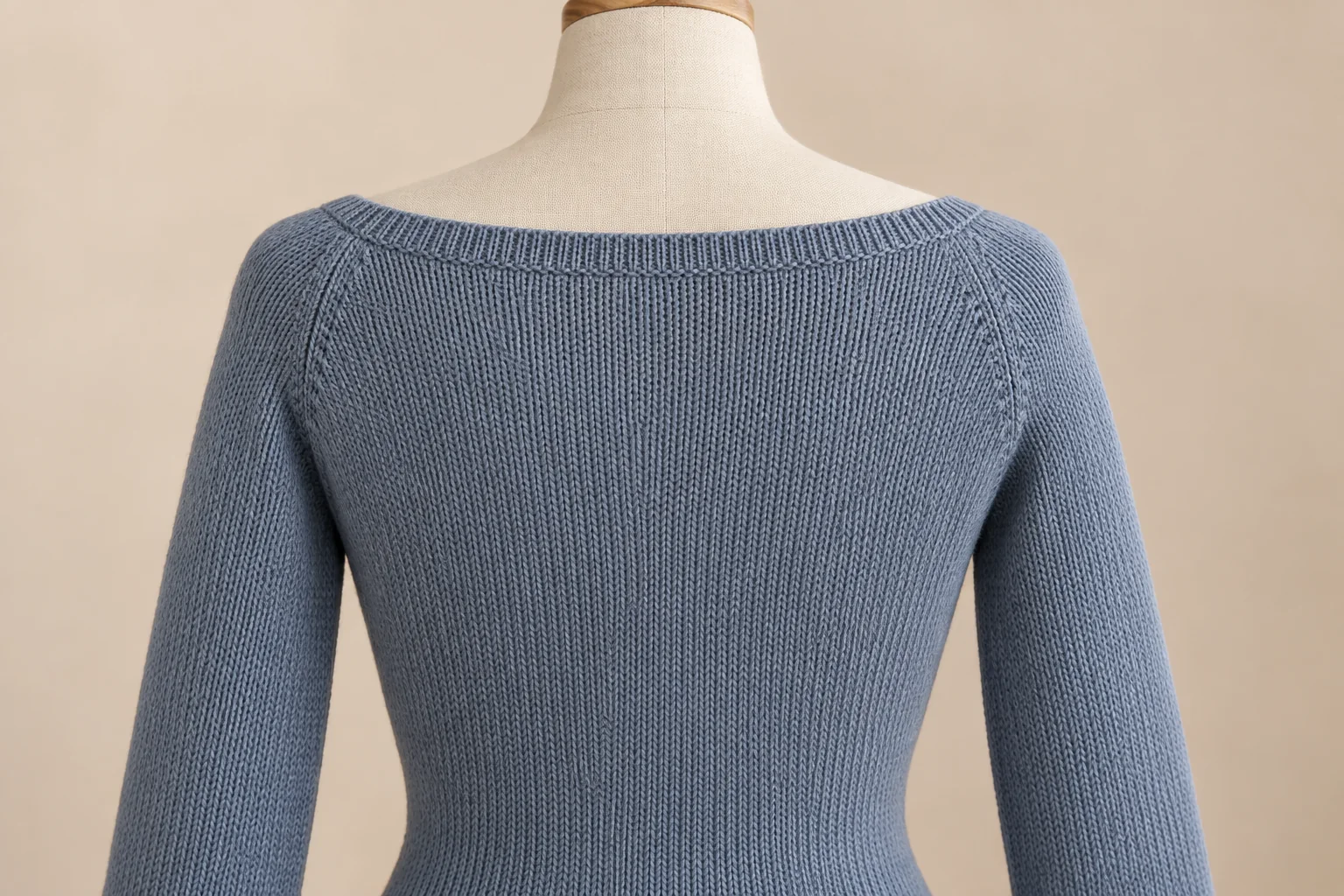
At a size-set review, a boat neck knit dress can fit through the hip while the neckline moves toward the shoulder in an upper size. A grading technician needs more than the base-size neck width: dress mass, shoulder support and wearing state can alter the edge after the garment settles. Approve a size rule only when the neck and lower body are seen together on named sample sizes.
What makes a boat neck knit dress different from a top?
Carry the lower body into the neck review
A boat neck top and a dress may share an upper-body sketch, but the finished dress continues over the waist and hip. That extra material can alter where the neckline rests after hanging and movement. Do not assume it always pulls the neck down: the response depends on yarn, knit structure, dress length and how the garment is supported at the shoulder. Define the intended silhouette and the actual proposed construction before judging the effect.
Use the actual dress length in the grading samples. A prototype shortened for convenience can screen the upper shape, but it leaves the neckline’s relation to the full lower body untested.
Define the wearing state of the opening
A boat neckline may be intended to sit close to the side neck, spread towards the shoulder, or expose a defined width of upper chest. Those are different visual targets. Save a marked front and back view on the selected wearer or form, with the arms resting naturally. Record the planned undergarment and any shoulder seam position that affects coverage. Compare the opening after the garment has been put on without manually pushing its edges into place.
References to fix before grading
Separate body and garment references
Start with an agreed wearer profile for the intended market. Body measurements describe the target wearer; garment measurements describe the finished dress. Do not treat neck width on a flat garment as the person’s shoulder width. ISO 8559-1 describes body measurement definitions that can support size and shape profiles. It does not prescribe the finished boat opening or tell a brand which customers it should fit. Record the brand’s chosen body data source, underlayer and fit preference in the project brief.
For the dress, mark the same origin and endpoints for neck width, neckline depth, shoulder width, cross-front and back width. Add front and back length, waist position, hip width and hem if they bear on the silhouette. ISO 18890 describes garment measurement points and allows additional agreed points. Put the neckline’s unusual points on a marked drawing rather than assuming a standard table will locate the exact decorative edge. The knitwear tech-pack guide gives the wider handoff context.
| Size-set reference | Agreed record | What it controls | Owner of choice |
|---|---|---|---|
| Wearer range | Target bodies and underlayer | Fit and coverage reference | Brand defines market |
| Boat opening | Marked width, front/back depth and edge line | Opening shape across sizes | Designer signs drawing |
| Shoulder | Seam or support path and width | Neck position during wear | Technician sets construction |
| Dress body | Length, waist, hip and hem relationships | Lower-body influence | Fit team approves silhouette |
| Material | Yarn, knit route and finished state | Response to hanging and care | Sample room identifies revision |
| Size transitions | Points where panel or program changes | Extra review samples | Buyer selects risk sizes |
Distinguish a rule from a tolerance
A grading rule says how a measurement or feature changes from one size to another. A tolerance says what difference is acceptable when a given size is measured against its approved specification. Neither can be borrowed unexamined from another neckline. Decide whether the neck width should change at all, whether edge curvature must change, and how the shoulder is positioned relative to the opening. A fixed neck width across every size may create its own problems; a uniform increment may make the upper sizes too open.
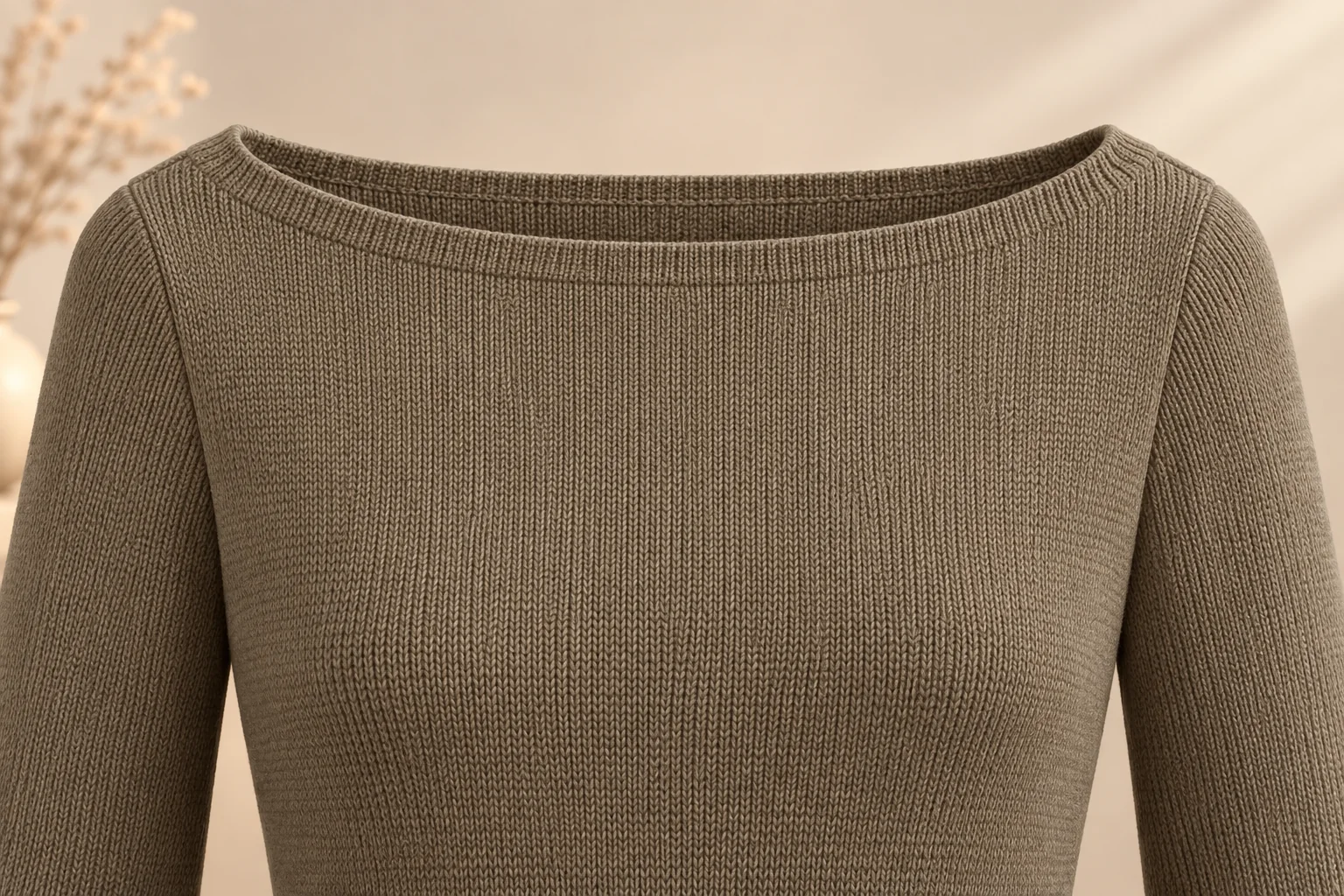
How should the size set reveal neckline drift?
Choose samples around structural transitions
Select lower, base and upper sizes from the planned range. Add a size where the collar finish, shoulder construction, panel count or knitting program changes. This is a risk-based sample plan, not a fixed number that every brand must order. Show the dressed front and back of each selected size on a corresponding wearer or suitable form. A small sample on an oversized form cannot stand in for a correctly fitted upper size.
Record whether the edge rests where the design intended before and after a normal arm movement. Observe if one shoulder becomes exposed, the front falls lower than the back, or the opening moves with the dress body. Repeat the photograph from the same height and garment state. The sample-feedback guide helps tie the visible comment to a named size and revision. A description such as “neck too wide” should identify whether it refers to a flat value, the worn outline, or both.
Distinguish support movement from opening width
A shoulder seam that slides or rotates can change the apparent neckline without a large change to its flat width. The opposite can also occur: a measured width can change while the visible edge still sits in the intended place. Compare seam position, upper-body ease and the neckline edge before deciding which pattern piece should move. If the body rises during reaching, identify whether the dress armhole and sleeve relationship is involved. Changing the decorative neckline alone may leave the fit cause intact.
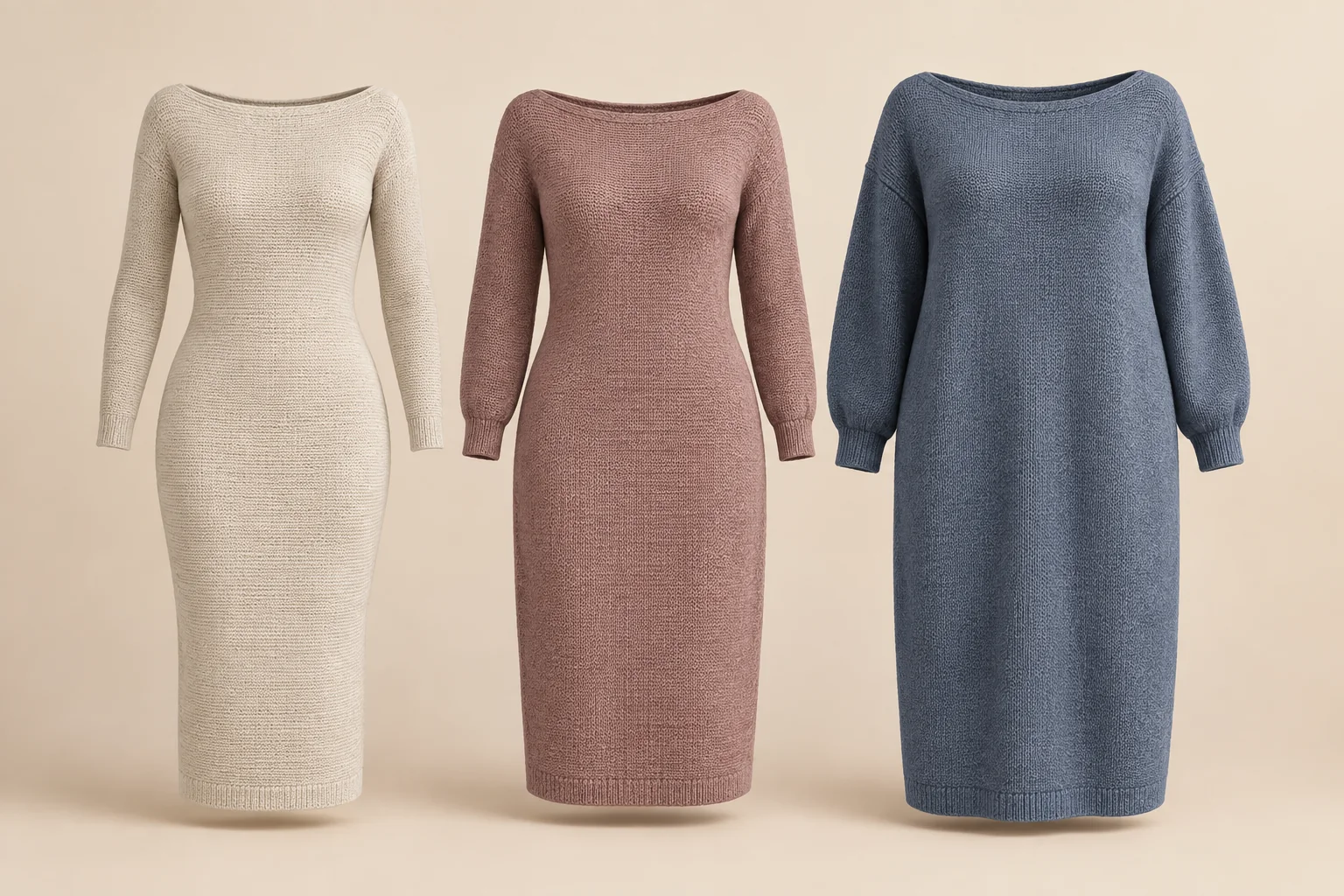
Material and care-state comparisons
Keep each material proposal identified
A knitted edge can respond differently when the yarn, stitch density, finishing or edge construction changes. Do not call two samples equivalent because their composition labels look alike. Record the supplier proposal, knit program, colour if it changes the finishing route, and sample revision. Use the actual dress length and proposed neckline finish in the comparison. A swatch can help screen a material response, but the shaped, supported dress still needs its own wearing review.
Hold the body and edge construction constant where practical when comparing yarn proposals. If that is impossible, list the combined changes so the buyer can interpret a moved edge without attributing everything to yarn alone.
Compare pre-care and post-care states honestly
Care may change garment dimensions, edge recovery or how the whole dress hangs. AATCC TM150 provides a public scope for garment length and width change after home laundering on applicable garments, and warns that it may not suit certain stretch fabrics. Do not present an informal wash photograph as an official TM150 test. Specify the care route actually intended for the product and label the state of each reviewed sample.
Keep formal dimensions separate from the worn appearance decision. A length result can meet its tolerance while the boat opening moves; a visually acceptable opening can accompany an unacceptable measured change. Compare paired front, back and shoulder views on the same cared samples, and inspect a differing size or yarn group separately.
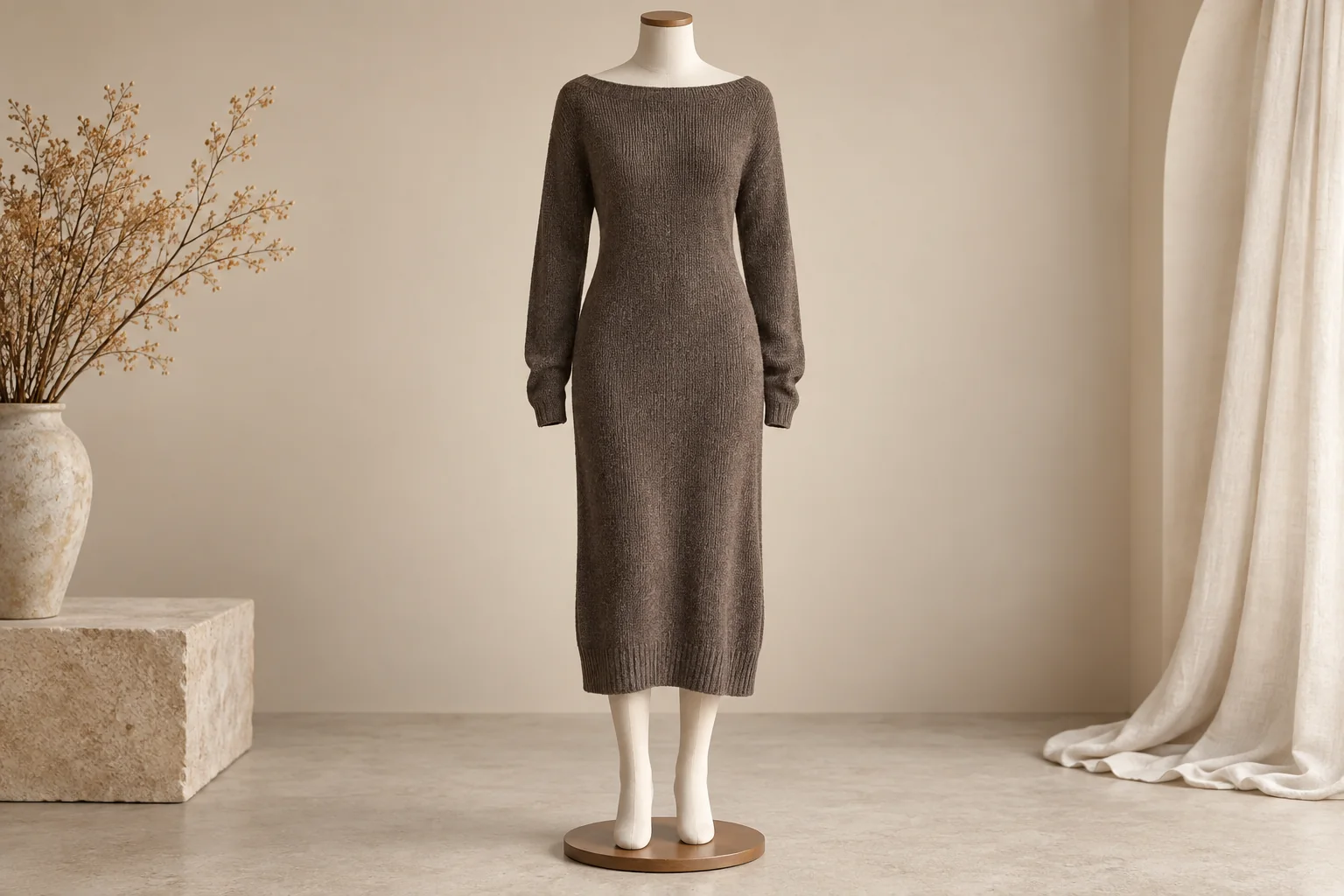
Which actions challenge the size rule?
Observe the neck without arranging it by hand
Compare the chosen dressing, reaching, walking and seated states with the same undergarment and appropriate fit reference. Take the first view without touching the edge and mark which shoulder, sleeve, back or lower-body section moved with it.
Recheck the hem and hip when the neck moves
A visible change at the neckline may follow a pull from the lower dress, especially if the hem or hip area restricts movement. Compare the hem landmark and side seam in the same frames as the neck edge. If a size cannot sit comfortably without lifting the front, do not solve that by widening the boat opening alone. Conversely, a neck edge that spreads while the dress body stays level points to a more local upper-body question. Keep these observations beside the size-set measurements so the next sample is revised at the actual problem zone. The buyer can then limit the correction to a size transition, construction detail or declared wearing condition.
Retaining the selected neck and shoulder map
Put a map behind the approved silhouette
Put neck endpoints, edge curve and shoulder support on the transition-size drawings. Attach the corresponding full-length wearing views in their identified material and care states.
Convert observed drift into a defined correction
| Neckline drift | Relationship to investigate | Buyer action | Required closing evidence |
|---|---|---|---|
| Upper-size edge opens too far | Neck curve against shoulder width | Trial a size-specific curve | Marked worn and flat comparisons |
| One shoulder slides in wear | Seam support and upper-body fit | Check shoulder system | Rest and movement views of same size |
| Front edge falls after hanging | Front/back balance and material | Hold affected material-size group | Paired conditioned views |
| Dressing distorts the opening | Usable extension and edge recovery | Trial entry or edge change | Dressing and recovery sequence |
| Care shifts only one size | Construction or finishing transition | Reopen that size’s approval | Identified pre/post-care records |
| Flat width passes but worn edge fails | Geometry beyond one measurement | Review shape before tolerance | Full opening drawing and wear view |
Keep an exception list if one size needs a different stitch count or edge route. Show exactly where the program changes. A first-off inspection can then compare the correct size-specific construction with the approved reference rather than checking a single neck width for every garment. The bulk comparison guide remains relevant when a production unit is checked against the size-set decision.
Frequently Asked Questions
Can a boat neck top grade be copied to a dress?
Use it only as a reference. The dress adds length and lower-body mass. Compare the full-length garment and its shoulder support in the intended size range before approving the neck rule.
Does every size need a larger neck opening?
No universal increment follows from the size label. Decide the edge shape and wearer coverage at each relevant size, then inspect physical samples around construction transitions.
Is a flat neckline width enough for approval?
It is one useful value, provided the endpoints and condition are marked. Worn front and back views reveal shoulder movement, asymmetry and exposure that a flat value may miss.
Must a care check use AATCC TM150?
Use a method only where its scope and the product’s intended care route fit. An informal comparison can guide development if it is labelled honestly; it is not a formal TM150 result.
When does a material substitution reopen grading?
Recheck when it changes the edge, shoulder or dress hang. Identify the new yarn and sample revision and compare the same size, wearing state and care condition.
Include the transition-size neck maps, full-length views and wearer profiles in the CNSweaters dress-size enquiry, with the unresolved grade relationship marked.