 CN Sweaters
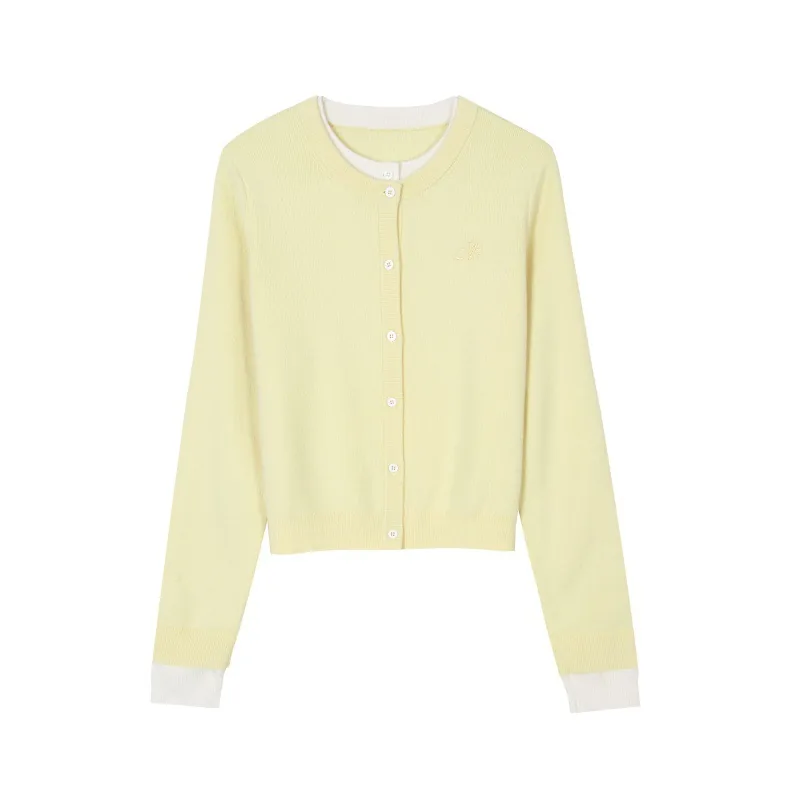
A linen cardigan’s intended hand and drape need a defined post-care reference. However, that relaxed drape also shows up after washing. The fronts may grow, the placket may hang longer than the body, and the hem can form a visible step where the two edges meet. So before bulk, we check how the cardigan behaves after care and rest, not just how it looks off the pressing table.
Compare each linen or linen-blend cardigan in a stated care and rest condition, with separate records for the body, front edges and sleeves. For more styles and quote options, see our custom cardigan sweaters page.
Why a linen cardigan needs a post-care check
Linen yarn has little natural stretch and recovery compared with wool. As a result, a linen knit tends to hold whatever shape handling, hanging or washing gives it. A pullover hides some of that movement, because the body is a closed tube. An open cardigan does not.
On a cardigan, the two front edges can change at different rates. For example, a ribbed placket may relax more than a jersey body, or a heavy button side may drop on the hanger. A small length difference then becomes an obvious step at the hem. Sleeves and elbows can also keep a bagged shape after wear. None of this proves a yarn fault by itself. Instead, it shows why we link every result to one version and one garment state.
Descriptions are not specifications
“Linen blend”, “washed linen” and “soft linen” sound precise, but they do not describe the yarn. They say nothing about blend percentage, yarn count, knit density or finish. Therefore we keep the supplier’s exact yarn description beside the sample ID, and we ask what evidence supports the care route for that exact yarn.
Freezing the linen cardigan version
We treat yarn, knit and finishing as one release version. Before any wash test, we record:
Yarn: composition, supplier, yarn item, count or ply, color and lot.
Knit: machine gauge, stitch structure, stitch setting and panel sizes.
Front edge: integral, linked or sewn-on band, rib or tubular structure, any tape support, buttons and buttonholes.
Finishing: washing, drying, pressing and the rest period.
If the development sample uses a substitute yarn or a temporary placket, its result cannot approve the bulk version. The evidence must follow the inputs that we actually tested.
Treat the front edge as its own system
The body and front edge may use the same yarn in different structures, or different inputs altogether. So we photograph and measure the front edge separately. A straight band cannot make up for a body that has changed beyond the agreed fit. Similarly, a body that stays in spec cannot approve a band that has grown.
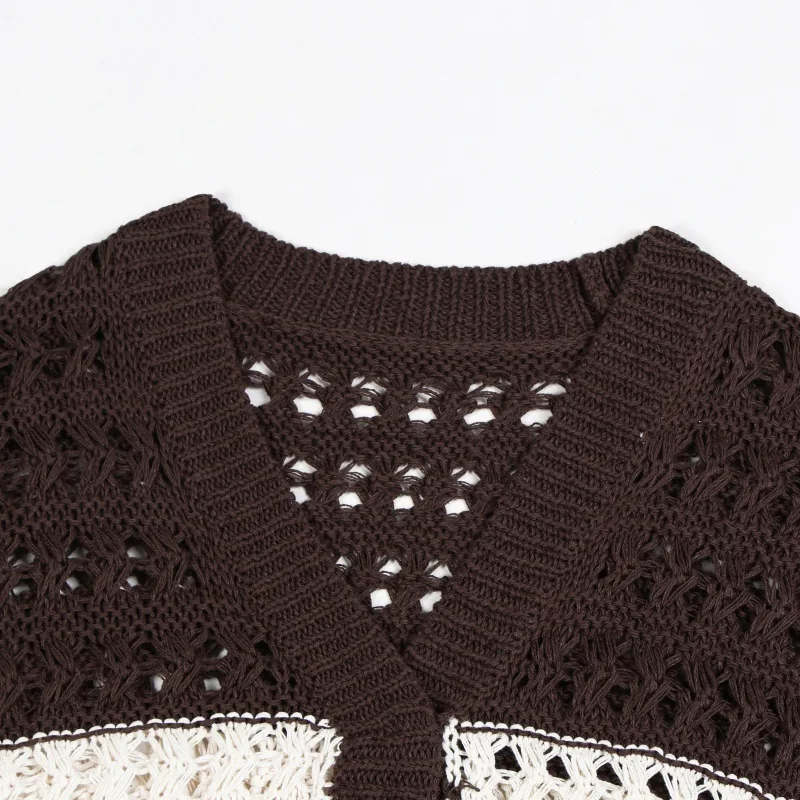
Controlling garment state before measuring a linen cardigan
We agree the care route before anyone takes a measurement. That means the wash or care procedure, the drying method, any steam or pressing, how the garment lies during drying and how long it rests before measuring. Because a linen cardigan can look very different straight after steam, we never compare a freshly pressed piece with a rested one.
AATCC TM150 covers length and width changes of garments after home laundering, with several washing and drying options. The buyer and the test provider pick the actual route. In practice, we write the full cycle, the drying route and the sample ID on the same sheet as the result.
Mark whole-garment and local points
We measure body length, front length on both sides, back length, chest width, shoulder, sleeve, hem and placket length. Then we add local points where the style needs them. These include the distance from the neck to the first button, the band-to-body join, pocket position and the gap between the placket bottom and the hem.
ISO 18890 defines main garment measurement points and lets the buyer and factory agree extra points. It does not set tolerances for this product. Use the same defined points before and after care.
We also keep the raw values next to any percentage. A single rounded number hides whether both fronts changed together, one edge grew, or the placket and body moved in opposite directions.
Reading the linen cardigan open front after care
First, we measure the linen cardigan body without using the placket to pull it flat. Next, we check the two front edges open, lightly aligned and buttoned if the style closes. We note whether the edges hang at the same height, whether the center-front line rotates and whether the hem forms a step.
If the design is asymmetric on purpose, we compare it with the approved reference instead of forcing it straight. Also, if a pocket or heavy trim loads one side, we record that too. We avoid guessing the cause from appearance alone. A stretched edge can come from knit setting, band attachment, pressing, hanging or a mix of these.
Sleeves, elbows and hem on a linen cardigan
We review sleeve length and elbow shape in one fixed state. A worn sample and a retained unworn sample answer different questions. So if the buyer runs a wear trial, we record how long, what activity and what the wearer wore underneath.
Then we check hem depth and flatness, and the front-to-back length relationship. A hem can stay level while the front edge drops below it. For appearance after washing, AATCC TM143 describes how to rate smoothness of seams and fabrics on the finished product. Identify the assembled cardigan and the method used for its appearance review.
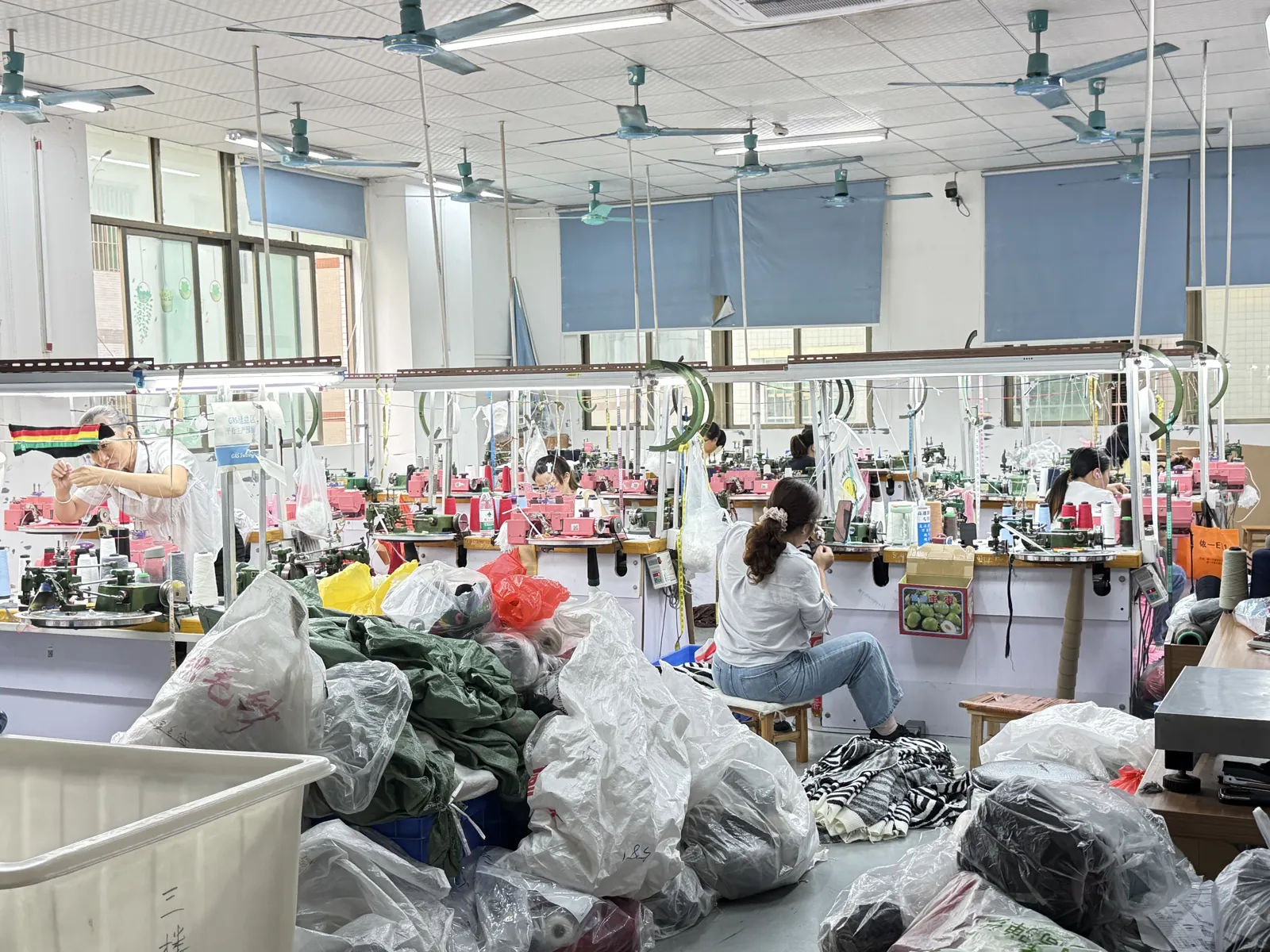
Hanger, wear and wash tests for a linen cardigan
Each condition answers one question. A flat, rested cardigan gives clean measurements. A hanger shows how length and front edges respond to their own weight over time. Meanwhile, a fit form or wearer shows the effect of body shape, buttons and movement. Finally, a wash test shows the cardigan after a stated care route.
We link these results, but we do not let one replace another. For instance, if the buyer wants to know whether the front stays level on a retail hanger, we define the hanger, the support points and the duration. We also avoid extreme tests that the real garment will never face, because they only produce dramatic photos.
Keep care wording tied to the same version
The care label and the tested version must use the same yarn, structure, trims and finish. If the care instruction changes after testing, we note which results are now out of date. Likewise, one good result does not cover every linen blend, color or future yarn lot.
Linen cardigan sizes and bulk groups
The base size sets the intended balance. However, the size set should show whether body width, front length, placket length and button spacing stay coordinated as the sizes grade. So we include one size that puts more demand on the front opening and one that tests length. We never stretch a base-size sample to imitate the next size.
Color can matter too. Pale and dark colorways may go through different wet processing. Therefore the buyer can release one color group while another stays pending, as long as cartons and production records stay traceable.
Carry the sample into bulk inspection
During bulk, we list the yarn lots, finishing groups and units we compared. Our general checks follow our knitwear quality control checklist. For linen cardigans, we add front-edge length, open-front balance, body dimensions, sleeve and elbow shape, and the care or rest state. We also keep retained pieces near the approved limits, not only the best-looking unit.
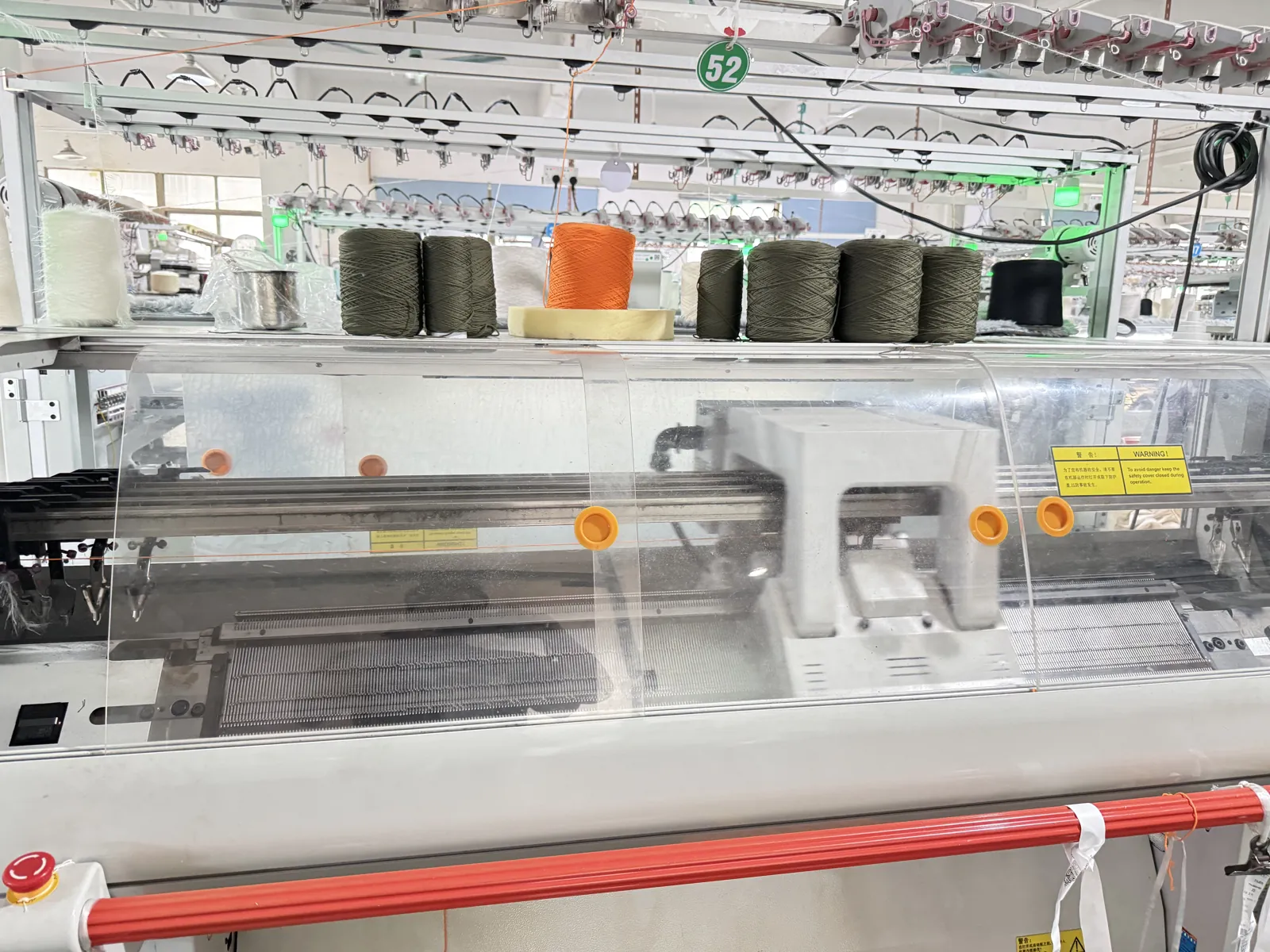
Evidence to include in a linen cardigan brief
A linen cardigan brief needs the exact yarn or blend, stitch density, garment length and the care route used to judge front-edge level. Ask for measurements before care, after care and after hanging the identified sample; record whether the two fronts change by the same amount. The OEM/ODM process page describes the general sequence, but yarn availability, swatch comparisons and approved tolerances determine this style’s sampling and bulk calendar.
Conclusion
Give the receiving team the linen cardigan’s accepted front-edge and body measurements with their care and rest conditions. A later band, yarn or finish change needs a scoped review before its result can represent the earlier version.
Send us your linen cardigan sketch or tech pack and we will plan the post-care review with your first sample.
FAQs
Can one sample approve every linen blend?
No. A different blend percentage, yarn supplier or finish can change how the cardigan relaxes. So each blend needs its own check.
Should we measure a linen cardigan right after drying?
Usually not. Instead, let the linen cardigan rest in the agreed condition first, because steam and fresh drying can distort the numbers.
Is body length enough to approve stability?
No. The body can stay in spec while one front edge grows. Therefore we measure both fronts and the placket as well.
Can a hanger test replace a wash test?
No. A hanger test shows drop under weight, while a wash test shows change after care. They answer different questions.