 CN Sweaters
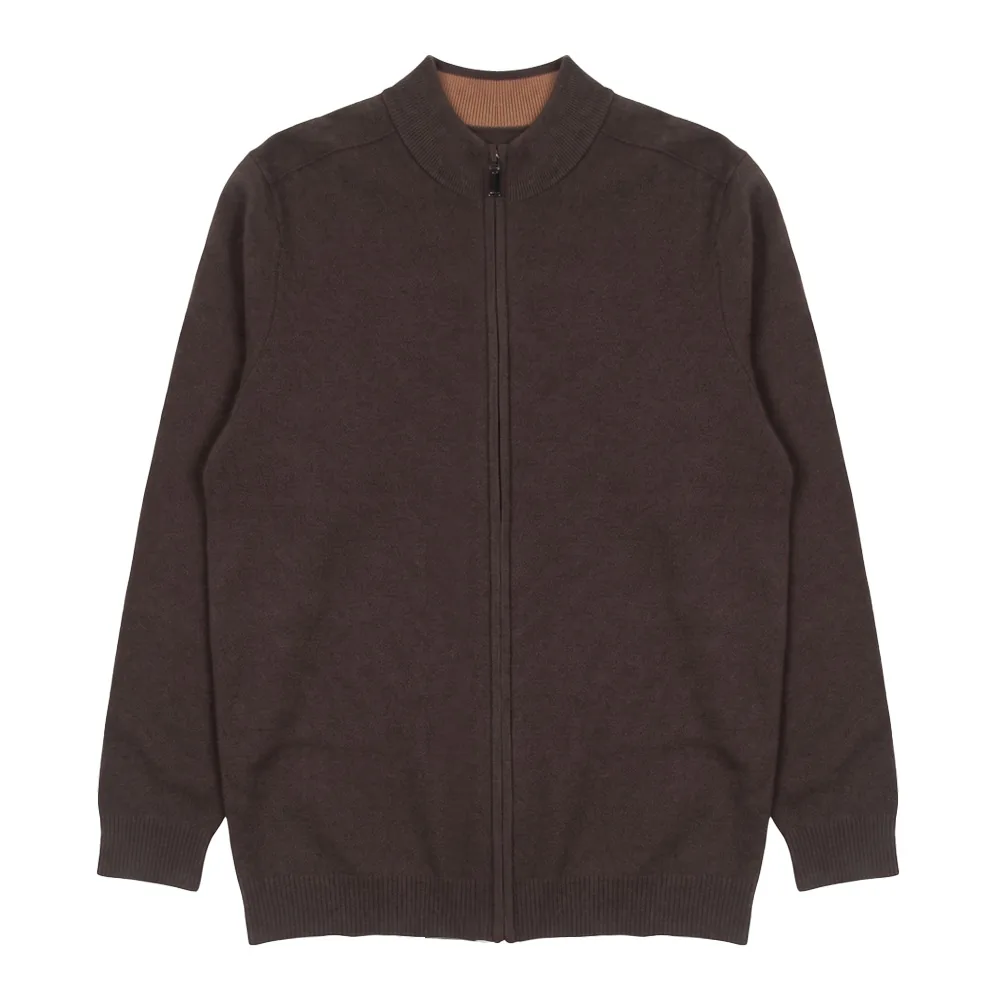
On a men’s full zip sweater, compare the hem with both front panels and the zipper assembly. When the zip closes, the two hem edges should meet in one straight line. If one side drops lower, or the rib steps at the zip, customers notice it at once. Check the hem, zipper attachment, front dimensions and fit block before selecting a cause.
Retain paired front measurements and open/closed views, then connect any correction to its zipper item, grade rule and finishing state. You can also see examples in our custom knit hoodies and zip-up sweaters range.
What makes a full zip sweater hem uneven
A full-zip front has two separate knitted panels joined by one zipper. Each panel stretches and relaxes on its own. The selected zipper tape may respond differently from the panels during handling and care. So any difference between the panels shows up where the zip ends, which is right at the hem.
Check these possible contributors to a hem step:
- The two front panels knit or relax to different lengths
- The zipper tape eases in more on one side during attachment
- The hem rib has a different stretch from the body
- The fit block pulls the front forward over the chest or stomach
Because each cause needs a different fix, we do not simply shorten one side. Instead, we trace the step back to its source first.
Why men’s blocks add pressure
Men’s full-zip styles often sit closer at the chest and straight through the body. As a result, the front carries more tension when zipped. A wearer with a fuller chest will lift the front hem and pull the zip line forward. We review the sample on a form that matches your fit block, not only flat on a table.
Specify the full zip sweater front before sampling
A clear spec gives the sample room a defined comparison for the next revision. For a full-zip, we ask for these details:
- Zipper length, type and the position of both stops
- Whether the zip ends at the hem edge or inside the rib
- Front length on each side, measured from shoulder to hem
- Hem rib height and rib structure
- Collar type: stand, mock neck, hood or no collar
- The main display state: zipped, or open on the hanger
We also ask which way the zip opens and whether you need a two-way slider. Next, we confirm the zip weight against the gauge. A chunky 5G front can carry a metal zip, but a 12G front usually needs a lighter coil.
Paired measurements on a full zip sweater
We measure every front point on both the left and right sides. That includes front length, zip-side edge length, hem width and rib height. Averages can hide a 1 cm step, so we never merge the two sides into one number. For general points of measure, see ISO 18890 on knitwear measurement.
Reviewing full zip sweater hem alignment on the sample
First, we put the sample on the form and zip it normally without pulling the fronts into place. Then we look at the whole front line, from collar to hem. We check the hem, the rib, any stripes or pockets, and the collar tips. We photograph it before anyone adjusts it.
After that, we open the zip and close it again three or four times. A good front returns to the same line each time. Record whether the step changes between closings, then compare panel dimensions, attachment and fit. Neither observation identifies one cause by itself.
Tracing the cause on a full zip sweater
We work through the causes in order:
- Measure both panels flat and unzipped to check the knitting
- Measure the zip tape on each side to check the ease
- Stretch the hem rib gently to compare its recovery with the body
- Try the sample on a second form to test the fit block
This routine keeps us from fixing the wrong part. For example, recutting the zip will not help if one panel relaxed more after washing. Similarly, a new knitting program will not fix a fit block that is too tight across the chest.

Grading a full zip sweater across sizes
Grading adds a second challenge. Zippers come in fixed lengths, while knit panels grade in small steps. So two sizes may share one zip length, or each size may need its own zip. We decide this with the buyer based on the size range and the order quantity.
Meanwhile, the hem rib should grade with the body width. If the rib stays the same while the body grows, the hem can flare on large sizes. On the other hand, a rib that grows too fast will look slack on the small sizes.
Checking the full zip sweater size set
We review a size set before bulk, usually the smallest, the base and the largest size. On each one, we zip the front and check the hem line. Consequently, we can spot a grading rule that works on a medium but fails on an XXL. For grading basics, read our guide on how to grade sizes for custom knit sweaters.
Washing, pressing and bulk control for a full zip sweater
Compare the dimensional response of the actual knit panels and zipper assembly after the agreed care route. Therefore we check the hem line again after the agreed care method. Many buyers use a home laundering test such as AATCC TM150 for dimensional change. We wash and press in-house, so we can repeat the same route on the sample and the bulk.
Once the size set passes, we lock the approved inputs. These include the yarn lot, knitting program, zip item and length per size, linking method and pressing steps. If any input changes, we re-check the front before cutting into bulk.

Inline checks on a full zip sweater
During bulk, our QC team zips and measures sample pieces from each size and color. They check the hem line, zip function and front lengths. Because we also run linking, washing, pressing and packing in-house, we can correct a drift at the station that caused it.
MOQ and lead time
For this full-zip sweater, identify the zipper length, bottom-stop position and approved front-hem alignment before asking for a production date. Recheck the zipped and open views after the intended care route; if the zipper tape and knit body change differently, the base sample may need another round. The MOQ and lead-time page gives site-wide planning ranges, while the chosen zipper, yarn and size set determine this order’s quote.
Conclusion
Keep the full zip sweater’s paired hem and front records with the accepted zipper mapping by size. If another component or finish enters the order, identify the affected comparison before carrying the earlier approval forward.
Share your full-zip tech pack with us and we will check the front and hem plan before sampling.
FAQs
How much hem step is acceptable?
That depends on your brand standard. We agree a tolerance with you at the sample stage and then measure every size against it.
Does every size need a different zip length?
Not always. Neighboring sizes may share a zipper length if the fitted opening remains correct. Select length changes from the graded garment and size-set evidence.
Can I approve the front from a flat photo?
A flat photo helps, but it is not enough. We also check the front zipped on a form, because body shape changes the hem line.
Which zipper suits a men’s full zip sweater?
It depends on the gauge. Chunky knits can take metal zips, while fine gauges usually need a lighter coil zip.