 CN Sweaters
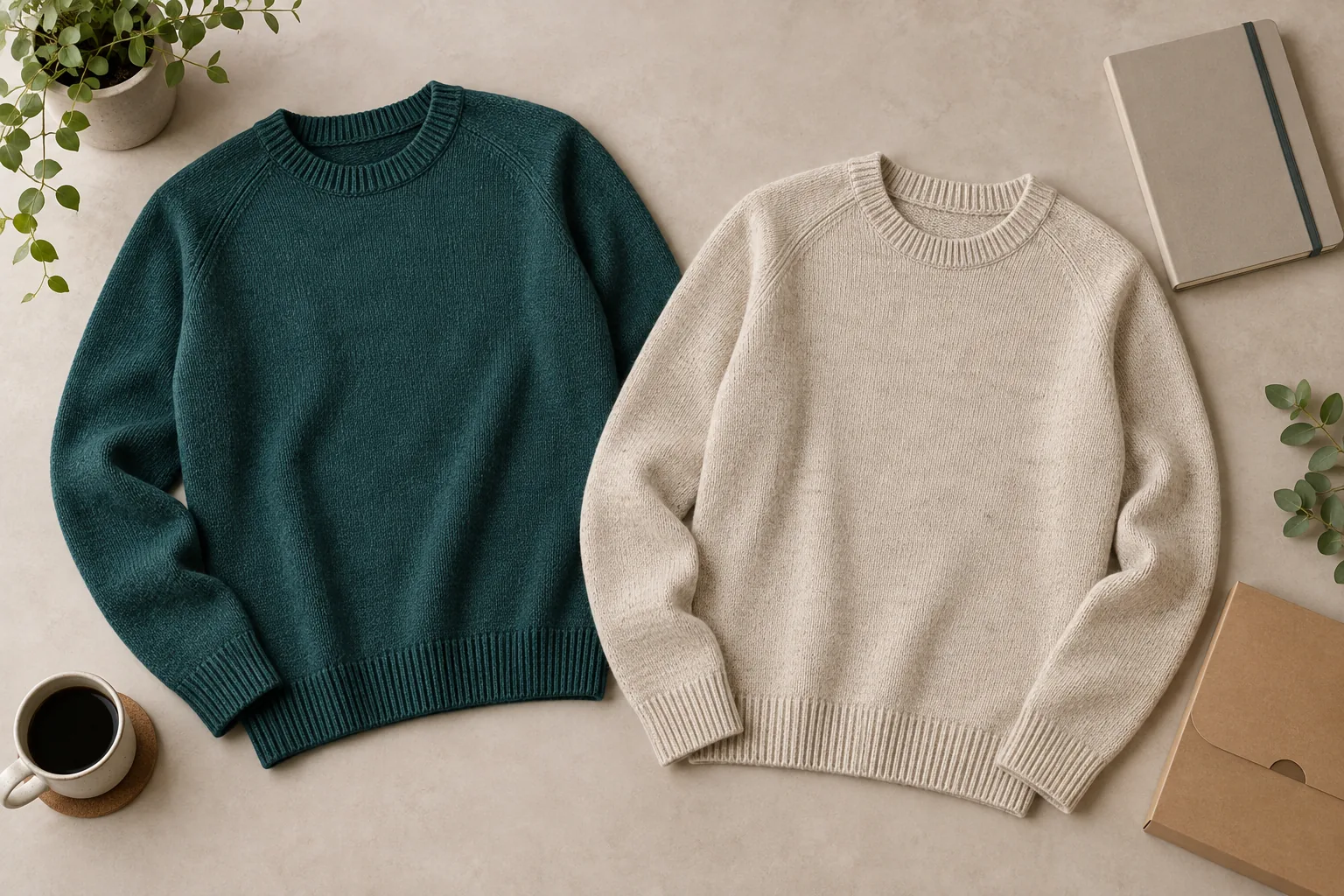
Custom crewneck sweaters for corporate merch have to work as garments, brand assets and repeatable inventory. The first order may be built around an event date, but the useful program lasts longer. New employees, regional teams, client gifts and annual campaigns can require the same identity in different quantities months later.
That makes continuity a design requirement. A program that depends on one seasonal yarn colour, an undocumented logo setup or an untested size ratio may look successful at launch and fail on replenishment. Buyers should design a controlled core specification, then decide which details can change by campaign.
This guide covers the operating choices behind a repeatable corporate crewneck program, from audience and fit through identity, packaging, stock and reorder release. It covers knitted pullovers rather than assuming that a decorated fleece sweatshirt uses the same yarn, construction or sampling route. Confirm that distinction in the purchase brief before requesting a quotation.
Who Will Wear Custom Crewneck Sweaters?
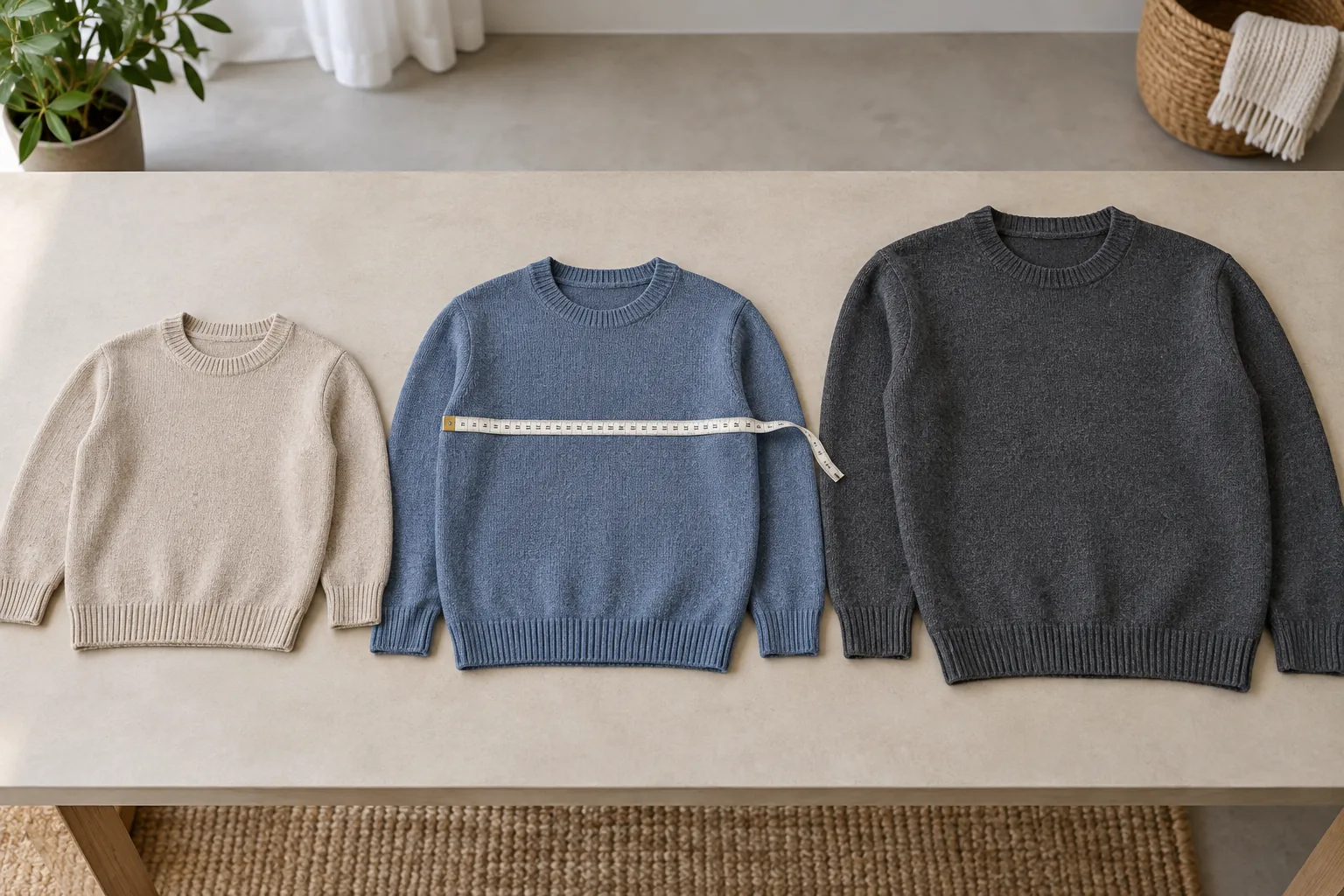
The audience determines fit, fibre, branding and order structure.
Define use cases and wear conditions
Separate employee uniform, onboarding gift, executive gift, conference merchandise, customer reward and retail collaboration. Record climate, indoor or outdoor use, expected wear frequency, care behaviour and dress code. A conference piece may prioritise visual impact; a weekly office layer needs comfort and dependable care.
Identify destination countries and distribution route. A central warehouse, direct-to-office shipment and individual home fulfilment require different packing data. Ask whether recipients choose their size or receive a forecasted allocation.
Use the bulk knit sweaters planning guide to connect the campaign calendar with development, material and production dates.
Build an inclusive size and fit brief
Choose the intended silhouette before discussing a generic unisex label. Define body length, chest ease, shoulder, sleeve, neck opening and hem behaviour. If one block serves multiple wearer groups, test the actual range and explain how recipients should select a size.
Plan sample sizes around fit risk rather than convenience. A middle size confirms styling, while edge sizes expose grading, sleeve and neck problems. The fit sample versus size set sample guide helps assign each approval.
Collect size preference data when privacy and timing allow. When forecasting, keep the basis, regional differences and exchange reserve visible so the next order can learn from actual take-up.
Create a recipient journey before freezing the garment. Show how a person learns about the program, chooses a size, receives the sweater, requests an exchange and gets care guidance. Every step can change the product specification or packing plan. If no try-on is available, publish finished garment measurements and the intended silhouette rather than translating several markets into one familiar size label.
What Should Stay Constant Across Reorders?
For custom crewneck sweaters, a core standard protects identity while allowing planned campaign variation.
Lock the identity-critical specification
Define yarn composition and performance, yarn count, gauge, stitch, garment weight range, measurements, tolerance, colour standard, logo method, logo dimensions, placement, labels, care instruction and packing presentation. Link every item to a version and approval.
Decide whether colour is matched to a brand reference or selected from a supplier shade card. Custom dyeing may improve identity but raise yarn minimum and continuity risk. The private label knitwear yarn planning guide explains specification and lot planning.
Retain an approved garment in protected storage, plus measured photos and digital records. A photograph alone cannot prove hand feel, weight or recovery.
Assign a core-standard owner inside the buying organisation. Brand teams may control colour and identity, HR may own recipient experience, and procurement may own the factory order, but one person should approve the combined version. The owner reviews any proposed substitute and records whether it is temporary, order-specific or a permanent standard change. This prevents separate departments from giving the supplier incompatible approvals.
Define controlled campaign variables
List what may change without creating a new core product: campaign date, secondary patch, gift card, sleeve message, packaging band or delivery destination. Then state which changes trigger a new sample, cost or test.
A limited accent can refresh a program while the body, fit and main identity remain stable. Keep the accent removable or separately sourced when possible so it does not make the base garment obsolete.
Use a simple control table:
| Program element | Change authority | Required evidence |
|---|---|---|
| core yarn and gauge | product owner | revised knit-down and performance check |
| body fit | apparel owner | fit and representative size approval |
| primary logo | brand owner | artwork and technique standard |
| campaign accent | campaign owner | placement sample or component proof |
| care and fibre data | compliance owner | market review and final label proof |
How Should Custom Crewneck Sweaters Be Branded?
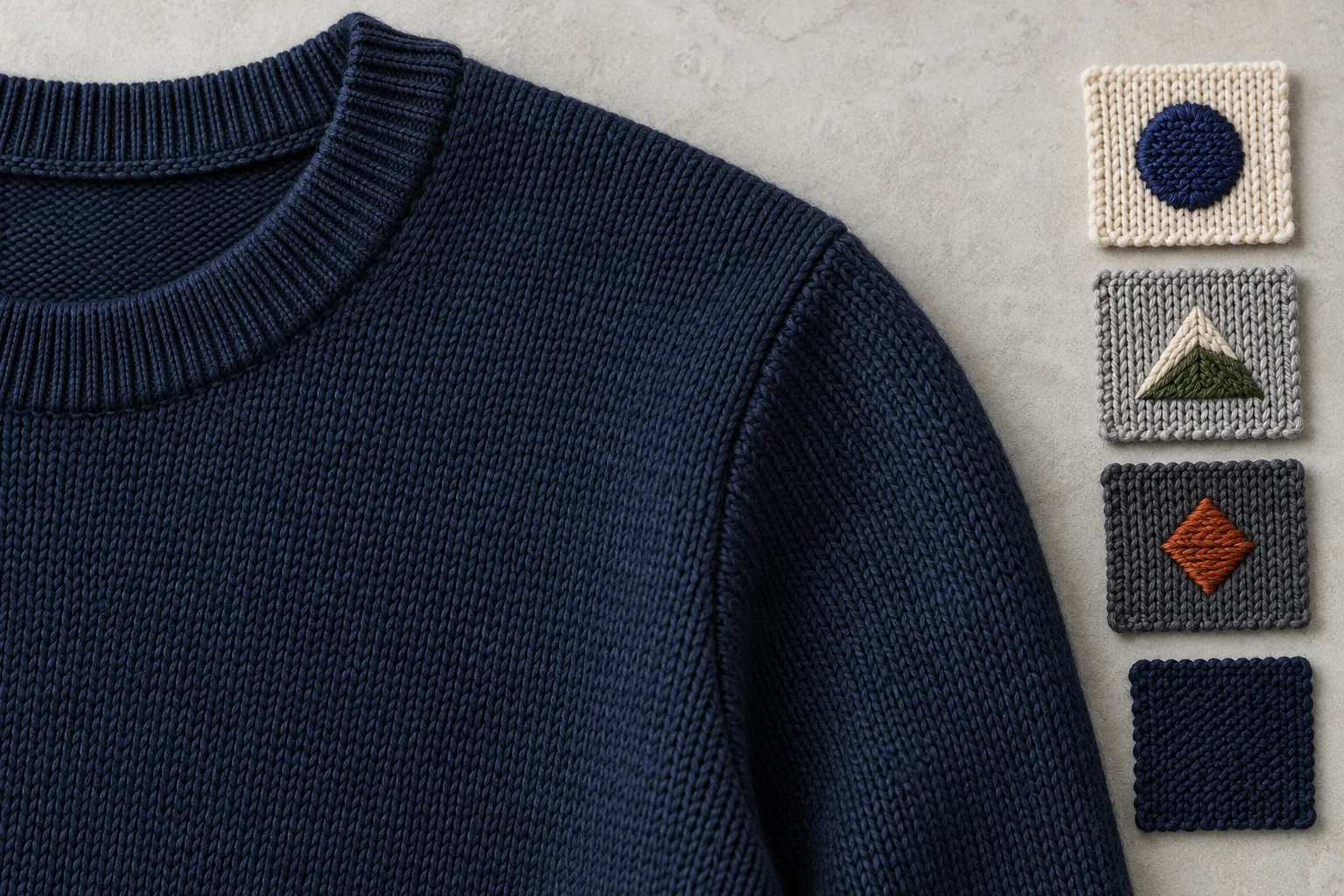
Branding on custom crewneck sweaters needs enough presence to be recognised without making the garment hard to wear.
Select the logo method by product behaviour
Compare embroidery, jacquard, intarsia, patch, print and hardware on the actual knit. Review edge detail, hand, stretch, reverse feel, weight, durability, minimum and lead time. The custom cardigan or pullover guide can help place branding against garment construction choices, while the supplier should provide actual trials.
For an office crewneck, a small embroidery or woven patch may be versatile. A bold event design may justify jacquard or intarsia. Do not assume a method that worked on a sweatshirt will behave the same on a fully fashioned sweater.
Approve an actual-size trial, followed by the logo on a fitted and washed garment. Record the production file, thread or yarn codes, settings and tolerances.
Coordinate labels and discreet ownership cues
Decide which information sits at the neck, side seam, hangtag, packaging and digital order record. The brand label should not conflict with fibre, care, origin or other mandatory content. Review the care labels and fibre content guide for the information architecture.
For internal distribution, consider a discreet size mark and reorder code that remains readable after hangtags are removed. Avoid printing personal employee data into a garment.
If recipient names or departments are personalised, separate the base bulk order from the personalisation step. Define the file format, proof, privacy handling, spelling approval and replacement rule.
Check trademark and partner-brand authority before sending production artwork. The World Intellectual Property Organization’s trademark overview provides general context, while the company’s legal or brand owner must approve the exact mark, territory and use. Keep authorised artwork separate from informal presentation files so an obsolete logo is not pulled into a repeat.
How Should Material and Colour Continuity Be Planned?
Material continuity matters when custom crewneck sweaters are reordered. An unavailable yarn can force a change in colour, construction or price.
Choose a continuity strategy for yarn
Ask the supplier whether the yarn is stock-supported, seasonal, mill-programmed or custom dyed. Record supplier, quality code, composition, count, colour code, lead time, minimum and substitution rule. The commercial name alone is insufficient.
For a stock colour, verify lot variation and availability before each order. For a custom colour, decide whether to buy the full forecast, reserve fibre, hold dyed yarn or accept a new lab dip on every run. The yarn MOQ versus garment MOQ guide helps expose residual quantities.
Do not hold yarn indefinitely without an inventory agreement. Record owner, location, quantity, lot, storage period, insurance, condition checks and disposal authority.
Manage shade and wash differences
Approve colour under defined lighting and against a physical reference. The lab-dip approval process should identify the approved submission and bulk lot relationship.
Finished shade can shift after knitting and washing. Compare bulk from the planned construction and wash route, not just loose yarn. If reorders may mix in one office or store, define whether shade continuity must be visually compatible with earlier stock.
For every repeat, obtain a pre-production or first-off garment from the current yarn lot. Record any acceptable difference explicitly rather than allowing the new lot to overwrite the old standard.
Agree how the retained colour is evaluated. Name the physical reference, light source, observer method and acceptance authority. Review the completed garment after the approved wash because surface and density change perception. If old and new stock will be issued together, compare them side by side after conditioning. If they will never meet, the buyer may accept a documented seasonal difference with less commercial risk.
How Should Quantity and Size Inventory Be Planned?
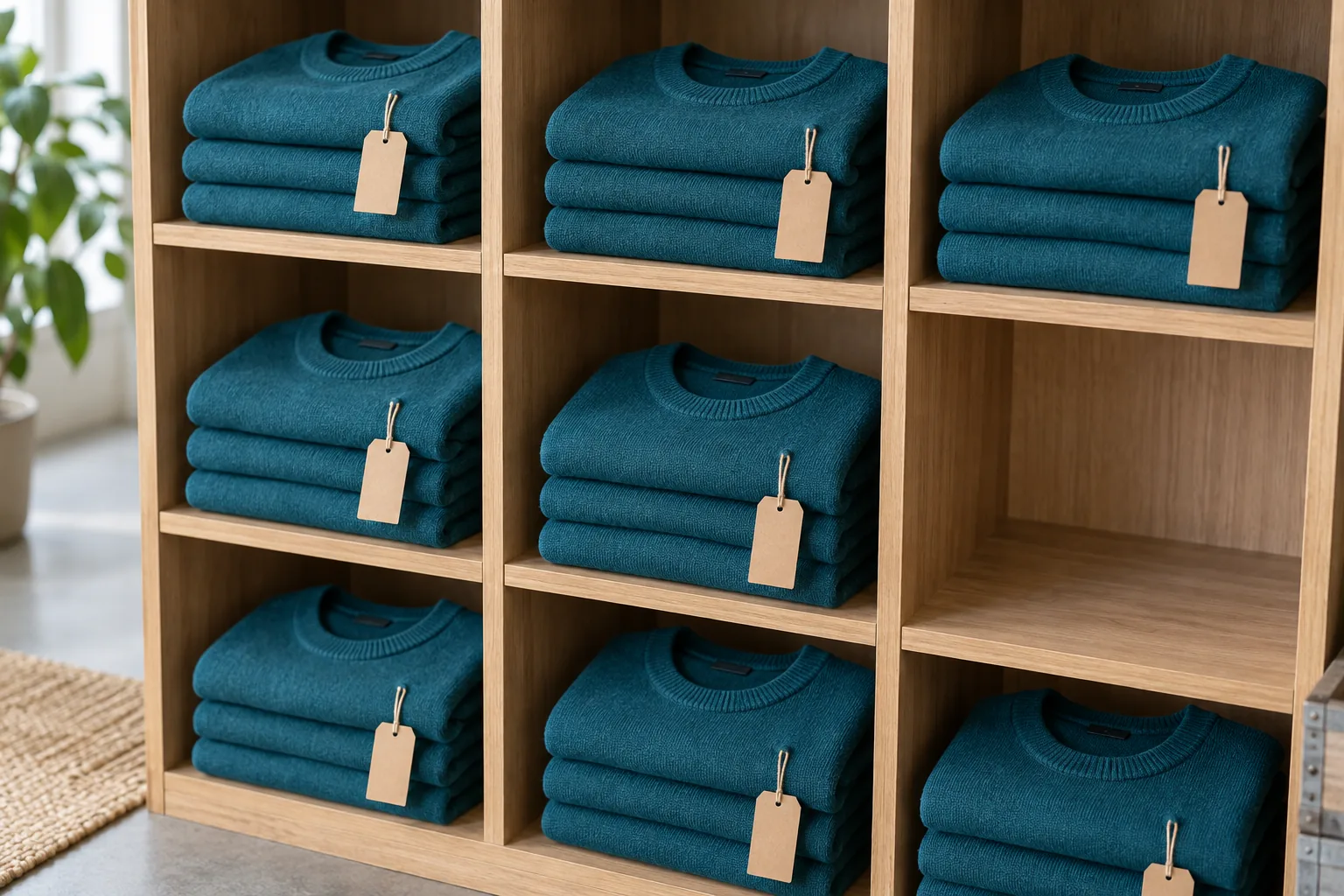
Ordering custom crewneck sweaters requires an inventory policy, not a single total quantity.
Forecast the first order by distribution unit
Break demand into named offices, events, teams or fulfilment channels. For each, record audience count, participation assumption, size ratio, issue date, buffer and replacement policy. Separate committed quantity from optional reserve.
Use employee preference data when available, but check whether it represents the actual population and intended fit. Compare with historical apparel issues. A generic industry ratio can be a placeholder, never unquestioned evidence.
The wholesale knitted sweaters SKU planning guide offers a useful approach to SKU breadth and depth even when the goods are distributed internally.
Design the reorder point and reserve
Define minimum service stock for common sizes, acceptable backorder for edge sizes and the review frequency. A reserve can cover onboarding, damage and exchanges, but excess customised stock may have little resale value.
Set reorder triggers using actual issue rate and supplier lead time. Include the time for current-lot approval, labels, packaging and transport. The MOQ and lead time framework helps separate nominal production time from the complete release path.
Track stock by program version, size and location. If a specification changes, decide whether old and new versions can be issued together or need a controlled transition.
Calculate the cost of a stockout and the cost of obsolescence by size. Common sizes may justify a service reserve, while rare sizes may use an agreed backorder route. Include yarn and component minimums in the decision. A nominal garment reorder quantity is incomplete when the supplier must buy an entire yarn lot or custom label run to serve it.
How Should Sampling and Bulk Release Work?
The approval route for custom crewneck sweaters should answer fit, brand and production questions in a deliberate sequence.
Build samples around decision gates
Begin with yarn and logo technique trials when those choices drive cost or timing. Follow with a fit sample in the correct construction, then a representative size set. Use a pre-production sample with final yarn, branding, labels and packing.
Consolidate comments by function. Brand, HR, product, compliance and procurement should not send conflicting instructions directly to the factory. One program owner issues the approved response and maintains the revision.
The custom sweater sampling checklist supports sample identity, measurements and closeout. State whether an approval is final, conditional or rejected and name the remaining condition.
Release bulk through an evidence pack
The bulk release pack should include purchase order, final tech pack, measurement chart, approved sample code, yarn and colour reference, logo file and standard, label proofs, packing data, test status, size breakdown and delivery plan.
Quality teams should approve first-off output and inspect placement, workmanship, measurements, shade and packing during production. Use the quality control process to define defects and release authority.
Do not start irreversible work because an event date is urgent while critical inputs remain open. Record any at-risk authorisation with quantity, cost exposure and decision owner.
Confirm destination compliance in the release pack. For the United States, the FTC’s Care Labeling Rule is one relevant source. For the European Union, the official textile fibre names and labelling regulation provides another. The buyer should identify current requirements for every market and have final claims reviewed by the appropriate specialist.
How Should Distribution and Repeat Orders Be Controlled?
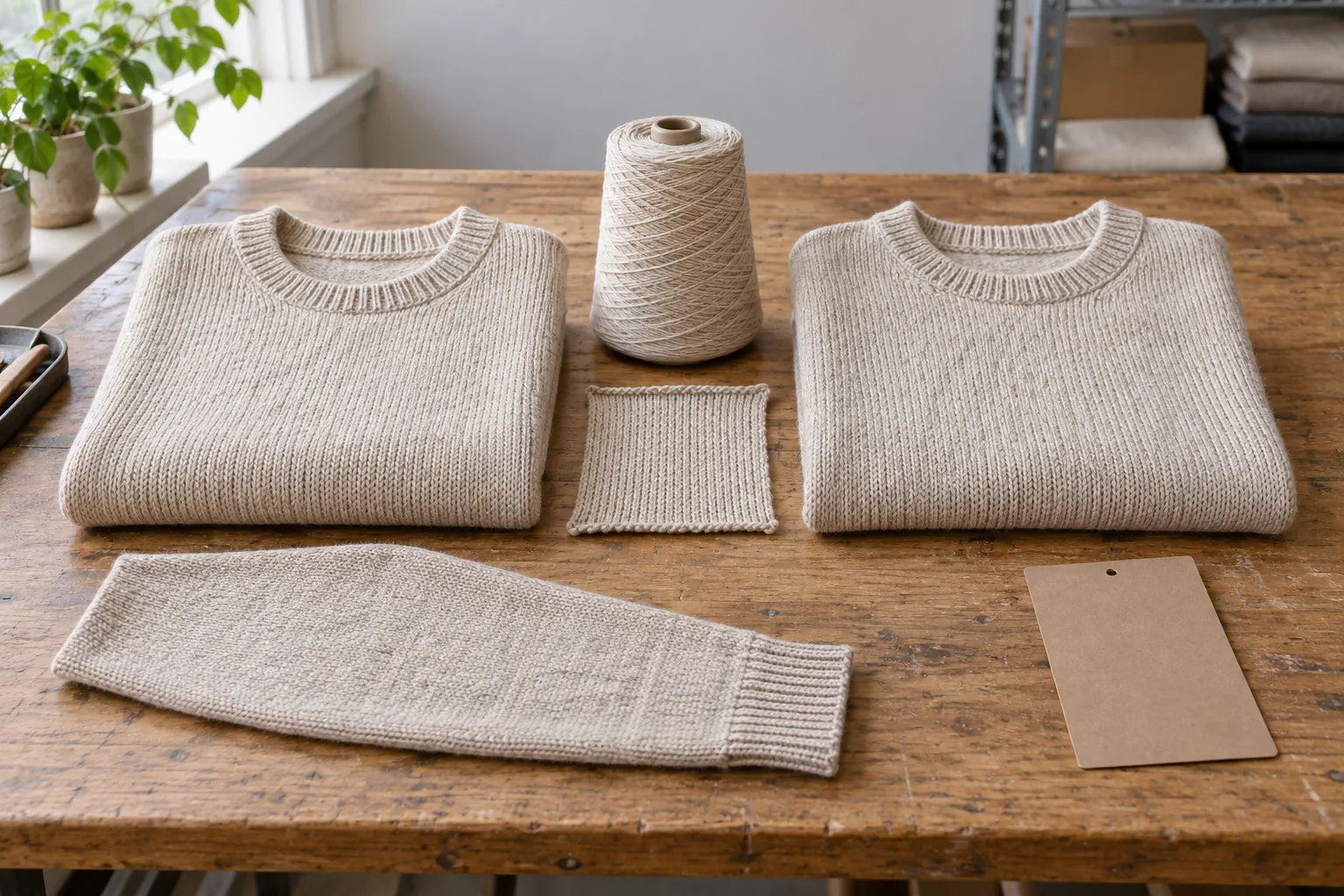
Distributing custom crewneck sweaters starts a service cycle. Delivery alone does not settle exchanges, remaining stock or replenishment.
Prepare packaging and recipient data
Choose folded dimensions, individual bag, size visibility, carton assortment and destination label. For multiple offices, define whether the factory packs by location or a fulfilment partner sorts after arrival. The retail packaging and barcode setup guide provides controls that also suit internal distribution.
Test one complete pack for scanning, handling and recipient experience. Avoid excessive packaging that adds labour and disposal without protecting the sweater.
Keep personalisation and recipient lists in an authorised system with limited access. The production record needs only the data required to make and route the order.
Run a packing pilot with realistic order data before bulk sorting. Scan or manually verify the size, destination and personalisation against the outer identifier, then open the pack and check the recipient experience. Time the operation and record error points. A pilot often reveals that a label is unreadable through the bag or that a name file lacks a unique order key.
Close the loop before replenishment
After distribution, collect issued quantities, size exchanges, defects, recipient feedback, unclaimed stock and remaining inventory. Separate fit dissatisfaction from fulfilment error and garment defect.
Before a reorder, compare the current material, colour, logo source, packaging and compliance needs with the retained standard. Issue a change note even when the commercial team expects an exact repeat.
Use the first order's actual size curve and issue rate to revise the next quantity. Keep the core product stable unless evidence supports a change, then communicate the transition to every stock location.
Set a review date rather than waiting for someone to notice low stock. The program owner should receive a compact dashboard by size, location and version, with supplier lead time and open changes. A scheduled decision gives the team time to qualify current yarn and reserve capacity before service stock becomes an emergency.
Give every replenishment a service objective. The team may choose immediate availability in core sizes, delivery within a stated window for all sizes, or campaign-only ordering with no standing stock. That choice determines buffer, reorder frequency and acceptable minimum cost. Without it, procurement is criticised both for excess inventory and for refusing uneconomic emergency orders.
Conclusion
A corporate crewneck program succeeds when brand identity and repeat-order control are designed together. Define the wearer and use case, lock the core product, isolate campaign variables and plan material continuity before the first bulk order.
Build quantity by distribution unit and size, approve the garment through clear gates and release production from one evidence pack. After distribution, use actual issue, exchange and defect data to improve the next order.
For custom crewneck sweaters, these records make differences between orders visible before stock is issued. They do not guarantee identical colour or fit without current-lot checks. Keep one owner accountable for the standard and use each distribution cycle to revise the next quantity. To discuss your garment, branding and delivery brief, contact the CNSweaters team.
Frequently Asked Questions
What yarn is practical for corporate crewneck sweaters?
Choose from wear conditions, care behaviour, budget and brand position. Merino blends, cotton blends and suitable synthetics can work. Approve composition, count, hand, pilling and care on the actual construction.
Should a corporate sweater use unisex sizing?
Only if the tested block serves the intended population. Define the silhouette, test representative wearers and sizes, publish clear garment measurements and monitor exchange data.
How much extra stock should be ordered?
Set reserve by onboarding rate, exchange policy, event uncertainty, lead time and minimum. Keep the reason for each buffer visible instead of applying one percentage to every size.
Can a small reorder match the first production colour?
It may, but yarn lot, dyeing and wash can create variation. Confirm current source and lot, approve a first-off garment and decide whether mixed stock must be visually compatible.
What records are essential for a repeat order?
Retain the approved garment, specification revision, measurements, yarn source and colour, logo production file, label and packing proofs, tests, size history, defect data and all approved exceptions.