 CN Sweaters
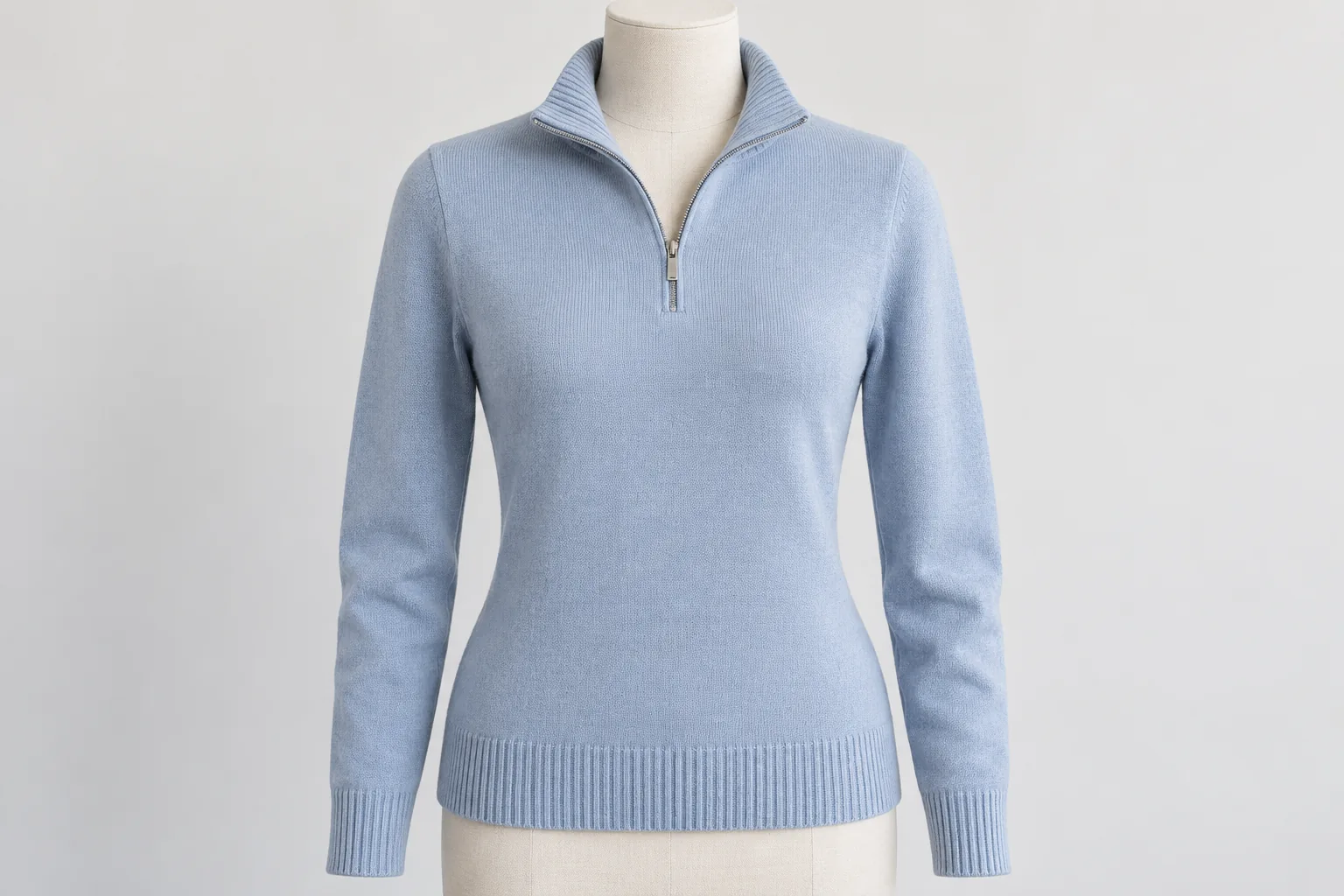
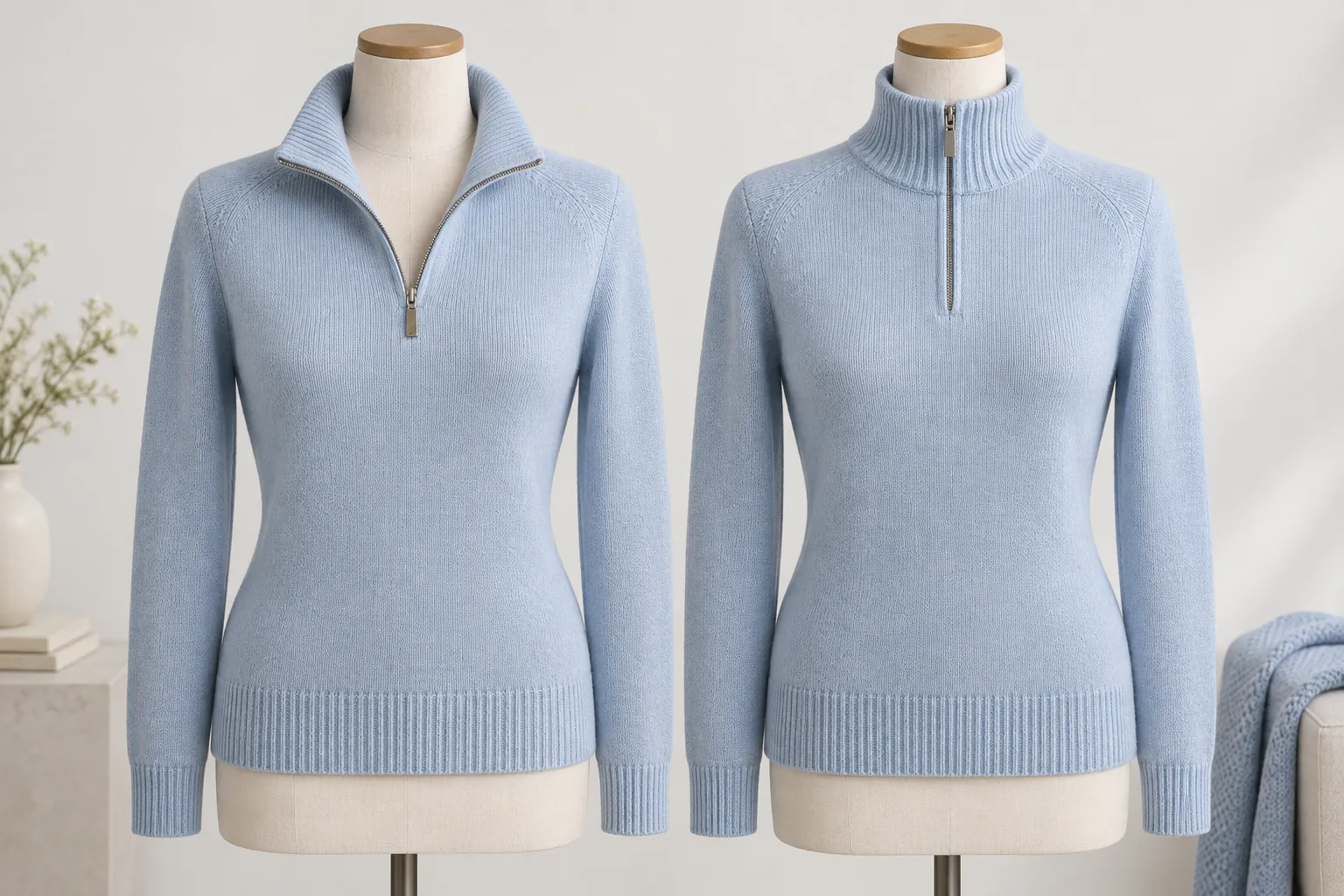
For a women’s quarter-zip order, procurement needs a size map showing which zipper item belongs to each body and collar group. A convenient shared component can put the placket endpoint or collar differently on neighbouring sizes even when chest measurements pass. Start from the accepted base and compare the opening’s geometry at those transitions.
What should the quarter-zip fit reference include?
Keep the quarter-zip fit and opening in one reference
Record the approved body block, intended underlayer, chest and waist relationship, shoulder, armhole and front/back lengths. Keep the collar, placket and zipper used in that sample attached to the same reference.
Identify the closure states covered by the fit decision. A sweater approved mainly with the collar open still needs a clear boundary for any closed operation the product offers. Record the opening position used in the reference views.
Define placket landmarks for quarter-zip fit grading
Choose reproducible points for placket start and end, zipper stops, collar height and opening. Connect them to the garment’s neck, shoulder and front-length references.
Do not mix nominal component length with a finished garment measurement. Define how the technician measures each length and where the zipper attaches within the placket.
Paired measurements can expose a left/right difference that an average hides. Use them where the opening’s alignment matters rather than treating the centre front as a single line with no width.
How should quarter-zip fit increments connect body and opening?
Set a quarter-zip fit rule for each changing relationship
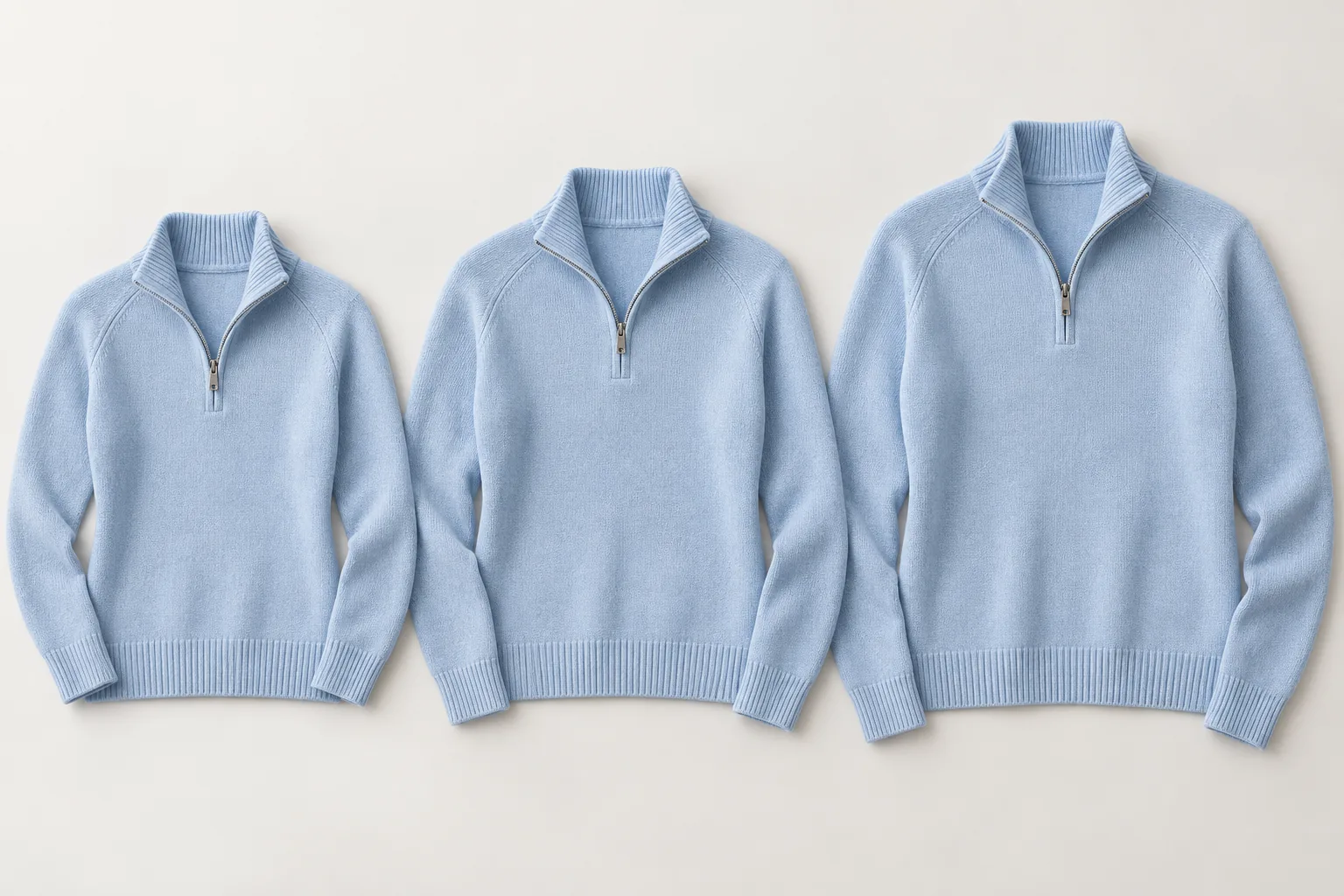
Write how chest, waist, shoulder, armhole, front length, collar opening and placket dimensions change from the accepted base. The rules should express the intended fit, not merely repeat the same increment in every row.
If the body gains width, show where the programme or pattern adds it. If front length changes, show how the opening and collar landmarks relate to that change. Those decisions need a programme or pattern explanation that the sample room can follow.
Identify each additional body block separately in the grade file. A retail size name does not establish that the same grade works across standard, petite, tall or other blocks.
Build a matrix that reveals component decisions
The following fields should be visible in the grading handover.
| Matrix group | Data by size | Relationship to verify | Missing-data risk |
|---|---|---|---|
| Body fit | Chest, waist, shoulder, armhole and lengths | Intended ease and silhouette | A size label replaces an actual fit rule |
| Neck and collar | Opening, collar geometry and attachment | Upper-body fit with the selected opening | Collar proportions drift unnoticed |
| Placket | Start, end, width and support route | Placement against neck and front length | Body and opening are graded independently |
| Zipper | Supplier item, nominal length and applicable size group | Finished attachment landmarks | A convenient component becomes an assumed fit solution |
| Programme revision | Size-specific shaping and knit references | Actual sample construction | A corrected sample lacks a reproducible instruction |
| Physical evidence | Sample ID, state, views and comments | What each reviewed size demonstrates | Unseen sizes are presented as checked |
When can quarter-zip fit grades share a zipper?
Identify the covered size group explicitly
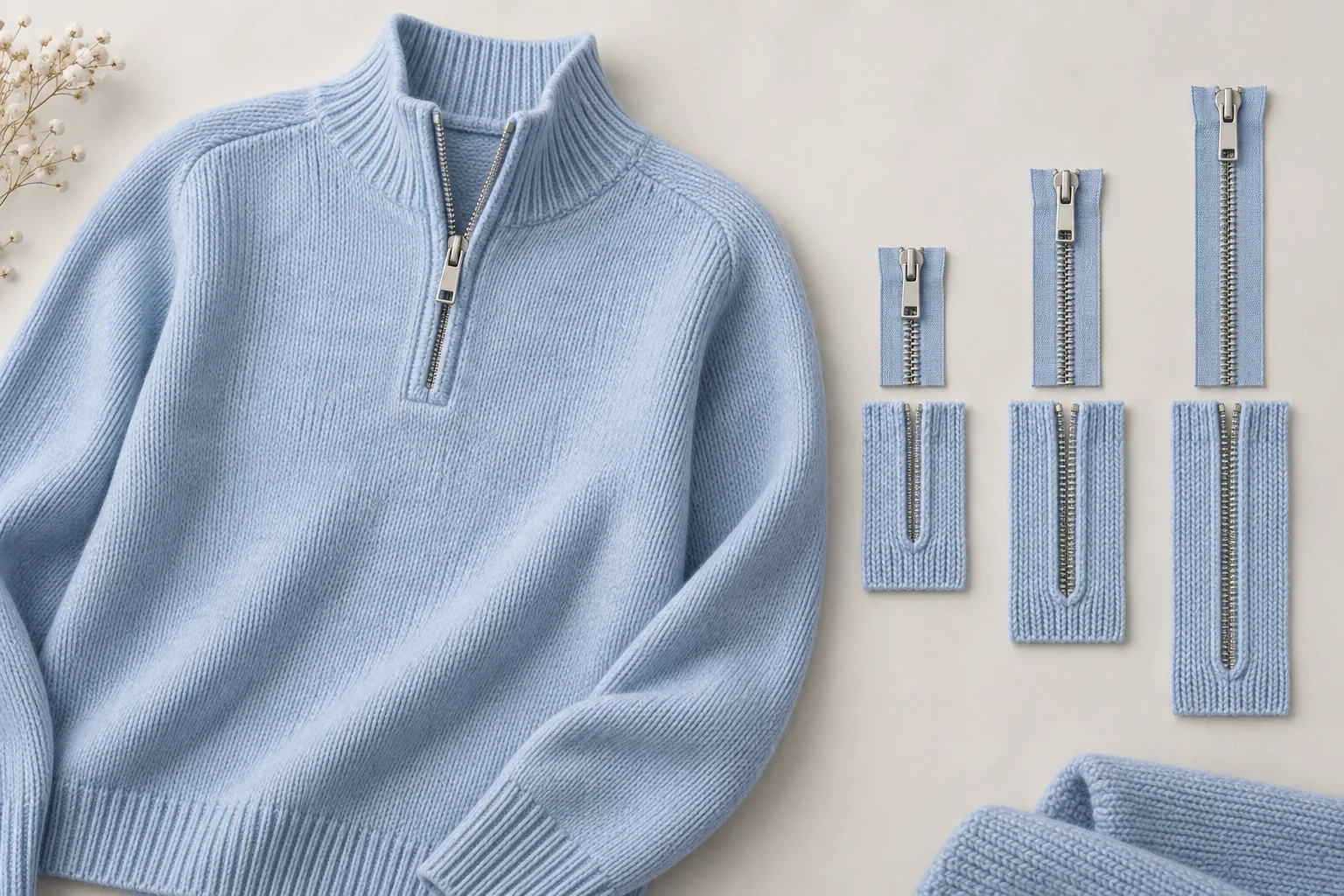
A shared component can be a valid construction choice if the surrounding placket and collar relationships work in the represented sizes. Record the exact zipper item and the sizes intended to use it.
Ask the technical team how the finished attachment and garment geometry accommodate that choice. A supplier’s stock availability may inform a proposal, but it cannot by itself establish that the resulting fit is acceptable.
If a proposed zipper change alters appearance or operation, assess the affected garment. The fact that another size already uses that item is comparison evidence, not automatic approval.
Compare quarter-zip fit at component transitions
Review the sizes on each side of a change in zipper length or construction. A transition can introduce a visual break even when both components work on their own.
Compare placket endpoint, collar position, front length and the open/closed silhouette. Ask whether the transition is intentional and whether the physical samples reproduce the specified relationship.
How should buyers review quarter-zip fit across the size set?
Use a repeatable quarter-zip fit sequence
Arrange the represented sizes in order and retain their sample identities. Review the named underlayer and closure states consistently, then compare front, side and back views.
Check the position of the placket against the bust and waist relationship. Preserve the natural front after ordinary movement instead of pulling it straight before every image.
Identify the actual wearer or form used for each size. If the reviewer uses a substitute, state which fit questions that substitution leaves unresolved.
Compare adjacent sizes as well as endpoints
A smooth smallest-to-largest progression can hide a single incorrect intermediate value or component. Review neighbouring samples and the grade instructions that produced them.
Look for an abrupt change in collar opening, shoulder relationship, sleeve position, front length or placket endpoint. Measure the relevant points before attributing the appearance to the zipper alone.
What do operation and care checks add?
Verify the installed opening in represented sizes
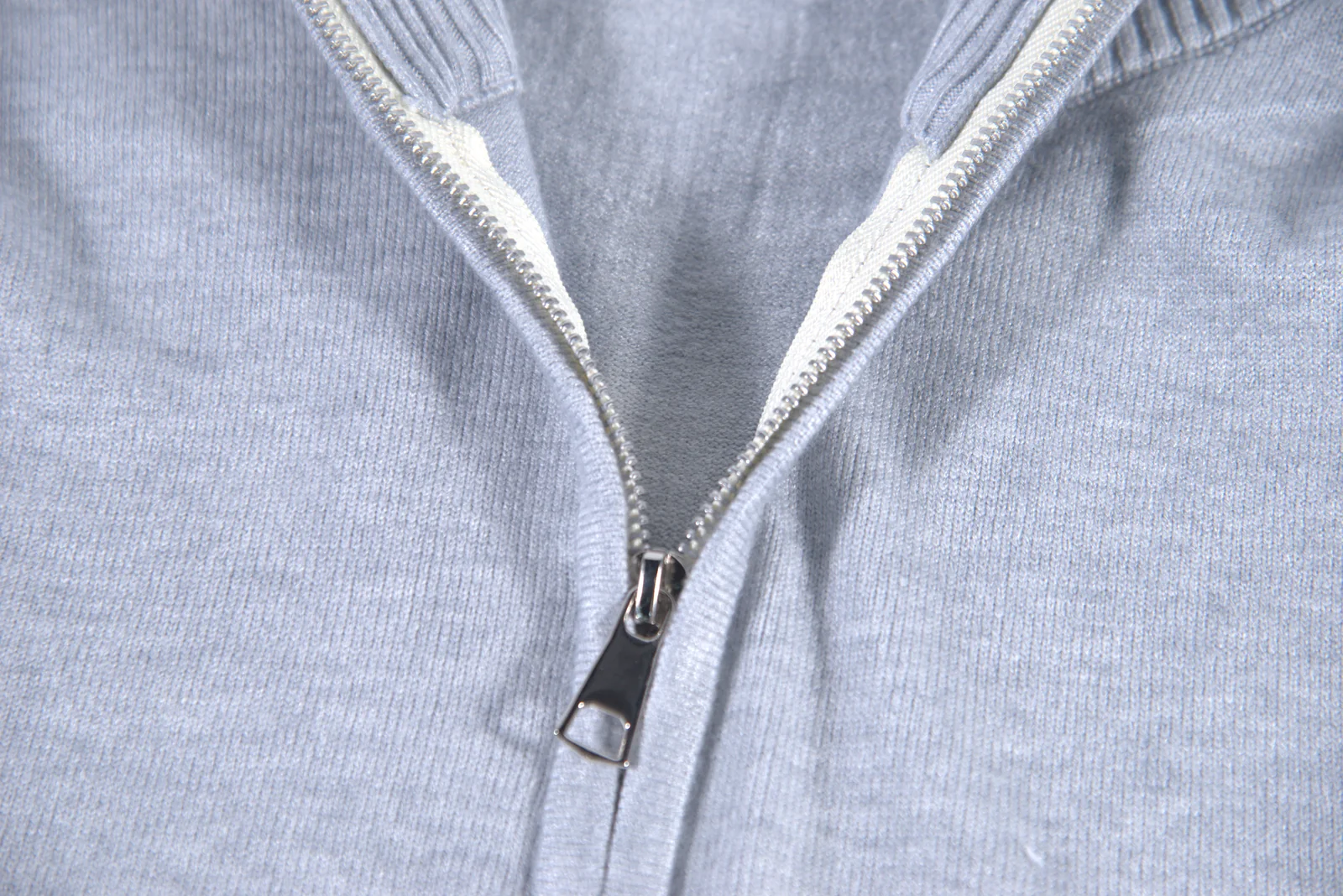
Observe the zipper through the product’s required positions without forcing the knit or rearranging the collar. Note whether operation changes the front or neck relationship.
A component that operates acceptably on a loose test piece may interact differently with a graded garment. Keep the actual size and assembly in the operation record.
Do not request a separating-zipper insertion check for a closed-end short opening. Review the function present in the selected component.
Compare equivalent finished conditions
Record the selected treatment, drying support, finishing interventions and rest before the size comparison. A freshly pressed base sample and a differently treated size set do not isolate grading effects.
| Finding | Question to resolve | Action | Evidence needed before closure |
|---|---|---|---|
| Placket endpoint changes abruptly between neighbours | Matrix, programme or component mismatch | Hold the affected size transition | Corrected chart and physical comparison |
| Collar opening no longer matches the intended fit | Collar grade versus upper-body requirements | Revise the connected rule | Neck, shoulder and collar views |
| Front drags only when fastened | Front reach, fit or assembly interaction | Investigate the affected size | Comparable open/closed records |
| Shared zipper works in one covered size only | Validity of component grouping | Revisit the mapping | Samples representing the proposed group |
| Care changes the grade relationship | Input or treatment representation | Keep affected variants pending | Matched treatment and dimensional records |
| Sample correction is absent from the programme | Reproducibility | Update and confirm the instruction | Revised programme and first-off evidence |
For a reorder, compare changed yarns, components, programmes and fit assumptions against that record. Reuse the parts still represented and reopen the dependencies actually changed.
Send the accepted base sample, size matrix, zipper mapping and unresolved neighbouring-size views when you contact CNSweaters about women’s quarter-zip grading. Specify the body, collar or endpoint relationship the next size sample must demonstrate.
Frequently Asked Questions
Must zipper length increase in every size?
No universal rule requires it. A shared component needs an explicit size mapping and evidence that the surrounding garment relationships work.
Can a base-size approval replace a size-set review?
It establishes the starting fit. It does not by itself show how the chosen grade and component transitions behave.
Should a taller body length move the placket endpoint?
The product’s grade rules must answer that question. Record the intended relationship rather than allowing one field to follow another automatically.
What if the supplied zipper differs from the approved item?
Identify the substitution and assess the affected fit, operation and appearance before applying the earlier grade conclusion.
Can one corrected sample close the whole range?
Only for the scope it actually represents. Keep any unrepresented size, body block or component group outside the conclusion.