 CN Sweaters
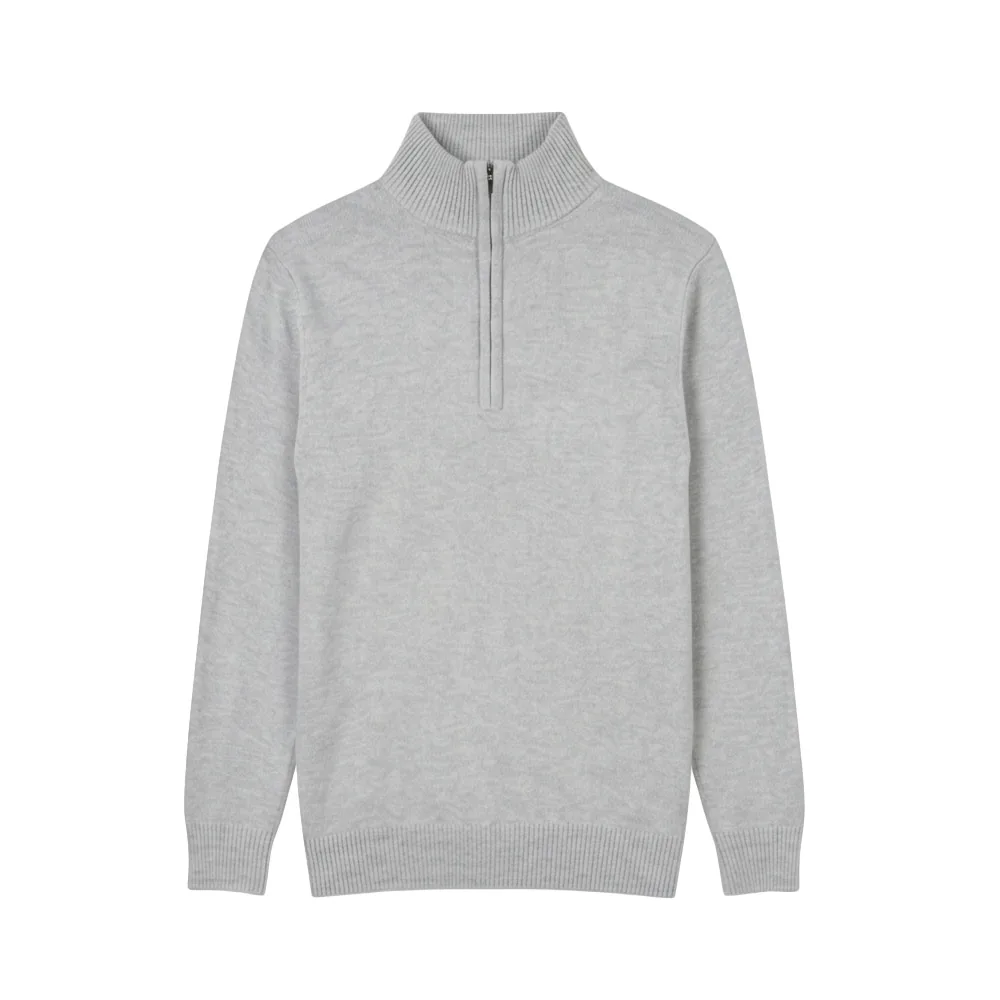
A cashmere quarter zip has to feel soft, yet its collar still has to stand up. Review the required softness and collar support together on the sample. The knit body relaxes and drapes, while the zipper tape stays firm. If nobody plans the join between them, the collar can fold flat beside the zip, the placket can wave, or the top stop can twist.
Define the open and closed collar shape, then compare the placket, support and zipper in the actual cashmere quarter zip assembly. For styles already in our range, see our zip-up and hooded knitwear category.
Why a cashmere quarter zip collar collapses
Most collar problems start with a mismatch. Cashmere and cashmere blends have a soft, open hand, and they relax after washing and steaming. The zipper tape may respond differently from the knit; compare the selected component and attachment. So the collar sits between a soft fabric and a stiff component, and it takes load from both.
In practice, we see four common faults. First, one side of the collar leans outward when the zip is open. Second, the placket ripples because the knit grows longer than the tape. Third, the top stop twists and pushes one collar tip forward. Finally, the collar looks fine when zipped but folds down as soon as the wearer opens it.
Soft by design or simply unsupported?
Some brands want a relaxed, rolled collar. That is a valid design choice, and we can knit it. However, a soft look is different from a collar that has no support at all. We ask buyers to describe the intended look in both states: zipped to the top and fully open. A photo of a reference garment helps more than words such as “soft” or “structured”.
Define the cashmere quarter zip collar before sampling
We start with a clear collar spec. Without one, the knitting program and the linking team have to guess. The spec should cover these points:
- Collar height at center back and at the front edges
- Collar type: stand, fold-over or double-layer
- Neck opening and back-neck width
- Zipper length, top stop position and bottom stop position
- Placket width and how the placket joins the body
- The main retail state: zipped, half open or fully open
Next, we agree on how the collar should look open and closed. A stand collar that looks sharp when zipped can still flop when open. Meanwhile, a fold-over collar that drapes well open can pull tight at the chin when closed. We review both states on every sample.
Materials and construction for a cashmere quarter zip
The yarn sets the limits for the collar. Two yarns sold as cashmere can differ in count, twist and finish. As a result, a collar program that works on one yarn may not work on another. We tie every collar approval to the actual yarn item and lot we used on the sample.
Gauge matters as well. On 12G or 14G, a single-layer rib collar can look thin and may need a double layer. On 7G, a single milano rib often gives enough body. Because we run 70 computerized flat knitting machines from 3G to 14G, we can test both routes before bulk.
Placket and collar support options
The support proposal may use knit structure, a facing or a separate reinforcement. Identify the actual route before comparing samples. Common options include:
- A double-layer collar knitted as one tube and folded
- A tighter rib or milano structure in the collar only
- A knitted facing behind the zip that spreads load into the body
- A soft woven or knitted tape along the placket edge
Each option changes the hand. For example, a knitted facing adds a little weight at the neck, while a tape keeps the placket straight but can show through a fine gauge. Therefore we sample the option first and let the buyer judge the trade-off.
Choosing the zipper for a cashmere quarter zip
The zipper should match the weight of the knit. A heavy zipper can load a fine cashmere front, so assess its weight and support in the assembled sample. So for most fine-gauge styles we suggest a light coil or a slim molded zip. We also check the puller weight, the tape color and how far the tape runs into the collar.
Record the tape endpoint as a construction landmark. When the tape stops too low inside the collar, the collar edge has nothing to hold it. On the other hand, when the tape runs too high, it can poke through the fold. We mark the tape end on the sample and keep it in the spec.
How we review a cashmere quarter zip sample
We put the sample on a form or a fit model and zip it to the top. Then we open it to the half and fully open positions. At each stage, we check the stand or roll, the front edges, the top stop and the placket. We also photograph the sample before anyone touches or steams it.
After that, we look inside. A clean outside can hide a facing that shifted or a bulky join near the top stop. Our quality control team checks the linking, the seam allowances and the tape attachment on every collar sample.
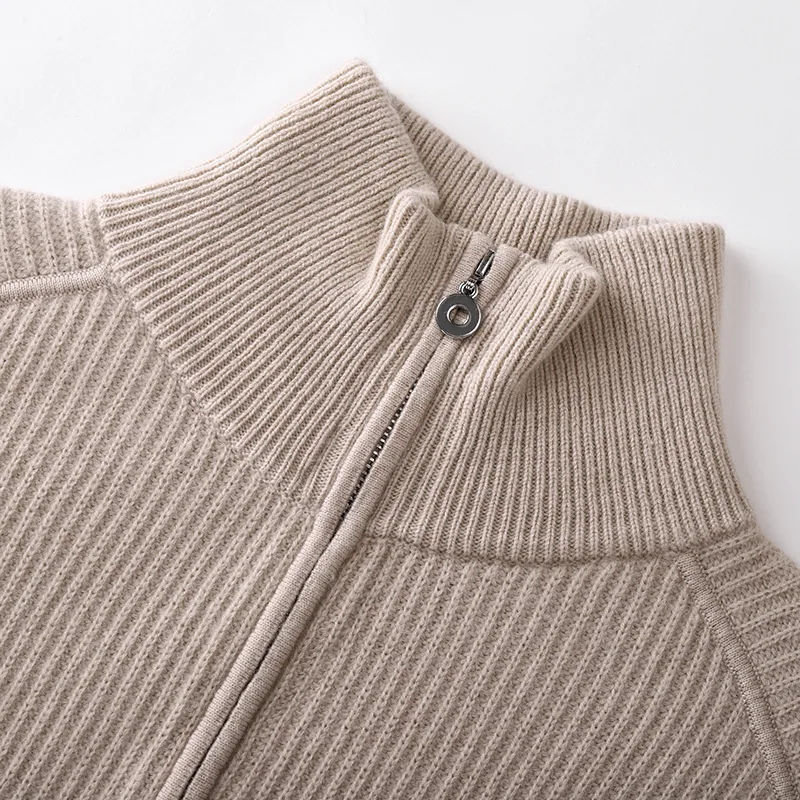
Checking wear and zipper operation
Next, we put the sweater on and take it off the normal way. The opening stretches as it passes over the head, so we let the garment rest and then check whether both collar edges return to height. We also run the zip up and down several times. The slider should move without catching the knit or wrinkling the placket.
Measuring against the spec
We measure collar height, neck opening, front edge lengths and placket length on both sides. Averages can hide a problem, so we record left and right separately. For general measurement terms, many buyers refer to ISO 18890 for knitwear measurement points. However, the collar-to-zip points are specific to your style, so we agree them with you.
Washing, finishing and bulk control for a cashmere quarter zip
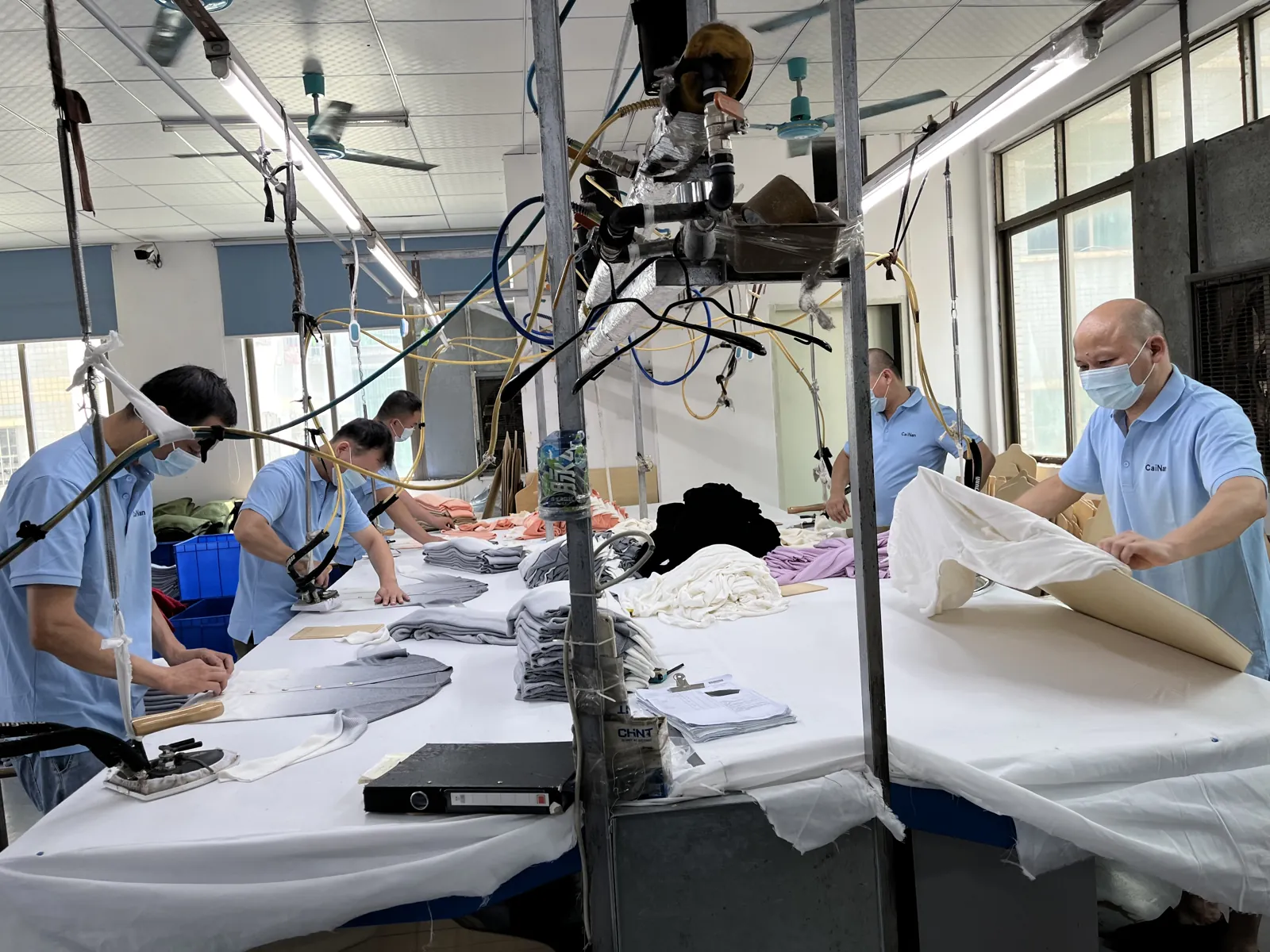
Cashmere changes after washing and pressing. The collar may soften, and the placket may relax more than the tape. So we review the collar after the agreed care method, not only straight off the pressing table. We wash and press in-house, which lets us repeat the same finishing route on the sample and in bulk.
When the sample passes, we lock the approved version. That includes the yarn lot, the collar program, the facing, the zipper item and the finishing steps. If any of these change later, we re-check the collar rather than assume it still works.
Grading a cashmere quarter zip collar across sizes
Collar height usually stays close across sizes, while the neck opening and placket grow. Consequently, a collar that stands well on a medium can look short on an XXL. We review at least the smallest and largest sizes before bulk. For fiber, yarn and finishing checks, read our guide to cashmere sweater manufacturing checks.
Small runs and timing
Before quoting a cashmere quarter zip, identify the exact yarn blend, collar construction, zipper and approved open/closed fit. Review the proposed sample after care and resting because a collar that stands when freshly pressed may not keep the same shape. Ask for current product-certification evidence covering the actual yarn and accessories; a social-audit report concerns the supplier, not product content. The chosen materials and required sample rounds determine this order’s quantity and timing.
Conclusion
Keep the cashmere quarter zip’s chosen support, zipper item and rested collar views with the approved sample. Record any accepted soft roll explicitly, so a future reviewer does not tighten the construction to correct an intended design feature.
Send us your quarter-zip sketch or tech pack and we will review the collar support before sampling.
FAQs
Does a cashmere collar need to stand up stiffly?
No. A soft roll can look right for many styles. Still, the collar should look balanced on both sides and return to shape after wear.
Which zipper suits a fine-gauge cashmere quarter zip?
Compare suitable zipper weights and types on the actual placket. A light coil or slim molded proposal may be useful, but the assembled sample must support the final choice.
Can one collar program work for every size?
Often the collar height stays similar. However, the neck opening and placket grow, so we check the smallest and largest sizes before bulk.
What is the MOQ for a cashmere quarter zip?
The published starting MOQ is 50 pieces per color per size. The selected cashmere blend may have its own yarn minimum; confirm that and the colour split before requesting a firm quote.