 CN Sweaters

A cashmere cardigan should be qualified before price comparison, because the largest sourcing risks usually sit inside fiber content, yarn selection, gauge, placket stability, testing, and bulk control. For premium buyers, a soft sample photo is not enough; the real question is whether the supplier can make the same cashmere cardigan consistently across sizes, colors, delivery batches, labels, and reorders.
Search terms such as cashmere sweater, cashmere cardigan sweater, cardigan sweater cashmere, cashmere cardigan women, ladies cashmere cardigans, and mens cashmere cardigan may describe retail demand, but they do not prove manufacturing capability. B2B buyers developing a luxury cashmere cardigan, private label cashmere range, or wholesale cashmere cardigan program need to ask sharper questions before sampling: What is the fiber composition? What is the yarn count? Which gauge and stitch density fit the price band? How will the placket hold its shape? What testing and quality inspection will confirm that bulk goods match the approved sample?
CN Sweaters develops knitted cardigans for buyers who need structure, wearability, and repeatable bulk results, but a premium project still needs clear decisions from the buyer side. The more precise the inquiry, the easier it is to separate a real knitwear manufacturer from a supplier that only quotes low prices.
Why Should Buyers Question Cashmere Before Price?

Price should come after composition, yarn quality, and production risk are clarified. In cashmere knitwear, two cardigans can look similar in photos while using very different fibers, yarn structures, stitch densities, and finishing methods. A low quote may simply reflect a lower cashmere percentage, loose knitting density, weaker trims, or limited testing.
Composition Claims Need Evidence
The first question is not “How much is the cashmere cardigan?” It is “What exactly is inside the yarn, and can it be verified?” The U.S. Federal Trade Commission explains that the term cashmere applies only when the fiber comes from the fine dehaired undercoat of the cashmere goat, meets an average diameter requirement of no more than 19 microns, and meets limits on coarser fibers according to the FTC cashmere labeling guidance. That matters for brands selling into regulated markets, because a label claim such as 100% cashmere or cashmere blend is not just a marketing phrase.
Ask the supplier to confirm whether the proposal is 100% cashmere, cashmere blend, wool cashmere blend, recycled cashmere blend, or another mixed fiber plan. For custom cashmere sweater and cashmere private label projects, the quote should show percentages, not vague descriptions such as “premium cashmere feel.” If the supplier cannot state the composition clearly, the buyer cannot assess retail positioning, margin, care label risk, or customer trust.
Blend Choices Change Positioning
A luxury cashmere sweater may require a different yarn plan from an entry premium cardigan. Pure cashmere can support a higher retail story, but it also raises material cost and requires careful control of pilling, shrinkage, color, and garment handling. A wool cashmere blend may improve resilience and price accessibility, while synthetic blends can change handfeel, recovery, and perceived value.
The CCMI facts on cashmere, camel hair, and wool describe cashmere as a fine undercoat fiber that can be processed through collection, sorting, scouring, dehairing, spinning, and knitting or weaving. That process explains why fiber quality cannot be judged only by surface softness. Premium buyers should ask for yarn composition, yarn supplier information when available, color lot plan, and whether fiber content testing can be arranged before bulk production.
Which Yarn Count Gauge And Weight Fit The Target Price?

Yarn count, gauge, stitch structure, and garment weight must match the target retail price and wearing scenario. A cashmere cardigan women collection for light layering, a mens cashmere cardigan for office wear, and a luxury cashmere cardigan for winter merchandising may need different gauge directions even if all are called cashmere cardigans.
Match Gauge To Retail Promise
Gauge affects fabric density, visual fineness, production speed, and cost. A chunky 3GG or 5GG cardigan may use more yarn and create visible texture, while 12GG or 14GG can feel refined but requires finer yarn, tighter control, and more careful measurement management. For buyers comparing cashmere sweater and related knitwear categories, gauge should be discussed together with yarn count, stitch type, garment weight, and size range.
CottonWorks notes that sweater manufacturing commonly uses weft knitting, including flat-bed machine methods, and that gauge and construction choices influence how panels, shaped garments, and whole garments are produced in sweater manufacturing methods. For buyers, this means gauge is not a decoration choice. It affects density, drape, seam behavior, lead time, and whether the finished premium cardigan can hold its shape after wearing.
Compare Development Variables Before Sampling
Before paying for samples, ask the knitwear supplier to map the target product against realistic variables.
| Sourcing question | What the buyer should confirm | Why it matters in bulk |
|---|---|---|
| Fiber plan | 100% cashmere, wool cashmere blend, or other blend | Controls label accuracy, cost, handfeel, and retail positioning |
| Gauge | 3GG, 5GG, 7GG, 9GG, 12GG, or 14GG direction | Changes density, drape, production speed, and size stability |
| Garment weight | Estimated weight by sample size | Helps judge warmth, material cost, and perceived value |
| Stitch structure | Jersey, rib, cable, Milano, jacquard, or mixed stitch | Affects stretch, thickness, pilling risk, and placket balance |
| Price band | Target landed cost or ex-factory range | Helps the factory avoid overdeveloping or underbuilding the style |
The table is useful because it moves the conversation from a generic custom cardigan request to a controlled development brief. A serious sweater factory should be able to explain why one option fits the buyer’s target market better than another.
How Should A Cashmere Cardigan Structure Be Checked?
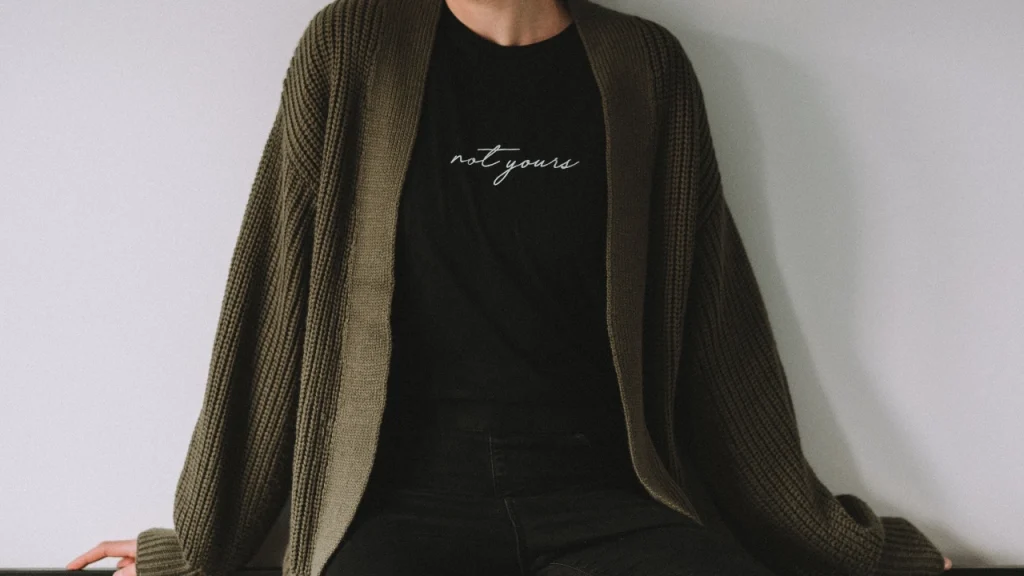
A cardigan fails more often at the opening, shoulder, cuff, hem, and button line than in the body panel alone. Premium buyers should treat the front structure as a core engineering area, especially for custom cardigan sweaters using soft cashmere yarns.
Placket Stability Comes First
The placket determines whether the garment looks premium after hanging, fitting, wearing, and packing. A cashmere cardigan with a weak front edge may twist, wave, stretch downward, or pull around buttonholes. For custom cardigan sweaters, the buyer should ask whether the placket is linked separately, knitted integrally, tubular, reinforced, or finished with another method.
Questions to ask before sampling include:
- How will the placket be constructed for this yarn and gauge?
- Will the buttonholes be stable enough for repeated opening and closing?
- Will the button weight cause pulling?
- Can the front edge stay flat after washing, steaming, and hanging?
- Is the placket tension checked against the approved sample?
Softness can be attractive at sample review, but excessive looseness can become a bulk problem. A luxury cashmere knitwear project needs enough density and structure to support daily wear, not only a soft first touch.
Fit Points That Move In Bulk
Cashmere and cashmere blend knitwear can shift during knitting, linking, washing, steaming, and packing. The high-risk points are shoulder width, sleeve length, cuff opening, hem sweep, body length, placket length, pocket placement, and button spacing. If the sample is approved without a measurement file, the supplier and buyer may later disagree about what “correct” means.
Ask for a full size spec, tolerance proposal, graded measurements, and measurement method. For bespoke cashmere sweaters or private label knitwear, the approval file should include front and back photos, detail photos, lab dip approval, trim approval, care label wording, packaging instruction, and measurement comments. This protects both sides when moving from proto sample to PP sample and bulk order.
What Sample Tests Should Be Approved Before Bulk?
Sample approval should include performance checks, not only appearance comments. For a premium cardigan, handfeel, color, shrinkage, pilling, seam recovery, button security, and measurement stability all affect whether the product can support a high retail price.
Handfeel Is Not A Test Result
Handfeel can change after washing, brushing, steaming, packing, and bulk yarn lot changes. A sample may feel soft because it has been heavily finished, but that does not prove long-term wearability. Buyers should ask how the handfeel is achieved and whether the same finishing process can be repeated during bulk production.
CottonWorks explains that lab dips and knit-downs help buyers review color, construction, stretch, drape, and pattern execution before fabric or garment production moves forward; it also notes that final handfeel may not be fully judged at the knit-down stage because final finishing has not yet happened in the knit-down and lab dip approval process. This is directly relevant to custom cashmere, because buyers should not approve bulk only from a small swatch if the final cardigan depends on washing, steaming, brushing, or special finishing.
Build A Clear Approval File
A premium buyer should ask the supplier to define which tests are required for the category and market. Intertek lists textile services that include fiber identification, care label support, dimensional stability, colorfastness, strength, abrasion, and pilling resistance under fiber identification and performance testing. For a cashmere cardigan, the most relevant checks usually include fiber composition, dimensional change after washing or dry cleaning method, pilling resistance, colorfastness to rubbing, colorfastness to washing or dry cleaning, button attachment, seam strength where applicable, and appearance after care.
The buyer should also confirm whether testing is done on yarn, fabric panel, garment sample, or bulk goods. These are not interchangeable. A yarn report can support material identity, but it does not prove garment shrinkage. A garment wash test can show dimensional behavior, but it may not verify fiber composition. For premium buyers, the safest approach is to match the test to the risk.
How Do MOQ Lead Time QC And Packing Decisions Protect Bulk?
MOQ, lead time, quality control, and packing are connected. If they are discussed separately, a custom cashmere sweater program may look feasible at quotation but become unstable during production.
Minimums Follow Splits And Yarn Reality
MOQ is affected by yarn type, color count, size ratio, stitch complexity, trim selection, and whether the yarn is in stock or custom dyed. CN Sweaters explains that MOQ and lead time are influenced by style, color, size ratio, yarn, gauge, stitch complexity, trims, packaging, and production scheduling. For cashmere private label projects, this means a buyer asking for five colors, seven sizes, custom buttons, special labels, and low quantity per SKU should expect different planning from a single-color core cardigan.
Lead time also depends on when the project enters the calendar. Sampling, lab dips, yarn booking, PP sample approval, bulk knitting, linking, washing, finishing, inspection, packing, and shipment all need time. A practical RFQ should include target delivery date, launch window, size breakdown, color plan, packaging needs, and testing requirement. Without these details, the supplier may quote quickly but revise the plan later.
Quality Control Must Start Early
A strong quality control system checks raw materials, measurements, stitch integrity, linking, finishing, visual appearance, safety, and packing before shipment. For cashmere cardigan programs, buyers should ask whether the factory records yarn lot, color lot, approved sample comments, measurement standards, inline inspection results, and final audit findings.
Intertek describes textile and apparel inspection as a process that can include pre-production checks, during-production inspection, garment inline inspection, before-delivery inspection, packaging review, labeling checks, workmanship assessment, and carton verification in textile and apparel inspection stages. For buyers, the lesson is simple: final inspection alone may find defects, but it may be too late to fix yarn lot problems, placket distortion, shade variation, or size grading errors.
Packing is also part of quality. Ask how the cardigan will be folded, whether buttons are protected, whether tissue or inserts are needed, how polybags are labeled, how carton weight is controlled, and whether carton shade separation is required. A luxury cashmere sweater can lose perceived value if it arrives creased, compressed, mislabeled, or mixed by shade.
Conclusion
Turn Questions Into A Sourcing Plan
A cashmere cardigan sourcing decision should be based on evidence, not only quote speed or sample softness. Premium buyers need to confirm fiber composition, blend logic, yarn count, gauge, garment weight, placket construction, fit points, testing, MOQ, lead time, trims, labeling, packing, and quality inspection before bulk approval.
The goal is not to make development slower. The goal is to prevent small unresolved issues from multiplying during bulk production: weaker handfeel, color inconsistency, stretched plackets, loose cuffs, uneven hems, visible pilling, shrinkage, incorrect labels, delayed shipment, and loss of premium brand trust. Review the full product range and discuss your project through the OEM/ODM knitwear service if you need factory input before sampling.
Send your cashmere cardigan design, target price band, fiber composition request, gauge direction, size range, color plan, MOQ target, labeling request, testing requirement, packaging requirement, and delivery timeline to review a practical premium sourcing plan with the Dongguan Cainan Clothing Co., Ltd. team.
FAQ
Practical Buyer Answers
What MOQ should I expect for a custom cashmere cardigan?
MOQ depends on yarn availability, color count, size ratio, gauge, stitch complexity, trims, and whether the project needs custom dyeing or private label packaging. A single-color wholesale cashmere cardigan is usually easier to plan than a multi-color bespoke cashmere program with many sizes.
How should I choose between 100% cashmere and a wool cashmere blend?
Choose 100% cashmere when the retail story, price band, and testing budget can support it. Choose a wool cashmere blend when you need a balance of softness, resilience, structure, and cost control. The label percentage must match the real composition.
What should be included in a cashmere cardigan sample approval?
A practical approval should include garment measurements, fit comments, yarn composition, gauge, stitch structure, lab dip, handfeel direction, placket review, button and trim approval, shrinkage or care result where required, and packaging notes.
Why can a soft cashmere cardigan still fail in bulk?
Softness does not prove density, fiber authenticity, pilling control, placket strength, color consistency, or wash stability. A garment can feel good at sample stage but perform poorly if the yarn lot, stitch density, finishing process, or measurement control changes in bulk.
Can private label cashmere projects include custom packaging?
Yes, private label cashmere and custom knitwear projects can include neck labels, care labels, hangtags, stickers, polybags, and carton requirements. These should be confirmed before bulk planning because labels, packaging, and barcode rules affect lead time and final inspection.