 CN Sweaters
Private label knitwear neck labels look like a small purchasing item, yet they touch branding, wearer comfort, sewing quality and stock control. A buyer who sends only a logo file leaves the factory to guess the finished width, fold, ground colour, yarn quality, edge treatment and attachment.
Those guesses become expensive when a woven wordmark loses detail, a stiff label scratches the neck, or bulk carries an old brand revision. The missing handoff is between a screen design and a physical component that must survive sewing, finishing and wear.
This guide follows that handoff from brief to repeat order. It concentrates on the brand neck label, sometimes called the main label or back-neck label. Fibre, origin, care and responsible-party statements may sit on another label and remain subject to destination requirements. A brand label must never be assumed to replace them.
What Must the Brief for Knitwear Neck Labels Contain?
A useful brief answers the label maker’s production questions before a price is accepted. It also gives the sweater factory one controlled reference for ordering, receiving and sewing the component.
Define the physical label, not just the logo
State the finished width and height, fold type, sew margin, base material, ground colour, logo colour, edge finish and intended face. Use millimetres and show whether dimensions are finished or include folds and seam allowance. For a centre-fold label, the open artwork and fold line must show how the finished size is made.
Name the construction, such as woven damask, printed satin, cotton tape or another confirmed option. “Premium label” is not a construction. Ask the supplier to identify yarn or substrate, density, cutting method and any coating used to control fraying. These details affect softness, colour and the minimum detail that can be reproduced.
Add front, back and folded views. A tiny diagram showing fold direction and stitch lines prevents more errors than a long email. Use the custom knit sweaters tech pack checklist to connect the label drawing to the correct style and revision.
Separate brand data from statutory data
List exactly what the neck label carries. It may show a wordmark, logo, size or short brand line. Then identify which separate component carries fibre content, care instructions, country of origin and the responsible business identity required for the destination.
For the United States, FTC textile guidance says most covered products need fibre content, country of origin and the identity of the manufacturer or another responsible business. The FTC’s detailed Textile and Wool Acts labelling guide explains placement, accessibility and record expectations. Great Britain’s textile labelling guidance and the EU’s textile fibre labelling regulation illustrate why a buyer must check the actual sales market rather than copy one global label.
Create a label map listing every component, its content, location and approval owner. The care labels and fibre content guide covers those statutory and care fields in more depth. Keep this neck-label brief focused on the branded component while checking that the complete garment label set works together.
Which Label Construction Suits the Sweater when managing knitwear neck labels?
The best construction carries the artwork clearly and sits comfortably against the selected knit. Choose it against a physical sweater, not a detached supplier swatch.
Compare woven printed and soft-tape routes
Woven labels build the artwork from yarns. They can give a durable, familiar finish, but very small text, fine curves and tonal effects may simplify when translated into a weave. Printed satin or similar substrates can reproduce finer graphics, although surface feel, print durability and cut edges still need approval. Soft tapes can suit understated branding but may limit colour and detail.
Ask for two views of each option: a clean component sample and the label sewn into the actual neckline. Rub the back and edges with a fingertip, then wear the sample. A label that feels acceptable on a board may curl or scratch once the collar moves.
Use this comparison to narrow the route:
| Construction choice | Useful when | Main approval risk |
|---|---|---|
| High-density woven | crisp wordmarks and durable branding | fine details fill in or colours shift |
| Printed satin | small type or complex artwork | print wear, shine and cut-edge feel |
| Soft woven tape | quiet branding and direct skin contact | lower edge definition or dimensional movement |
| Heat transfer | minimal bulk is important | adhesion and wash compatibility |
The table is a starting point. The label supplier must confirm the selected construction, and the garment test must confirm that it suits the sweater finish and care route.
Match stiffness and weight to the neckline
A heavy folded label can pull on a fine-gauge neckline or show through a pale lightweight knit. A very soft label may twist during attachment or lose shape after washing. Compare component weight, folded thickness and bend against the collar rib and back-neck construction.
Check whether seam bulk lands directly against skin. On a cardigan or open neck, consider whether the label is visible from the outside. On reversible or unusually constructed styles, the brand location may need a different solution.
Request cut samples from the proposed production route, because a generic swatch book does not prove the delivered edge or backing. The manufacturing capability overview can help frame questions about gauge and construction, but comfort approval belongs to the specific garment-and-label combination.
How Should the Label Supplier Be Qualified when managing knitwear neck labels?
Most neck labels are made by a specialist label mill, not by the sweater factory. Before artwork is released, confirm that the supplier can make the chosen construction through a route the buyer and factory both know.
Confirm the production route and variant controls
Ask which operations the label mill performs itself and which it sends out: weaving, printing, cutting, heat-transfer production, inspection and packing. A mill that is strong in woven brand labels may pass printed satin labels or size tabs to another plant. Record the supplier’s component code and the site that will make this order, and ask for recent samples made on that route rather than a mixed sales board.
Where the label or its size tab changes by size, colour or market, ask how the variant files are kept apart. The mill should explain how an operator is prevented from running the wrong size file, how superseded artwork is blocked and how each variant is packed and marked separately. For any delivered lot, it should be able to retrieve the approved proof, production lot and inspection result.
Agree who orders, approves and receives the labels
Labels can be bought by the brand or by the sweater factory. Either works, provided the responsibilities of brand, label supplier and garment factory are written down before the first proof:
| Decision or action | Primary owner | Required confirmation |
|---|---|---|
| Artwork and content release | brand | dated approved revision |
| Label production method | label supplier | technical specification and proof |
| Order quantity | garment factory plus buyer | garment plan, allowance and sample needs |
| Receiving inspection | garment factory | lot count and sampled result |
| Sewn placement release | garment technical owner | approved garment reference |
If the factory buys the labels, its purchase order should cite the buyer’s approved revision. If the brand buys them, state whether the factory may quarantine a nonconforming delivery and how replacements will be arranged.
How Should Artwork and Colour Be Released when managing knitwear neck labels?
The buyer’s screen is not the production reference. The released file needs dimensions, colour instructions and a revision that can be matched to a physical proof.
Build a production-ready artwork pack
Send editable vector artwork with fonts outlined, linked images embedded and unused layers removed. Include a PDF viewing copy at actual size. Mark the finished border, fold lines, safe area, sewing allowance, reading direction and front face. If the reverse weave is not intended to be seen, state that too.
Avoid judging tiny artwork while it is enlarged on a monitor. Print the PDF at 100 percent and inspect letter counters, spacing and registered marks at the real size. If a symbol becomes unclear, simplify it with the brand owner’s approval rather than leaving the label maker to redraw it.
Use a file name that carries brand, label type, dimension and revision, for example Northline_MainLabel_40x20_R03.pdf. Put the same revision on the purchase specification and proof. The how to prepare for contacting a sweater manufacturer guide can help organise the wider brand and product handoff.
Approve colour through a physical standard
Screen values can help identify intent but do not predict the appearance of woven yarn or print on a chosen substrate. Give a recognised colour reference where possible, then approve the supplier’s physical strike-off or woven proof under agreed light.
Judge ground and logo colours together. A bright white yarn can make an off-white sweater look dirty; a black ground may show through pale cut edges; close tonal colours may merge in a low-density weave. Record any accepted difference rather than relying on “match logo.”
Photograph the approved proof for the record, but keep the physical piece as the master. A photograph can document identity and condition; it is not a colour standard. The lab dip approval process uses the same useful principle: instrument or screen data supports a visual decision, while a named physical reference closes it.
Where Should Knitwear Neck Labels Be Attached?
Placement affects comfort, symmetry and production repeatability. “Centre back neck” is a direction, not a measurable sewing instruction.
Dimension the position from stable points
Show the label on a garment sketch and measure from defined construction points. For a crewneck, this may be the centre-back neckline seam or the top edge of the collar rib. State whether the measurement reaches the label top, centre or fold. Give a left-to-right centring tolerance.
Confirm the label face and reading direction when the sweater is hanging and when it is worn. Mark whether it sits over a joining seam, below it or inside a facing. If the design includes a separate size tab, specify its side, exposure and stacking order.
Use one instruction across tech pack, approved sample and inline inspection sheet. The custom sweater sampling checklist can help tie this placement decision to the correct sample stage.
Specify the attachment method and finish
State which edges are sewn, stitch type, thread colour, stitch margin, stitch density and whether backtacking or another securing method is allowed. A four-side straight sew gives a different appearance and hand feel from two short side seams on a centre-fold label.
Review needle and thread choice against the knit. A dense stitch line or blunt handling can distort a fine neckline. Loose corners can catch during wear. Long thread tails, puckering and visible backtracking are simple defects that a clear standard can prevent.
Ask the factory to show the inside and outside of one attached label before bulk. If attachment is subcontracted, name that operation in the order route. OECD guidance on responsible garment and footwear supply chains supports visibility across relevant operations and business relationships, including work that sits outside the main factory.
What Must Be Approved Before Bulk when managing knitwear neck labels?
There are two approvals: the component itself and the component attached to the garment. Signing only one leaves an obvious gap.
Approve the pre-production label set
Review a production-route sample for dimensions, fold symmetry, artwork, spelling, colour, density, edge finish, softness and appearance on both sides. Compare it with the released file and physical colour reference. Record results on a dated approval sheet with the supplier code and revision.
Check all size variants if size appears on the main label or on an attached tab. Confirm that the label supplier’s internal codes do not appear on the visible face. Count a small delivery and inspect pieces from more than one bundle before the garment factory accepts the lot.
Do not approve from a cropped phone image when touch, scale or colour matters. A couriered approval set costs less than unpicking labels from completed sweaters. Use the OEM and ODM process to place label approval before the applicable material or bulk release gate.
Approve attachment on a sealed garment when managing knitwear neck labels
The garment approval should show position, centring, reading direction, stitch appearance, seam bulk and comfort after the intended finishing process. Measure the placement and photograph front, reverse and neckline context. Keep the sealed sample with the label revision written in its record.
Wash or clean the garment by the proposed care method when the label substrate, print or adhesive could change. Inspect curling, fraying, colour transfer, delamination, shrinkage and abrasion against skin. A component can pass its supplier check and fail after garment finishing.
Build the decision into a release table:
| Approval object | Required evidence | Release owner |
|---|---|---|
| Artwork file | named vector and actual-size PDF revision | brand owner |
| Physical label | approved construction, colour and dimensions | brand plus technical buyer |
| Attached label | sealed garment showing placement and sewing | garment technical owner |
| Bulk label lot | receiving count and sampled inspection | factory quality owner |
No team should substitute a later email attachment for the approved revision without reopening the affected approvals.
Set the label quantity and delivery format
Calculate the label order from planned garments plus destructive tests, salesman or photo samples, retained pieces and a stated sewing allowance. Keep deliberate overage separate from an undefined safety buffer, and agree whether the label supplier may over-deliver and who pays for the excess.
Specify piece bundles or rolls, bundle quantity, inner packing and carton marks. Each pack should show the component code, revision, production lot, variant and quantity. Time the delivery to the sample and bulk stages: a late label can hold finished sweaters, while branded labels delivered months early sit uncontrolled in a store room.
Handle a nonconforming label delivery
Quarantine each delivery until the purchase order, packing list and carton marks agree, then sample from more than one carton, bundle or roll. If a check fails, identify the affected lot and variant before opening more packs, block it from the sewing line and decide with the correct owner whether the supplier sorts or replaces the stock or the buyer accepts a documented concession.
Sewing staff should never hand-correct a label to make it usable. A tiny weave fault may be an acceptable cosmetic concession; a wrong size, spelling or brand revision is not. Trace any labels already issued or sewn and record the affected garments. Our quality control process links this receiving check to the inline and final garment inspections.
How Should Labels Be Issued and Reconciled?
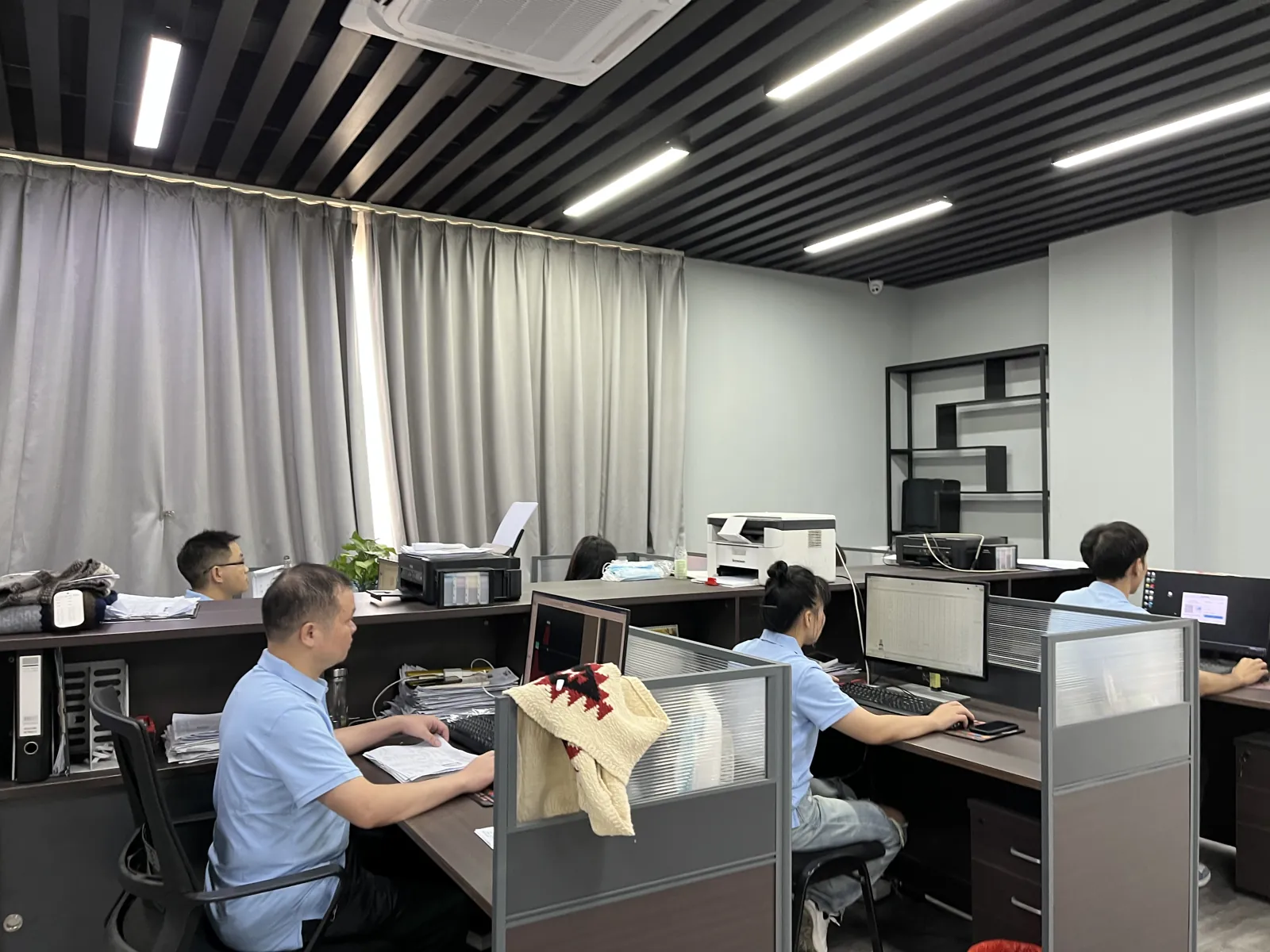
Branded labels are controlled assets. They may be bought in a larger lot than the garment order, so the buyer needs a record from receipt through use and disposal.
Create a lot and issue register
Record label supplier, order number, label revision, production lot, received quantity, inspection result and storage location. When labels move to a sewing line or subcontractor, record the issue date, style, colour, size group where relevant, issued quantity and recipient.
Keep superseded labels physically separated and clearly blocked. A label can look almost identical to the current version while carrying an old wordmark, address or size treatment. Colour-coded temporary bins are useful on the floor, but the permanent control is the printed revision and register.
Match label release to the garment purchase order and bill of materials. The retail packaging and barcode setup guide uses the same discipline for variant data: one source, one revision and a traceable issue to the correct SKU.
Reconcile use waste and remaining stock when managing knitwear neck labels
At order close, calculate labels received plus approved opening stock, less labels attached to good garments, attached to rejected garments, damaged during sewing, returned from the line and held as samples. Investigate the difference rather than entering a convenient balance.
Set an expected process allowance before bulk, then record actual waste. An unusually high loss can reveal sewing damage, mixed revisions, poor bundle control or unauthorized use. Keep rejected branded garments under the same disposition rule as unused labels.
State who owns remaining stock, where it will be stored, how long it may be held and who can authorize reuse. If it must be destroyed, agree whether cutting, pulping or another method is acceptable and what evidence closes the action. The bulk knit sweaters planning guide can help connect component balances with the production closeout record.
How Should a Repeat Order Be Controlled?
A repeat is safe only when the team can identify the approved label, confirm usable stock and detect any brand or product change.
Revalidate before reusing old labels
Check the current logo, business identity, artwork revision, colour, dimension, fold, substrate and destination label map. Inspect stored labels for dust, moisture, yellowing, print migration, adhesive ageing or distorted folds. Count the usable balance rather than quoting the ledger total.
Confirm that the new garment still has the same neckline construction and colour relationship. A dark label approved on a heavy navy crewneck may show through a new ivory fine-gauge style. If the yarn, finish, care route or attachment position changes, run the relevant garment approval again.
Use the private label knitwear yarn planning guide to revalidate material continuity alongside the trim check. A saved label cannot make a changed sweater an automatic repeat.
Close changes with a controlled transition when managing knitwear neck labels
When artwork changes, give the old revision a last-use date or immediate stop instruction. Identify affected open orders, work in progress, finished stock, ecommerce images and remaining components. Decide whether mixed revisions are allowed within one delivery. Usually they create avoidable customer and inventory confusion.
Issue the new file, proof and purchase specification as one revision package. Withdraw obsolete files from shared folders and block the old physical stock. Record the approved destruction, return or limited use of every balance.
Before placing the repeat, compare label stock, garment quantity, planned waste and lead time. The MOQ and lead-time planning page helps show when a label minimum or production schedule becomes the binding condition. Buy only after the label revision and garment order are aligned.
Conclusion
Private label knitwear neck labels need more than a logo attachment. Define the finished dimensions, fold, construction, colour, edge, sew allowance and visible face in a controlled brief. Separate the brand component from the fibre, care, origin and responsible-party information required for each sales market.
Approve a physical production-route label, then approve it again when attached to the actual sweater. The second check catches comfort, centring, stitch and finishing problems that a loose swatch cannot show.
During bulk, trace every label lot from receipt to line issue, garment use, waste and remaining balance. Treat obsolete labels and rejected branded goods as controlled assets. Before a repeat, recheck the artwork, stored stock and neckline construction rather than assuming that an old component still fits the order.
That discipline protects the brand at the point where customers see and feel it, while giving the factory a practical standard it can reproduce.
Frequently Asked Questions
What size should a sweater neck label be when managing knitwear neck labels?
There is no universal size. Set dimensions from the artwork, neckline construction, wearer comfort and available sewing area. Approve the label at physical size and sewn into the sweater.
Is a woven label always better than a printed label?
No. Woven labels suit many durable wordmarks, while printed substrates can hold finer detail. Compare readability, softness, edge finish and wash performance on the actual garment.
Can the neck label include the garment size?
Yes, if the brand’s variant system and destination requirements allow it. Specify whether size is woven into the main label or carried on a separate tab, then approve every variant.
Does a brand neck label replace the care label?
Usually not. The complete garment may need fibre, care, origin and responsible-business information under destination rules. Map each required field to an approved component.
What should happen to unused branded labels when managing knitwear neck labels?
The agreement should name their owner, storage period, authorized use and final disposition. Reconcile the quantity and document any return, transfer or destruction.
Who should order the neck labels, the brand or the sweater factory?
Either can. The order documents must still name who owns the artwork, who approves proofs, who receives and inspects the delivery and who owns any unused stock.
CNSweaters Related Resources
- Custom Knit Sweaters Tech Pack Checklist
- Care Labels and Fibre Content Guide
- Manufacturing Capability
- How to Prepare for Contacting a Sweater Manufacturer
- Lab Dip Approval Process
- Custom Sweater Sampling Checklist
- OEM and ODM Process
- Retail Packaging and Barcode Setup
- Bulk Knit Sweaters Planning Guide
- Private Label Knitwear Yarn Planning
- MOQ and Lead-Time Planning
- Contact CNSweaters