 CN Sweaters
A yarn MOQ and a garment MOQ describe minimums at different points in a knitwear order. Yarn MOQ is the smallest material quantity a spinner, stockist or dye house will supply on the proposed route. Garment MOQ is the smallest number of finished pieces a factory will accept for a style, colour or production run.
The larger headline number does not always control the order. A factory may accept 100 sweaters per style, while a custom shade requires more yarn than those garments consume. A low garment minimum may work with stock-service yarn and fail with custom dyeing. Labels, zippers, buttons, polybags or testing can introduce separate minimums after the garment quantity appears settled.
Buyers should calculate the order from garment units to yarn demand and then map every other minimum to the same style-colour-size plan. That shows which constraint governs, what excess material remains and whether changing colours, yarn or packing solves the problem without distorting the sales plan.
Which Yarn MOQ Applies First?
The first task is to list every minimum at the level where it applies. Avoid one statement such as “MOQ 100 pieces” when the order contains several colours, sizes and material routes.
Separate style, colour and order minimums
Ask whether garment MOQ applies per order, style, colour, delivery or production lot. A 200-piece style split across four colours may not satisfy a 100-piece-per-colour rule. A factory may also require a minimum size ratio so that linking, washing and packing remain efficient.
Write the proposed style-colour-size matrix next to the rule. If one colour has 40 units and another has 160, the total of 200 does not answer whether both are acceptable.
Use the MOQ and lead-time planning page to frame the conversation. The quotation must still state the rule and any exception for the actual order.
Identify the governing constraint
The governing minimum is the first constraint the current plan cannot satisfy. It may be yarn weight per shade, garment pieces per colour, custom label quantity, zipper colour, test-lot size or packing material.
List each requirement, planned quantity, shortfall and proposed treatment. Do not increase finished units automatically. Excess yarn may be cheaper than unwanted garments, while excess garments may be useful when the colour is a proven core SKU.
The governing constraint can change after a revision. Reducing garment weight lowers yarn demand and may leave more excess. Adding a colour creates another dye lot. Changing a pullover to a cardigan introduces buttons or a zipper with its own minimum.
Recheck the governing constraint whenever the assortment, material route or product revision changes.
How Does Yarn MOQ Become a Colour MOQ?
Yarn minimums usually apply by yarn specification and shade. The buyer needs the finished garment’s yarn usage to translate kilograms into pieces.
Calculate demand from weighted size usage
Start with approved or estimated garment weight by size. Multiply each size weight by planned units, add sample and testing needs, and apply a documented allowance for knitting loss, linking waste, defects and residual cones.
For example, 100 garments do not all consume the base-size weight when the order includes several sizes. Use the actual size curve. A large-size-heavy order can consume materially more yarn than the same piece count weighted toward smaller sizes.
Keep body yarn, contrast yarn, plating yarn and special trims separate. A jacquard motif may use little of one colour, yet that colour can still require a full package or dye lot.
Keep the calculation auditable. Show net garment demand, sampling allowance, test pieces, expected knitting loss and the final purchase quantity as separate lines. If the factory rounds to full cones or packages, show the rounding step. Recalculate after the approved sample establishes actual weight. A five per cent weight change across several hundred units can move the order above or below a supplier threshold.
Compare custom-dyed and stock-service routes
Stock-service yarn can allow a lower colour quantity because the supplier already carries the shade and specification. The trade-off may include limited colour choice, stock fluctuations and weaker repeat continuity.
Custom-dyed yarn gives the buyer a targeted shade but can require a mill package, dye lot or economic batch. Ask whether the minimum is set by raw yarn, dyeing vessel, package count or commercial policy. Also ask how excess yarn will be owned, stored and used.
The private label knitwear yarn planning guide helps buyers compare stock, custom and repeat routes. The current quotation should identify the supplier route, package size and colour-level minimum.
When Can Garment MOQ Be Lower Than Yarn MOQ?
A factory can sometimes make fewer garments than the yarn minimum when the buyer accepts excess yarn, shares a material across styles or uses available stock.
Who Buys and Owns Excess Yarn Under a Yarn MOQ?
If the mill sells 60 kilograms but the garments need 42, the remaining 18 kilograms needs a commercial treatment. The buyer may pay for it, the factory may absorb it into price, or the material may be shared with another approved style.
Record ownership, storage period, identification, permitted use and disposal. If the buyer funds custom colour, state whether the yarn is reserved exclusively for that buyer. Add the conditions for release on a repeat order.
Storage is not free. Natural fibres require protection from moisture, pests, contamination and shade mixing. A long storage promise with no location, lot record or expiry does not solve the minimum.
Share One Yarn Platform Carefully to Meet Yarn MOQ
Several styles can use one yarn and shade when composition, count, twist, supplier and colour standard match. A cardigan, crewneck and vest may then reach the yarn minimum together while keeping garment quantities aligned with demand.
Confirm that gauge, stitch and finishing remain appropriate for each product. A shared yarn does not require identical garment weight, but each style needs its own sample and performance approval.
Use the custom cardigan or pullover guide to compare style implications, and use the manufacturing capability overview to verify the proposed gauge and construction route.
Which Materials and Trims Create Hidden Yarn MOQ Constraints?
Yarn is often the largest minimum, but retail components can control a small order after sweater quantities are approved.
Map labels, closures and packing separately
List neck labels, care labels, size labels, hangtags, buttons, zippers, badges, embroidery backing, polybags, tissue, barcode labels and cartons. Record minimum by artwork, colour, size or format.
A custom zipper can require one tape colour per shade. A woven label may have a high production minimum but can be shared across styles if the artwork and dimensions agree. Size labels need a split that matches the size curve.
For U.S. programmes, the FTC’s clothing and textiles guidance explains covered fibre, origin and responsible-business information. Accurate label content should be approved before ordering the label minimum.
Confirm how component suppliers handle overrun and underrun. A nominal order of 500 labels may arrive as 490 or 520 under the supplier’s permitted manufacturing variance. The garment plan needs enough usable components for sellable units, replacements and inspection samples. Colour, size or market-specific versions should be counted separately even when the base artwork looks similar.
Distinguish purchase minimum from consumption
A supplier may require 1,000 labels even when the order consumes 300. Record the unused balance, ownership and storage. Do not divide the full unused value into one order without showing that commercial choice.
Packing suppliers can also set a carton or print minimum. A standard blank component with applied barcode label may reduce exposure compared with a fully printed item. The change must still meet customer, legal and brand requirements.
The retail packaging and barcode setup guide helps buyers connect size and colour variants to packing data. GS1 notes that each size-colour combination is a separate product variation requiring its own GTIN, so a low total order can still create many retail records.
Map test coverage before splitting colours
Testing can be charged per colour, material, style or submitted set, so a small assortment can still carry several test minimums. List each planned composition, colour route, finish and product claim on its own row, then name the report that covers it. Ask the laboratory or compliance owner whether grouped submissions are technically acceptable. Sharing evidence cuts duplicate cost. Assuming coverage without checking can leave a small colour or finish outside the approval basis.
How Should Buyers Model Yarn MOQ Order Splits?
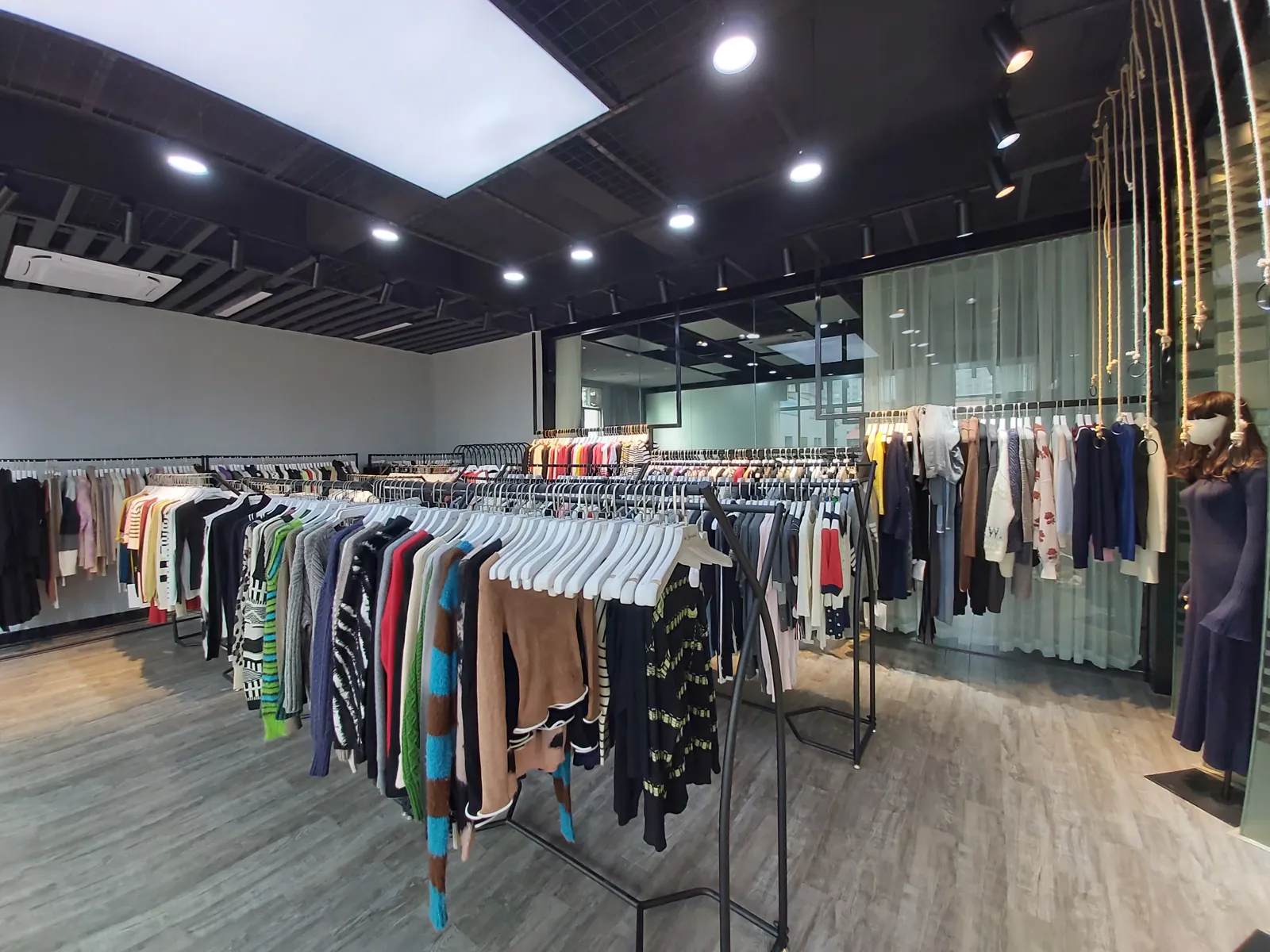
One total does not show whether every colour and size can be produced, identified and sold. Use a constraint table before confirming units.
Build a style-colour-size demand model
Create one row per SKU with unit quantity, garment weight, body-yarn colour, contrast-yarn colour, label set and packing format. Calculate yarn demand by shade across all eligible styles. Add development, testing and loss allowances separately.
Use relevant sales and return evidence for the size curve. Do not add units to a weak size merely to make the order sheet look balanced. A minimum problem should be solved where it exists.
The wholesale knitted sweaters SKU planning guide can support the commercial split. The production model should use the current weights and supplier rules.
Compare practical scenarios
Use a three-column decision table.
| Scenario | Production effect | Buyer decision |
|---|---|---|
| Keep four custom colours | four dye lots and more excess risk | confirm each shade earns its minimum |
| Reduce to two core colours | deeper units and simpler shade control | accept narrower assortment |
| Use stock-service shades | lower custom-dye exposure | accept available colour choices |
| Share yarn across styles | material minimum reached together | lock one yarn platform |
| Buy excess yarn | garment plan remains demand-led | fund, own and store balance |
| Increase garments | material is converted into stock | verify sell-through and size curve |
| Simplify labels or packing | component minimum falls | preserve compliance and brand need |
Price every scenario on the same delivery and service basis. An option that appears cheaper ex-factory may create more inventory, storage or later colour-continuity risk.
ICC’s Incoterms 2020 checklist helps distinguish delivery responsibilities from product quantity. State the rule and named place when comparing costs, because freight and import scope are not garment MOQ.
What Changes Unit Cost Below Efficient Volume?
A low quantity can be feasible and still carry a higher unit cost. The factory should show the activities that are spread across fewer pieces.
Separate fixed setup from variable consumption
Programming, pattern interpretation, machine setup, yarn change, linking setup, washing trial, measurement, inspection and packing preparation can occur whether the run contains 50 or 500 units.
Variable cost includes yarn, trims, direct operations and packaging consumed per garment. Some losses also behave in steps rather than in a straight line. One extra cone or carton may be required even when only part is used.
Capacity also has an opportunity cost. A short run can interrupt a longer machine plan, require more changeovers per production hour and create small batches at linking, washing and packing. Ask the factory which stage is inefficient at the proposed quantity. A surcharge tied to a visible setup is easier to evaluate than a flat statement that all small orders are expensive.
Ask for cost drivers, not confidential internal payroll. A clear quotation can show development, sample, yarn excess, custom components and unit production as separate lines or documented assumptions.
Avoid saving cost by changing the product silently
Lower weight, looser density, simpler construction, cheaper yarn, reduced testing or generic packing can reduce price. They also change the product or risk allocation.
Require every cost option to identify its technical effect. Compare the sample and performance evidence for the new route before approving it.
The custom knit sweaters cost guide supports a wider cost review. The MOQ decision should remain tied to the planned garment and SKU demand.
Find the stage with the smallest efficient batch
Knitting may accept a short run while dyeing, washing or label production does not. Map the smallest efficient batch at yarn supply, knitting, linking, finishing, testing and packing, and ask the factory which stage sets the floor for this style. The answer varies by product. A solid fine-gauge crewneck on stock yarn needs less proofing than a jacquard or intarsia cardigan with several colours, pattern alignment and buttons, so the same piece count can carry very different setup work.
Ask whether a short run can share a scheduled yarn, gauge or setup window with a related programme. If it can, confirm that buyer-owned yarn stays separated and traceable.
Compare unit price with total cash commitment
Review every option in two ways: cost per finished garment, and total cash needed to obtain the planned sellable units, including unused yarn and components. A lower unit price can tie up more cash in inventory, while a higher unit price can protect cash by keeping the assortment small. Which is better depends on demand and on how long any excess material stays usable.
How Should a Low Yarn MOQ Pilot Be Set Up?
A pilot order is useful when it answers a named question. It is weak when units are spread so thinly that no SKU produces a readable result.
Define what the pilot must prove
Typical objectives are fit acceptance, one yarn platform, a new sales channel, factory execution or a size curve. Choose the smallest assortment that can answer the question, and keep the core specification the same as the intended repeat. A pilot made with different yarn, weight or packing proves demand for a product that may never be made again on the same basis.
Set repeat and stop-loss conditions in advance
Before launch, state what results justify a repeat, such as sell-through by a date, returns, fit feedback, margin or a channel commitment. Also state the maximum development spend, number of sample rounds, component overage and unsold stock the pilot may create, and name who can approve an exception. A one-time low MOQ exception is not a replenishment promise, so ask which cost floors carry over to a repeat and which need a new decision.
Compare Low Yarn MOQ Offers on the Same Basis
A low headline MOQ can hide a high total commitment. Normalise each quotation before choosing:
| Cost floor | Supplier response | Buyer comparison |
|---|---|---|
| Programming and setup | included, separate or reusable | same construction and revision |
| Yarn and colour | package, dye lot and excess | same fibre, count and shade route |
| Garment production | pieces by style and colour | same size curve and weight |
| Testing | methods, colours and submitted sets | same market and claims |
| Labels and trims | minimum, overrun and storage | same artwork and quality |
| Packing | standard or custom route | same retail requirements |
| Delivery | trade rule and named place | same freight and risk basis |
| Repeat order | reusable work and remaining stock | conditions are documented |
Share your style-colour-size plan through our OEM and ODM services and we will show which cost floors apply to it.
How Should Yarn MOQ Decisions Be Recorded?
The final order should state which minimums apply, how exceptions are treated and what happens to paid excess material.
Use a governing-minimum schedule
Record yarn minimum by specification and colour, garment minimum by style and colour, component minimum by artwork, planned consumption, ordered quantity, excess, owner, storage period and cost treatment.
Attach the style-colour-size matrix and weighted yarn calculation. Name the revision date. If weights are estimates, define the sample or bulk check that will replace them.
The schedule should also identify subcontracted dyeing, labels, testing or packing where those handoffs create minimums. OECD’s garment and footwear due-diligence guidance supports visibility across relevant operations and business relationships.
Carry the decision into repeats
Store yarn lot, supplier, colour standard, excess balance, component stock and actual bulk consumption. Compare planned and actual values after the first order.
Close the first order with a simple variance review. Record kilograms issued, returned and scrapped; garments packed by size; approved replacements; unused labels and cartons; and any supplier package that was purchased but never consumed. Assign a person to confirm each remaining stock balance with dated photographs or warehouse records. The next quotation can then use observed consumption and verified inventory instead of repeating the original estimate or assuming that every leftover component remains available.
For a repeat, confirm that stored material is usable and sufficient before quoting a lower minimum. Do not promise a low reorder MOQ based on stock that has been consumed, damaged, reallocated or discontinued.
Use the OEM and ODM process to place material release within the wider production sequence. The purchase order should name the specific yarn, garment and component conditions for the style.
Conclusion
Yarn MOQ is a material constraint, while garment MOQ is a factory production constraint. A custom knitwear order must satisfy both, plus any minimum linked to colour, trim, labels, testing or packing. The governing minimum is the first one the actual style-colour-size plan cannot meet.
Calculate weighted yarn demand using garment weights by size, planned units and documented loss. Compare it with each shade’s supplier or dye-lot requirement. Then model stock-service yarn, fewer colours, shared yarn platforms, paid excess material or additional garments without forcing unwanted units into the sales plan.
Record ownership and storage of unused yarn and components. Keep every cost option tied to a named product route, and carry actual consumption into the repeat pack. That method turns a vague MOQ negotiation into a measurable decision about material, production efficiency, inventory exposure and the conditions under which a future order can genuinely be smaller.
Frequently Asked Questions
Is yarn MOQ always stated in kilograms?
Often, but suppliers may quote packages, cones, dye lots or a monetary minimum. Convert the rule into kilograms and expected garment units using the current yarn specification, garment weights and loss allowance.
Can several sweater styles share one yarn MOQ?
Yes, when yarn composition, count, twist, supplier and shade are the same and each style approves the material. The factory should allocate the lot and preserve traceability by style and production batch.
What happens to yarn left after production?
Agree who owns it, who pays, where it is stored, how long it remains available and whether it is exclusive to the buyer. Record lot and colour identity and confirm condition before a repeat.
Does increasing sizes help meet a colour MOQ?
It increases yarn demand, but units should follow expected sales and fit evidence. Adding weak sizes to consume yarn can replace a material shortfall with inventory risk. Compare paid excess yarn with additional sellable garments.
Why can a low garment MOQ have a higher unit price?
Programming, setup, yarn handling, washing trials, inspection and packing preparation are spread across fewer pieces. Small colour lots may also create excess yarn and trims. Ask the quotation to show those assumptions.
What makes a low MOQ offer risky?
Common warning signs are hidden product changes, unclear ownership of excess yarn, labels or tests that do not match the claims, many shallow SKUs, a yarn route that cannot be repeated, and a first-order exception with no written repeat condition.