 CN Sweaters
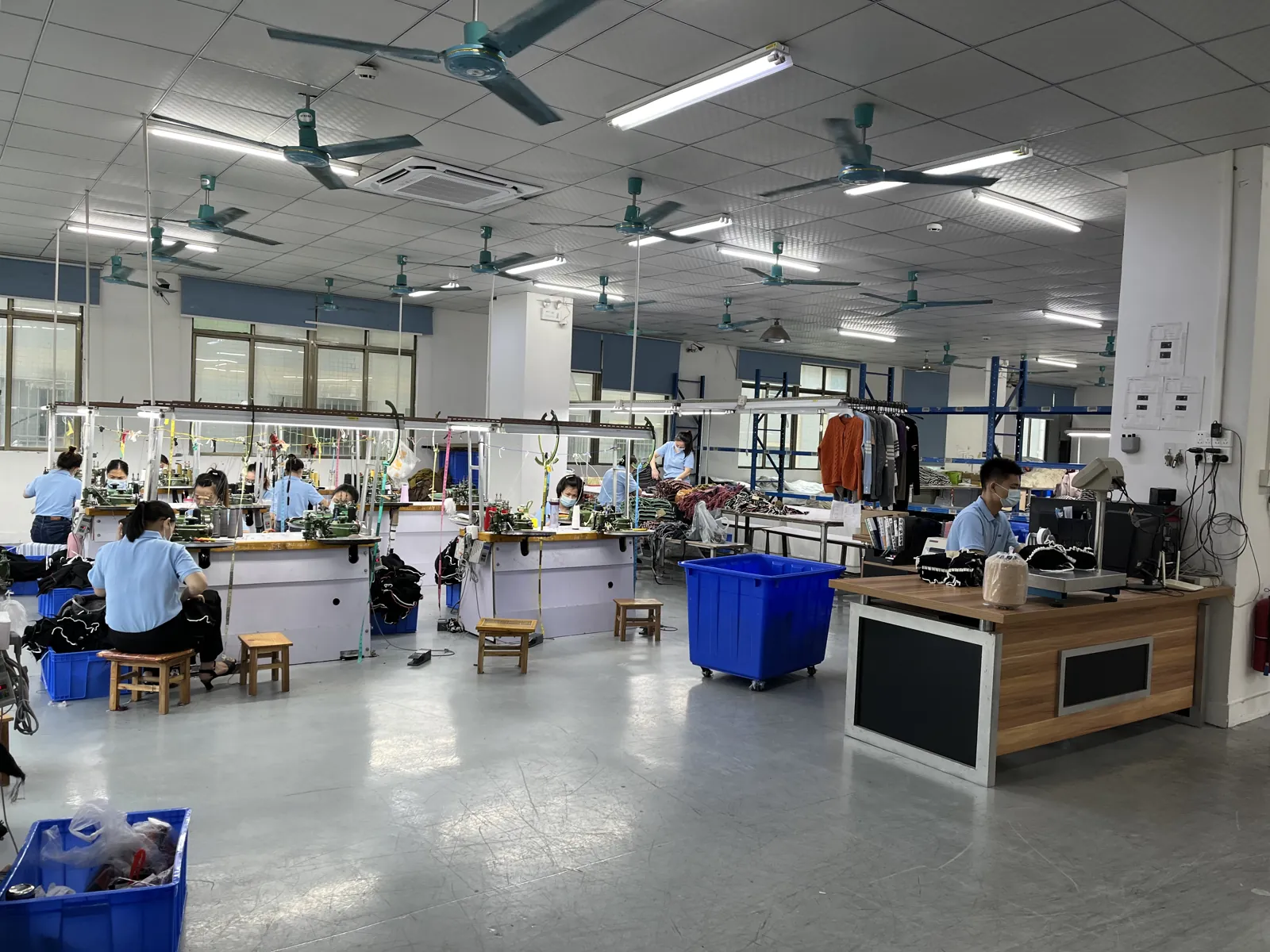
Unit price for a bulk knit sweater drops as order volume rises, but the curve is not linear. From a factory perspective, the biggest reductions happen when an order crosses three thresholds at once — the MOQ setup threshold, the yarn supplier’s minimum purchase quantity, and the point where knitting can be split across multiple machines running in parallel.
This article is written for brand owners, wholesalers, distributors, procurement managers, and product developers evaluating quotes for bulk knit sweaters. We explain why quantity changes price, what cost drivers are not sensitive to volume, and how to plan order sizes that lower unit cost without creating inventory risk. The goal is to help you read factory quotes with a clearer sense of what is actually moving the number — and to know when asking for a bigger quantity genuinely helps, and when it only increases your exposure.
Why Bulk Knit Sweater Unit Price Drops with Volume
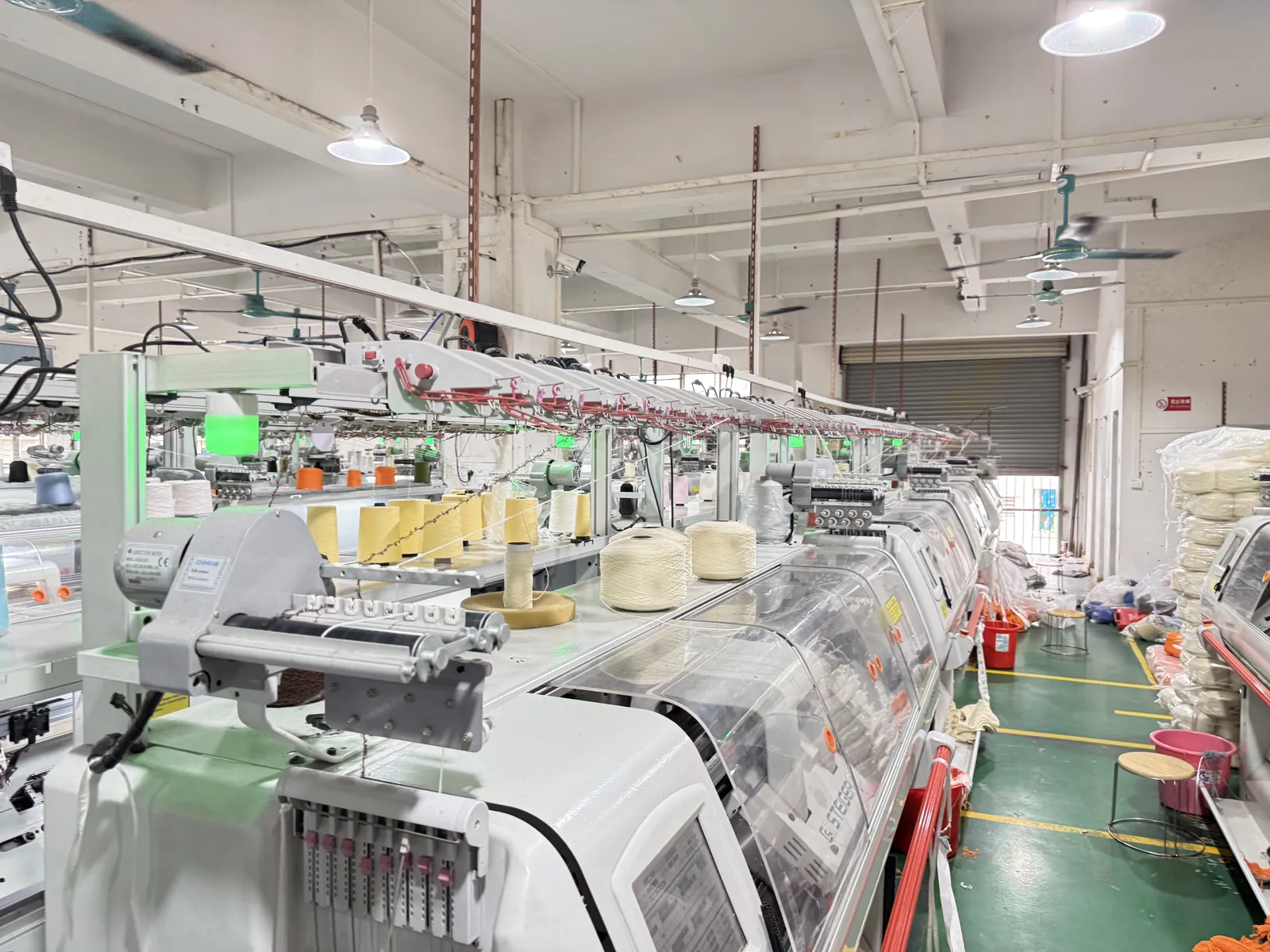
The unit price drops for three structural reasons: fixed costs get amortized across more pieces, yarn procurement moves past supplier minimums, and production can be distributed across multiple knitting machines at the same time. All three matter, and they affect different parts of the cost sheet.
What surprises many first-time buyers is how uneven the drop is. Moving from 50 pieces to 200 pieces often shows a noticeable per-unit drop because sampling, programming, and setup get spread thinner. Moving from 500 to 1,000 pieces may show a smaller relative drop, because the main fixed costs are already absorbed and you are mostly buying more yarn and more labor hours.
Fixed Costs That Do Not Scale with Quantity
Every sweater style carries a fixed cost layer that is paid once, regardless of how many pieces you eventually order. This includes pattern programming for the computerized knitting machines, tech pack review and adjustments, sample rounds before bulk approval, and machine setup time when yarn and needle configurations change.
For a 100-piece order, that fixed block is divided across 100 units. For a 1,000-piece order of the same style, it is divided across 1,000 units. The fixed cost itself barely changes, but its per-unit share collapses. This is the single clearest reason why repeat orders and larger first orders quote lower unit prices on the same spec.
Variable Costs That Behave Differently
Not every cost line behaves the same way as volume grows. Yarn cost per piece is mostly stable once you are buying in full-cone quantities, because you are paying for material weight. Knitting machine time per piece is also relatively stable — one sweater still takes its own run time, whether it is piece number 10 or piece number 1,000.
Linking, trimming, make-up, and finishing are labor-heavy steps where the time per piece is also fairly fixed. What does compress with volume is the amortized portion of setup, sampling, QC planning, and administrative overhead. Reading a quote well means separating the parts that can genuinely shrink from the parts that cannot.
The Parallel Machine Effect for bulk knit sweater orders
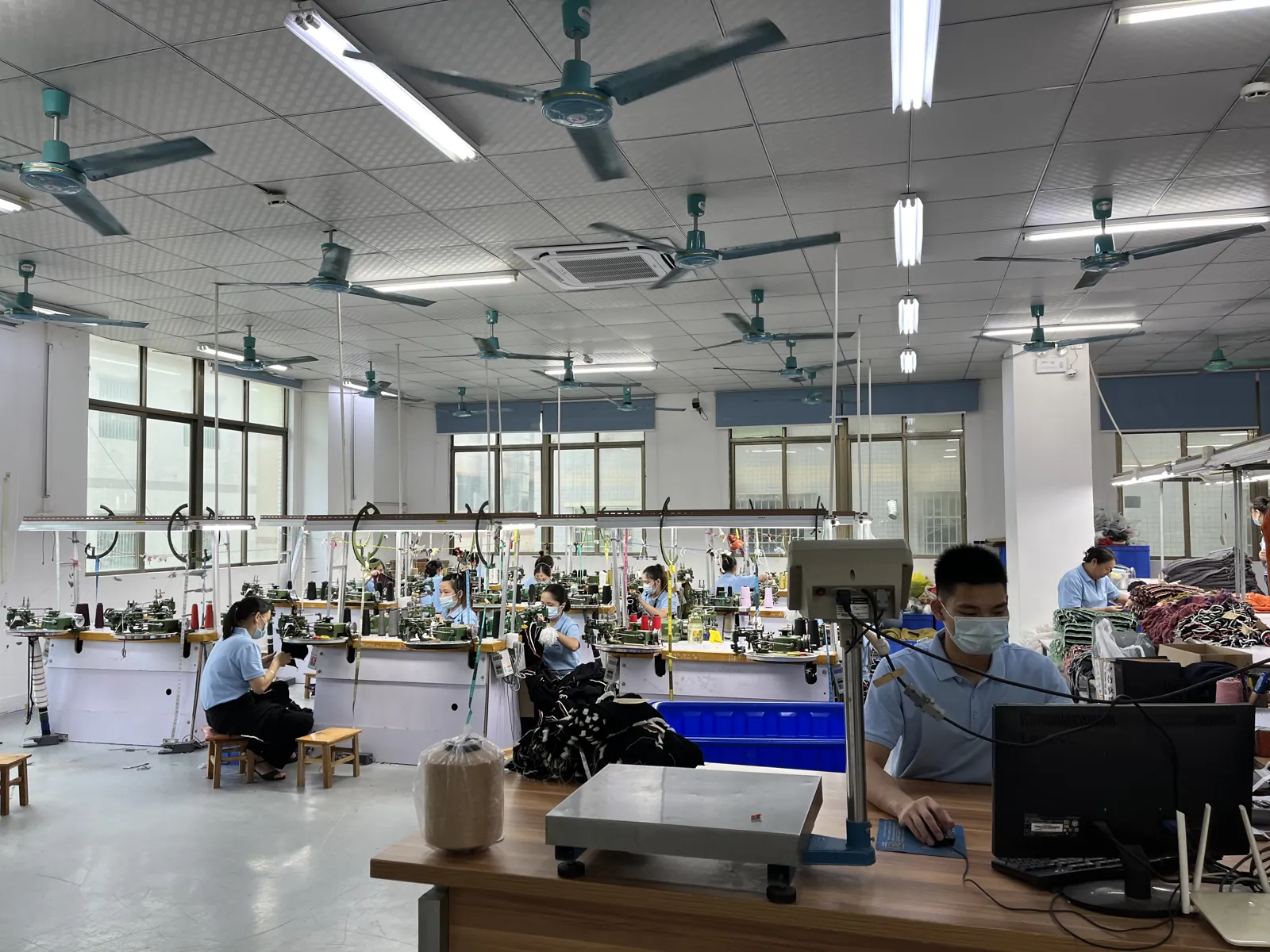
A factory-side detail that buyers rarely see on paper is how order quantity changes machine allocation. With a small run of around 50 pieces, the yarn volume and style mix usually only justify allocating two computerized knitting machines. With a larger run of 500 pieces, the same style can be split across several machines running in parallel.
This matters for both cost and lead time. Parallel knitting shortens the production window, reduces the risk of a single-machine bottleneck, and lets the factory batch similar yarn colors more efficiently. It is also one reason scale-tier quotes are more predictable — there is more room to absorb small schedule disruptions without delaying the whole PO.
Typical Pricing Tiers for Wholesale Knitted Sweaters
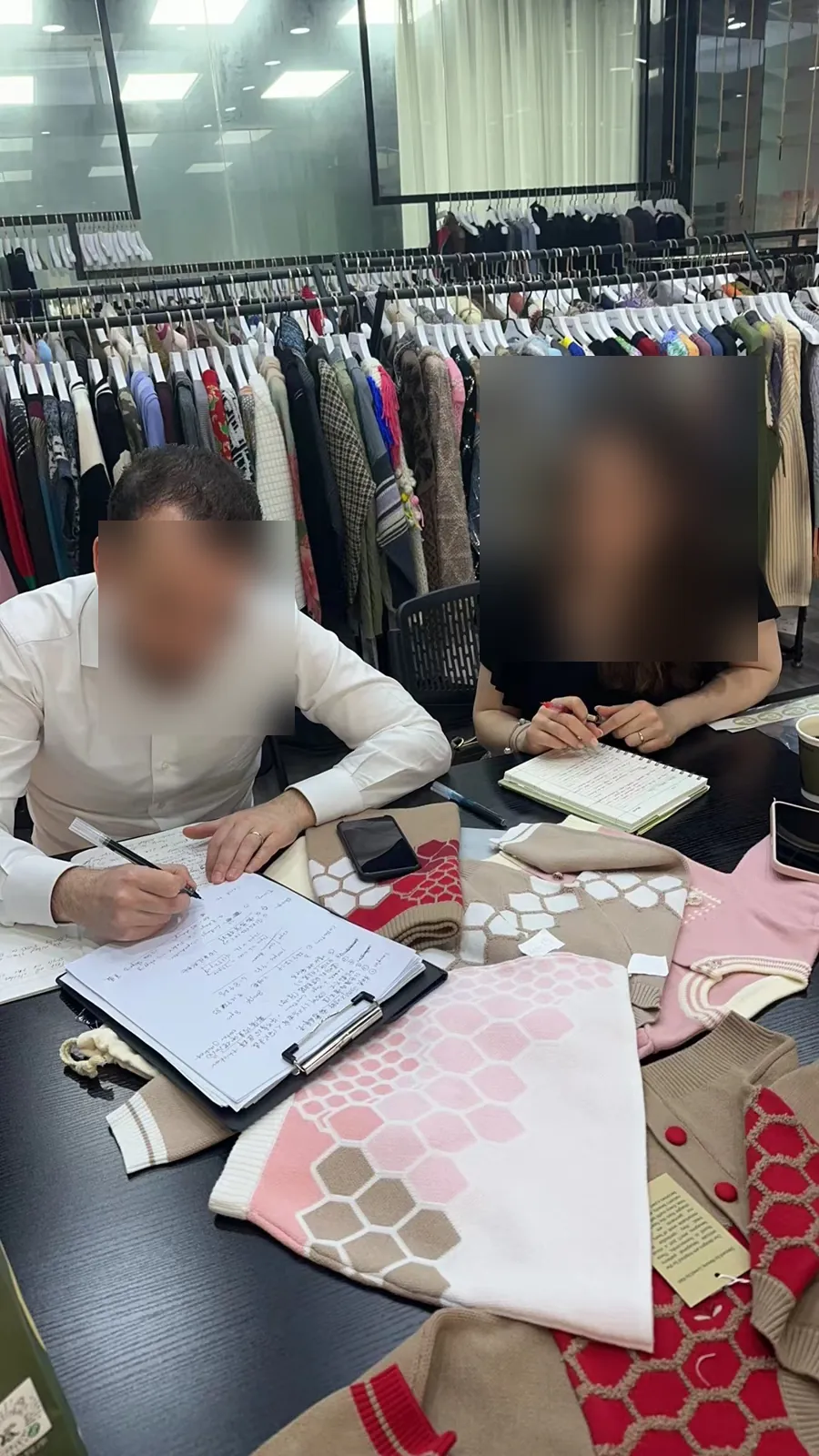
Wholesale knitted sweater prices usually settle into three recognizable tiers rather than a smooth curve. From a factory perspective, those tiers reflect how much of the fixed cost layer has been absorbed, and whether the yarn order is large enough to unlock standard mill pricing.
The table below describes the tiers qualitatively. Exact prices depend on yarn, gauge, construction, and country of origin, so we avoid posting specific dollar numbers that would not hold up across styles.
| Tier | Typical Quantity Range per Style | Main Cost Driver | Trade-offs |
|---|---|---|---|
| Sample / Small-run tier | Below standard MOQ, often under 50–100 pcs | Sampling fees, programming, single-machine setup | Highest unit cost, fastest flexibility, useful for validation only |
| Standard bulk tier | Around MOQ up to a few hundred pcs | Fixed cost amortization and yarn minimums | Stable unit price, workable lead time, the common first-order zone |
| Scale tier for seasonal or repeat programs | Several hundred pcs and up, often 500–1,000+ | Yarn volume pricing and parallel machine allocation | Best unit cost, longer cash commitment, needs reliable sell-through |
Sample and Small-Run Tier
Below the factory’s stated MOQ, you are essentially paying to validate a style before committing to bulk. Quotes here carry full sampling fees, dedicated setup, and limited machine allocation. This tier exists to protect both sides — buyers test fit, hand-feel, and washing before scaling, and factories avoid absorbing development cost on orders that may not move forward.
A common practice is to charge a sampling fee that is later refunded, or partially refunded, once a bulk order exceeds a certain quantity. It is worth asking about this explicitly during quoting.
Standard Bulk Tier for bulk knit sweater orders
This is where most first orders land. The quantity is large enough that fixed costs start to amortize meaningfully, but not so large that you are locked into a long commitment. Unit prices stabilize and become comparable across factories at this level, which makes it the most useful tier for benchmarking.
Styles in our cardigans and core sweater programs typically reach workable per-unit pricing at this tier, especially when colors are consolidated and yarn choices stay within common mill stock.
Scale Tier for Repeat and Seasonal Programs
Scale-tier pricing usually applies to repeat orders of proven styles or to seasonal pre-books for core items. At this volume, yarn can be purchased in full-batch quantities, knitting can be split across multiple machines, and linking teams can be scheduled in continuous runs. The quote reflects a factory that is planning several weeks of stable utilization rather than a one-off order.
The trade-off is cash. Scale-tier pricing only pays off if sell-through is strong enough to absorb the larger buy. This is where the conversation shifts from “how low can the unit price go” to “what total landed cost and inventory risk am I willing to accept.”
Hidden Cost Drivers Beyond Piece Count
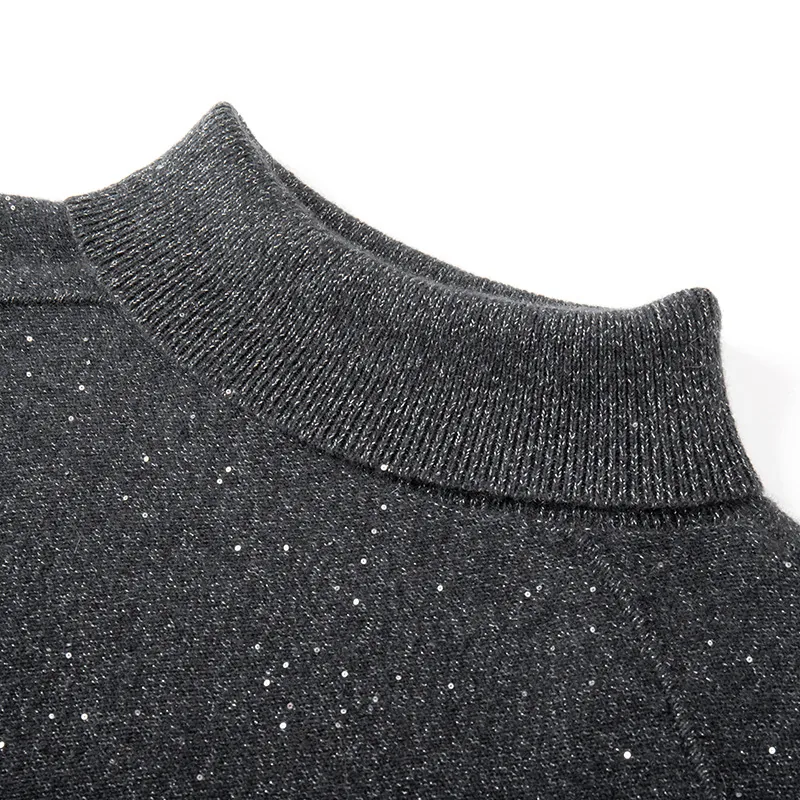
Volume is powerful, but two sweaters with identical quantities can still quote at very different prices. Yarn, gauge, and construction often move the number by more than 30 percent. Buyers who focus only on quantity miss the levers that actually change their margin.
Yarn Minimums and Color Tier Costs for bulk knit sweater orders
Yarn is the largest single cost line in most knitwear quotes, and it has its own volume logic. Mill-stock yarns are cheaper and faster to secure because they are already produced in bulk. Custom-dyed yarns require a minimum dye-lot, which can force you to buy more material than your order actually needs.
Color count matters too. One sweater style in five colors at 100 pieces each behaves very differently from 500 pieces in one color — the second case hits yarn minimums cleanly, while the first may trigger surcharges on low-volume dye-lots. Consolidating colors is one of the most underused ways to improve a wholesale knitted sweater quote.
Gauge, Stitch Complexity, and Machine Time
Gauge refers to how fine or coarse the knit is. A 3GG chunky sweater and a 12GG fine-gauge sweater use different yarn weights, different needle setups, and different run times on the machine. Chunky knits use more yarn by weight but knit faster; fine-gauge knits use less yarn but take longer per piece. Neither is universally cheaper — it depends on your yarn price and how the machine schedule looks.
Stitch complexity adds another layer. Plain jersey knits are the fastest and cheapest to run. Cables, jacquard patterns, intarsia, and intricate rib structures all slow the machine down and sometimes require additional programming. For highly customized constructions, quoting often moves into the territory of custom knit projects, where the cost sheet looks different from standard bulk pricing.
Linking, Finishing, and QC Labor
Fully-fashioned sweaters are linked by hand — operators join knitted panels stitch by stitch. This step is labor-intensive and does not compress much with volume. The same applies to trimming loose ends, steaming, measuring, and inspecting.
These labor lines are why two styles with similar yarn and similar gauge can still differ in price. A style with many linking points, multiple trims, or tricky finishes simply needs more hands and more hours. Volume helps here only at the margin, by smoothing scheduling and reducing overtime premiums.
How Bulk Knit Sweater MOQ, Lead Time, and Sampling Interact
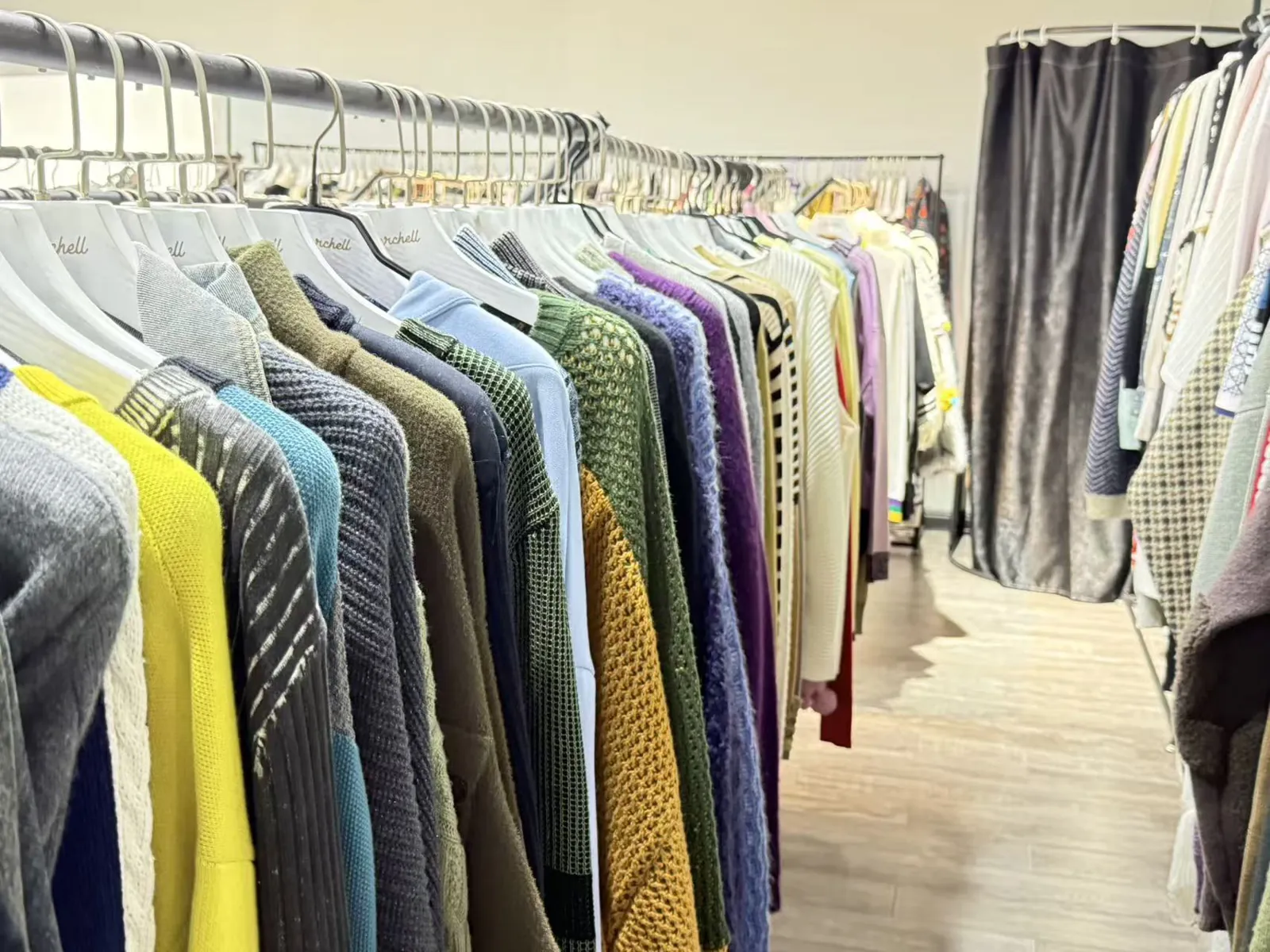
Quantity does not sit alone on a quote. MOQ, lead time, and sampling are all connected, and adjusting one usually moves the others. The practical way to read a factory quote is to look at all four levers together.
MOQ Logic from a Factory Perspective
Factories set MOQs to protect the economics of setup. Every style requires programming, needle setup, yarn threading, and initial QC calibration. Below a certain quantity, those hours cannot be recovered at a reasonable unit price without making the quote uncompetitive.
MOQ is also shaped by yarn logistics. A mill may only sell yarn in full-cone or minimum-weight batches. If a factory quotes you a lower MOQ than the yarn mill allows, it often means the factory is absorbing leftover material into other orders — which is only sustainable for styles and yarns they run regularly. Our typical MOQ is 30 pieces per size per color, and we support further scaling through our OEM knitwear production setup.
Lead Time Differences Between Small and Large Orders
Intuition says small orders are faster. In practice, small orders are sometimes slower, because they are harder to slot into a busy production schedule without disrupting larger POs. Larger orders have predictable machine blocks assigned in advance, which makes their lead times more reliable even if the absolute number of production days is longer.
Industry references on bulk clothing lead times in China place typical ranges between 30 and 90 days depending on complexity and season. For sweaters specifically, sampling usually takes 3–5 days, and bulk production after PPS approval tends to run 15–30 days depending on volume, yarn availability, and finishing requirements.
Sampling Fees and When They Get Refunded for bulk knit sweater orders
Sampling fees are a source of confusion for new buyers. The fee covers real material, machine time, and operator hours, and factories charge it to filter out non-serious inquiries. The good news is that many factories — including ours — refund the sampling fee once the buyer commits to a bulk order above a defined quantity threshold.
This is worth negotiating upfront. If your order path clearly leads to bulk, ask how the sampling fee applies against the final invoice. It does not change the list price, but it can meaningfully reduce the first-order cash outflow, which is often the real constraint for emerging brands.
How to Plan Order Volume for Better Pricing Without Overstock
The right order volume is the one that minimizes landed unit cost per sold piece, not the one that minimizes the factory quote. A cheaper unit price on paper becomes an expensive mistake if half the order sits unsold at the end of the season.
Buying bigger only pays off when your sell-through supports it. The planning question is not “can I afford a bigger buy” but “can I afford the cash commitment, the storage, and the markdown risk that comes with it.”
Balancing Unit Cost Against Inventory Risk
Larger orders tie up cash, occupy warehouse space, and create markdown pressure if the season turns cold early or demand shifts. Industry analysis of why garment unit costs decrease with larger orders consistently notes that the savings only convert into margin when the stock actually moves at full price.
A useful exercise is to model two scenarios on the same style: a smaller buy at a higher unit cost with a higher sell-through rate, and a larger buy at a lower unit cost but with a more conservative sell-through assumption. In many cases, the smaller buy wins on realized margin even though it looks worse on the quote.
Using Core Styles and Refill Orders
A practical way to capture volume benefits without overstocking is to split the assortment. Put your proven core styles — the ones with predictable demand across seasons — into scale-tier orders. Keep test styles and trend-driven items at standard bulk or small-run levels until the numbers prove out.
Refill orders on core styles also tend to quote well because yarn, programming, and sampling costs are already absorbed from the first run. The factory is essentially running a repeat with a known spec, which is the cheapest state for both sides.
Seasonal Timing That Changes Quoting for bulk knit sweater orders
Sweater production has a clear seasonal cycle. From a factory perspective, August through January is the peak season, when raw material prices and labor costs run higher and capacity tightens. February through July is the off-season, when quotes are generally more favorable and lead times are more flexible.
If your launch window allows, booking production before September often locks in better pricing and shorter queues. Waiting until peak season can mean paying more per piece and waiting longer for the same quantity — a combination that quietly erodes margin even when the quote looks acceptable in isolation.
Conclusion
Production volume does affect bulk knit sweater pricing, but it is not the only lever, and it is rarely the most important one on its own. The clearest unit price reductions come from crossing fixed-cost thresholds, consolidating yarn and colors, and allowing the factory to schedule multiple machines in parallel. Beyond that, gauge, stitch complexity, linking, and sampling each shape the quote in ways that quantity alone cannot offset.
A practical decision framework looks like this. Use small runs to validate fit and hand-feel. Move proven styles into standard bulk for the first commercial season. Promote only the most reliable sellers into scale-tier repeat orders where yarn, machine allocation, and finishing economics all work in your favor. And time your orders so the factory quotes you in the calmer part of the year rather than the peak.
If you are comparing quotes or planning a seasonal buy and want a clear breakdown of yarn, gauge, and tier options for your specific styles, you can start a quote with our sweater factory team with your tech pack and target quantities.
FAQ
What is the typical MOQ for bulk knit sweaters? Most professional sweater factories quote a workable MOQ somewhere between 30 and 300 pieces per style, depending on yarn type and color count. Lower MOQs usually reflect use of mill-stock yarn, while custom-dyed yarns pull the MOQ up because of dye-lot minimums.
How much cheaper are wholesale knitted sweaters at 1,000 pieces versus 100? The unit price drop between 100 and 1,000 pieces is usually the largest single improvement you will see, because fixed costs are spread over ten times as many pieces and yarn often reaches standard mill pricing. Beyond 1,000 pieces, the curve flattens — further discounts depend more on yarn volume deals and machine allocation than on raw quantity.
Do sampling fees affect bulk pricing? Sampling fees do not change the per-unit bulk price, but they affect your total first-order cash outflow. Many factories refund the sampling fee once a bulk order exceeds a defined threshold, so it is worth clarifying that policy before you commit.
Are knitted jumper wholesale quotes lower in off-season? Generally yes. From February through July, yarn prices and labor availability are more favorable, and factory scheduling is less crowded. Orders placed before September typically see better quotes and shorter lead times than those placed during the August-to-January peak.
Does yarn choice change the size of the volume discount? Yes, significantly. Mill-stock yarns allow volume benefits to flow through cleanly because they are already produced in bulk. Custom-dyed yarns carry dye-lot minimums that can cap how much your unit price can drop, because you end up buying more yarn than your order strictly needs.