 CN Sweaters
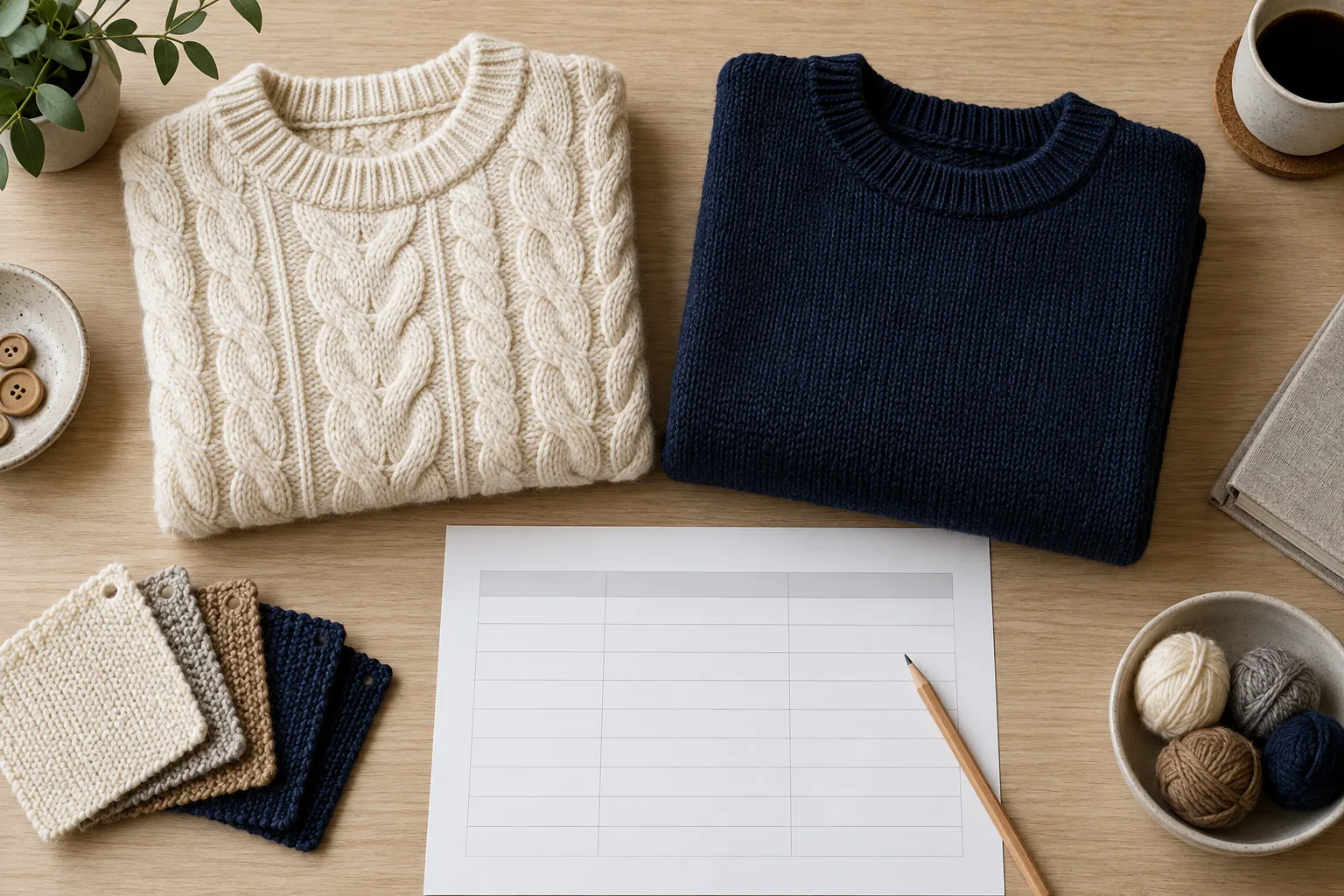
Compare wholesale knitwear suppliers against the same order brief before comparing price. Start with the yarn, style, colour breakdown and delivery window. Then ask each supplier to explain its minimum order, sample approvals and inspection plan. A cheap quote is not comparable if it excludes work that another supplier includes.
This guide is for buyers choosing between shortlisted suppliers for a private-label knitwear order. Its purpose is a documented comparison, not a vendor ranking. You will check what each supplier controls, which costs depend on your assortment, and what evidence supports bulk release. Record exclusions beside the price. Keep a separate list of unresolved questions so a sales promise cannot silently become an approved production instruction.
What Do Wholesale Knitwear Suppliers Actually Sell?
Wholesale knitwear suppliers are not all doing the same work. Some hold stock, some book factory slots, some knit, link, wash and pack in-house. Before you compare quotations, you have to know which type you are talking to, because it changes MOQ, lead time and QC accountability.
Supplier vs manufacturer in real purchase terms
A manufacturer may operate its own knitting and finishing processes while using subcontractors for other work. A trading supplier may coordinate disclosed specialist factories. Neither label proves how your particular order will be handled. Ask for the legal seller, production address, process allocation and person responsible for changes. Match these details to the quotation and sample records. For the broader selection process, use our sampling and bulk stability comparison. Here, keep the comparison tied to this order rather than a general impression of the business.
Why the distinction changes your risk profile
Responsibility matters more than the number of companies involved. Ask who can stop work, approve yarn changes and authorise rework. A direct factory relationship does not remove the need for written controls. Equally, a disclosed sourcing partner may manage those controls well. Test the arrangement with a sample change: who receives the comment, who changes the file, and who confirms the result? Keep the answers with the revised sample record. A fast reply is useful, but it is not evidence that the correct production instruction reached the line.
Separate stock purchases from development orders. Stock garments may allow little change beyond approved labels or packing. A custom project may require new stitch programming, fit development or trim sourcing. Ask which work the quote covers and which work starts only after an extra approval. For example, a new colour can require a fresh yarn decision even when the garment shape stays unchanged. Use a custom knit sweater tech pack checklist to make that scope visible before comparing offers.
How Should You Compare Wholesale Knitwear Suppliers on MOQ?
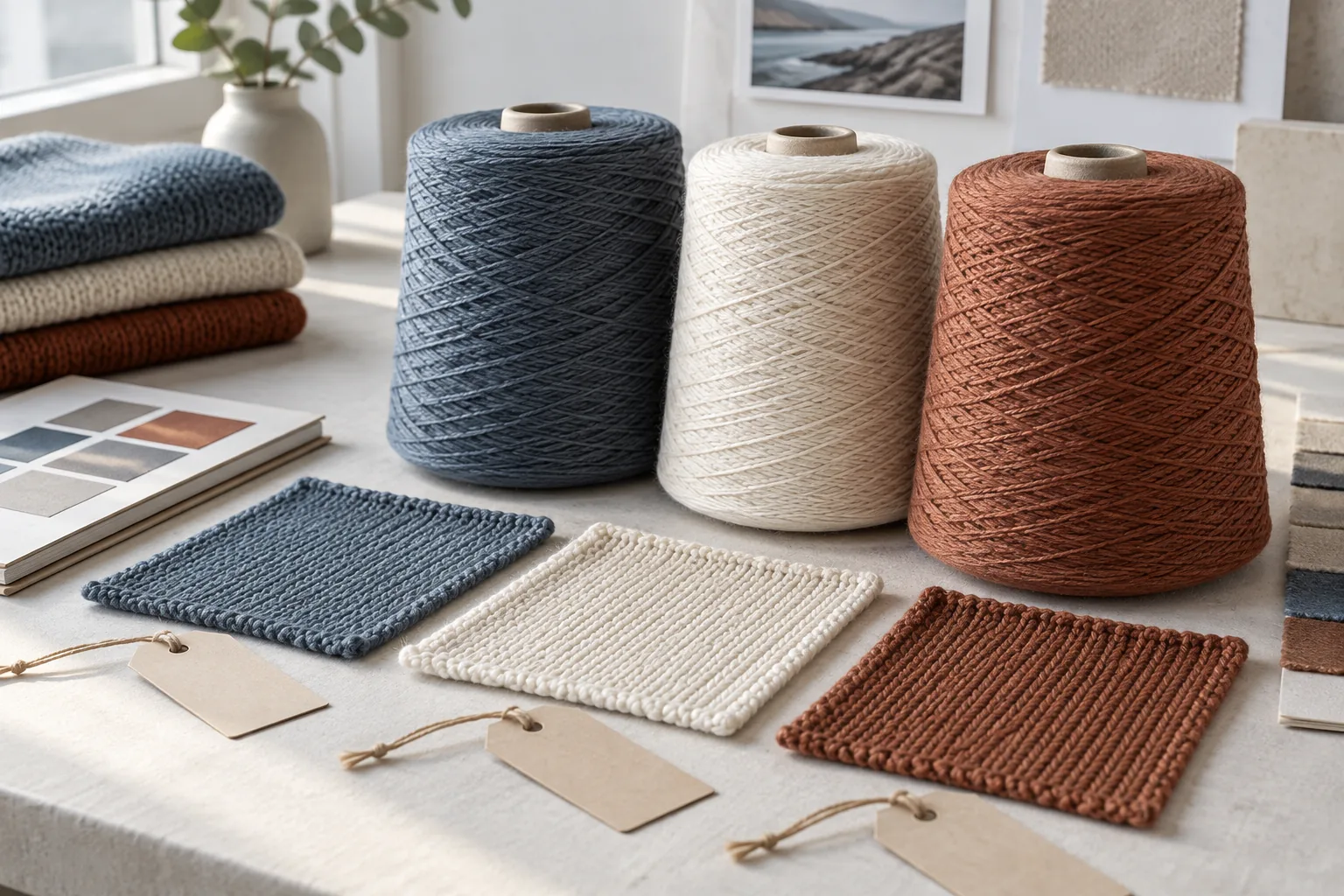
Compare MOQ by style, colour and yarn class, not by a single headline number. A factory saying “MOQ 100” and another saying “MOQ 300” can end up delivering the same effective cost once yarn dye lots and colour counts are factored in. The buyer’s job is to translate the MOQ structure into your actual assortment plan.
Check material-specific minimums
Do not assume that cotton, wool or cashmere has one standard minimum across suppliers. Request a written minimum for each style and colour, plus the yarn mill or dye-lot constraint behind it. Confirm whether existing stock is available, reserved or merely shown on a yarn card. A supplier may accept a small garment order but still charge for unused yarn. Record who owns that remainder and whether it can support a later order. Our yarn and garment MOQ guide explains why these are separate purchasing decisions.
Reading MOQ the way factories actually calculate it
Translate every minimum into your actual assortment. Ask for estimated yarn use, waste assumptions and the quantity required for each colour. A multicolour design may create several material minimums. Garment weight, stitch structure and yield also affect the result; gauge alone cannot predict yarn consumption. Compare the total commitment and expected sellable units, not just pieces per style. Before changing the assortment, check our custom sweater MOQ planning guide and ask the supplier to reissue the quote against the revised brief.
Use this comparison sheet to request order-specific evidence. It deliberately does not give universal MOQ or delivery benchmarks. Fill the same fields for every candidate, then flag any answer based on an unconfirmed material or production slot.
| Decision | Evidence to request | Comparison risk |
|---|---|---|
| Order minimum | Style, colour and yarn minimums in the quote | A garment minimum may exclude unused yarn cost |
| Sample approval | Revision log, measurements and retained sample | An attractive sample may lack a repeatable specification |
| Quality release | Defect definitions, sampling plan and signed report | A pass label may conceal a different inspection scope |
| Delivery window | Material readiness and allocated process dates | A quoted duration may start after an unstated approval |
| Repeat order | Retained yarn reference and reapproval triggers | The next batch may use a different material lot |
For buyers, the practical takeaway is that consolidating colourways and using stock-service yarn is often the fastest way to lower effective MOQ without asking the factory to absorb risk.
How Can Sample Records Support a Supplier Comparison?
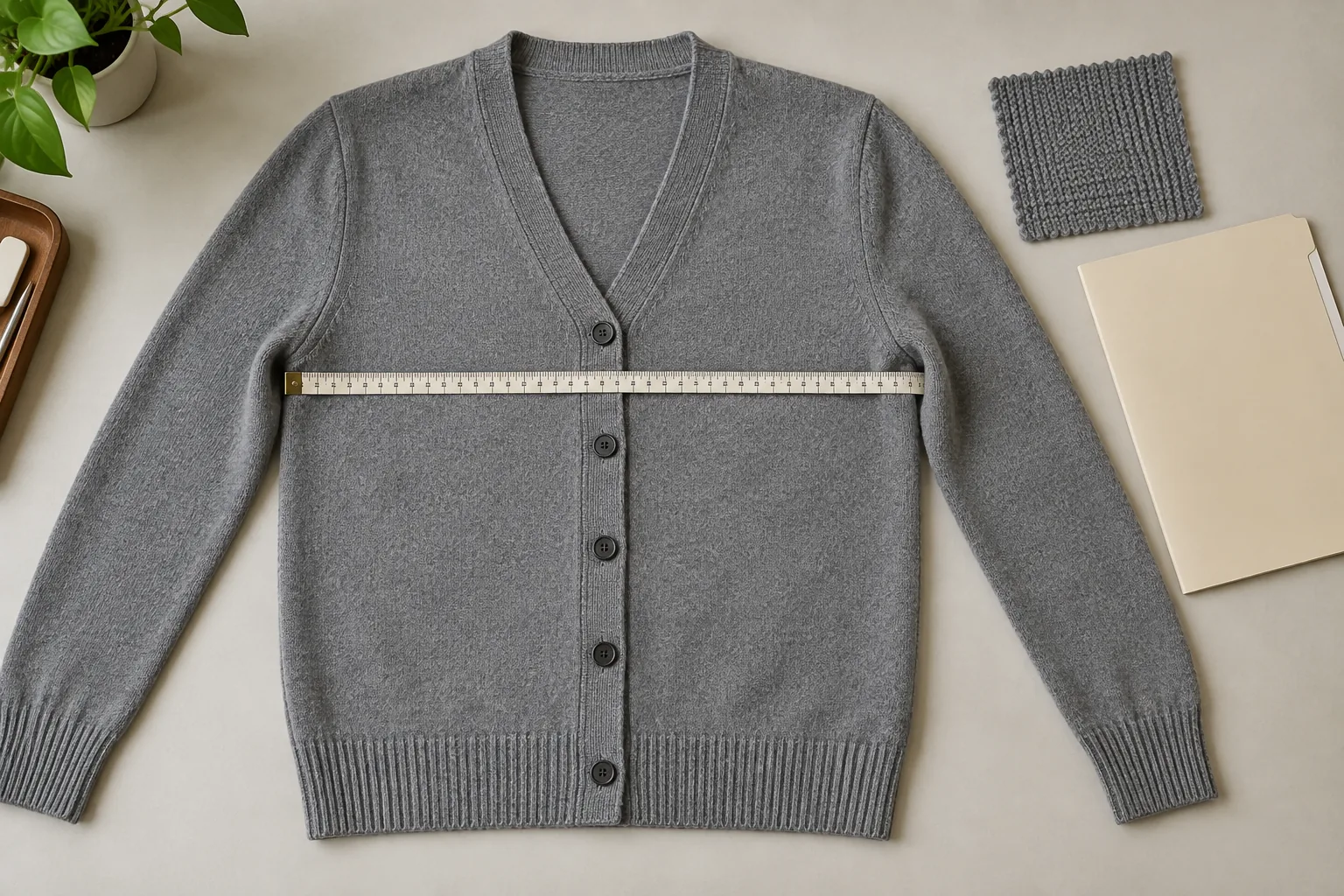
When comparing wholesale knitwear suppliers, check sample control, not just the number of rounds. A simple style can pass quickly; a complex brief may need several useful revisions. Repeated failures need investigation, but do not prove hidden outsourcing. Check whether each round closes the agreed comments and preserves previously approved details. Ask the supplier to explain any new deviation before accepting the next sample.
What a proper sampling process looks like
Request a sample plan with a named starting condition and dated checkpoints. Separate material selection, fit review, size approval and pre-production release where the order requires them. Ask what happens if a buyer changes the brief or a yarn is unavailable. Do not treat a quoted duration as a guaranteed delivery date. The custom sweater sampling checklist can help turn these stages into records that both parties can review.
How many yarn options a factory can actually offer
Ask for a current yarn card and identify the exact yarn used in the sample. Check its supplier, composition, colour reference and availability for your planned quantity. A large catalogue does not prove that the selected material is in stock. It also does not guarantee continuity for later orders. If the proposed yarn changes, require a documented comparison and decide whether another sample is needed. See our yarn substitution checks after sample approval before treating a replacement as equivalent.
Look past the garment and check its records. Request the measurement sheet, agreed tolerances, yarn identity and construction comments. Match the record version to the physical sample. Use photographs for visible details, not as proof of fibre content or test performance. Keep a retained reference that the production team can identify. The measurement tolerance guide helps buyers specify how a measurement is taken, rather than arguing over a number produced by two different methods.
How Do You Compare Quality and Compliance Evidence?
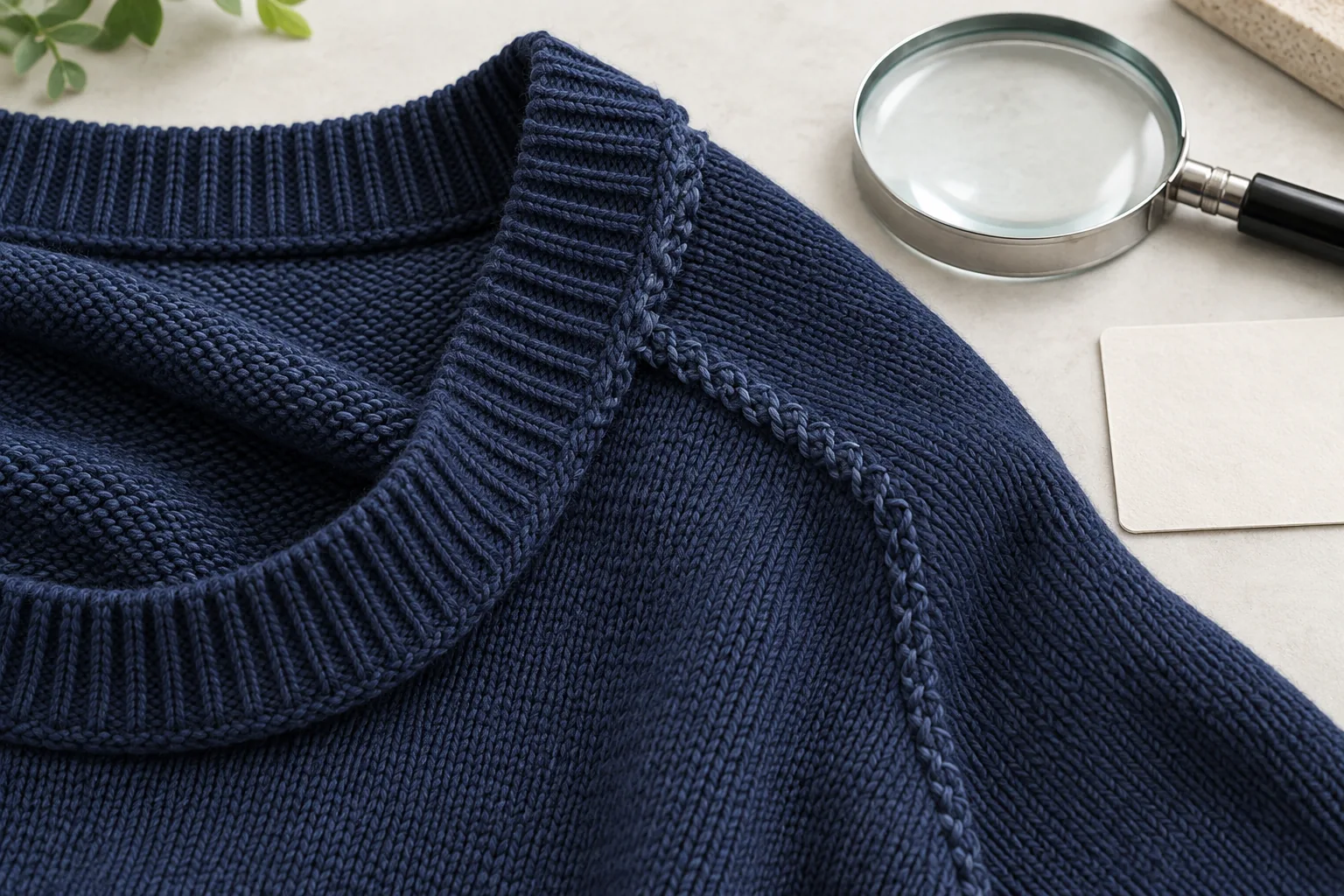
Ask wholesale knitwear suppliers for the inspection plan and supporting records, not just a marketing claim. Visual inspection can identify construction and appearance issues. It cannot establish every performance property or reveal every hidden defect.
AQL levels and what they mean for your PO
Agree the sampling plan before production. It should identify the lot, inspection level, sample size, defect classes and acceptance rules. An AQL label alone is not a complete instruction or a guarantee that every garment is defect-free. Define how any critical safety finding is handled instead of calling it an “AQL 0” standard. Review the bulk sweater inspection guide with your inspector. Keep product safety requirements separate from the commercial visual inspection.
Physical tests that matter for knitwear
Choose tests from the product specification and intended use. Dimensional stability, pilling, colourfastness and composition may need different methods and samples. Confirm the method, care conditions and acceptance criteria with the laboratory before testing. A report for another fabric or colour does not automatically cover this order. Intertek describes textile inspection at pre-production, production and delivery stages. Use those stages to decide when evidence is needed, while keeping laboratory testing and visual inspection as separate checks.
Check the scope of any audit or certificate offered during selection. Identify the legal entity, facility, date, activities covered and unresolved findings. Do not treat a certificate image as evidence of every subcontractor or every production lot. The OECD garment and footwear due diligence guidance provides a framework for identifying and addressing supply-chain risks. A buyer can use that framework to organise questions and follow-up actions; it is not a certificate of supplier approval.
What Does the Delivery Plan Need to Prove?
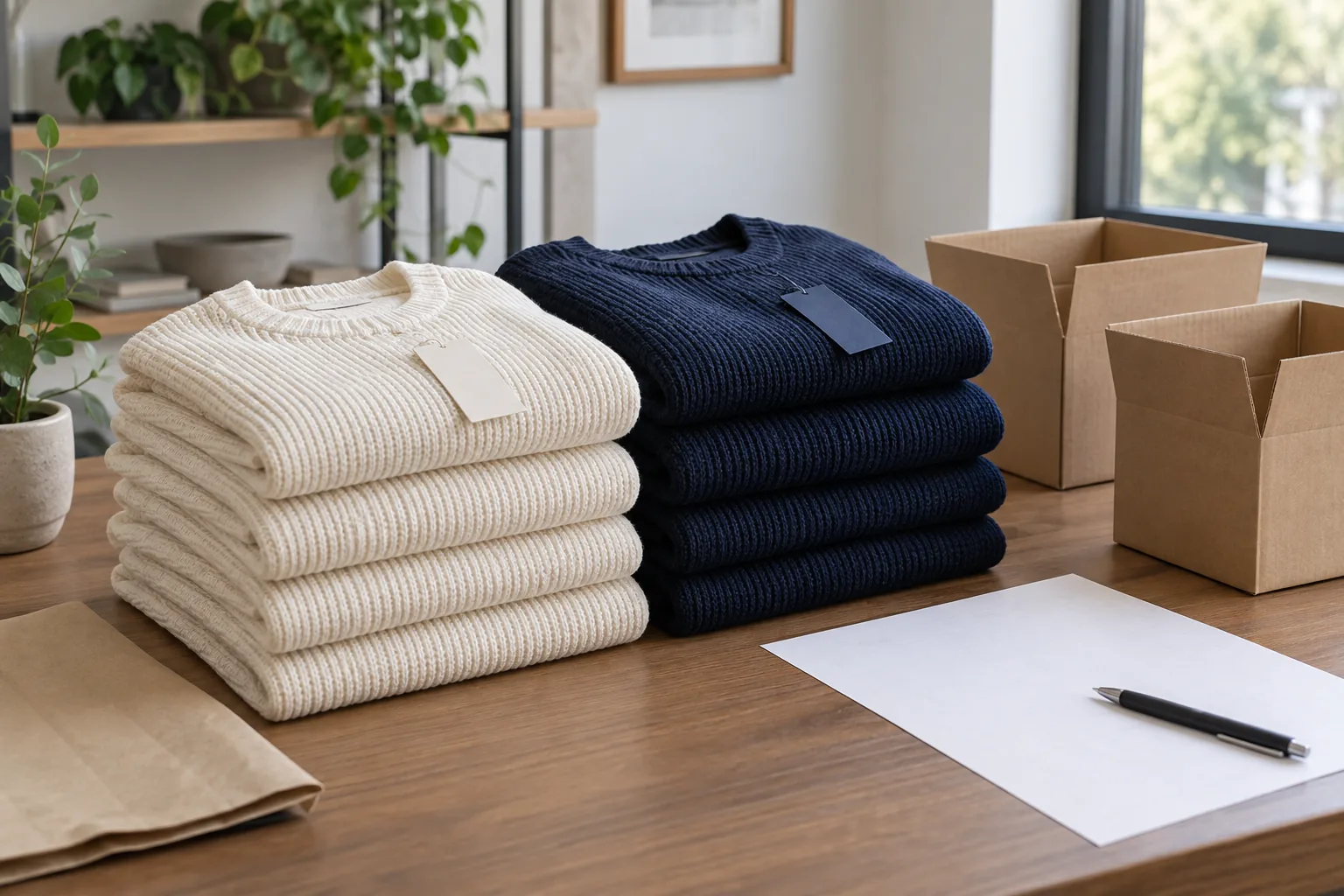
Compare delivery promises from wholesale knitwear suppliers against the processes your order needs. A large monthly output figure may describe a different product or a fully booked period. A small specialist may have suitable capacity, while a larger factory may lack space on the required gauge. Ask which processes are constrained and what evidence supports the proposed completion date.
Confirm the delivery starting conditions
Write the start condition beside each lead-time quote. It may depend on approved samples, cleared payment, yarn arrival or final packing instructions. Request dates for those inputs and for the main production stages. Ask how holidays, subcontract work and rework affect the plan. A purchase order acknowledgement is not the same as an allocated production slot. Use the factory capacity questions to check the proposed window against current loading. Do not substitute a generic industry timeline for an order-specific commitment.
How capacity shapes your reorder cycle
For a repeat order, ask what remains available after the first delivery. Identify the yarn, trims, approved files and retained samples. Then confirm whether the supplier can reserve a suitable window or must quote again. Avoid assuming that a first order creates automatic priority. A refill may require a new dye lot, another test or a revised size breakdown. Keep these dependencies in the reorder decision so sales teams do not promise an identical product before production has checked the inputs.
Request current freight quotations for the actual route, shipment date, carton measurements and agreed trade terms. Compare the same delivery endpoint and included charges. Transit estimates can change and do not include every customs or inland delay. Separate factory readiness from carrier departure and warehouse receipt. Ask who bears each cost and who supplies the required documents. The ICC Incoterms rules overview is a primary reference for trade-term responsibilities; the named place and chosen rule still need to be recorded in the contract.
Which Unresolved Questions Should Delay Approval?
Use vetting to identify unresolved risks, not to predict every future failure. Investigate vague minimums, missing sample records, unclear yarn sources and inspection restrictions. Decide what evidence would resolve each question before approving the order.
Quotation and MOQ red flags
Be cautious when a supplier quotes a flat MOQ without asking about your colourways, gauge or yarn class. That usually means the number is a sales anchor rather than a real production constraint. Also watch for quotations that exclude sampling fees, yarn surcharges on small dye lots, or packaging costs. These often re-appear later as “unexpected” line items and distort your landed cost comparison between sweater suppliers.
Sampling and communication red flags
When sample rounds slip, request a cause and a revised action plan. Missing specifications, material problems and scheduling conflicts require different responses. Ask for records that connect the current sample to the production method. If a supplier claims in-house control, verify that claim rather than inferring it from response speed. A refusal to disclose essential process responsibility is an unresolved sourcing risk, not proof of a particular hidden arrangement.
Agree inspection access, report ownership and the response to failed findings before placing the order. Ask who contains affected goods, who approves corrective action and who pays for a repeat check. A supplier may propose a different inspection arrangement; compare its scope before accepting it. Do not assume that adding inspections guarantees a lower defect rate. The useful evidence is whether findings lead to documented corrections and whether the next check confirms those corrections.
Make the comparison traceable with a small decision log. Give each open question an owner, a requested document and a decision date. Keep the supplier’s original answer beside any later clarification. If the yarn or quantity changes, mark the old quote as superseded rather than editing its numbers in place. This prevents your team from comparing the price from one revision with the delivery promise from another.
Also distinguish a missing answer from an unacceptable answer. A missing report may be obtainable before release; an unavailable production process may require a different supplier. Decide which gaps can remain open during sampling and which must close before an order commitment. Record the reason for accepting any remaining risk, the person approving it and the check that will detect a change.
Conclusion
Choose wholesale knitwear suppliers by comparing evidence for the same order, not by collecting broad capability claims. The minimum order must match your colour and size plan. Sample records must define what bulk production should reproduce. The inspection scope must state how findings affect release. Capacity and shipping dates need clear starting conditions. Keep unanswered questions visible alongside each quote. A candidate with a higher price may include work that another excludes, but that difference needs checking rather than assumption. Before approving the supplier, retain the final brief, quotation, sample record and unresolved-risk decision together. For a discussion of a specific knitwear project, prepare your garment type, yarn direction, quantity breakdown and required delivery window, then contact the CNSweaters team with your order brief.
Frequently Asked Questions
What MOQ should I expect for a first order of custom sweaters from China?
There is no single minimum that applies to all suppliers or designs. Ask for the style, colour, yarn and trim minimums separately. Request the total commitment, including any unused material. If the quantity is too high, ask which design or material choices would change the constraint before reducing the order on paper.
How long does sampling really take, and what files do I need to send?
Ask the supplier to quote a timeline against a complete brief and confirmed material. Send measurements, construction details, colourways, trims and the required approval stages. Record when the timeline starts and how revisions affect it. A generic number of sampling days is not enough to plan a launch.
How do I protect bulk order quality without flying to the factory?
Appoint an inspector and agree the scope, sampling plan and release rules in writing. Match the inspected lot to the order and approved sample. Request the findings, photographs and corrective actions, not only a pass label. If the order also needs laboratory testing, agree those methods and reports separately.
Can I start with a small trial order and scale up later?
Ask whether a trial is commercially and technically feasible for the proposed yarn, colours and style. A small first order may carry setup or material costs that do not fall proportionally with quantity. Treat a forecast as planning information unless both parties agree a purchase commitment. Recheck capacity and materials before scaling.
What is the difference between a knitwear supplier and a knitwear manufacturer for private label programs?
A manufacturer operates production processes; a supplier is the party providing the goods and may use several production partners. The terms alone do not establish control. For private-label work, verify the legal seller, process allocation, approved specification and person authorised to change it. Use that evidence to judge accountability, not the business label alone.