 CN Sweaters
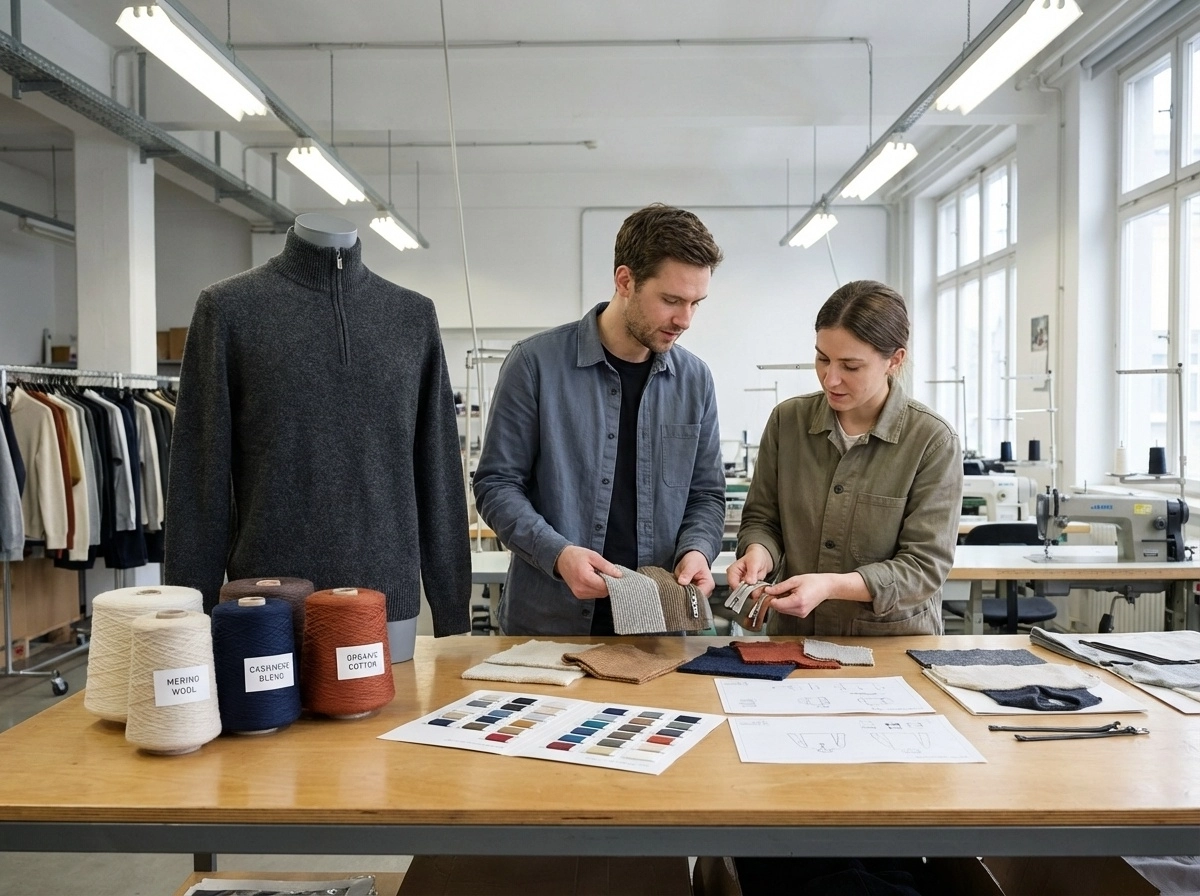
Choosing yarn for a mens half zip jumper line is not about picking the most expensive fiber on paper. For most brands, the better decision is to match yarn to retail position, season, care expectations, and bulk production stability. A premium result comes from the right balance of hand-feel, structure, consistency, and commercial fit.
This article is for buyers, product developers, and private label teams planning a premium half zip program. From a factory perspective, yarn choice affects far more than softness. It shapes gauge selection, zipper construction, sampling risk, MOQ flexibility, refill consistency, and final margin. If those decisions are not aligned early, even a strong design can become a difficult bulk program.
What Makes a Yarn Choice Premium for a Mens Half Zip Jumper
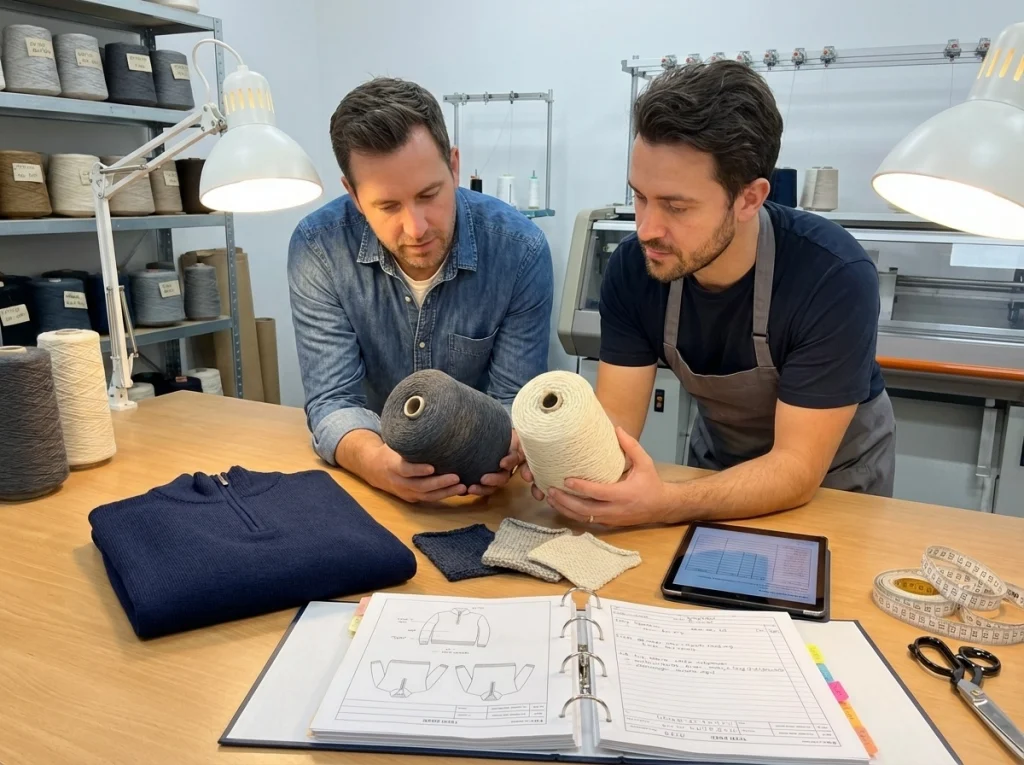
A premium yarn choice is the one that supports the product you actually want to sell. That sounds obvious, but many half zip programs go wrong because teams start with fiber prestige instead of product strategy. A yarn can sound luxurious in a showroom, yet still create problems in cost control, care claims, or repeat production.
For a mens half zip jumper, “premium” usually means a clean appearance, stable collar shape, smooth zipper integration, comfortable hand-feel, and reliable performance after washing and wear. Buyers also expect the garment to look good online, hold its shape in-store, and fit into a realistic retail price architecture. That is why premium should be defined by the finished product, not by fiber name alone.
From a factory perspective, yarn choice affects at least five things at once: drape, stitch definition, gauge feasibility, placket stability, and quality risk. In a normal pullover, you can sometimes hide a poor yarn decision through finishing. In a half zip style, the collar and zipper area expose problems much faster. If the yarn is too loose, too hairy, too unstable, or mismatched to gauge, the garment can look uneven around the placket even when the body looks acceptable.
That is also why we would not describe every cashmere program as premium by default, or every blend as a compromise. In real production planning, the premium option is often the yarn that delivers the right look with fewer surprises in sampling and bulk.
Which Yarns Work Best for Different Premium Programs
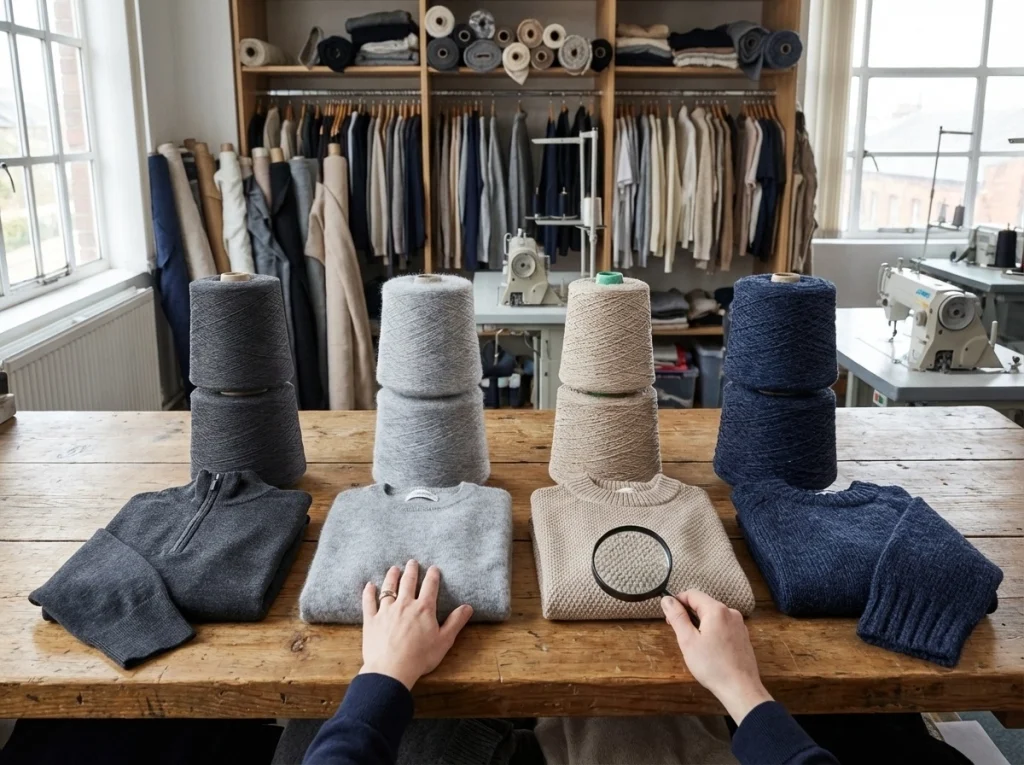
Merino wool for the safest premium baseline
For most premium half zip programs, merino is the safest starting point. It gives a refined surface, strong commercial acceptance, and a natural fit with business-casual menswear. Merino also works well across common half zip gauges, especially when the goal is a clean, polished silhouette rather than a bulky outdoor look.
Another advantage is that merino supports the visual language buyers often want in a premium line. The fabric can look sharp in 12GG to 14GG, drape well under a jacket, and photograph cleanly for e-commerce. That makes it a practical core choice for brands selling to officewear, smart casual, golf-inspired, or elevated basics customers.
Merino is not risk-free, though. Buyers still need to confirm pilling expectations, wash behavior, and yarn lot continuity before bulk approval. If the line is meant to scale into repeat orders, those checks matter as much as the initial hand-feel.
Cashmere and cashmere blends for selective high-end lines
Cashmere can create a strong luxury story, but it should be used selectively. Pure cashmere or high-cashmere-content yarns make more sense for limited capsules, higher retail tiers, or lines with tighter volume control. In those programs, the softness and prestige can justify the added development pressure.
The trade-off is that cashmere usually raises the bar on QC, finishing, and buyer expectation. If visible pilling appears too early, the brand risk is immediate. The yarn also tends to be less forgiving in bulk consistency than many commercial merino-led programs, especially when the style includes a zipper and structured collar.
For that reason, cashmere blends are often the more workable answer. A well-developed blend can keep the luxury direction while improving structure, durability, and cost discipline. In many cases, that is a better path than pushing pure cashmere into a program that really needs stable replenishment.
Cotton and cotton blends for lighter and easier-care programs
Cotton is a reasonable premium option when the product is meant for lighter wear, transitional seasons, or easier-care positioning. It works especially well when the target customer wants a cleaner, casual product rather than a clearly wool-led winter knit.
That said, cotton should not be treated as a direct substitute for premium wool in every half zip program. The feel, drape, and perceived value are different. Cotton often reads more relaxed and less elevated unless the construction, gauge, and finishing are carefully aligned. If a brand wants a polished business-casual half zip sweater men style, fine merino usually gets there more easily.
Cotton blends can be more commercially useful than pure cotton in this category. They can help adjust weight, softness, and recovery while keeping a lighter seasonal identity. For spring assortments or brands that want a softer care story, that can be the right fit.
Wool blends when margin and consistency matter
Wool blends are often underrated in premium development. Many buyers hear “blend” and assume compromise. In practice, blends can be the most commercial premium solution, especially when the line needs cost discipline, better durability, or smoother repeat production.
A merino blend or wool-synthetic blend can help control pilling risk, improve shape retention, or stabilize the program at a more workable price point. That matters when the product is not a one-time fashion piece but part of a broader sourcing plan with possible refills.
For many brands, this is where premium and commercial reality meet. A well-built wool blend can feel more premium in the final garment than a poorly managed luxury yarn program. The result is not just better cost control. It is often better bulk confidence as well.
| Yarn Option | Best For | Main Strength | Main Risk | Typical Price Position | Factory Note |
|---|---|---|---|---|---|
| Merino Wool | Core premium lines | Clean look, refined hand-feel, broad market fit | Needs wash and pilling control | Mid to upper premium | Safest baseline for many half zip programs |
| Cashmere Blend | Limited luxury capsules | Softness and elevated perception | Higher QC pressure and higher cost | Upper premium | Better than pure cashmere for many scalable programs |
| Cotton Blend | Transitional or easier-care programs | Breathability, lighter feel, softer care positioning | Can look less elevated than wool | Mid premium | Works best when season and fit direction are clear |
| Wool-Acrylic Blend | Entry premium or value-conscious premium | Cost balance and production stability | Can feel less elevated if yarn quality is weak | Entry to mid premium | Good option when margin matters |
| Wool-Nylon Blend | Durable premium programs | Better recovery and structure | Needs careful hand-feel control | Mid to upper premium | Useful when repeatability matters |
How Yarn Choice Changes Gauge Drape and Zipper Structure
Fine gauge yarns for cleaner business-casual half zips
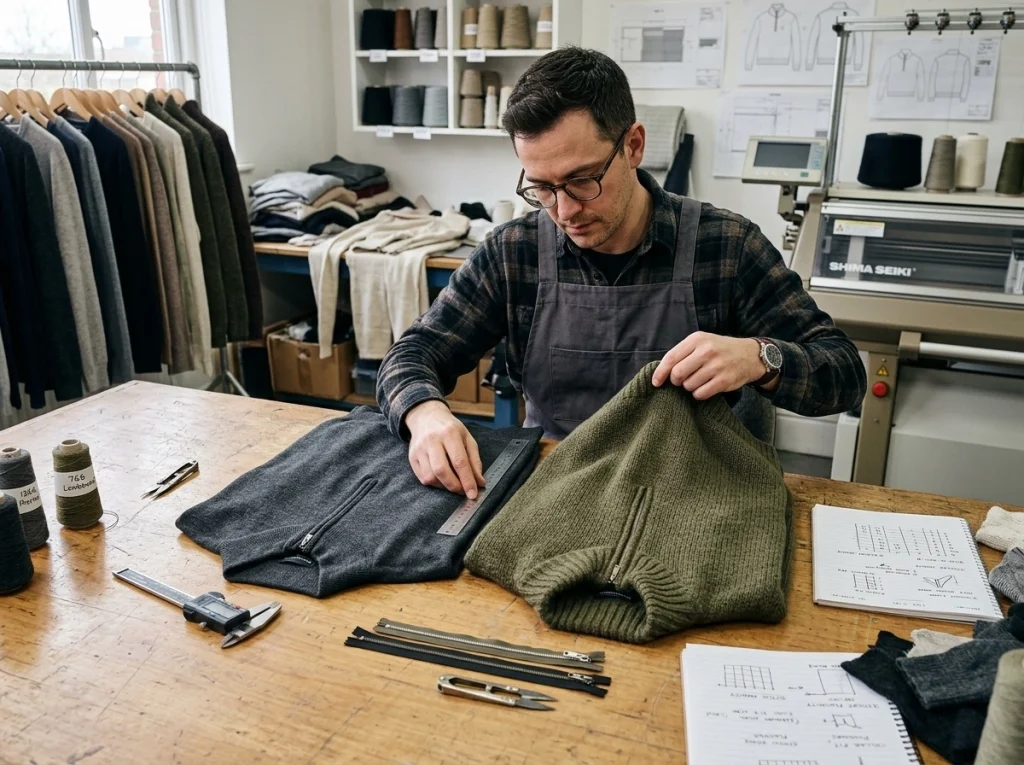
If the goal is a polished, business-casual mens half zip jumper, finer gauges usually make more sense. A 12GG or 14GG program paired with merino or a refined merino-led blend tends to create the cleanest result. The surface looks smoother, the body drapes better, and the garment sits closer to tailoring than to outerwear.
This matters because half zip styles often sell on sharpness. Buyers want the product to layer easily, hold shape around the collar, and avoid looking bulky at the placket. Fine-gauge yarns support that direction better than heavier, fuzzier constructions.
Brands comparing gauge directions can also review this custom sweater gauge guide before locking a development path.
Mid-gauge yarns for broader wholesale appeal
Mid-gauge yarns still have a strong place in premium half zip development. A 7GG to 10GG structure can feel more substantial, more casual, and more broadly commercial for fall and winter assortments. It is often a practical choice for wholesale programs that want visible texture and stronger shelf presence.
The limitation is that mid-gauge programs expose yarn quality in a different way. If the yarn is weak, hairy, or inconsistent, the garment can quickly lose the premium feel. Weight and shipping cost may also rise, which matters for larger B2B orders.
That does not make mid-gauge a weaker option. It simply means the yarn decision should match the intended look. A relaxed wholesale half zip can work very well in mid-gauge. A cleaner office-oriented line usually benefits from going finer.
Why collar and placket stability matter in zip styles
This is where half zip development becomes more technical than a regular pullover. Once a zipper enters the garment, yarn choice has to support collar shape, placket flatness, and the transition from knit fabric to hardware. A yarn that feels attractive in a swatch may still fail in the finished garment if it cannot hold that structure cleanly.
In practice, buyers should evaluate yarn together with zipper type, collar construction, and gauge. A soft yarn with weak recovery may create waviness near the zipper. A hairy yarn may make the placket look less clean than expected. A yarn that behaves well in the body panel may still struggle where the collar meets the zip opening.
That is one reason a mens half zip jumper wholesale guide is useful to review alongside yarn planning. In a zip up knit sweater program, structure and fiber choice should be discussed together, not as separate decisions.
What Buyers Should Confirm Before Sampling Starts
MOQ and yarn booking before you ask for a quote
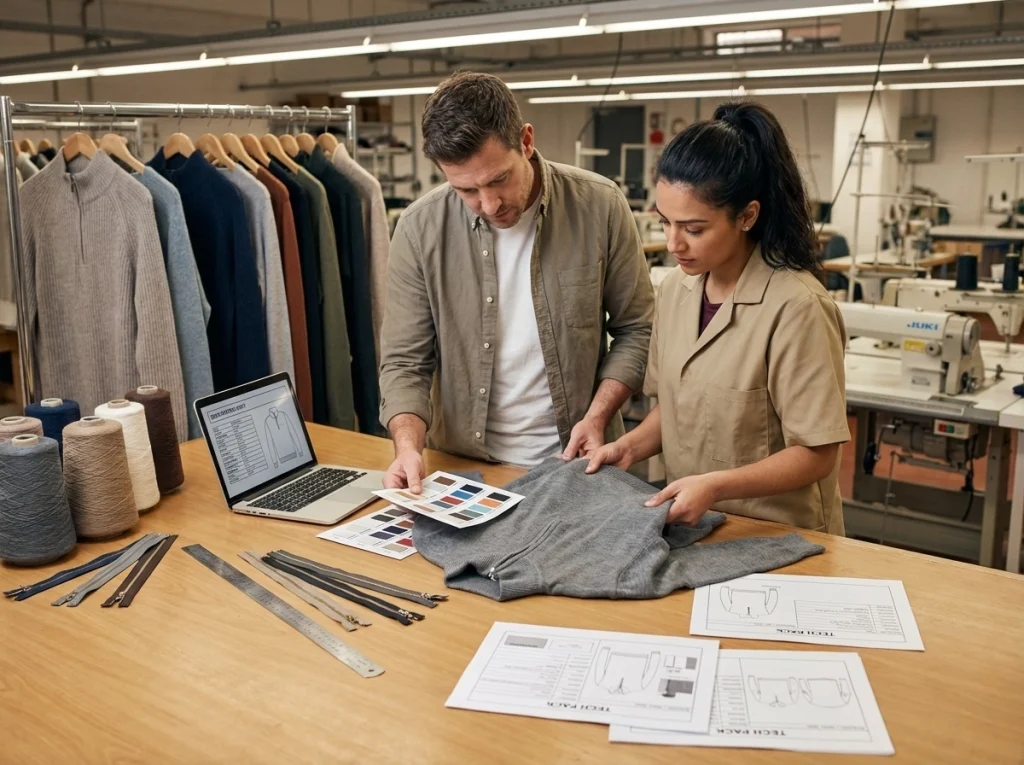
The best time to discuss yarn is before the quote is finalized, not after the first sample arrives. Buyers should already have a working view on fiber direction, gauge range, fit profile, and approximate quantity split when requesting pricing. Without that, the yarn discussion stays too abstract.
MOQ is especially important because yarn choice can affect flexibility. Some premium yarn programs are easier to start in small quantities than others. Others need firmer planning because of sourcing, dye continuity, or production efficiency. Brands that expect multiple colorways or future refills should surface that early.
If your team is still deciding how quantity and timing affect feasibility, this MOQ and lead time for knitwear page is worth checking before RFQ.
Sample checks for pilling shrinkage and shade continuity
A premium half zip sample should not be approved on hand-feel alone. Buyers should confirm pilling behavior, dimensional stability, shade continuity, and placket appearance before moving into PP or bulk planning. That is even more important when the yarn claims a luxury or performance position.
From a factory perspective, sample review should answer clear questions. Does the collar stay balanced after washing? Does the zipper area remain flat? Does the yarn still look premium after handling? Are color and surface appearance stable enough for a multi-color program? Those checks are more valuable than general feedback like “feels nice” or “looks good.”
For a more detailed view of checkpoint logic, buyers can review the site’s knitwear quality control system and align testing expectations before bulk sign-off.
Lead time and refill planning for repeat programs
Premium yarn choice also affects planning after launch. Some yarns are easier to repeat, some are harder to match, and some become risky if the line depends on rapid refill. That does not mean brands should avoid richer fibers. It means they should be honest about what kind of program they are building.
If the product is a seasonal statement piece, higher yarn complexity may be acceptable. If the line is meant to become a core replenishment style, continuity matters more. In that case, yarn availability, lot stability, and repeat feasibility should weigh heavily in the decision.
That is where broader development support also matters. A capable OEM knitwear manufacturing service or OEM/ODM knitwear and private label wholesale team can help buyers translate yarn preference into a practical sampling and bulk plan.
A Practical Yarn Matrix for a Mens Half Zip Jumper Line
Best choice for entry premium
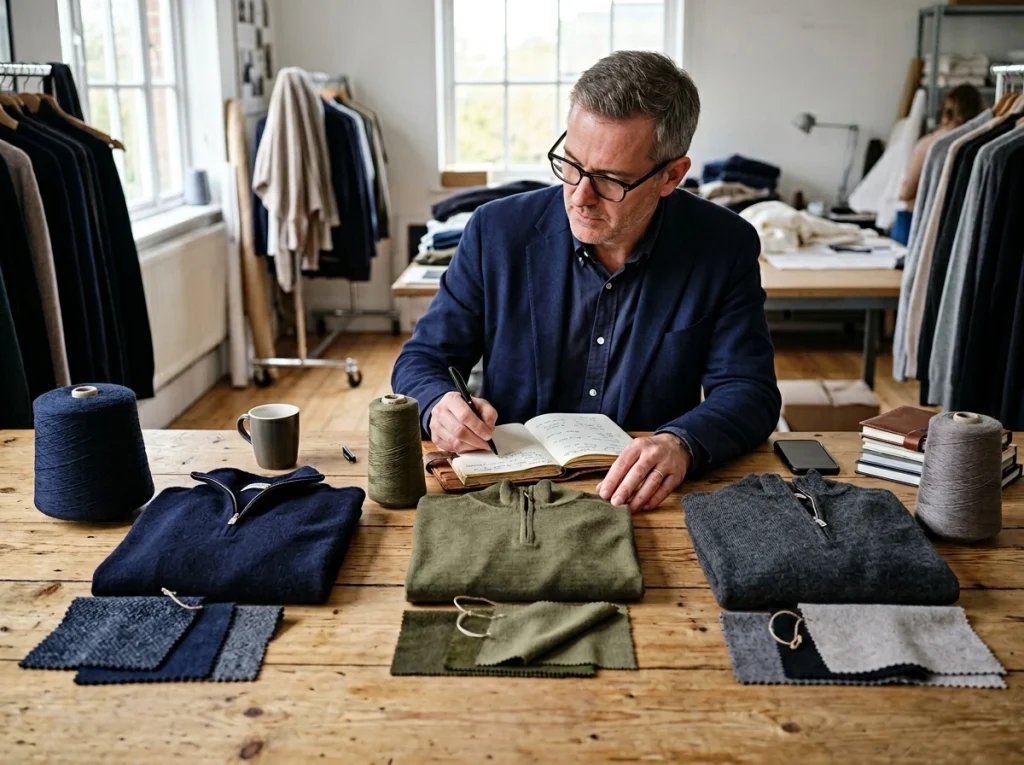
For entry premium, a good wool blend is often the strongest answer. It gives a better path into premium positioning than low-cost imitation luxury stories, while keeping pricing and production more manageable. This tier works well for brands that want a commercial half zip sweater men line with decent margin protection.
Best choice for core premium
For core premium, merino remains the most reliable center point. It supports clean gauge work, a refined business-casual look, and strong acceptance across many markets. If a buyer wants one yarn direction that covers premium appearance, realistic bulk planning, and repeat potential, merino is usually where we would start.
Best choice for limited luxury capsules
For limited luxury capsules, cashmere blends or carefully structured cashmere-led programs make sense. The key word is limited. These lines work best when the brand can support tighter QC, more selective volume, and a higher final price position. They are a good fit for image-building capsules, not automatically for every scalable premium line.
Conclusion
For most brands, the best yarn for a premium mens half zip jumper is not the one with the strongest luxury label. It is the one that matches the product’s retail role, care expectations, fit direction, and production reality. In many cases, that means starting with merino or a merino-led blend rather than chasing the most expensive option first.
Cashmere still has a place, especially in selective high-end capsules. Cotton and cotton blends also make sense when the line is lighter, more casual, or easier-care by design. At the same time, well-developed wool blends often give buyers a better commercial answer than expected, especially when margin, consistency, and refill potential matter.
From a factory perspective, the strongest premium half zip programs are built through alignment. Yarn, gauge, zipper construction, MOQ, sample testing, and repeat planning all need to support the same product idea. If you are still comparing yarn directions for your next line, send us your tech pack and yarn target and we can help review the most workable development path.
FAQ
Is merino always the best yarn for a mens half zip jumper
Not always, but it is often the safest premium baseline. Merino works especially well when the product needs a clean appearance, refined hand-feel, and broad commercial appeal.
When does a cashmere blend make more sense than pure cashmere
A cashmere blend usually makes more sense when the brand wants a luxury direction but still needs better structure, lower risk, or more practical bulk execution. It is often the smarter choice for scalable premium programs.
Is cotton a good option for a premium half zip sweater men program
Yes, if the product is meant for transitional wear, lighter handle, or easier care. Cotton is less direct than merino for a polished business-casual look, so the fit and gauge need to be aligned carefully.
How does yarn choice affect MOQ and lead time
Yarn choice can affect sourcing flexibility, dye planning, sample revision risk, and repeat feasibility. More complex or less flexible yarn programs may require earlier booking and tighter planning.
What should buyers test before approving bulk yarn for zip up knit sweater styles
They should confirm pilling behavior, shrinkage, shade continuity, collar balance, zipper flatness, and overall appearance after handling or washing. For half zip styles, structure checks are just as important as softness.