 CN Sweaters
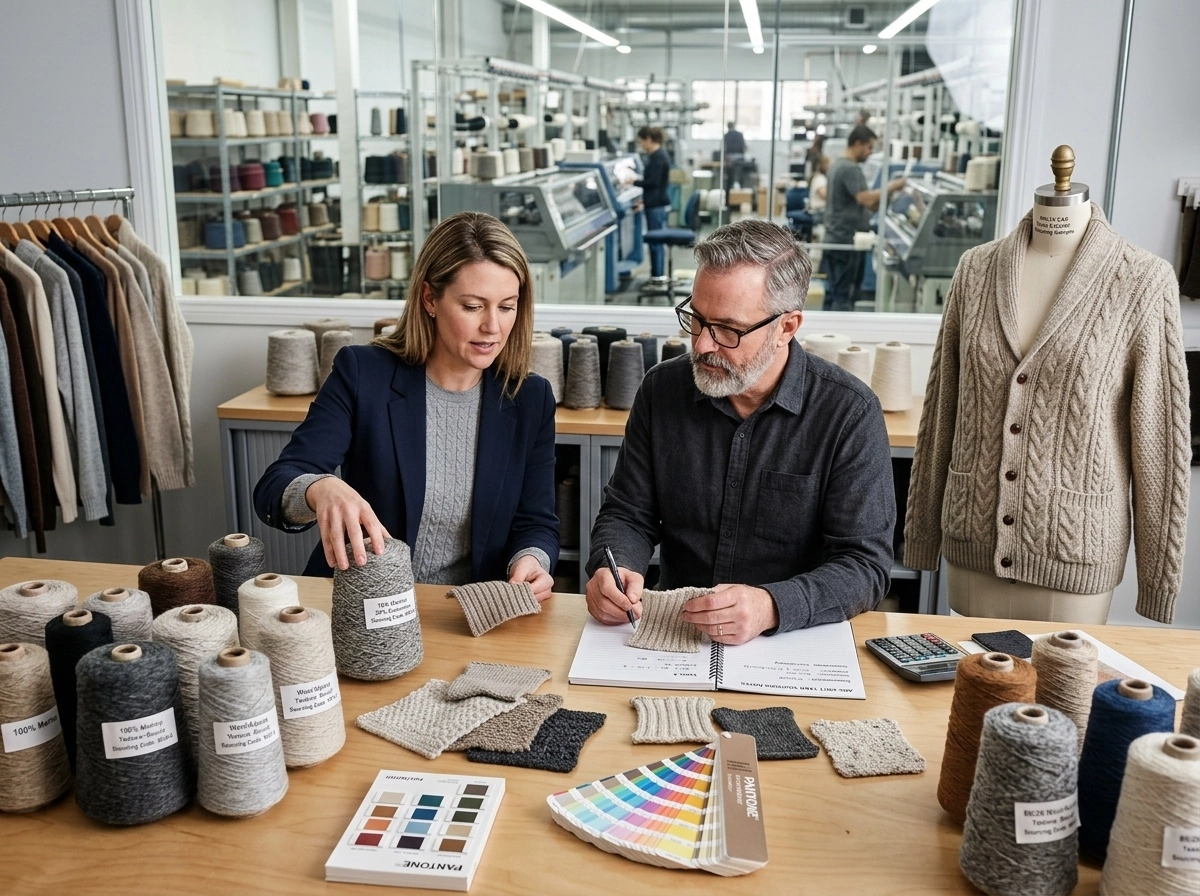
A wool cardigan sweater is not always best made with pure wool. For brands planning knitted cardigan production, blended yarns are often the safer commercial choice because they offer a better balance of warmth, softness, shape retention, cost control, and bulk consistency.
This article is written for brands, wholesalers, distributors, procurement managers, and product developers who need to make practical yarn decisions before sampling and bulk production. From a factory perspective, the best yarn blend is not the one with the highest wool content, but the one that fits your target price, stitch structure, gauge, and reorder strategy.
When Does Pure Wool Create a Production Risk?
Pure wool can be the right answer for some premium programs, but it is not automatically the best answer for production. In commercial cardigan development, buyers usually need a better balance between hand-feel, structure, lead time, and repeatability.
What wool does well in cardigan development
Wool remains attractive because it offers warmth, elasticity, breathability, and a natural premium story. Those qualities make it especially relevant for fall and winter cardigans, where buyers want comfort without losing visual value. As explained in The Woolmark Company’s guide to wool fibre properties, wool also has natural resilience, moisture management, and wrinkle resistance, which is why it remains a strong base fiber for knitwear.
From a product development angle, wool also supports better recovery than many lower-cost fibers. That matters in cardigans, because front openings, plackets, cuffs, and hems all need some degree of rebound if the garment is expected to keep its shape through wear.
Where pure wool creates production pressure
The problem is that a pure wool story can come with real production pressure. Depending on the yarn type and garment structure, buyers may face higher material cost, more sensitivity in wash performance, more visible surface change after wear, and tighter tolerance expectations during bulk.
Cardigans are especially unforgiving because they are not merely body panels joined together. The front opening, button line, and placket area create stress points. If the yarn choice is too soft, too unstable, or too heavy for the structure, the garment may lose shape where the customer notices it first.
Why blends are common in commercial programs
That is why blended yarns are so common in actual production. A blend is not simply a cost-cutting shortcut. In many cases, it is the practical way to balance softness, stitch definition, shape retention, pilling behavior, and price.
At yarn selection stage, buyers still need to evaluate count, quality, texture, weight, budget, and sampling rather than relying on fiber marketing alone, which is also a useful reminder in Surya Spinners’ yarn selection guide. For a wool cardigan sweater, the commercial question is usually not “How much wool can we add?” but “Which blend gives us the right result with the least production risk?”
Which Blend Fits Each Cardigan Programme?
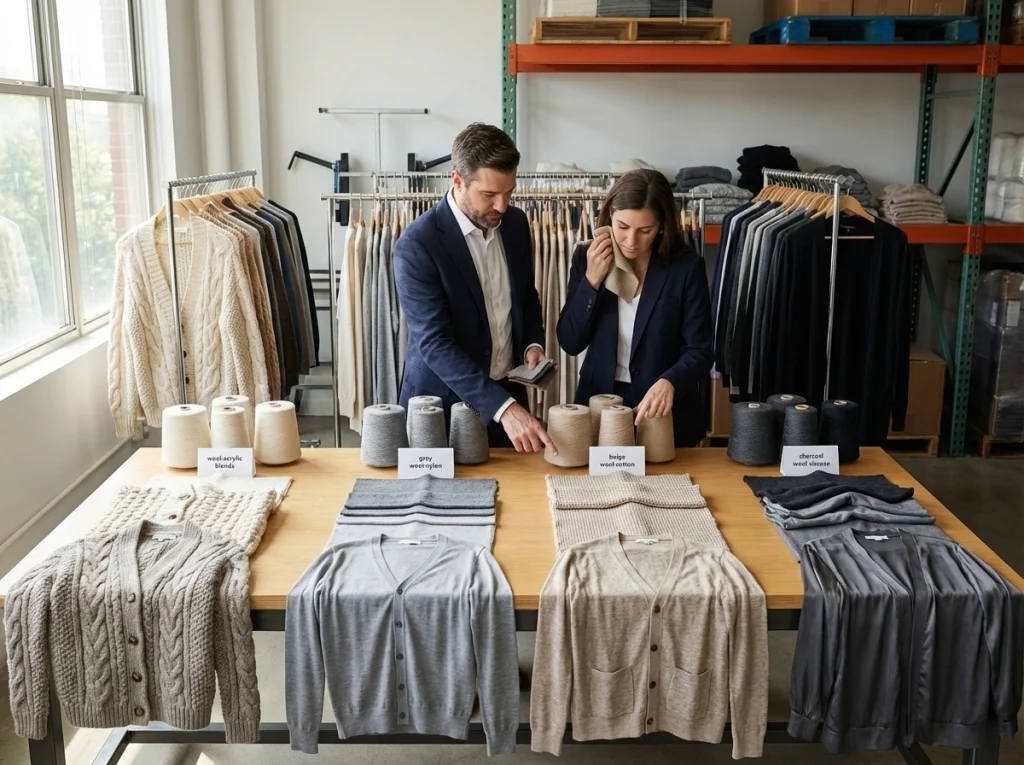
Different cardigan programs need different blends. The right choice depends on whether the style is cost-driven, texture-led, lightweight, or meant for repeat orders where stability matters more than fiber romance.
| Blend Type | Best For | Main Advantage | Main Trade-Off | Factory Note |
|---|---|---|---|---|
| Wool-Acrylic | Commercial basics, price-sensitive programs | Better cost control and broad commercial usability | Less natural hand-feel than higher-wool options | Good for core styles when the target price is tight |
| Wool-Nylon | Structured cardigans, longer-wear programs | Better strength and support in stress areas | Can feel less lofty if the yarn setup is too hard | Useful when placket stability and durability matter |
| Wool-Cotton | Transitional or lighter cardigans | More breathable and easier for milder seasons | Less warmth and sometimes less bounce | Better for spring/fall layering than heavy winter styles |
| Wool-Viscose | Softer drape-led silhouettes | Cleaner drape and smoother surface | May need closer control on shape retention | Better for lighter fashion cardigans than rigid structures |
Wool-acrylic blends for cost-sensitive core styles
Wool-acrylic blends usually make sense when a buyer needs a commercial cardigan that still feels seasonal but must stay within a clear retail price structure. They can be a practical choice for basic button-front styles, schoolwear-inspired programs, and entry-level private label collections.
From a factory perspective, this blend often gives more flexibility in cost engineering. It can also make color development and repeat programs easier to manage than higher-risk yarns. The trade-off is that not every wool-acrylic yarn will deliver the same natural loft, depth, or premium touch that a better wool-rich blend can provide.
Wool-nylon blends for structure and longer wear
Wool-nylon blends are often the better option when the cardigan needs more support. They are useful in programs where the buyer is worried about elbow wear, placket distortion, repeated use, or replenishment performance across multiple orders.
This is especially relevant for structured retail styles and core programs that need longer commercial life. The goal is not to make the garment feel technical. It is to help the cardigan hold its shape better in the parts that tend to fail first. That kind of decision is often easier to make when the yarn plan is discussed together with a clear OEM/ODM knitwear service process rather than after sampling problems appear.
Wool-cotton or wool-viscose blends for lighter cardigans
Not every cardigan needs to feel heavy, fuzzy, or winter-dense. Wool-cotton and wool-viscose blends can be better choices for transitional programs, refined layering pieces, and silhouettes where a cleaner fall or lighter touch matters more than maximum warmth.
Wool-cotton often works when breathability and everyday wearability are priorities. Wool-viscose can help when a softer drape is needed, especially in women’s cardigans with a less rigid silhouette. The risk is that lighter, smoother blends may need more care around recovery, hem stability, and button-line support.
How Do Stitch and Gauge Change Blend Choice?
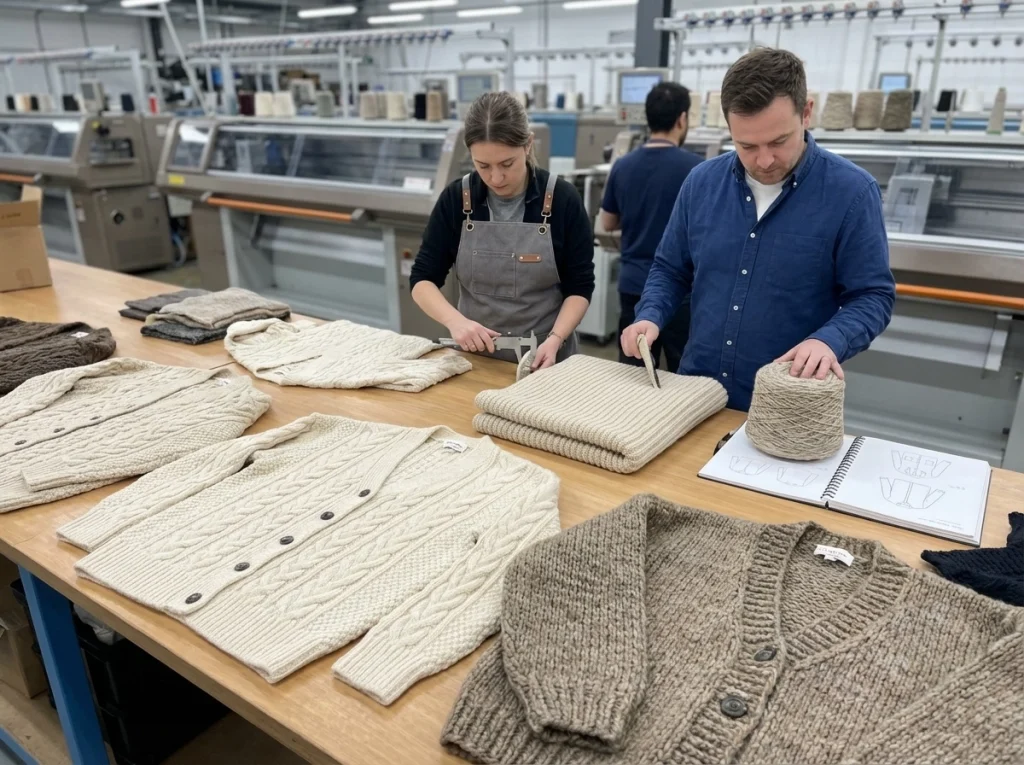
Yarn choice cannot be separated from stitch, gauge, and silhouette. A blend that works well in a simple jersey cardigan may fail in a textured style, and a blend that looks fine in a small swatch may become too heavy or unstable once the full garment is knitted.
What a cable knit cardigan needs from the yarn
A cable knit cardigan needs more than softness. It needs enough body and stitch clarity for the cables to read clearly, enough recovery to support the structure, and enough consistency to keep the pattern balanced across production.
If the yarn is too limp, the cable effect can look flat. If it is too hairy, the texture may become visually muddy. For that reason, buyers developing a cable knit cardigan should evaluate the yarn together with gauge, panel size, and front opening construction rather than approving fiber composition alone.
Why a chunky knit cardigan needs weight control
A chunky knit cardigan is where blend decisions become even more sensitive. Thick yarns and coarse gauges can create beautiful texture, but they also increase garment weight, shipping volume, and the risk of front-edge stretching.
That means a chunky knit cardigan is not merely a style decision. It is also a cost, wearability, and logistics decision. A blend that looks ideal in a sample may become too heavy for bulk if the garment length, placket structure, or button size is not adjusted early. This is one reason why checking sweater gauge options before final yarn approval is more useful than treating gauge as a later production detail.
Medium-gauge vs fine-gauge cardigan decisions
Medium-gauge cardigans usually offer the safest commercial range because they balance warmth, texture expression, and production efficiency. They can support many wool blends without pushing the program too far toward either bulkiness or fragility.
Fine-gauge cardigans require a different mindset. The yarn must be cleaner, more even, and more stable because the garment exposes every inconsistency. If the buyer wants a refined wool cardigan sweater rather than a textured casual piece, the blend should be selected for surface clarity and recovery, not merely softness on the first touch.
What Must Buyers Validate Before Bulk?
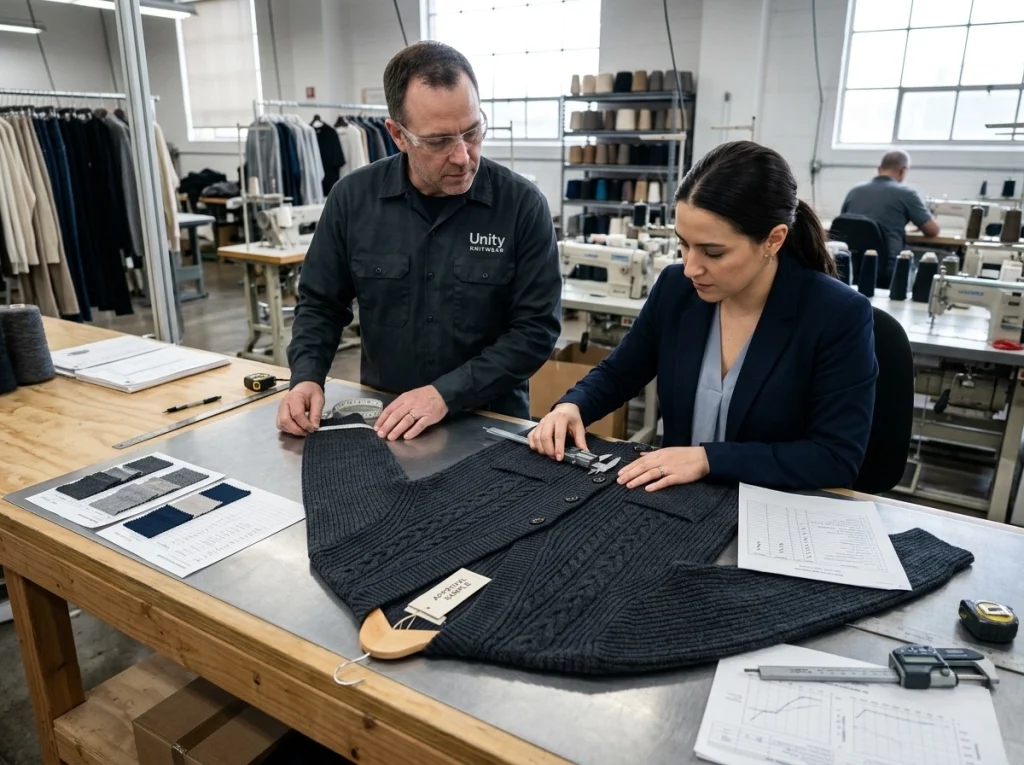
Before bulk begins, buyers should validate the yarn in use, not merely the yarn on paper. The safest cardigan programs are built on sample-stage verification of performance, not assumptions based on composition labels.
Swatches, wash tests, and hand-feel approval
A yarn can sound right in a quotation and still fail in real product use. That is why swatches and wear-focused sample reviews matter. Buyers should check surface feel, stitch behavior, and post-wash appearance before they approve the style for bulk.
A useful review is not limited to “soft” or “premium.” It should ask whether the hand-feel still supports the target customer after washing, whether the garment becomes too flat or too hairy, and whether the structure still matches the intended market level.
Placket stability, button line, and shape retention
In cardigan production, the placket and button line deserve special attention. These are the areas most likely to expose the wrong yarn choice because they combine weight, tension, and repeated handling.
Even a visually attractive blend can create trouble if the front opening grows, waves, or twists after wear. From a factory perspective, these risks should be reviewed together with placket method, stitch density, and trim selection. That is one reason buyer teams often benefit from discussing yarn choice alongside cardigan construction rather than treating yarn as a separate sourcing issue.
MOQ, dye-lot planning, and repeat-order consistency
Blend choice also affects the less visible side of the business. Some yarns are easier to repeat, easier to shade-match, or easier to secure in bulk than others. That matters for replenishment programs and for styles expected to return in new colors or future seasons.
If the brand also has sourcing or certification requirements, those should be aligned early. Textile Exchange’s wool overview highlights traceability, animal welfare, and certified wool as real sourcing considerations, not afterthoughts. For buyers, that means the fiber decision should support both product performance and supply-chain clarity before MOQ is locked.
How Should Buyers Balance Cost and Reorder Risk?
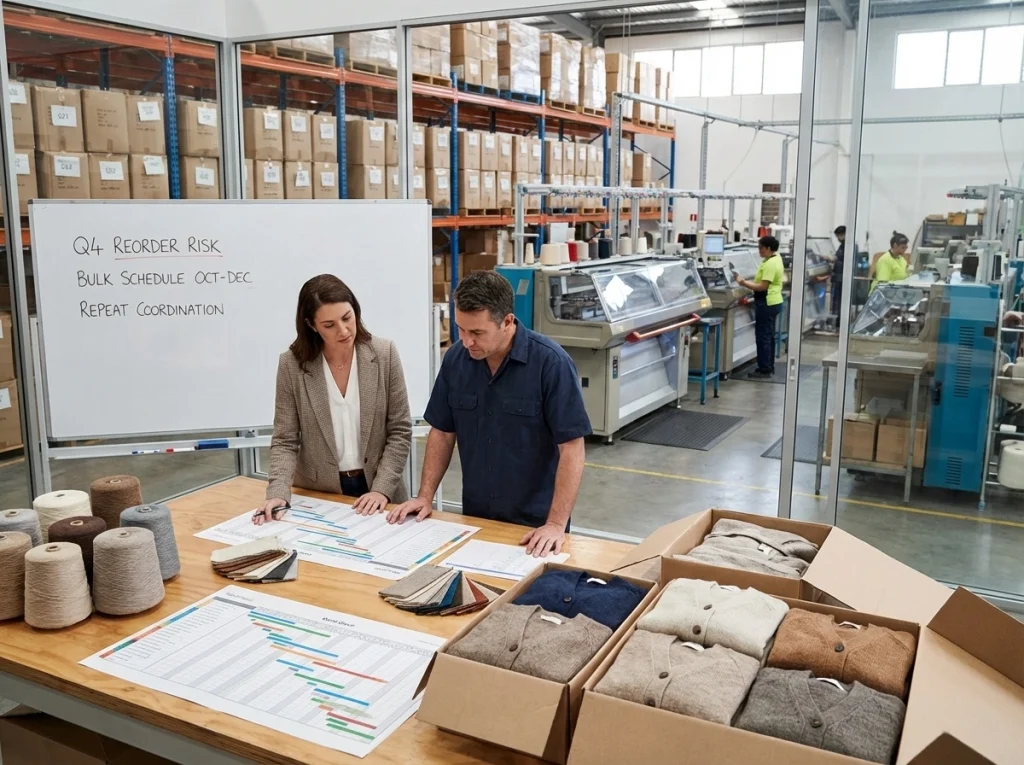
The best yarn decision is usually the one that protects the entire program, not merely the first sample. Cost, lead time, and reorder risk should be evaluated together because the cheapest starting option can become expensive once delays, corrections, or inconsistent repeats enter the picture.
Why the cheapest yarn is not always the cheapest program
A lower yarn price can look attractive at quote stage, but it may create hidden costs later. If the blend causes poor sample approval speed, unstable shape retention, or more quality claims after shipment, the apparent saving disappears quickly.
This is especially true in cardigans because customers notice front balance, drape, and shape loss very quickly. A yarn that is slightly better aligned with the garment structure often reduces friction across sampling, PP approval, and bulk inspection.
When to simplify the blend, stitch, or gauge
If the program is becoming too complex, buyers do not always need to change the whole concept. Sometimes the best move is to simplify one variable. That may mean choosing a cleaner blend, reducing stitch complexity, or moving from a very heavy gauge to a more stable commercial gauge.
This is usually the more effective way to protect margin and timing. In other words, if the yarn, the silhouette, and the stitch are all ambitious at the same time, the risk level rises sharply. Simplifying one element often protects the rest.
A practical factory-side recommendation by project type
For entry-price cardigans, wool-acrylic blends are often the most workable starting point. For structure-led cardigans or repeat programs, wool-nylon may be more reliable. For lighter fashion cardigans, wool-cotton or wool-viscose can be the better fit if shape control is built into the development stage.
The best decision comes from matching blend type to the actual business goal. If the goal is fast replenishment, choose stability. If the goal is visual texture, choose stitch definition. If the goal is broader seasonal wear, choose comfort and weight balance. A wool cardigan sweater performs well in production when the yarn serves the program, not when the label sounds impressive.
How Should Buyers Approve a Blend Specification?
Approve the blend as a controlled specification, not as a percentage written in a sales brief. The yarn record should state the declared fibre composition, yarn count, ply, twist direction when relevant, colour standard, finish, supplier lot and the test or sample that represents the approved hand feel. Match that record to a knitting swatch, washed panel and finished garment. If the results change after washing, linking or pressing, the buyer needs a documented revision before bulk release.
For a wool claim, the label route must be considered before packaging is approved. The U.S. Federal Trade Commission’s textile and wool labelling guidance explains why fibre claims require supporting information. That guidance describes legal labelling requirements; it does not verify a supplier’s blend. Buyers should request current fibre and transaction records for the order, then check that the product description, care label and packing data use the same approved specification.
Use a decision table with three columns: proposed blend, sample evidence and bulk-release condition. The sample evidence can include a garment measurement check, hand-feel sign-off, wash result, pilling or abrasion method where relevant, and button-placket review. The release condition should identify who can approve a deviation. Development teams can align that record with a knitwear tech pack, a gauge decision and the correct cardigan construction brief.
What Must a Reorder Record Retain?
A reorder can be simpler than a first run only when the evidence is retained. Keep the approved yarn and dye-lot reference, machine and gauge information, measurement chart, wash outcome, trim record, packing specification, approved sample photographs and the production exceptions from the first bulk. The buyer should also note whether the source yarn was stock-supported or specially booked. Without that record, a supplier cannot tell whether a later quote is a like-for-like repeat or a new development request.
Before placing a repeat order, compare the colour and size split with the first order and review whether the same blend is still commercially suitable. A small change in colour count, gauge or sleeve construction can alter yarn consumption and available quantities. The planning questions in the custom sweater MOQ guide, the low-MOQ order guide and the sample-to-bulk control article help turn that review into an approval step rather than a verbal request for the “same” cardigan.
When the evidence does not match, hold the reorder until a new swatch or sample closes the gap. That is usually less costly than accepting an unrecorded yarn substitution and discovering the difference after the product reaches retail.
Conclusion
Blended yarns are often the smarter choice for wool cardigan sweater production because they help buyers balance hand-feel, structure, cost, and consistency. Pure wool can work well in the right premium context, but many commercial cardigan programs perform better when the blend is chosen around the product goal rather than around fiber prestige alone.
The safest buying process is to define the target price, gauge, stitch structure, and reorder expectation first, then select the blend that supports those decisions. That approach usually leads to fewer surprises in sampling and better control in bulk.
If you are evaluating yarn options for a new cardigan line or trying to reduce production risk in future orders, working with a professional knitwear manufacturer can help you align yarn, structure, and approval standards before bulk starts.
FAQ
Is 100% wool always better for a wool cardigan sweater?
No. Pure wool can feel more premium in some programs, but it is not always the best production choice. Many cardigan styles perform better with a blend that improves shape retention, cost balance, or repeatability.
What blend works best for a cable knit cardigan?
There is no single best answer, but the yarn should support stitch clarity and structure. For a cable knit cardigan, buyers usually need enough body and recovery to keep the cable definition clean through wear and bulk production.
Does a chunky knit cardigan need a different yarn strategy?
Yes. A chunky knit cardigan usually needs closer control over garment weight, placket stability, and shipping practicality. A blend that looks good in a swatch can become too heavy or too unstable in full production if these points are ignored.
How does blend choice affect MOQ and lead time?
It can affect both. Some yarns are easier to source, shade-match, and repeat than others, which can influence MOQ flexibility and production timing. This becomes more important in seasonal launches and replenishment programs.
What should buyers test before approving bulk production?
At minimum, buyers should review swatches, sample hand-feel, wash response, stitch behavior, and front opening stability. In cardigan production, placket performance and shape retention are just as important as the initial touch of the yarn.
References
- Surya Spinners – A Complete Guide On How To Choose the Right Yarn for Your Textile Products
- The Woolmark Company – Wool Fibre Properties, Facts & Benefits
- Textile Exchange – Wool