 CN Sweaters
From a factory perspective, sweater vests represent one of the most commercially robust layering products an apparel brand can develop. By eliminating sleeves, you immediately reduce raw material consumption by 30% to 40% while preserving high-perceived retail values. This makes the private label sweater vest an exceptional vehicle for premium yarn positioning, high-margin cross-selling, and low-risk seasonal transitions. For commercial buyers, boutique owners, and apparel sourcing directors, understanding how knitting gauges, yarn compositions, and manufacturing minimums interact is critical to building a profitable private label knitwear program.
The commercial advantage of launching a private label sweater vest lies in its adaptability. Unlike heavy outerwear or lightweight t-shirts, knitted vests are highly versatile styling pieces that extend your inventory’s lifecycle across three distinct seasons. By strategically mapping your production runs with a specialized sweater vest manufacturer, your brand can bypass the high risk of seasonal overstocks, secure highly efficient shipping weights, and establish an aesthetic anchor point for your knitwear collection.
Why Private Label Sweater Vest Positioning Matters
Establishing the Aesthetic Anchor for a Private Label Sweater Vest
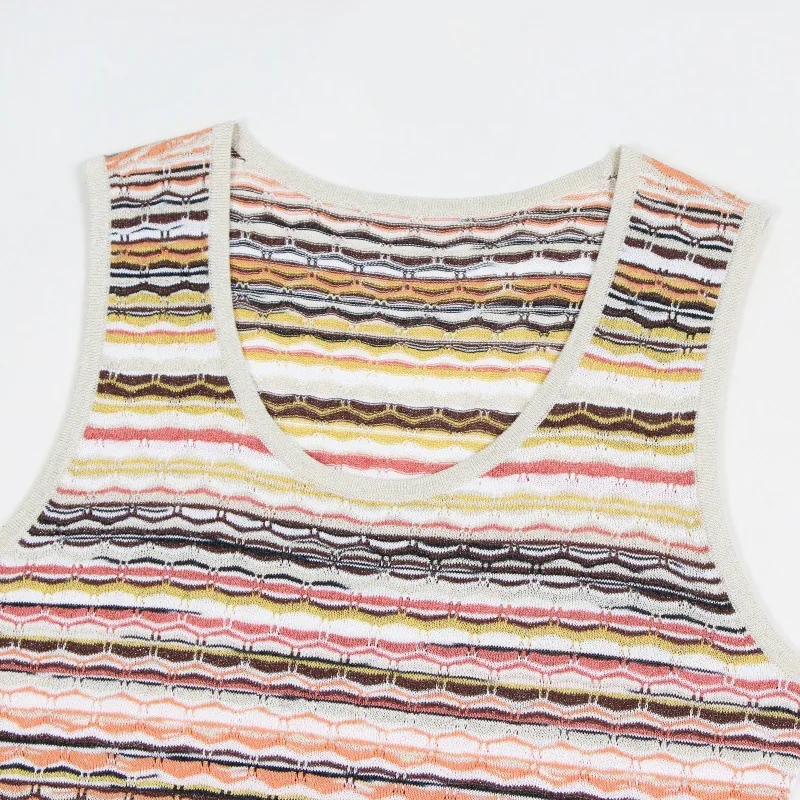
A premium vest is rarely worn directly against the skin; it functions as an aesthetic frame. When designing a private label sweater vest, you must first clarify its stylistic context. Will it be layered over formal button-down shirts, worn as a standalone knit tank in summer, or styled loosely over oversized relaxed tees? This determines your physical construction parameters. For a structured, traditional collegiate aesthetic, tight stitch architectures and structured necklines are non-negotiable. Conversely, casual streetwear drops rely on drop-shoulder block dimensions and relaxed rib structures.
Establishing this positioning before launching your tech pack ensures that subsequent choices in yarn weight and structure remain consistent. When working within OEM/ODM & Private Label channels, failures in product positioning usually manifest during the prototyping phase, where brands find that their selected materials do not achieve the expected drape. Aligning your aesthetic vision with technical fabric capabilities prevents costly sampling loops.
Mitigating Capital Risk in a Private Label Sweater Vest Program
From a capital allocation perspective, the knit vest operates as a premium margin buffer. Because it requires less overall yarn weight than a crewneck or cardigan, brands can elevate their fiber specifications without pushing retail prices past target ceilings. Selecting high-grade merino wool or luxury alpaca blends for a private label sweater vest program becomes financially feasible, allowing your marketing to leverage luxury fiber stories.
Additionally, the absence of sleeves means that sleeve-length grading issues are completely bypassed. This dramatically simplifies sizing tables and reduces retail returns driven by sleeve length complaints, which represent a significant percentage of online knitwear return rates. Your size charts remain streamlined, lowering fit-testing costs during pre-production development.
How Gauge Affects a Private Label Sweater Vest
Decoding the Gauge System in Factory Settings
The thickness, hand-feel, and physical weight of a knit vest are dictated by its machine gauge. The gauge indicates the number of needles contained per inch of the knitting machine bed. A low gauge number represents thick, chunky stitches, while a high gauge number yields ultra-fine, lightweight fabrics. Selecting the appropriate gauge requires balancing design intent with the physical traits of the yarn. For resource guides on standard knit behavior, CottonWorks Knit Basics provides extensive technical overviews of knitting stitch patterns and structure variations.
A chunky 3-gauge or 5-gauge sweater vest creates a visual statement, requiring heavy multi-ply yarns that drape with structural gravity. A standard 7-gauge or 12-gauge construction is highly versatile, running efficiently on modern flat-knitting machinery and adapting easily to midweight cotton or wool-blend yarns. Fine 14-gauge or 16-gauge options produce refined, office-wear layers that feel exceptionally soft and pack easily.
Analyzing the Interdependence of Gauge and MOQ
Many brands do not realize that your choice of knitting gauge directly impacts your minimum order quantity (MOQ). Knitting machinery setup times, needle preparation, and programming files are highly specialized processes. Changing a machine from a 7-gauge to a 12-gauge configuration requires extensive down-time and physical adjustment. To absorb these preparation costs, factories maintain strict minimum limits.
Furthermore, raw yarn is spun and dyed in batches. If your private label sweater vest design utilizes a highly specialized yarn, the yarn spinner’s MOQ will dictate our factory’s final production requirements. Standardized, stock-color yarns in common weights (such as 2/30 Nm cotton or merino blends) allow us to offer more flexible manufacturing minimums compared to completely custom-dyed fibers.
| Gauge Type | Common Yarn Blends | Average Factory MOQ | Styling & Weight Traits | Capital Tradeoff Profile |
|---|---|---|---|---|
| 3-5 GG (Chunky) | Wool-Acrylic, Chunky Alpaca | 50 pcs each size per color | Heavy, structural, winter-focused | High shipping cost, strong visual appeal |
| 7-12 GG (Standard) | Cotton-Nylon, Merino-Acrylic | 100-200 Pcs/Style | Highly versatile, trans-seasonal | Optimal production speed, standard margins |
| 14-16 GG (Fine) | 100% Cotton, Merino, Silk-Blend | 300-500 Pcs/Style | Drapes fluidly, lightweight, smart-casual | Higher knitting machine run times, premium market pricing |
Analyzing the relationship shown in the table above reveals that while 7-12 GG offers the lowest entry MOQ and fastest throughput, the finer 14-16 GG allows for a much sleeker profile but incurs higher minimums due to extended knitting run times. A 3-5 GG program provides incredible shelf presence but significantly increases shipping volumes and associated transport logistics fees. Understanding this balance helps you structure a balanced knitwear collection.
Which Yarn Compositions Give a Private Label Sweater Vest the Best Commercial Return?
Natural Performance with Merino Wool and Alpaca
When targeting the upper-mid to premium retail sectors, your material composition defines your brand authority. Merino wool is an exceptional natural fiber for a private label sweater vest due to its breathability, warmth, and moisture-wicking properties. Merino wool fibers (ranging from 17 to 21 microns) feel smooth next to the skin, which is vital for warm-weather vests or sleeveless styles.
Alpaca has also grown in popularity because it is significantly warmer than wool of equivalent weight, hypoallergenic, and provides a luxurious, slightly haloed texture. However, pure alpaca lacks structural elasticity. To prevent the collar and hem ribs of your custom sweater vest from stretching permanently over time, we strongly recommend blending natural alpaca or wool with a performance fiber like nylon to retain elasticity and improve shape recovery.
Cotton Blends for Spring and Summer Transitions
Cotton is a core material for spring/summer knit vest capsules. It provides excellent stitch definition, allowing intricate cable knits or drop-stitch open designs to stand out clearly. Pure cotton, however, is heavy and lacks elasticity, meaning it can sag under its own weight if knitted in loose patterns.
To counteract this, modern knitwear developers frequently use cotton-nylon or cotton-acrylic blends. These technical combinations combine the skin-friendly breathability of organic cotton with the shape retention, lightweight bulk, and durability of high-quality synthetics. They wash exceptionally well and maintain high resistance to pilling, which is a major long-term consideration for garments that experience constant under-arm friction.
How Can Brands Navigate Private Label Sweater Vest Sampling?
Preparing the Perfect Tech Pack to Prevent Sampling Delays
The sampling phase is where many clothing brands encounter frustrating timelines. The single most effective way to accelerate your prototyping is to provide a complete, clear tech pack. This document should detail flat sketch measurements, reference physical samples when possible, specify yarn composition, define Pantone TCX color codes, and detail exact rib dimensions at the armholes and hem.
For early-stage brands looking to map their development strategies and establish trusted manufacturing workflows, resources like Maker’s Row Guide to Clothing Manufacturers offer structural templates for tech pack creation and factory matching. Getting your tech pack formatted to factory standards prevents misinterpretations, reduces the number of sampling iterations, and keeps your project moving.
Navigating Proto Samples, Fit Samples, and PP Standardizations
The development pathway typically follows three major sampling phases before you release bulk production. The first is the Proto Sample, which is primarily used to evaluate stitch structure, general hand-feel, and approximate proportions. This sample is often knitted in “yarn of available color” to save time and raw material.
Once the proto is approved, we move to the Fit/Salesman Sample, which uses the correct yarn and exact colorways. Finally, we establish the Pre-Production (PP) Sample. This final piece is the golden standard that locks in every detail, from main labels to side-seam care labels. No bulk knitting machine should ever be turned on before the PP sample is signed, dated, and approved by your development team.
Which Quality Controls Protect a Private Label Sweater Vest Program?
The Critical Role of Inline Inspection Processes
Knitwear defects are highly cumulative. A minor setting drift on a computerized knitting machine, if left unchecked, can quickly propagate through hundreds of panels, leading to systemic structural failures. For premium brands, relying solely on a final post-production inspection is a high-risk approach. Inline inspection on the knitting floor and during the linking phase is crucial.
Inspectors check stitch tension, watch for dropped needles, evaluate linking elasticity, and ensure that armhole openings are symmetrical. It is far more cost-effective to identify and repair a loose linking stitch before the panels are washed, ironed, and labeled. Catching variance early ensures consistency across all sizes, from XS to XXL.
Utilizing Independent Testing for High Compliance Standards
For brands selling in highly regulated markets, securing third-party verification is essential for compliance and maintaining customer trust. Professional testing bodies, such as Intertek Textile & Apparel Inspection, provide structured visual assessments, fabric weight checks, and rigorous laboratory tests.
These standard tests evaluate seam strength, colorfastness under home laundering conditions, dimensional stability, and pilling resistance. They also perform the specialized “Prickle Factor Test” for wool products, ensuring that premium private label knitwear remains comfortable and non-irritating when worn next to the skin. Utilizing these independent checks protects your brand equity and reduces customer return rates.
Why Is Flat Knitting Preferable for a Private Label Sweater Vest?
Fully-Fashioned Knitting: Minimizing Waste and Maximizing Fit
When sourcing premium private label knitwear, you will choose between fully-fashioned flat knitting and cut-and-sew knit construction. Fully-fashioned knitting means that each individual panel (the front, back, and neck trims) is custom-knitted directly into its final shape on computerized machines. Stitches are increased or decreased during the machine run, creating beautiful, angled fashioning marks along the armholes and neckline.
This method offers two distinct advantages. First, it produces near-zero yarn waste because you do not cut shapes out of large knitted sheets. Second, fully-fashioned seams lay remarkably flat, reducing bulk and providing an elegant, high-end drape that flatters the silhouette.
Cut and Sew Knitting: Production Speed vs. Quality Profile
Cut-and-sew construction involves knitting wide sheets of fabric on circular or flat machines, laying them out, cutting panels with physical patterns, and linking them on overlock sewing machines. This method is fast and highly efficient for high-volume basic items, but it has notable downsides for knitwear.
First, the cut edges are prone to unraveling if the overlock stitches are not perfectly executed. Second, cut-and-sew seams are bulkier and stiffer, which can distract from the fluid drape of a knitted vest. This method also produces up to 20% yarn waste, which makes it less eco-friendly and less cost-effective when using expensive fibers like fine merino or cashmere.
What Is the Best Refill and Reorder Strategy for a Private Label Sweater Vest?
Managing Lead Times and Planning Core Runs
Succeeding with knitwear requires managing seasonal timelines carefully. Because yarn spinning, machine setups, and linking are time-intensive, standard factory lead times generally run from 8 to 16 weeks, depending on the complexity of your design and yarn availability. To keep your best-selling items in stock, your reorder strategy must be planned well in advance.
A great approach is to split your order into a “Core Run” and “Seasonal Drops.” Your core runs should feature timeless neutral colors (such as charcoal gray, navy, and cream) using stock-supported yarns. This allows you to secure faster production turnarounds on reorders, keeping your digital shelves stocked during peak sales periods. For detailed scheduling and booking processes, refer to our guide on MOQ & Lead Time standards.
Strategic Color Over-Dyeing and Yarn Commitments
For seasonal drops, consider reserving “greige” yarn with your manufacturer. Greige yarn is spun but left undyed. By reserving greige yarn in advance, you secure the material volume and can dye the final garments into trending seasonal shades in smaller batches later.
This strategy allows you to react quickly to late-season color trends, reducing the risk of being stuck with excess inventory in slower-moving colors. Work closely with your manufacturer to set up a yarn reservation program, turning your supply chain into a highly responsive asset.
Conclusion
Launching a successful private label sweater vest program requires a careful balance of product positioning, material selection, and structured quality control. By matching the right knitting gauge with your target retail price and choosing yarn blends that offer both durability and next-to-skin comfort, you can build a highly profitable knitwear collection. Navigating the sampling phase with complete tech packs and establishing robust quality check protocols ensures that your bulk production runs arrive exactly as planned.
Partnering with a dedicated manufacturer makes it easy to bring these refined styles to market. Whether you are expanding your current knitwear line or launching an exclusive capsule, our team is here to support you at every stage, from custom prototyping to final quality inspection. To get started on your upcoming collection, reach out today to discuss your private label sweater vest development options.
Frequently Asked Questions
What is your typical MOQ for custom knitted sweater vests?
Our standard MOQ is 100 to 200 pieces per style/colorway, depending on your selected yarn composition and machine gauge. Using stock-supported yarns in common counts allows us to offer lower minimums, while custom yarn colors or specialized luxury fiber blends may require higher quantities to meet spinner minimums.
How long does the sampling process take for a private label vest?
A standard proto-sample takes 10 to 14 business days, provided we have a complete tech pack. If we need to source specialty yarns or custom-dye lab dips, the sampling timeline can extend to 3 or 4 weeks. We highly recommend using stock-color yarns for initial proto fits to speed up development.
How do you control pilling and shrinkage in wool-blend vests?
We manage pilling and shrinkage during the pre-production phase by adjusting yarn twists, tightening stitch densities, and pre-washing our testing panels. We also perform in-house wash tests to ensure shrinkage remains within standard limits (under 3% for wool blends) before starting bulk production.
Can we supply our own custom labeling and packaging materials?
Yes, we specialize in private label manufacturing and accept brand-provided woven neck labels, care tags, hangtags, and custom polybags. Alternatively, we can source and manufacture these packaging materials locally based on your artwork files to simplify your shipping logistics.