 CN Sweaters

A knit zip up hoodie is one of the most failure-prone styles in knitwear development, and most of the problems do not come from the design itself but from a mismatch between trims, hood structure, gauge, and yarn weight. If your reference image looks clean but your sample comes back with a wavy zipper, a hood that collapses forward, or a hem that twists after washing, the issue is almost always rooted in how the panels, trims, and finishing were planned before knitting started.
From a factory perspective, a knit zip hoodie is not a cut-and-sew hoodie with a zipper added. It is a fully fashioned or panel-knitted garment where every gram of trim weight, every stitch density at the placket, and every centimeter of hood depth interacts with the fabric’s elasticity. When buyers approve a style based only on a flat sketch or a market reference, the bulk often looks different from the sample because the structural variables were never locked in. This guide focuses on the variables that decide whether your knit zip up hoodie program will produce consistent units or constant rework. It covers zipper weight and length matching, hood shape and support, shoulder and placket alignment, pocket and rib stability, and post-wash dimensional change. Each section is built around the judgment calls a buyer needs to make before sampling, not after problems appear in bulk.
Why Does a Knit Zip Up Hoodie Behave Differently From a Cut and Sew Hoodie
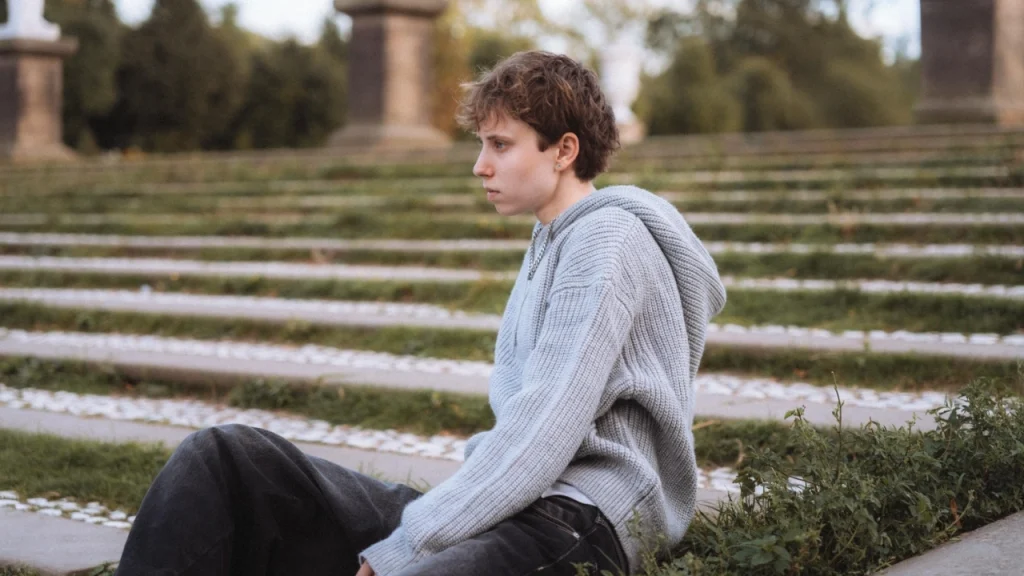
A knit zip up hoodie behaves differently because the body fabric is elastic, directional, and weight-sensitive, while the zipper and trims are rigid and fixed. The mismatch between these two systems is where most defects originate. A French terry or fleece hoodie is built from a stable woven-like knit that holds its shape against trims. A sweater-knit hoodie, whether 3GG, 5GG, 7GG, or 12GG, has loops that stretch under load and recover unevenly depending on yarn composition and stitch structure.
This becomes critical at the front placket. A standard nylon or metal zipper has zero stretch, but the knit panel next to it can stretch 10–25% along the wale. If the placket is not stabilized with the right rib density, fused tape, or knit-in reinforcement, the zipper will either pull the fabric into waves or the fabric will pull the zipper into a curve. Neither defect can be fixed after the garment is assembled.
Yarn composition also changes how the garment responds to trims. Acrylic blends are lighter and more dimensionally stable, while wool and cotton blends are heavier and more prone to relaxation shrinkage. A buyer comparing a cable knit zip up hoodie in merino against a waffle knit zip up hoodie in cotton should expect different sampling outcomes even if the silhouette looks identical. The fabric is doing different work in each case, and the trims need to match that behavior. Understanding this principle before sampling saves weeks of revision later.
How Do Zipper Weight and Length Affect the Final Hoodie Shape
Zipper weight and length are the single biggest source of front-panel distortion on a knit zip hoodie, and the correct choice depends on yarn weight, gauge, and target garment weight, not on aesthetic preference alone. A heavy metal zipper on a 7GG cotton body will drag the center front down, creating a smile-shaped sag at the hem. A lightweight coil zipper on a 3GG chunky cable knit will look underbuilt and may fail under hood weight.
As a working reference, we use the following matching logic in development. These are starting points for sampling, not guarantees, because final selection depends on yarn tension, finishing, and intended end use.
| Body Gauge | Typical Yarn Weight | Suggested Zipper Type | Common Risk if Mismatched |
|---|---|---|---|
| 3GG–5GG chunky | Heavy wool, chunky acrylic | Molded plastic or heavy coil, #5–#8 | Light zipper looks weak, fabric overpowers tape |
| 7GG mid-gauge | Medium cotton, wool blends | Standard coil, #5 | Metal zipper drags hem, creates smile sag |
| 12GG fine | Fine merino, cotton, viscose | Lightweight coil, #3–#5 | Heavy zipper causes wavy placket and ripple |
| Waffle or textured | Cotton, cotton blends | Coil, #5 with stable tape | Stiff tape distorts soft waffle structure |
The table shows that the same hoodie silhouette can require three different zipper specs depending on the fabric system, which is why a single reference image is rarely enough to lock production.
Zipper length matters just as much. A zipper that is even 1 cm shorter or longer than the placket’s relaxed length will create tension or slack after washing. Since knit panels relax 2–5% after the first wash, the zipper length must be calculated against the post-wash placket measurement, not the pre-wash one. Buyers who approve samples without a wash test often see this defect appear only in bulk, when it is too late to correct.
What Hood Shape Problems Show Up Most Often in Sampling
Hood collapse is the most common defect on a knitted zip up hoodie, and it is almost always caused by hood panels that are too heavy for the shoulder seam to support, or by a hood opening that lacks structural framing. A hood made from the same fabric as the body will, in most yarns, weigh between 80 and 180 grams. Without proper neckline reinforcement, that weight pulls the back collar down and tips the hood forward when worn.
There are three hood structures we typically discuss with buyers before sampling, and each has different trade-offs.
A two-panel hood with a center back seam is the most common, easiest to grade, and gives a sharper peak. It works well with mid-gauge cottons and wool blends but can show seam puckering if the seaming gauge does not match the body.
A three-panel hood with a top gusset gives a rounder, fuller shape and is preferred for streetwear silhouettes. It uses more yarn, adds weight, and requires more careful matching at the seams, especially on a cable knit zip up hoodie where the cable lines must align across panels.
A single-piece knitted hood with shaped decreases is the most premium option, reduces seams, and gives the cleanest finish, but it requires fully fashioned knitting capacity and longer machine time. MOQ for this construction is typically higher because setup cost is spread across more units.
Hood opening framing is the second variable. A drawcord channel with grommets adds weight and structure at the front edge, holding the hood open. A clean rib-finished opening looks minimal but tends to roll inward, especially in softer yarns. For buyers developing a hooded knit sweater or hooded knit cardigan with a refined look, the rib opening is more on-trend but carries higher styling risk in bulk. We usually recommend testing both finishes in the first sample round to compare drape.
Why Do Shoulder and Placket Symmetry Fail in Bulk
Shoulder slope and front placket symmetry fail in bulk when the panel tension during knitting is not controlled across machines or operators. On a single sample run, one technician knits both front panels under similar conditions. In bulk, multiple machines produce panels with small tension variations that compound at the center front. The result is a placket that looks aligned on the sample but visibly skews after 200 or 500 units.
Three factors drive this risk. The first is yarn lot variation. Even within the same dye lot, yarn tension can shift by 3–5%, which changes panel length. The second is machine calibration drift over a long production run. The third is panel matching during linking. If left and right front panels are not paired from adjacent production cycles, length differences become visible at the hem.
To manage this in development, we recommend buyers ask for a bulk-condition sample, not just a hand-knit sample, before approving production. A bulk-condition sample is knitted on the same machines and tension settings planned for production, which exposes symmetry issues early. This is especially important for knitted zip up hoodies mens where buyers expect a clean military-style center front, since the human eye catches asymmetry quickly on a vertical placket.
Shoulder slope works the same way. A drop-shoulder silhouette tolerates more variation than a set-in shoulder. If your design uses a set-in shoulder with raglan-style decreases, expect more sampling rounds. According to apparel testing standards used by major QC providers such as Intertek’s apparel testing programs, seam alignment and symmetry are routinely measured in pre-shipment inspection, and tolerance ranges are usually 0.5–1.0 cm depending on the buyer’s spec. Setting this tolerance in writing before bulk avoids disputes later.
How Do Pockets Hem and Cuff Trims Stabilize the Garment
Pocket openings, hem ribs, and cuff ribs are structural elements on a knit zip up hoodie, not decorative ones. They control how the garment hangs, how it recovers after stretching, and how it looks after the first wash. When buyers treat them as styling details, they often end up with deformation that no amount of finishing can fix.
Pocket openings are the highest-risk area on the front panel. Kangaroo pockets cut into a knit body create a horizontal opening that wants to stretch open over time. Without a stabilized binding, a rib reinforcement, or a knit-in tape, the opening sags within 10–20 wears. The trade-off is that heavy stabilization adds weight and stiffness, which can clash with a soft waffle knit zip up hoodie aesthetic. For lighter constructions, we usually recommend a knit-in 1×1 or 2×2 rib welt instead of a sewn binding.
Hem and cuff ribs control the garment’s recovery. A 2×2 rib in a 2/24Nm yarn at 7GG will recover well for 50+ wash cycles in most cotton-blend programs. A 1×1 rib in a finer yarn looks cleaner but loses recovery faster. For sweater hoodies designed for heavy daily wear, a deeper rib (6–8 cm) gives better long-term shape retention than a shallow rib (2–3 cm).
According to general knit design guidance from sources such as CottonWorks on knit textile design, fabric performance and garment construction are directly intertwined, and pattern adjustments must account for the natural shrinkage and recovery characteristics of the chosen knit structure. This is especially relevant for cuff and hem stability, where the recovery rate of the rib determines how the garment looks after the customer’s third or fourth wash. Buyers who approve samples without wash testing often see cuffs go slack in field returns.
What Sampling Steps Reduce Risk Before Bulk Production
A structured sampling sequence is the most effective tool buyers have to reduce risk on a knit zip up hoodie program, and skipping any step almost always shows up in bulk. We typically recommend a four-stage sampling flow that has been refined across years of OEM and ODM knitwear development for streetwear and DTC brands.
The first stage is the knit-down or fabric swatch. This confirms yarn, gauge, stitch structure, and hand feel before any garment shape is committed. Buyers often want to skip this and go straight to a full sample, but the knit-down is what locks the fabric system. Without it, every later issue is harder to isolate.
The second stage is a fit sample, usually in a substitute yarn or available color, that confirms pattern, hood shape, placket length, and pocket placement. This sample is for shape only and should not be judged on color or final finishing.
The third stage is the pre-production sample, knitted on the same machines and tension settings planned for bulk, using approved yarn, trims, and labels. This is where zipper weight, hood support, and rib recovery are validated. We strongly recommend a wash test on this sample, because relaxation shrinkage and trim distortion appear most clearly after one or two wash cycles. Reference apparel manufacturing guidance from Maker’s Row on the production process emphasizes that washing and treatment can change a garment after construction, and unanticipated changes here create the most expensive rework.
The fourth stage is the top-of-production sample, taken from the first 50–100 units of bulk. This catches machine drift and operator variation before the full order is finished. Standard lead times for this full cycle are 35–55 days for development and 45–75 days for bulk, depending on quantity, yarn availability, and complexity. MOQ for custom knit projects varies by gauge and construction, but skipping sampling stages to compress timelines almost always costs more in rework than it saves in calendar days.
Conclusion
A knit zip up hoodie program succeeds or fails based on decisions made before knitting starts, not after the sample arrives. Zipper weight must match yarn weight, hood structure must match shoulder support, and rib recovery must match the buyer’s expected wash life. None of these can be judged from a flat reference image alone, which is why structured sampling and clear specs matter more than fast turnaround. For buyers developing streetwear, DTC, or men’s knitwear programs, the most reliable path is to lock yarn and gauge first, then validate trims and hood structure on a bulk-condition sample, then run a wash test before approving production. If you are scoping a new program and want to confirm whether your reference style is feasible at your target MOQ and budget, you can review our zip-up and hooded knitwear capabilities and share your spec for a feasibility review. Send your knit zip-up hoodie reference style, zipper type, hood shape, target yarn, and quantity to check sampling feasibility before development.
FAQ
What is a typical MOQ for a custom knit zip up hoodie program?
MOQ usually starts at 100–300 pieces per color per style for standard gauges, and 300–500 pieces for cable or jacquard constructions. Lower MOQs are possible for stock yarns but limit color and gauge choices. Buyers developing a new style should expect higher MOQ on the first run because setup and sampling costs are spread across fewer units.
How long does sampling and bulk production take for a knit zip hoodie?
Sampling typically takes 25–40 days across knit-down, fit sample, and pre-production sample stages. Bulk production runs another 45–75 days depending on quantity, yarn lead time, and trim sourcing. Cable and waffle constructions add 5–10 days to bulk because they knit slower than plain jersey or rib.
Can I use my own zipper supplier on a custom knit zip up hoodie?
Yes, buyers can nominate zipper brands such as YKK or RIRI, but the zipper must arrive at the factory before pre-production sampling, not at bulk stage. Late trim delivery is one of the most common causes of shipment delay on hoodie programs, especially when nominated trims need to clear customs.
What testing should I request before shipment on a knit zip up hoodie?
For most B2B programs, we recommend dimensional stability after wash, seam strength at the placket, zipper pull strength, colorfastness to washing and rubbing, and pilling resistance. These tests are routinely offered by major third-party labs and align with most retailer compliance programs for knitwear.
How do I reduce risk on a refill order of an existing knit zip hoodie?
Refill orders should reference the original approved pre-production sample, the original yarn lot specs, and the original trim sources. Even a small change in yarn lot or zipper supplier can shift the garment’s look. We recommend keeping a sealed reference garment from the original bulk for direct comparison on every refill.