 CN Sweaters
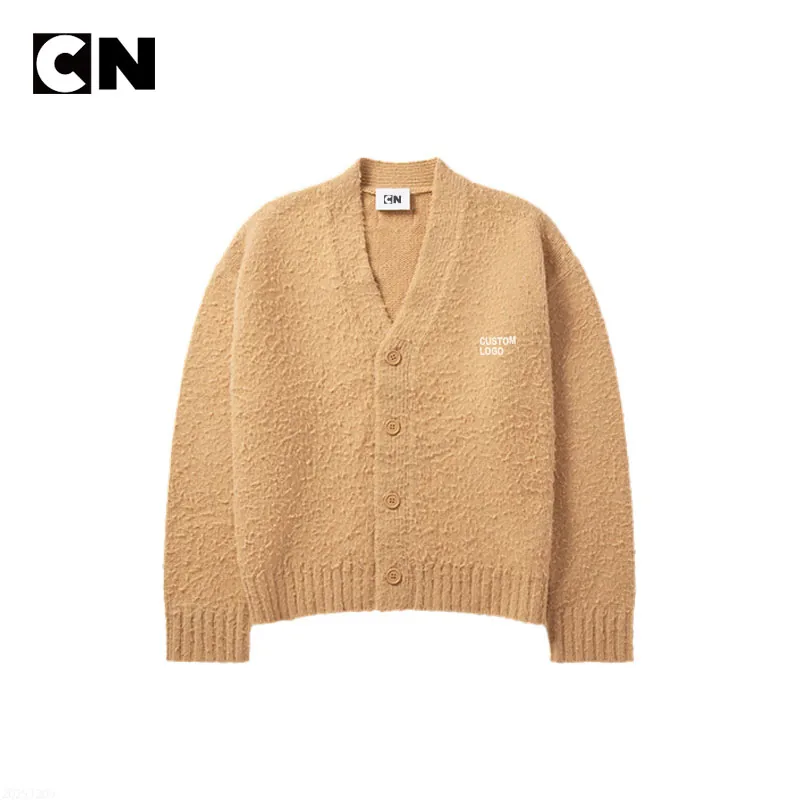
Selecting a cable knit sweater design is never merely an aesthetic choice; it is a fundamental engineering decision that directly dictates your product’s raw material consumption, manufacturing speed, and final FOB price. For fashion sourcing managers, product developers, and apparel brands planning cold-weather lines, choosing the wrong stitch complexity can unintentionally increase garment weights by up to 40% and push factory lead times past critical retail delivery windows. This detailed guide addresses the specific technical variables that link cable architectures to exact manufacturing bottlenecks, providing you with actionable strategies to optimize your margins without sacrificing visual impact.
When developers initiate an OEM custom cable-knit development project, they often focus on visual references without calculating the physical implications of needle-crossover mechanics. In industrial knitting, cables require needles to transfer loops across adjacent stitches, physically pulling the fabric inward, which demands additional yarn to achieve the target garment width. Failing to account for this structural shrinkage results in unexpected bulk weight increases, prolonged machine tuning during sampling, and elevated unit costs. By understanding these parameters from our factory perspective, brands can make highly informed decisions regarding gauge selection, yarn composition, and pattern placement to balance design ambition with commercial reality.
Why Do Raw Material Costs Rise in Cable Knit Sweater Production?
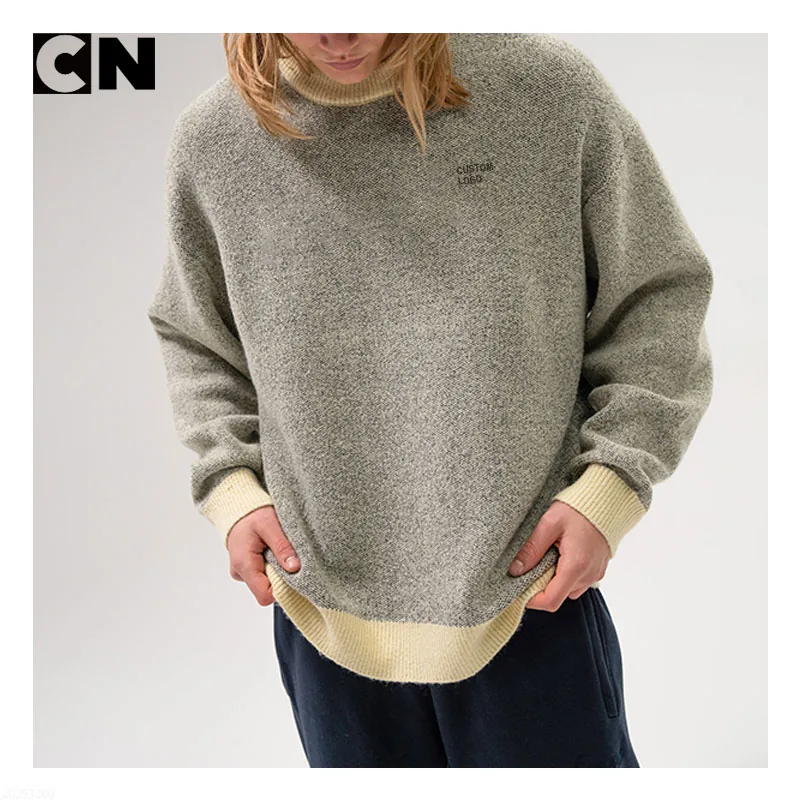
Cable knit designs directly inflate raw material costs because the physical crossing of knit stitches compresses the fabric horizontally, requiring significantly more yarn per square inch to achieve the specified chest width and length compared to flat jersey. From our factory perspective, this structural contraction can increase raw material consumption by 15% to 50% depending on the cable’s width and frequency.
Stitch crossover mechanics and yarn consumption
To create the classic dimensional twist of a cable knit sweater, knitting machine needles must transfer loops of yarn across neighboring needles. This crossing action causes the fabric to contract, pulling the left and right sides toward the center of the cable column. To counteract this shrinkage and maintain standard sizing, the machine must knit more courses and wales. This mechanism is one of the essential fabric structures explained in the CottonWorks Knit Basics tutorial, which illustrates how physical loop configurations dictate final fabric dimensions. When a brand requests a dense, repetitive all-over cable design, we must allocate substantially more yarn cones per garment. For example, a standard 12-gauge flat-knit sweater might consume 350 grams of yarn, whereas a heavy cable pattern in the same yarn and dimensions can easily require 500 grams, directly driving up the raw material bill of materials (BOM) cost by over 40%.
Weight-to-cost ratios in chunky cable configurations
In chunky mens cable knit sweater styles or oversized womens cable knit sweater lines, low-gauge machines (such as 3-gauge or 5-gauge) are used with thick, multi-ply yarns. When these heavy yarns are knit into wide, overlapping cable structures, the garment’s total weight escalates rapidly. Because factory yarn procurement is priced by the kilogram, every additional 50 grams per piece directly affects your margins, especially when using premium fibers like wool or cashmere. Furthermore, shipping costs scale with weight, meaning heavy cable sweaters incur higher air or ocean freight charges per unit, compounding the landed cost. Sourcing teams must therefore evaluate the exact weight-to-cost ratio during the initial tech pack review, selecting yarn blends or adjusting cable widths to meet target retail price points without compromising the desired chunky aesthetic.
How Does Cable Knit Sweater Complexity Affect Machine Time?
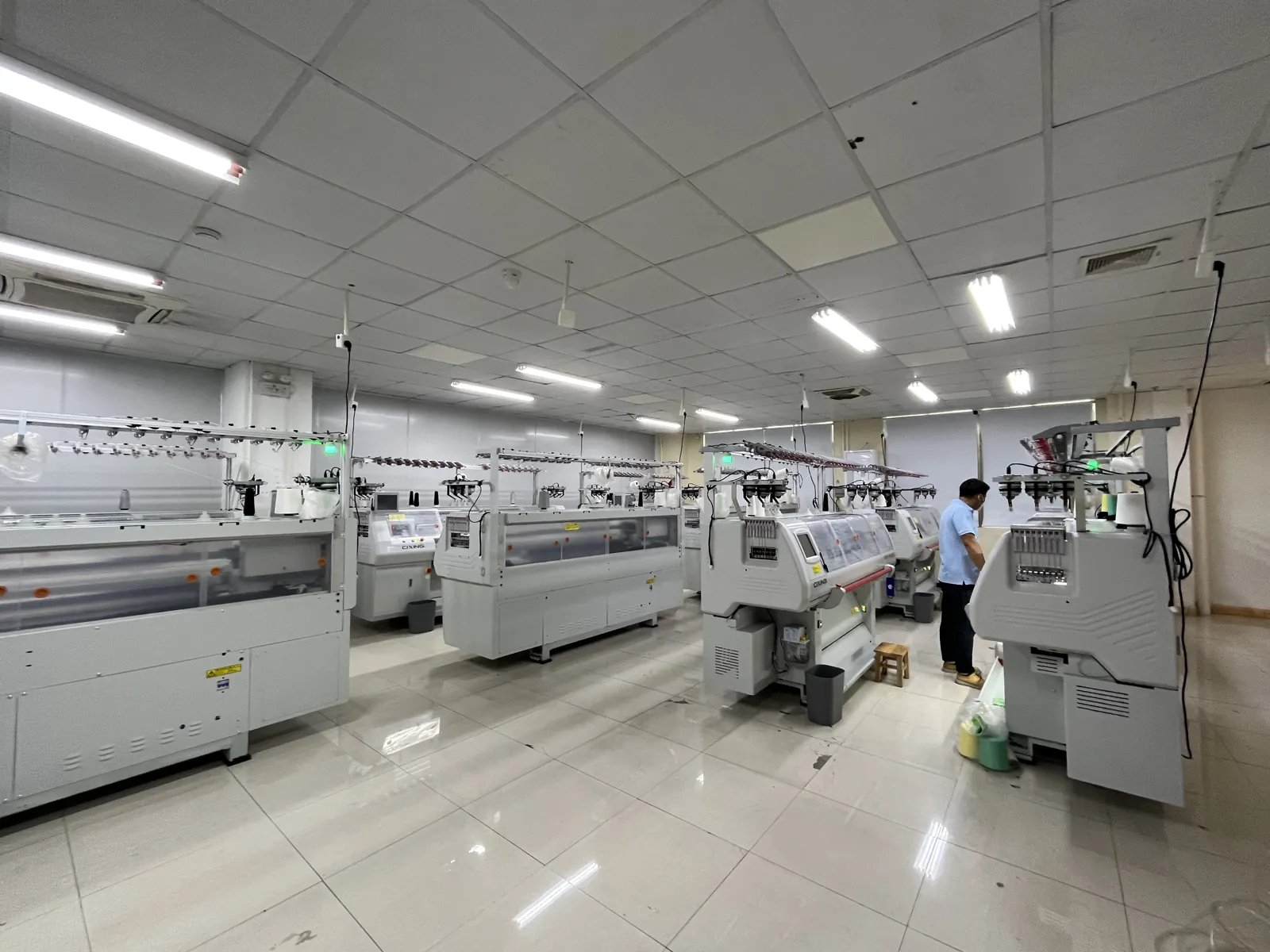
Stitch complexity impacts machine knitting runtimes by dictating the number of needle transfer cycles and carriage passes required to complete a single row of fabric. While a simple flat jersey stitch allows the knitting machine carriage to glide smoothly across the bed at maximum speed, complex cable twists force the carriage to slow down, execute multiple needle transfers, and operate at a fraction of its standard efficiency.
Needle movement, transfer cycles, and machine speed factors
Every twist in a cable represents a point where the knitting machine must pause its standard stitching routine to transfer loops between the front and back needle beds. The more complex the crossover—such as intricate honeycomb, braided, or intersecting celtic cables—the more transfer cycles the carriage must perform. This mechanical limitation means that while a basic flat jersey sweater might take only 15 minutes to knit on an industrial flat knitting machine, a highly complex chunky cable-knit design can easily take 45 to 60 minutes per panel.
Below, our factory performance metrics illustrate how specific cable architectures influence knitting efficiency, yarn consumption, and bulk lead times relative to a basic flat knit.
| Pattern Complexity | Stitch Style | Yarn Usage Increase | Knitting Speed Factor | Lead Time Impact |
|---|---|---|---|---|
| Low | Flat Single Jersey | Baseline (0%) | 1.0 (Maximum Speed) | Baseline (15-20 days) |
| Medium | Simple 2×2 Rib Cables | 12% – 18% | 0.7 (Moderate Speed) | +3 to 5 Production Days |
| High | Traditional Braided / Aran | 25% – 35% | 0.4 (Slow Speed) | +7 to 10 Production Days |
| Very High | Deep Honeycomb / Celtic | 40% – 55% | 0.25 (Very Slow Speed) | +12 to 15 Production Days |
This comparison demonstrates that as you move from flat structures to deep honeycomb patterns, the physical knitting speed drops to one-quarter of the baseline, which directly prolongs your production timelines.
High-gauge versus low-gauge cable production efficiency
Gauge selection further complicates the relationship between stitch complexity and machine runtime. In high-gauge knitwear (such as 12-gauge or 14-gauge), knitting fine cables requires extreme precision, as the needles are closely spaced and the yarn is delicate. If the tension is set too high or the machine speed is not carefully regulated, fine yarns can snap during the loop transfer process, leading to dropped stitches and machine stoppages. Conversely, in low-gauge knitting (such as 3-gauge or 5-gauge), the needles are larger and more robust, but the physical mass of the thick yarn creates massive resistance during crossovers. Product developers must realize that selecting a 1.5-gauge or 3-gauge machine for a heavily braided design requires our technicians to reduce machine speeds to prevent needle breakage, directly lengthening the bulk production schedule and limiting daily factory output.
Why Does Cable Knit Sweater Sampling Extend Lead Time?
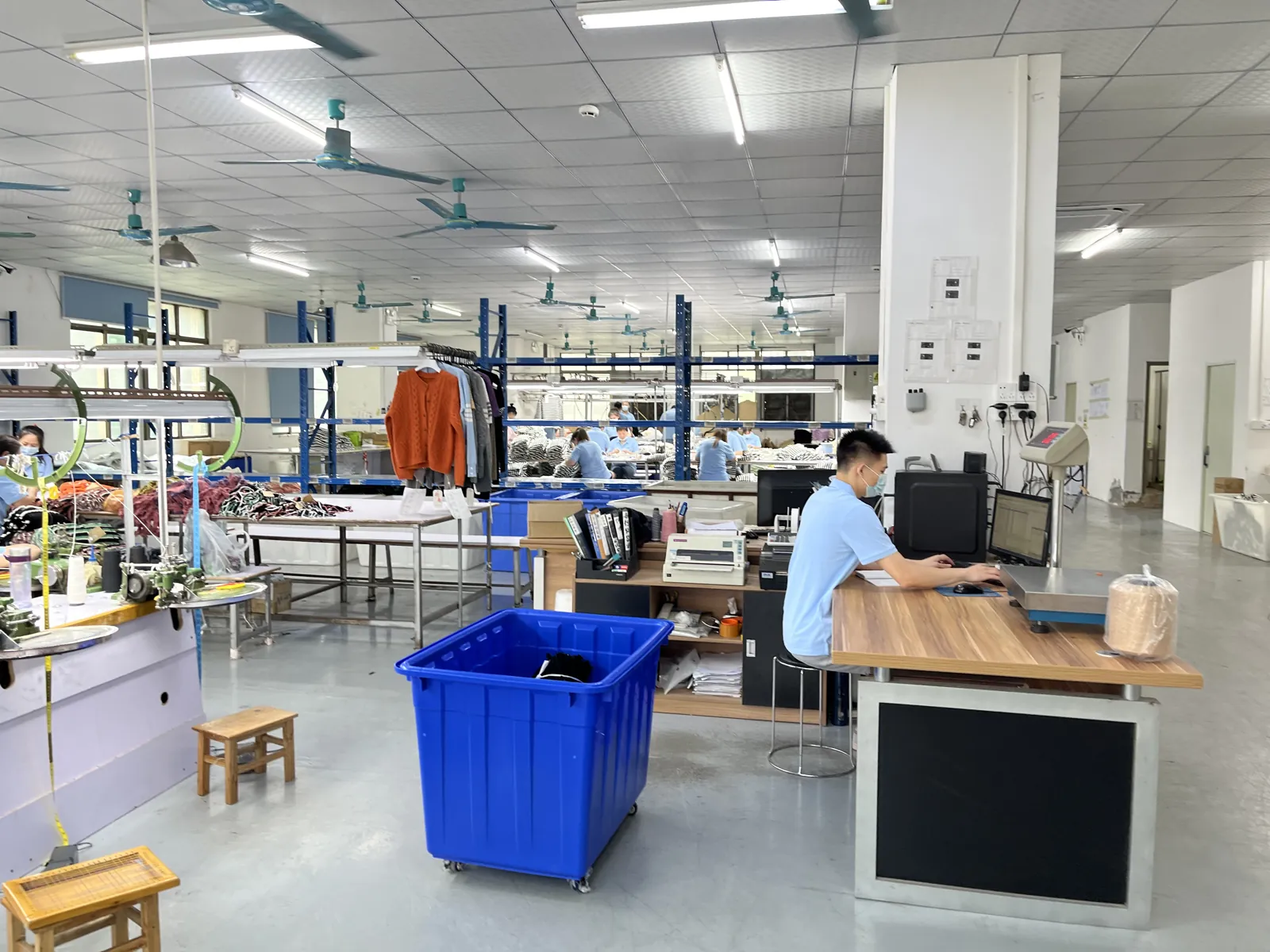
Custom cable patterns extend pre-production sampling lead times because they require iterative machine programming, physical trial-and-error tension adjustments, and multiple wash cycles to correct for unexpected fabric distortion and shrinkage. Unlike standardized basic knits, custom cables rarely behave predictably on the first knitting trial, often requiring three or more rounds of physical sampling to refine.
Structural distortion and tension calibration trials
When our programming engineers receive a new tech pack for a custom sweater featuring unique cable configurations, they must write a customized program for the computerized flat knitting machines. Cable crossings exert asymmetric tension on the surrounding fabric, which can cause the edges of the sweater panels to bow inward or ripple. To counteract these structural distortions, our technicians must execute physical test runs, adjusting the stitch presser foot tension and the takedown roller speed increment by increment. Sourcing teams should expect this programming and calibration phase to add 3 to 5 working days to the standard sampling timeline. If a brand requests a complex layout without a clear stitch map, our design technical team must manually translate the visual concept into digital code, which further delays the physical machine setup and increases the likelihood of multiple sample revisions.
Wash testing and dimensional stability challenges
Because cable structures bunch the yarn together in thick, dense columns, they react dramatically to the wet processing and tumble drying stages of production. During wet finishing, the tension locked inside the twisted stitches is released, which can lead to severe shrinkage or torque (fabric twisting). We perform rigorous wash testing on all initial samples to ensure the finished garment meets the specified size chart. We align our testing methodology with the standardized shrinkage and distortion protocols outlined by Intertek Apparel Testing standards, which help verify that the cable patterns do not warp or shrink excessively after domestic laundering. If a custom pattern fails these stability tests, we must adjust the machine program to increase or decrease stitch density and knit a completely new sample, adding another 4 to 7 days to the pre-production approval cycle.
How should buyers balance cable coverage with retail price points in cable knit sweater production?
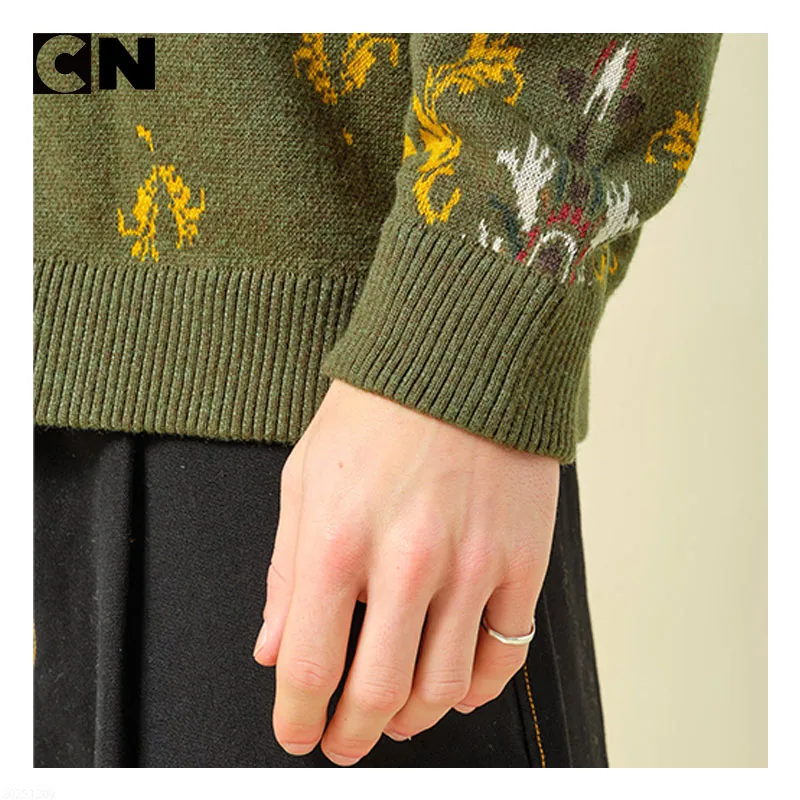
Buyers should balance cable coverage with retail price points by strategically limiting the high-density cable patterns to highly visible areas—such as the front panel—while utilizing cost-effective flat jersey or simple rib stitches on the back panel and sleeves. This asymmetric design approach allows brands to maintain a premium, high-value appearance on the retail hanger while significantly lowering raw material weight and reducing machine knitting time.
Full-body versus panel-placed cable layouts
A classic design dilemma when developing chunky cable knit cardigan collections or heavy sweaters is deciding whether to run the cable patterns across the entire garment or restrict them to the front. A full-body cable design—where front, back, and both sleeves are covered in complex twists—maximizes the weight and material consumption of the garment, which drives up the wholesale FOB price. By contrast, a panel-placed layout restricts the dense cabling to the front chest area, transitioning to plain jersey on the back and sleeves. This placement technique lowers the overall garment weight by up to 25% and reduces machine knitting runtimes by nearly 30%, presenting an ideal compromise for mid-tier retail brands that need to hit specific price points while preserving the look of a premium, heritage-style knit.
Optimizing front-only cables to manage fabric consumption
From a factory manufacturing perspective, implementing a front-only cable layout requires careful engineering to ensure the front and back panels link together seamlessly. Because cable panels contract horizontally while plain jersey back panels do not, our technical team must program different needle counts for each piece. The front panel will require more active needles and a wider knit footprint on the machine bed to match the narrower needle count of the relaxed back panel. This stitch patterning principle is detailed in CottonWorks Designing Knit Textiles guides, which illustrate how combining contrasting stitch structures within a single garment affects panel sizing and assembly. By optimizing this transition during the tech pack phase, buyers can maintain perfect symmetry in the side seams while saving substantial yarn volume, allowing them to hit lower target prices without sacrificing the perceived luxury of the product.
Sleeve and panel assembly demands dictate labor costs in cable knit sweater production.
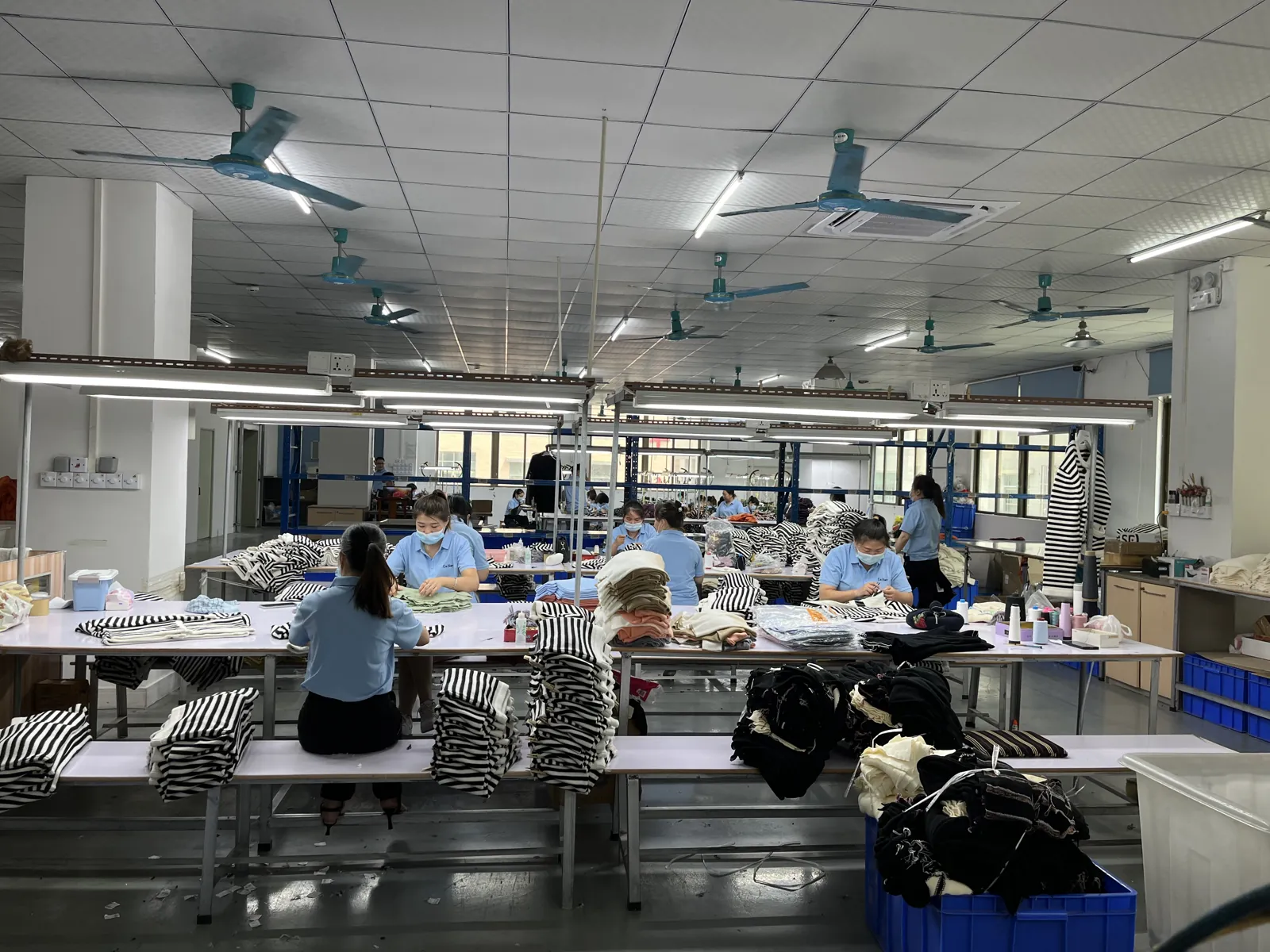
Sleeve and panel assembly demands dictate labor costs because mismatched cable patterns or complex seam alignments require manual, high-precision linking on the factory floor rather than automated sewing. While standard flat-knit panels can be joined quickly using semi-automatic sewing machines, aligning cable columns across shoulder seams, armholes, and side seams requires highly skilled hand-linking operators.
Seamless linking versus cut-and-sew cable alignment
In high-quality womens cable knit sweater production, the transition where the sleeve joins the shoulder is a primary indicator of craftsmanship. If a cable pattern runs continuously from the collar down the sleeve, the knitting and linking teams must align the cables perfectly so they do not look staggered or interrupted. This alignment is achieved through hand-linking, a labor-intensive process where an operator manually places every single loop of the knit edge onto a linking machine’s dial needles. If a design specifies continuous, uninterrupted cabling, the assembly time per garment increases by 15 to 20 minutes compared to a standard cut-and-sew construction. Sourcing managers must understand that this manual labor requirement is highly sensitive to peak-season capacity constraints, meaning complex assembly requirements can easily inflate factory labor costs by 20% to 30% and add days to the overall production schedule.
Linking precision and waste reduction in bulk assembly
To minimize labor costs and raw material waste in cable knit sweater bulk assembly, our factory utilizes advanced computerized knitting techniques that shape the panels during the knitting process—a method known as fully-fashioned knitting. Fully-fashioned panels are knit to the exact shape of the pattern pieces, leaving clean, self-finished edges with visible fashion marks along the seams. This technique eliminates the fabric waste associated with cut-and-sew methods, which is particularly beneficial when working with expensive fibers like mohair, wool, or cashmere. For a complex cable sweater, fully-fashioned production ensures that the edge loops are perfectly uniform, making the hand-linking process faster and more accurate. This precision reduces defect rates in our quality control department, ensuring that bulk shipments maintain consistent sizing and structural integrity across thousands of units.
Strategic yarn selection mitigates weight and cost bottlenecks.
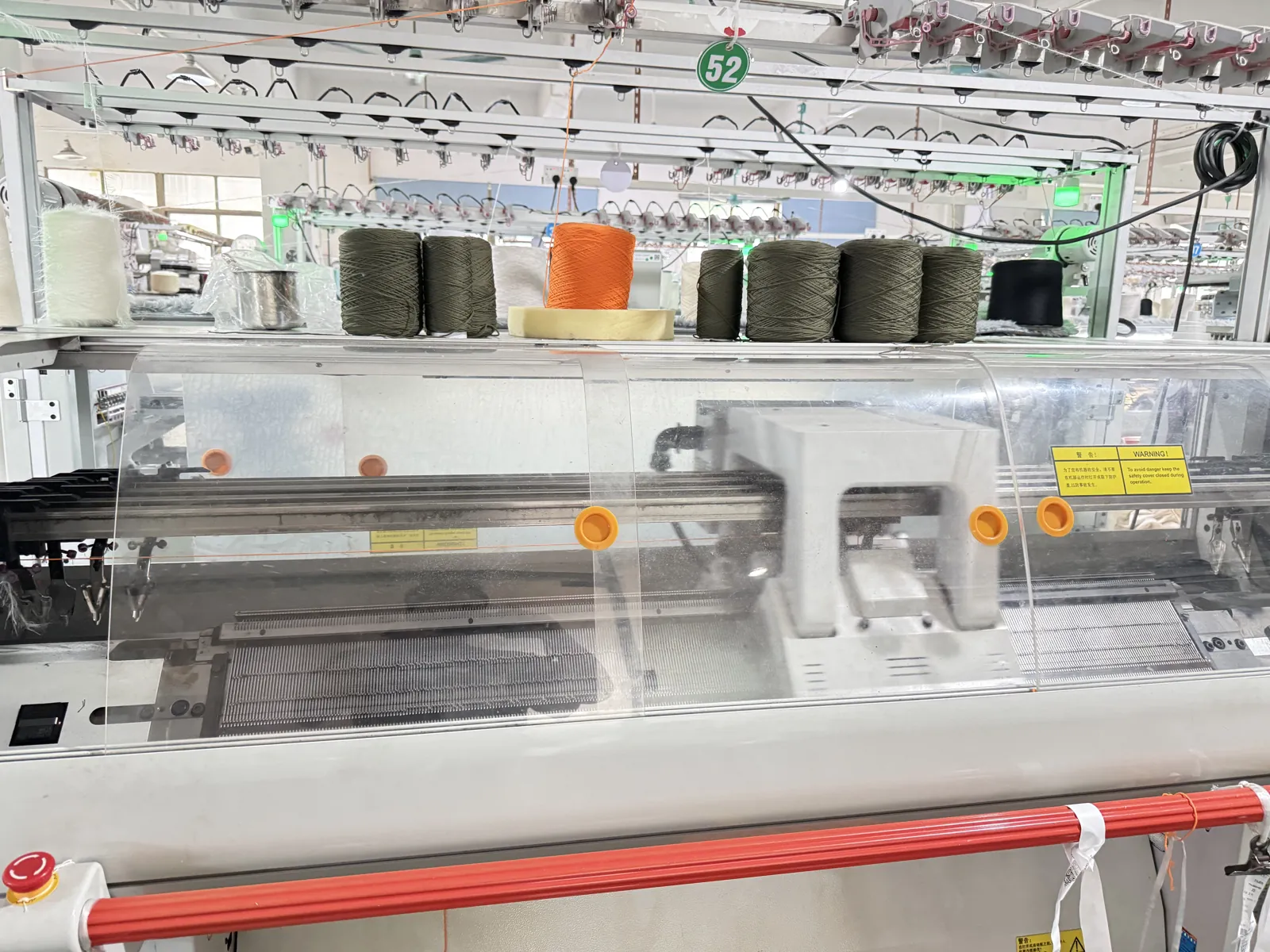
Strategic yarn selection mitigates weight and cost bottlenecks by replacing heavy, dense solid fibers with lofted, air-spun, or blended yarns that deliver the desired visual volume of a chunky knit at a fraction of the physical weight. By choosing yarns with a lower specific gravity or high-bulk acrylic-wool blends, product developers can maintain the iconic cable aesthetic while significantly reducing fabric consumption and raw material expenditures.
Choosing blended and lofted yarns for heavy cable textures
When designing a chunky cable knit cardigan or an oversized sweater, using 100% solid cotton or heavy combed wool results in an extremely heavy garment that feels restrictive to the wearer and is expensive to produce. To resolve this, we advise our clients to consider alternative yarn structures, such as hollow-core yarns, tape yarns, or air-spun wool blends. For instance, blending lightweight nylon or acrylic with wool (such as a 30% nylon, 47% acrylic, and 23% wool blend) creates a lofted fiber structure that traps air within the yarn. This allows us to knit a thick, cozy, chunky textured knitwear style that looks substantial but weighs 30% less than its 100% cotton equivalent. This strategic yarn choice directly lowers your per-unit material cost and reduces shipping weights, maximizing your retail profit margins.
Mitigating Raw Material Price Spikes in Cable Knit Sweater Production
Yarn pricing is highly seasonal, with raw material costs for wool, cashmere, and mohair climbing sharply during the peak production months of August through January. For brands placing orders during these busy periods, choosing complex cable designs that consume high volumes of yarn compounds the financial impact of seasonal price hikes. To mitigate this risk, we recommend that sourcing teams finalize their yarn selections and lock in material prices during the off-season, which runs from February to July. Placing bulk orders early not only secures lower raw material rates but also ensures that our factory’s computerized knitting machines are available, preventing the scheduling bottlenecks that occur when hundreds of brands compete for machine capacity in the autumn.
Conclusion
Optimizing a cable knit sweater for commercial success requires a balanced approach that respects both design aesthetics and the mechanical realities of flat-bed knitting. By understanding how stitch crossover frequency, machine gauge, panel placement, and yarn structure influence raw material consumption and knitting carriage speed, sourcing managers can confidently engineer garments that delight consumers without eroding brand profitability. As a dedicated manufacturing partner, we are committed to helping you navigate these complex production choices, providing clear transparency from initial pattern programming to the final shipping container. When you are ready to develop your next collection, partner with a professional custom sweater manufacturer to ensure your designs are optimized for efficiency, quality, and prompt market delivery.
B2B Purchasing FAQs
Q.What is your Minimum Order Quantity (MOQ) for custom cable knit designs?
Our standard factory MOQ is 30 pieces per size per color. This low threshold is designed to help boutique brands and emerging designers launch winter collections without the burden of excessive inventory. However, because setting up a computerized flat knitting machine with custom cable programs requires significant technical preparation, ordering larger volumes distributes these fixed setup costs over more units, resulting in a substantially lower per-piece price.
Q.How long does it take to develop a custom cable knit sample?
Our standard sample development takes 3 to 7 working days, depending on the complexity of the cable layout. If your design utilizes highly complex structures, multiple craft combinations (such as adding hand embroidery or beads over the cables), or requires specialized technical programming, sampling can take up to 5 to 10 working days. Once completed, shipping the physical prototype to your overseas office via international air express typically takes another 5 to 7 days.
Q.Why do small orders of 50 pieces take the same production time as 500 pieces?
In sweater manufacturing, the pre-production phases—including yarn sourcing, machine programming, tension calibration, and washing trials—take the same amount of time regardless of order volume. For a 50-piece order, we can only allocate a small number of machines due to the low yarn volume being split; whereas for a 500-piece order, we can split the larger yarn volume across multiple computerized machines operating simultaneously. Consequently, the actual machine running time represents only a small portion of the overall production timeline, making the lead times comparable.
Q.How do we prevent our cable knit sweaters from shrinking or losing shape after washing?
We control dimensional stability through physical testing and specialized wet finishing processes during bulk production. Before we begin cutting and linking, every knit panel is washed and steam-boarded to release the tension built up during the cable-knitting process. We align our testing procedures with international standards to ensure that the finished garments maintain their shape, minimizing the risk of post-purchase shrinkage or torque when they reach the end consumer.