 CN Sweaters
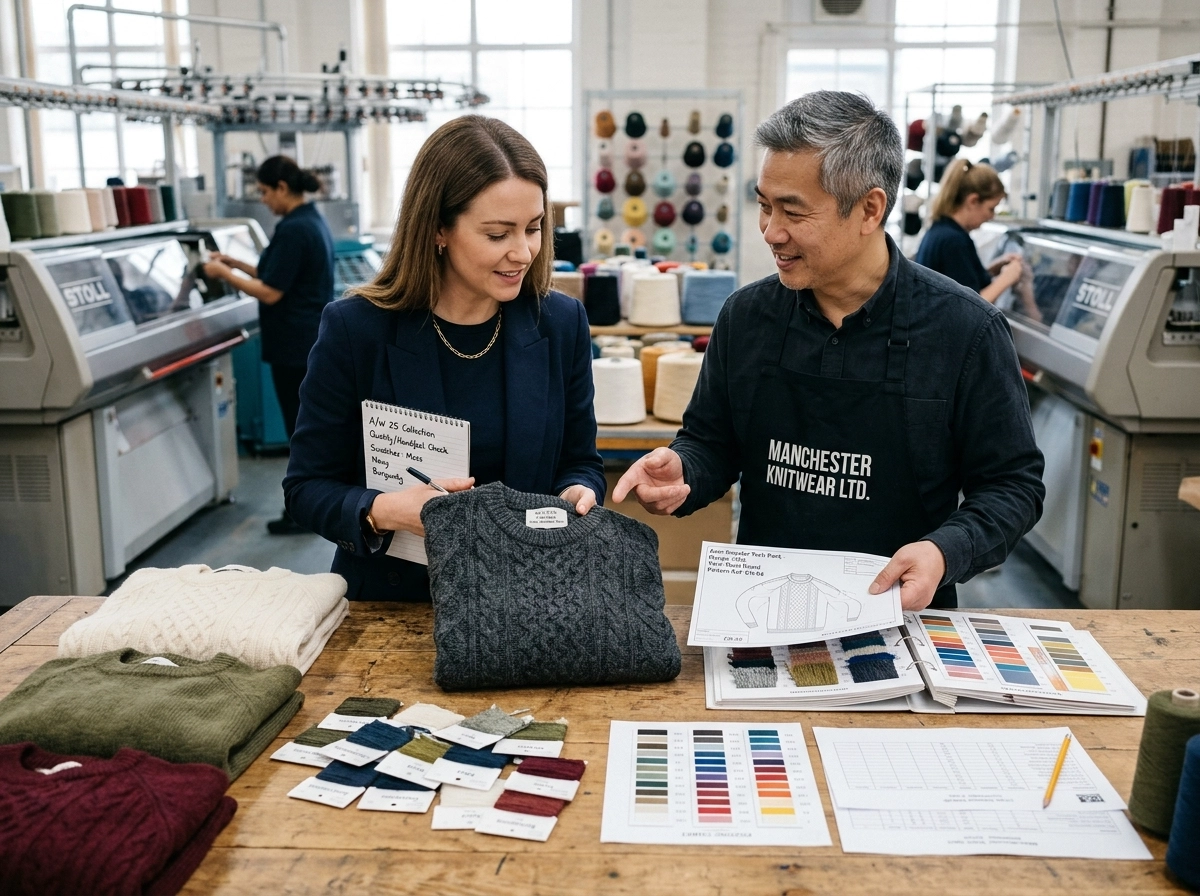
For boutique buyers sourcing knitwear in 2026, the question is no longer which trends to chase — it’s which styles are worth building a reliable business around. After several seasons of overbuying, slow sell-throughs, and fragmented supplier relationships, a growing number of buyers are stepping back and doing something more deliberate: rebuilding their core wholesale knitted sweaters assortment from the ground up.
This article is for brand owners, wholesale buyers, and boutique operators who are at that rebuilding stage. It covers what a commercially durable knitwear range actually looks like, how to evaluate China-based knitwear manufacturers in the current sourcing environment, and what to watch for in sampling, quality control, and lead time planning as you commit to production in 2026.
Why Boutique Buyers Are Rethinking Their Knitwear Strategy
When Trend-Heavy Buying Leads to Dead Stock
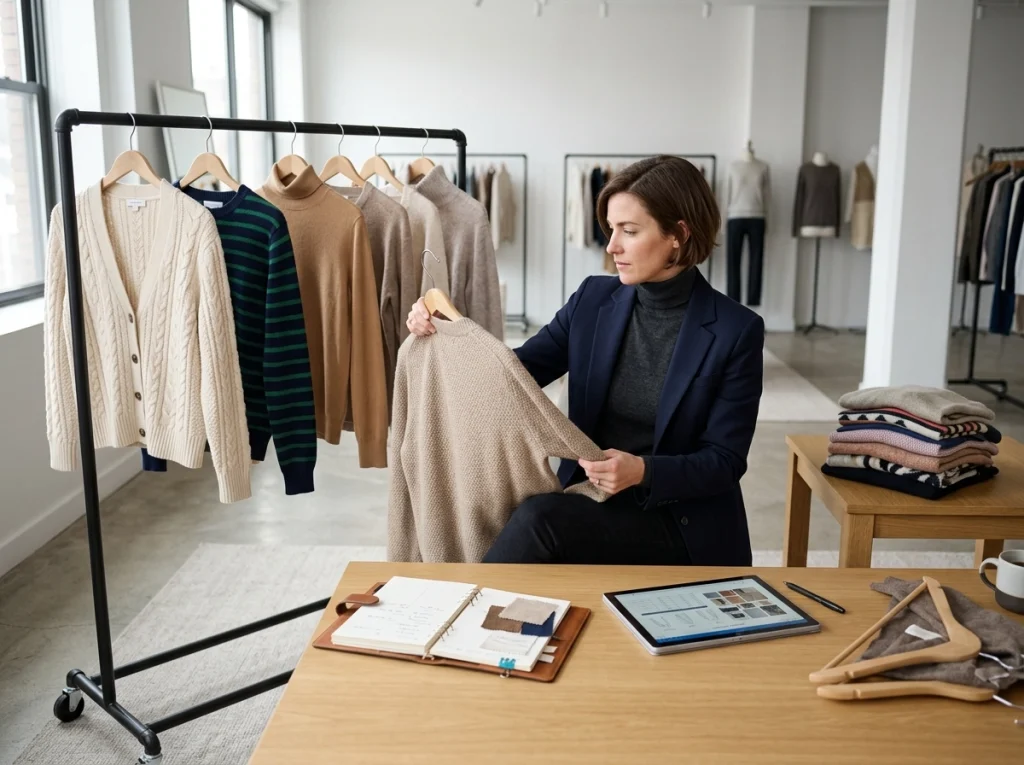
The pattern is familiar: a buyer chases a trending silhouette, places a wider assortment than the business can absorb, and ends up with slow-moving inventory that ties up cash and floor space. Multiply that across a few seasons and the problem compounds quickly.
The broader market context makes this worse. According to McKinsey’s State of Fashion report, only 20 percent of fashion executives expect consumer sentiment to improve in the near term, while 39 percent anticipate conditions to worsen. Consumers who came out of recent inflationary periods are more price-sensitive and less impulsive — which means unpredictable, trend-driven SKUs face a higher bar than they did three years ago.
The buyers who are managing this well tend to have made a deliberate choice: they’ve narrowed their assortment and bought deeper into fewer styles. That’s not a retreat — it’s a more sustainable commercial model.
The Case for Building Around Fewer, Repeatable Styles
When boutique buyers talk about “rebuilding” their knitwear range, what they usually mean is identifying three to six styles that sell through reliably — across multiple colorways and multiple seasons — and committing to those with appropriate depth. This shifts the focus from novelty to performance.
The advantage from a sourcing perspective is significant. A buyer who returns to the same supplier with the same style specifications can negotiate better pricing, lock in yarn lots for color consistency, and reduce the re-sampling overhead that comes with constant new development. The supplier also has an incentive to perform: repeat customers with stable programs are worth protecting.
This isn’t to say trend responsiveness is irrelevant. But for most boutiques, one or two seasonal statement pieces on top of a reliable core is a healthier model than an assortment built entirely around what’s trending this month.
What a Core Knit Assortment Actually Looks Like
The Styles That Hold Commercial Value Across Seasons
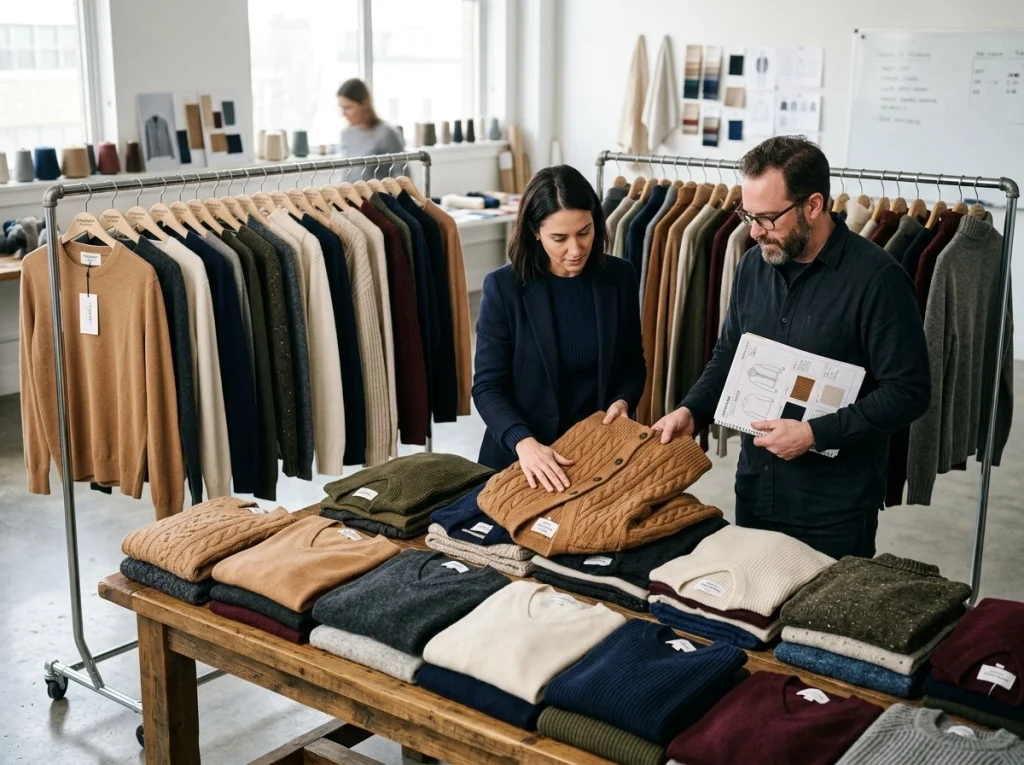
Not all knitwear performs equally in a core assortment context. From a production standpoint, the styles that tend to anchor boutique ranges year after year share a common characteristic: they’re easy for consumers to understand, wear, and replace.
Classic crewneck and V-neck sweaters — especially in 7GG to 9GG mid-weight construction — consistently hold their commercial value. They can be updated with color, yarn blend, or minor fit changes without requiring a full structural re-development each season. Cardigans in open-front or button-up styles serve a similar role, particularly when placket construction is clean and shape retention is reliable across multiple washes.
What tends to underperform in core positions are overly complex jacquard patterns, extreme silhouettes, or styles with multiple handcraft elements — not because they’re bad products, but because the development and quality control requirements are harder to standardize at boutique scale.
Gauge and Weight Choices That Work Year-Round
Gauge is one of the more practical decisions a buyer can make when specifying wholesale knitwear, and it directly affects cost, lead time, and wearing occasion.
For most core programs, 7GG to 9GG mid-weight construction is the most versatile. It covers fall and winter comfortably, holds structure well, and is familiar enough to both factories and consumers that sizing and shrinkage behavior is predictable. Fine-gauge options in the 12GG to 14GG range open up layering and transitional season opportunities — a useful addition if your market has a longer spring shoulder. At the heavier end, 3GG to 5GG chunky constructions work well for statement pieces but tend to require more yarn, longer knitting time, and more attention to seam integrity.
The trade-off is straightforward: finer gauge takes longer to produce and requires tighter tolerances; heavier gauge costs more in materials. Neither is inherently better — the right choice depends on your price point and what your customers actually wear.
Where Private Label Earns Its Place in the Mix
Private label knitwear is most valuable when a buyer already has validated sellers. The logic works like this: if a style has sold through reliably under a third-party label, replacing that label with your own branding adds perceived value, protects margin, and reduces the risk of a customer finding the same product elsewhere at a lower price.
The practical requirements aren’t complicated — neck labels, care labels, hangtags, and branded packaging — but they do require a factory with established private labeling processes. A full-service OEM/ODM knitwear program covers this end-to-end, from label specification through to carton-level branding. The real advantage of private label at boutique scale isn’t exclusivity in the luxury sense; it’s brand coherence and repeat customer recognition.
Sourcing Wholesale Knitted Sweaters from China in 2026
What Has and Hasn’t Changed About China Knitwear Sourcing
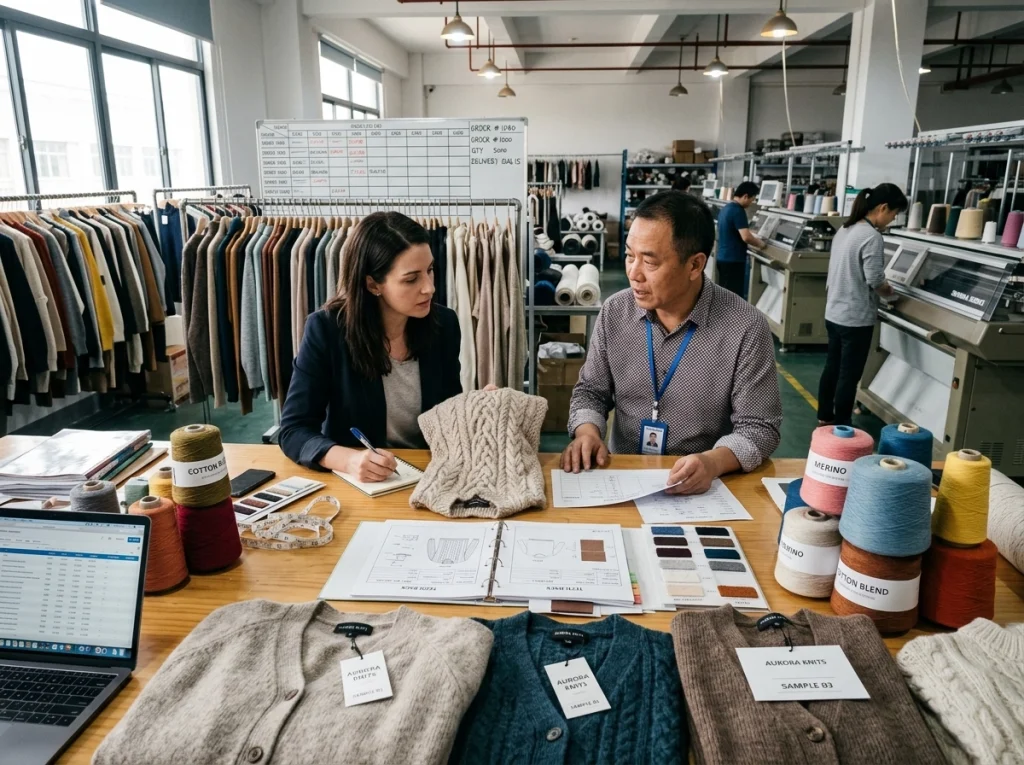
China remains the dominant source for wholesale knitted sweaters at the price points most boutiques operate in. The manufacturing depth — in terms of gauge range, yarn sourcing, stitch complexity, and finishing capability — is genuinely difficult to replicate elsewhere at comparable cost. That hasn’t changed.
What has changed is the sourcing environment around it. Tariff pressure has been the defining disruption. According to Vogue Business, 95 percent of executives surveyed by supply chain platform Inspectorio cited tariffs as the biggest disruptor in 2025, and tariff-driven sourcing strategy is expected to remain a core agenda item in 2026 even as specific rates continue to shift. US apparel and textile imports from China were already down six percentage points from the 2019 baseline by 2023, as Supply Chain Dive reported, citing McKinsey data — with nearshoring investment in the US rising 20 percentage points over the same five-year period.
For boutique buyers, this context matters — but probably not in the way it affects large retailers. A boutique sourcing 300 to 500 pieces per style is unlikely to restructure its entire supply chain toward nearshoring. The practical question is simpler: which China-based factories can deliver consistent quality, responsive communication, and realistic lead times? That’s where the real selection work happens.
MOQ Realities for Boutique-Scale Orders
MOQ is often the first filter boutique buyers apply when evaluating knitwear suppliers — and it’s a reasonable one. The short answer is: China knitwear factories vary considerably, and the headline MOQ figure doesn’t always reflect actual minimums once you have a real conversation.
Typical starting points for OEM production run around 200 to 300 pieces per style, with 50 to 100 pieces per colorway. Some factories operate with lower thresholds at the style level, particularly for buyers willing to consolidate styles or work within available yarn stocks.
The key constraint isn’t always total quantity — it’s the per-color minimum. Yarn economics drive this: splitting a small order across too many colors creates short yarn runs, which increases waste and cost per unit. A buyer who wants four colors on a 200-piece order will often get a better outcome by consolidating into two stronger colors with deeper quantity in each.
MOQ alignment should happen at the RFQ stage, not after sampling. Getting clarity on quantities before development begins avoids the uncomfortable situation of approving a sample you can’t actually afford to produce at minimum.
Stock Programs vs. OEM vs. Private Label — The Trade-Offs Worth Knowing
These three sourcing models serve different needs, and many boutiques use more than one simultaneously. The differences matter depending on where you are in your product development cycle.
| Stock / Catalog Program | OEM Custom Production | Private Label | |
|---|---|---|---|
| MOQ | Lowest — existing inventory | 200–300 pcs / style | Same as OEM |
| Lead Time | Fastest — days to a few weeks | 45–60 days from PP approval | Same as OEM |
| Customization | None | Full: yarn, gauge, fit, stitch | Full + branded labeling |
| Reorder Stability | Risk of discontinuation | High — specs are locked | High — brand-owned |
| Best Suited For | Testing styles, filling gaps | Expanding proven categories | Brand-building on validated sellers |
For buyers at an early stage with a new supplier, starting with a catalog program — if available — reduces the commitment required to validate quality and communication. Moving into OEM and then private label makes more sense once the relationship is established and you have sell-through data to justify deeper commitment.
Sampling, QC, and Getting Bulk Right the First Time
Why Sampling Decisions Shape Bulk Outcomes
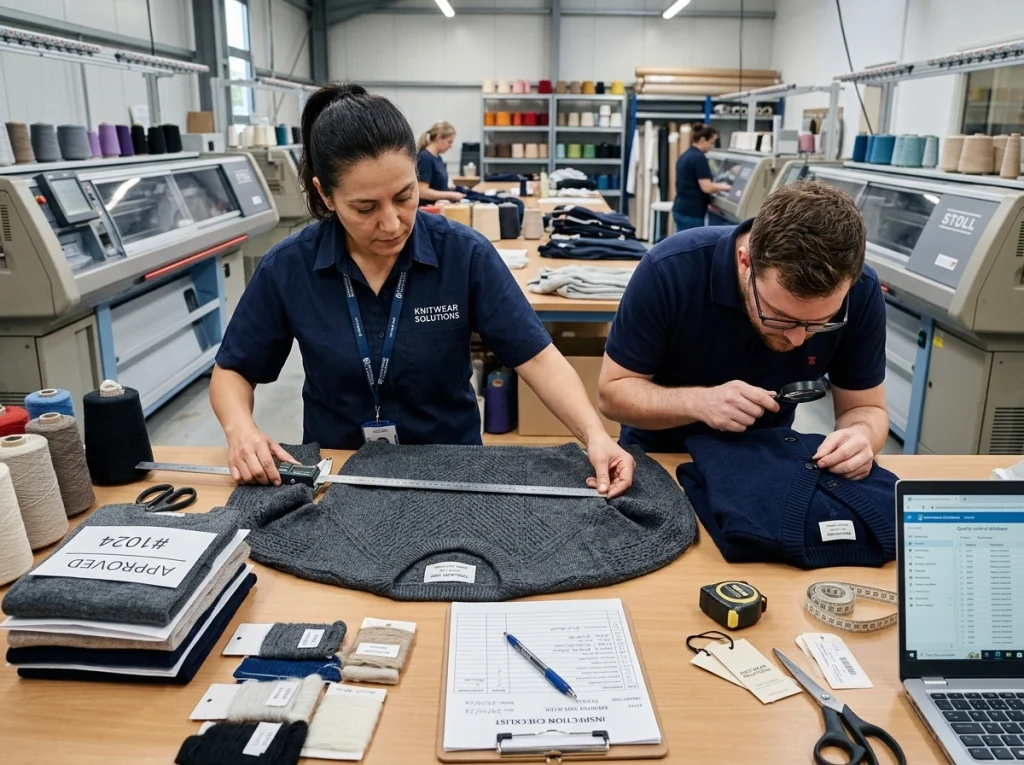
Sampling in knitwear is not just a quality check — it’s the last practical moment to align on construction before bulk production commits resources. Changes after a pre-production (PP) sample has been approved are possible but costly: they can trigger additional sampling rounds, delay the production schedule, and in some cases affect yarn availability if a revision requires a different colorway or fiber.
From a factory perspective, the buyers who get the best bulk results are typically those who treat sampling as a real decision point, not a formality. That means reviewing measurements against a proper spec sheet, evaluating hand-feel relative to your retail price point, and confirming that any special stitches or finishes are achievable at bulk quantity without compromising consistency.
Standard sampling lead time runs 7 to 14 days for straightforward styles. Complex constructions — jacquard, intarsia, or styles with multiple handcraft details — can extend to 10 to 20 days. Factor this into your development calendar, especially if you’re coordinating sampling across multiple styles simultaneously.
Quality Checks That Matter Most for Boutique Buyers
The quality risks in wholesale knitwear are specific and recurring. Pilling is the most visible post-sale issue, particularly for acrylic or short-staple fiber blends in higher-friction wear areas. Evaluating pilling behavior during pre-production approval — rather than discovering it after bulk arrives — is one of the more straightforward ways to protect your customer return rate.
Size tolerance in knitwear is more complex than in woven garments because knit fabric has inherent stretch. Measurements taken on a flat, unstretched sample may not reflect how the garment fits and recovers after actual wear. Confirming both flat measurement and on-body behavior during sampling reduces the likelihood of fit complaints in bulk.
Two other checks that are easy to overlook but matter in practice: seam and linking integrity — particularly at side seams and shoulder joins — and color continuity across sizes and reorder lots. For any style you plan to carry across multiple seasons, establishing yarn lot records and sealed bulk shade standards at the initial production stage is worth the effort. It’s the difference between a reorder that matches and one that arrives noticeably different.
Lead Times, Refill Risk, and Planning the 2026 Calendar
When to Confirm Orders to Avoid Peak-Season Delays
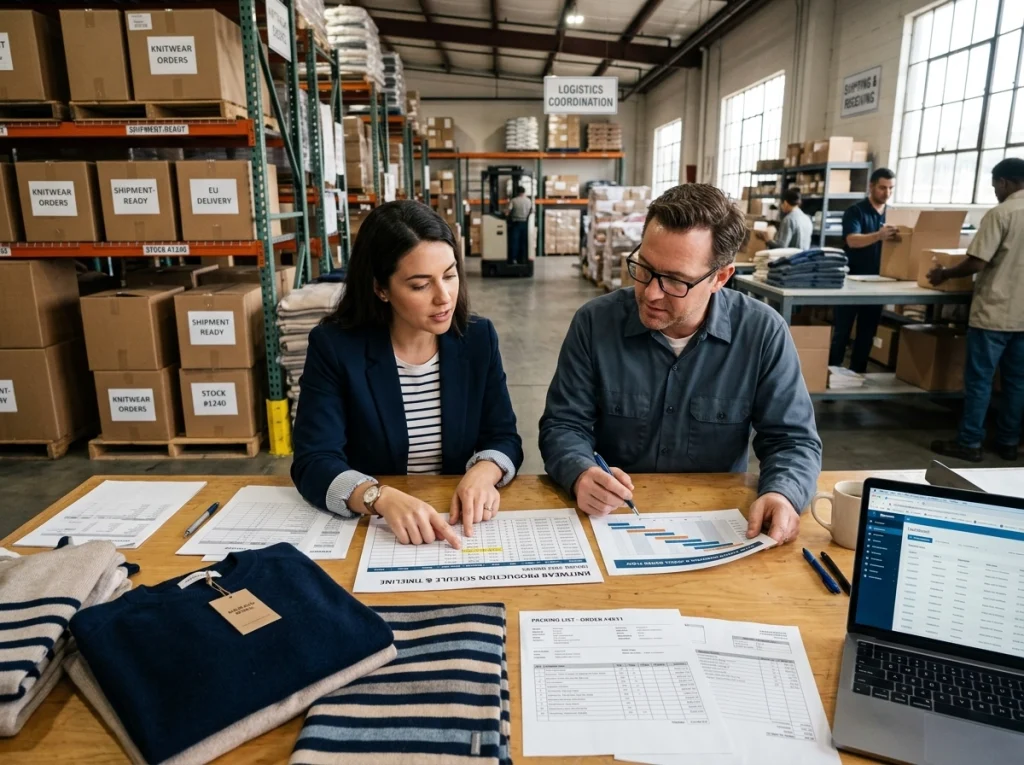
Knitwear production has a well-defined peak season that affects both pricing and lead times. August through January is the high-demand period, when order volumes are highest and machine capacity at most factories is under pressure. Buyers who confirm orders — and ideally lock in yarn — before peak season begins consistently see shorter lead times, more predictable scheduling, and in some cases better pricing on raw materials.
For fall and winter programs, the calendar works backwards from your in-store date. If goods are needed by mid-September, a realistic bulk lead time of 35 to 45 days means confirming production approval no later than late July. Add 7 to 14 days for sampling, and the development window starts to look tight if you don’t begin the conversation until June.
The off-season window — February through July — is genuinely underutilized by many boutique buyers. Factory capacity is more available, yarn prices are typically lower, and lead times are more flexible. If you have a clear program and can commit to quantities in Q1 or Q2, the scheduling advantage is real and worth planning for.
How Reorder Programs Differ from First-Time Sourcing
The first order with any supplier is partly a quality and reliability test. The reorder is where the commercial value of that supplier relationship actually materializes — or doesn’t.
Successful knitwear reorders depend on a few specific things being in place from the initial run: a sealed PP sample that functions as the accepted bulk standard, yarn lot records that trace the fiber and dye used, and graded size specifications that prevent dimensional drift between orders. Without these in place, “the same style” ordered six months later may arrive with subtle but commercially significant differences in hand-feel, color, or fit.
For knit hoodies, zip-up styles, and other pieces with functional components — zippers, drawcords, ribbed cuffs — component sourcing consistency matters too. Specifying trim references at the initial sampling stage prevents substitution surprises when reorder bulk is in production.
The buyers who build reliable reorder programs treat the first order as documentation, not just production. Everything that defines the approved standard gets recorded and archived. That’s the infrastructure that makes a stable long-term assortment possible.
Conclusion
For boutique buyers in 2026, the rebuilding impulse is well-founded. Markets are tighter, consumers are more selective, and the cost of carrying slow-moving inventory is higher than it was a few years ago. The answer isn’t complexity — it’s discipline.
A core knitwear assortment built around three to five commercially proven styles, sourced from a manufacturer who can deliver consistent quality and support reorder continuity, is more valuable to most boutiques than a wide spread of trend pieces that require constant re-sourcing and re-development. That’s not a conservative position; it’s a profitable one.
If you’re evaluating suppliers or building out a new knitwear program for 2026, start with clear specifications, realistic quantity commitments, and a sampling process that functions as a genuine decision point. The rest of the supply chain follows from there.
Talk to our team at cnsweaters.com to discuss your 2026 knitwear program — whether you’re starting fresh or looking to improve consistency on an existing range.
FAQ
What MOQ should boutique buyers expect when sourcing wholesale knitted sweaters from China?
Typical OEM programs start at 200 to 300 pieces per style, with minimums of 50 to 100 pieces per colorway. Some suppliers offer lower entry points depending on yarn type and construction complexity. The per-color minimum is often more constraining than total quantity, so consolidating colors — rather than simply reducing total pieces — is usually the more effective approach when working within a tight budget.
How long does it take to get samples and bulk production from a China knitwear factory?
Standard sampling runs 7 to 14 days for straightforward constructions; styles with jacquard patterns, complex stitches, or handcraft elements may take 10 to 20 days. Bulk production typically runs 30 to 45 days for orders in the 200 to 500 piece range, though peak-season orders placed between August and January should allow for additional buffer. Confirming production during the off-season can meaningfully shorten both timelines.
Is private label worth pursuing for boutique-scale buyers?
Yes — but timing matters. Private label makes the most commercial sense when applied to styles that have already proven themselves in your assortment. Putting branded labels on an untested style adds cost and process without a validated reason to do so. Once you have reliable sellers, private label protects margin, reduces competitive exposure, and builds recognition with repeat customers.
What is the biggest risk boutique buyers face when sourcing knitwear for reorders?
Inconsistency between the original order and the reorder — in color, hand-feel, or fit — is the most common practical problem. It almost always traces back to insufficient documentation from the first production run: no sealed PP sample, no yarn lot records, no confirmed trim references. Preventing this starts at the sampling stage, not at the reorder stage.
How does gauge selection affect cost and lead time for wholesale sweaters?
Finer gauges (12GG to 14GG) require more knitting time and tighter production tolerances, which extends lead time and increases labor cost per unit. Heavier gauges (3GG to 5GG) use more yarn per piece, raising material cost while generally requiring less machine time. Mid-weight 7GG to 9GG construction tends to offer the best balance of cost, lead time, and market versatility for most core wholesale programs.
References
- McKinsey & Company — The State of Fashion. mckinsey.com
- Vogue Business — The Forces That Will Shape Fashion’s Supply Chains in 2026. vogue.com
- Supply Chain Dive — Fashion Supply Chains: 2025’s Risks and Trends. supplychaindive.com