 CN Sweaters
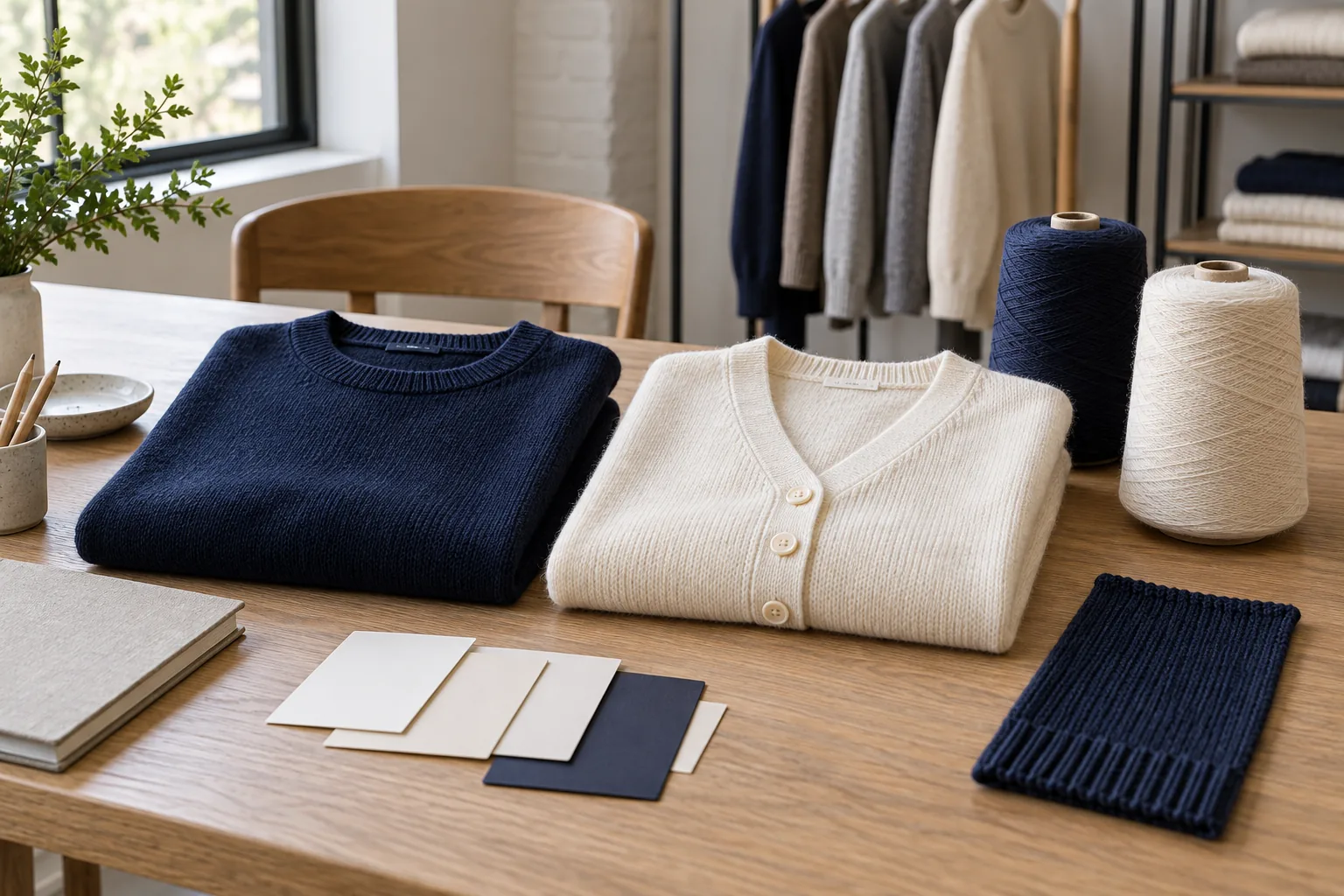
When demand is uncertain, buyers need sweater manufacturers to support a controlled commitment rather than a confident forecast. The order should protect the product identity while limiting the amount of unproven stock. That requires clear decisions about assortment breadth, yarn, sample evidence, production timing, quality release and replenishment.
A cautious buy is not simply a smaller purchase order. Reducing quantity without changing colours, materials or development scope can leave the same setup and material commitments spread across fewer garments. Delaying approval can also remove the production window the delivery plan depended on. Buyers therefore need to decide which risk they are reducing and which risk they are accepting.
This guide is for procurement and product teams planning private-label knitwear when sell-through is hard to predict. It explains what to hold constant, what to simplify and what evidence to request before release. It does not claim a universal market trend, MOQ, price or lead time. Each sweater manufacturer must confirm the current route for the actual yarn, style, quantity and destination.
What Should Buyers Ask Sweater Manufacturers to Hold Constant?
The safest first decision is the product identity. Buyers can change order depth or delivery phasing, but they still need a defined garment that suppliers and internal teams interpret the same way. A vague request for “the same quality” cannot protect fit, hand, shade or construction when the next order uses a different yarn lot or production window.
Freeze the buyer-facing product promise
Write the use case before the specification. Identify the wearer, climate, layer, expected care route, retail position and reason the style belongs in the range. Then connect those inputs to observable requirements such as silhouette, body length, ease, neckline, stitch surface, finished weight direction, colour character and label presentation.
Keep a controlled tech pack, measurement method and approved sample identity. The custom knit sweater tech-pack checklist helps separate construction, measurements, yarn and trims. Every approval should carry a version. If the buying team later simplifies a detail to protect cost or timing, record whether the change applies to one order or becomes a new permanent standard.
Do not let a seasonal colour sample silently change the base block. One person should consolidate product, brand, compliance and commercial comments before they reach the supplier. The decision record should show who can approve fit, colour, substitutions and a release with open conditions.
Separate fixed standards from adjustable variables
Create two lists. The fixed list may include the base pattern, grade rules, yarn performance requirement, core stitch, rib dimensions, logo method, fibre claim, care route and essential packing identity. The adjustable list may include seasonal colour, secondary decoration, carton allocation or delivery split. Each adjustable variable still needs a trigger for resampling or testing.
Ask sweater manufacturers to identify which input controls the quoted minimum. Yarn colour, machine program, special trim, wash route and size allocation can create different constraints. The yarn and garment MOQ guide provides a useful way to separate them. A lower garment quantity is meaningful only when the material commitment, unused balance and remaining setup scope are also visible.
Keep unknowns explicit. If current yarn availability, capacity or testing scope has not been confirmed, write it as a buyer request rather than a supplier promise. This protects the order from a planning assumption becoming an unreviewed production instruction.
How Should Buyers Reduce Assortment Risk?
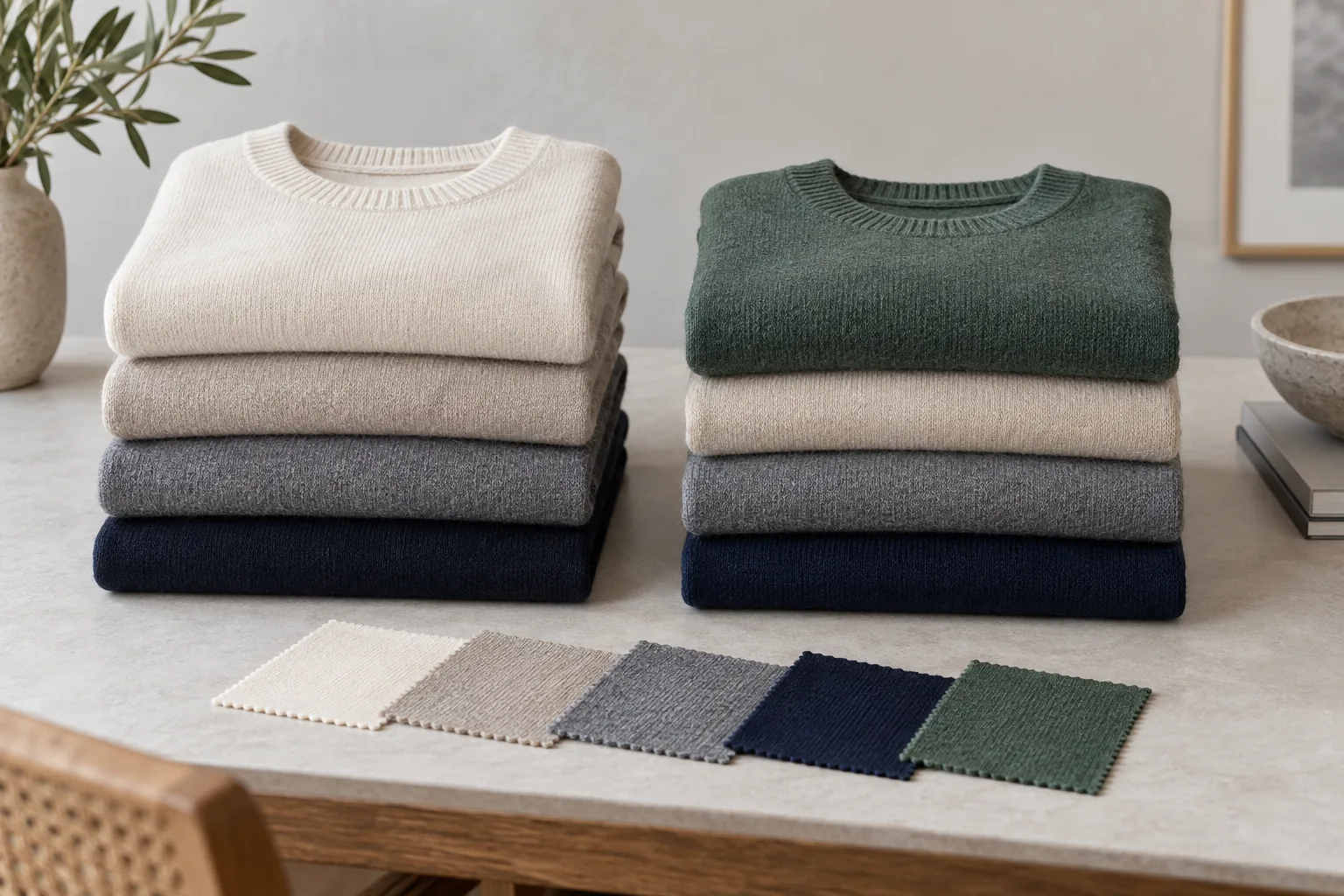
Assortment risk comes from breadth and depth. Breadth is the number of styles, colours and size combinations. Depth is the quantity behind each combination. A cautious plan controls both, but it should not reduce every line equally. The buyer needs enough information from the first order to decide what deserves replenishment.
Give every SKU a job
Classify each proposed SKU as core, test, seasonal or customer-specific. A core SKU needs continuity and a defined refill route. A test SKU needs a decision question, such as whether the colour, fit or price earns a second order. A seasonal SKU needs a last useful delivery date. A customer-specific SKU needs a clear commitment and exit rule because resale may be limited.
Use the wholesale knitwear SKU planning guide to connect breadth with size depth and replenishment. Do not add colours merely to reach a total quantity. If colours require separate yarn commitments, a broad trial may create more residual material than useful market evidence.
Compare proposed options through one decision table:
| Buying decision | Evidence to request | Hold condition |
|---|---|---|
| Keep a core style | Approved block, yarn route and refill trigger | Product identity cannot be reproduced |
| Test a new colour | Current material route and colour approval gate | Material commitment exceeds the test purpose |
| Add a size | Grade method and representative size evidence | Edge-size balance remains untested |
| Split delivery | Production, inspection and shipment allocation | Later delivery has no protected material or slot |
| Reserve material | Ownership, quantity, condition and expiry record | Balance and disposition cannot be verified |
The table prevents the same cautious label being applied to very different risks. It also gives the supplier a reason for each requested option, which makes alternatives easier to evaluate.
Compare total commitment, not unit price alone
Request a like-for-like cost scope. It should identify material, development, sampling, knitting, linking, finishing, testing, labels, packing and delivery terms. Ask which lines are fixed at style level, which change with pieces and which depend on an external provider. The custom knitwear cost-driver guide helps buyers find exclusions before comparing quotations.
Model at least three controlled cases: the proposed assortment, a narrower colour plan and a replenishment case. Use the same yarn, construction, quality and delivery basis. Do not claim that one case will be cheaper until the supplier has priced the actual inputs. A lower unit price can still create a larger cash or inventory commitment if the buyer must fund unused yarn or a wide size range.
Record the reason for choosing the final case. If the business accepts a larger material commitment to protect a core colour, that is a commercial decision. If it accepts a stock colour to reduce the first commitment, the colour limitation should remain visible in the product and reorder record.
How Can Sampling Protect a Cautious Buy?
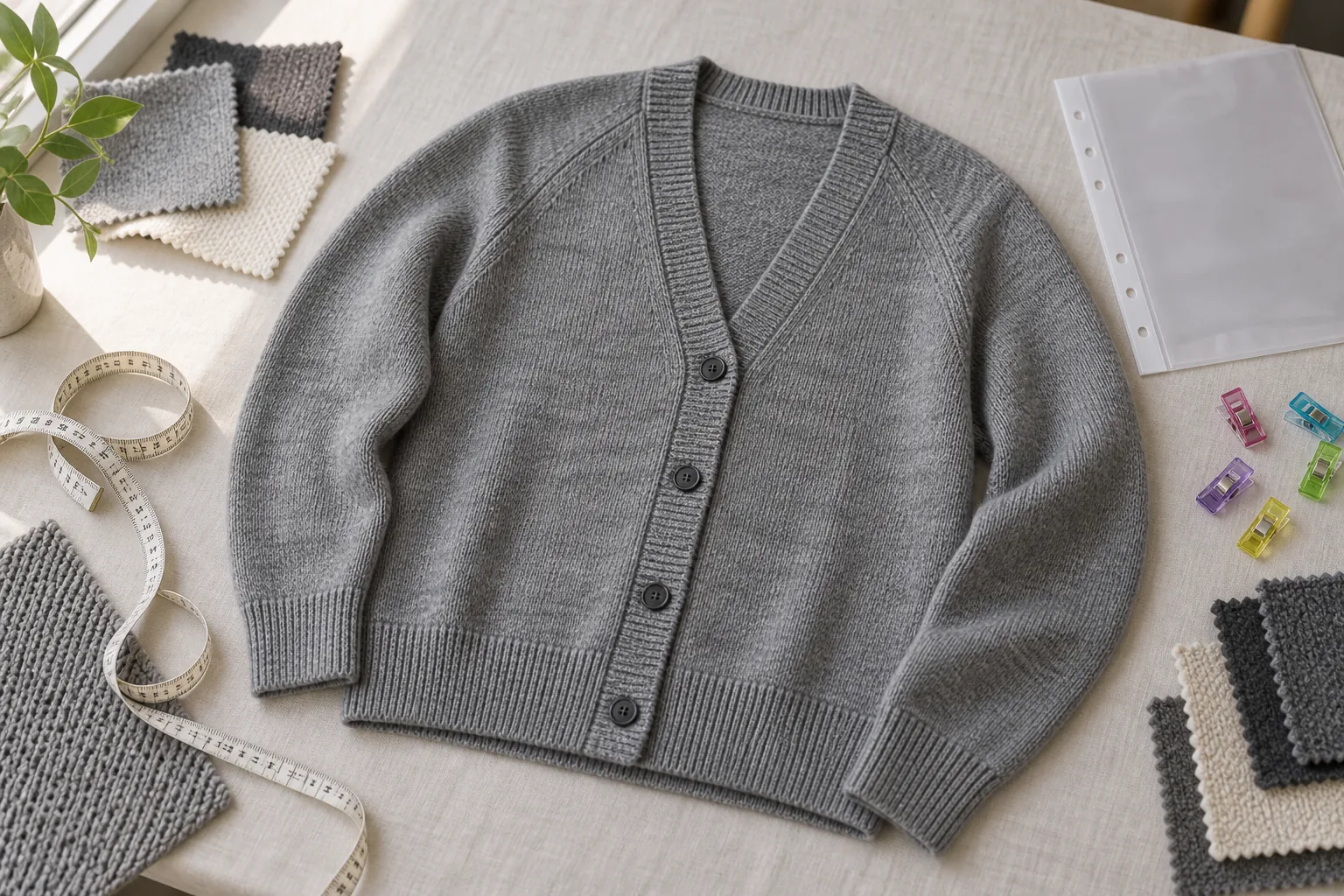
Sampling should remove uncertainty before irreversible work starts. A small bulk order does not make fit, colour or construction mistakes less important. It often leaves fewer saleable garments available to absorb a failure. The sample plan should therefore be based on decisions, not on a fixed number of rounds.
Assign one question to every sample
A knit-down can answer yarn, stitch density, colour and preliminary hand questions. A fit sample can settle proportion and construction. A size set can test grade balance. A pre-production or first-off garment can connect approved details to the intended bulk yarn and process route. The sample-stage comparison helps prevent one sample from being asked to prove everything.
Record the sample code, revision, yarn identity, colour reference, gauge, measurements, known substitutions and decision status. “Approved” should mean approved for named properties. A sample made from available yarn may support fit approval while leaving final shade and hand open.
Send one consolidated comment sheet. Separate observations from required changes and state who approves each closure. The custom sweater sampling checklist provides a structured way to track unresolved inputs without turning a sales message into an approval.
Carry sample evidence into production
Before bulk release, compare the sample route with the proposed production route. Ask whether yarn lot, machine route, linking, wet finishing, decoration or external providers will change. A good sample from a separate development route does not by itself prove that bulk will reproduce it.
Use a first-off garment made from the intended bulk inputs when the risk justifies it. Match it to the retained sample, written measurements and approved colour or trim references. The pre-production sample review explains how to close the handoff without treating the physical sample as a substitute for the specification.
Do not skip a needed gate because the order is smaller or late. Instead, simplify the product, reduce open variables or move the delivery decision. A cautious buy that begins production with unresolved fit or material identity is still a high-risk buy.
What Must Capacity and Lead Time Evidence Show?
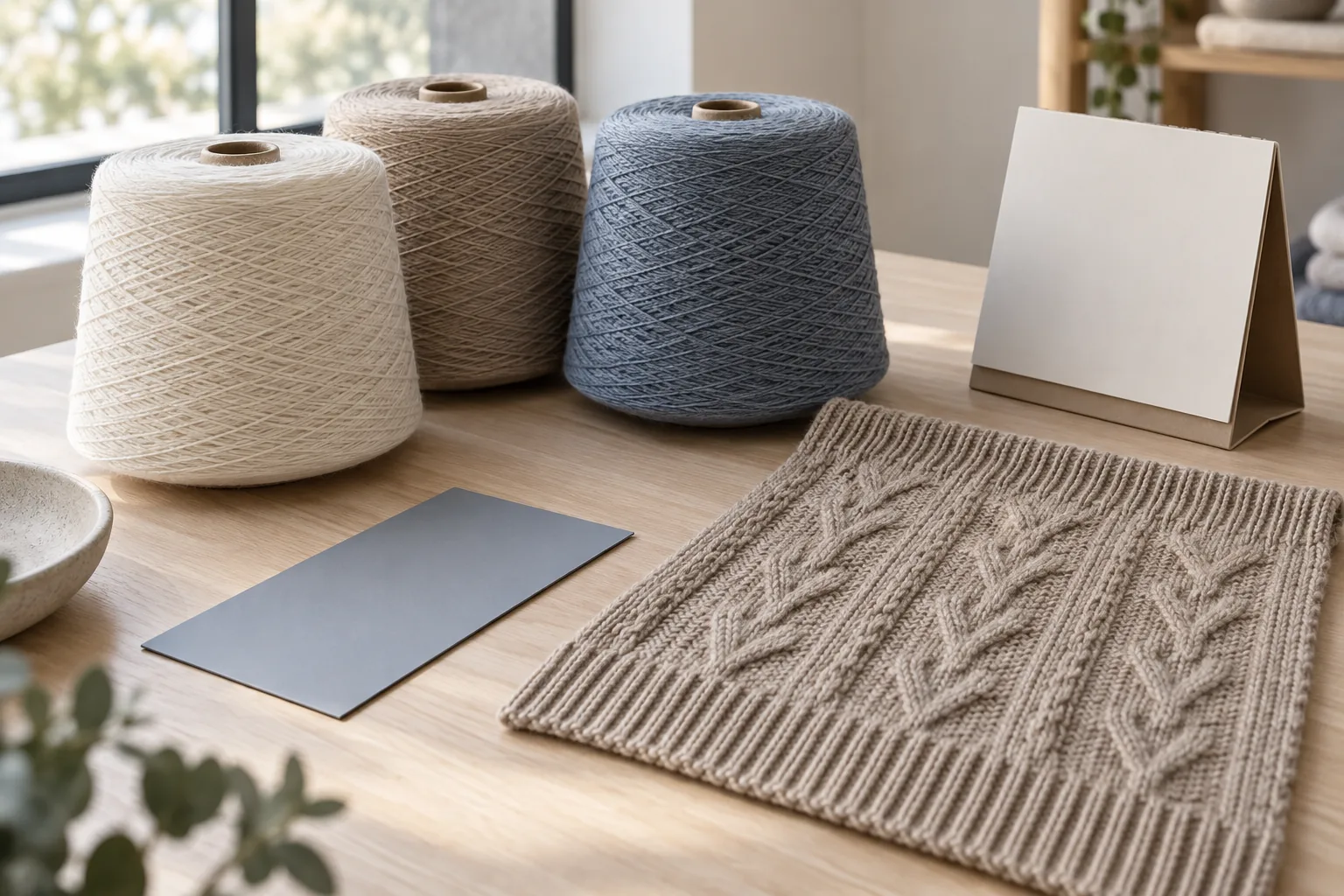
Lead time is a chain of starting conditions and process stages. Quantity is only one input. Yarn availability, colour approval, sample closure, knitting gauge, linking, finishing, testing, packing and freight can each control the date. Buyers should compare schedules only when their starting conditions match.
Ask for a dated stage plan
Request the date on which the supplier considers the order production-ready. List every input required by that date, including purchase order, payment condition, approved specification, sample decision, material confirmation, labels and packing information. Then request the proposed window for each main production stage and the owner of any external process.
The knitwear lead-time planning guide helps define the dependencies. Ask what happens when an approval arrives late. The answer should name the affected stage and a revised date, not simply promise that production will “catch up.”
Capacity evidence should match the product. Total machine count does not prove that the required gauge, programming support, linking or finishing window is available. Use the factory capacity questions to test the proposed slot against the actual construction and current load.
Define the delivery boundary
Separate factory readiness, carrier departure, import clearance and warehouse receipt. Record the Incoterms rule, named place and version where applicable, plus the documents and costs outside that rule. The ICC Incoterms overview is a primary reference for delivery obligations, but it does not define garment quality, payment remedies or every landed-cost item.
If the buyer wants split delivery, identify whether the split occurs before production, after inspection or only at freight booking. Confirm how material, labels, cartons and quality records are allocated. A later shipment without protected material or capacity is a new promise, not a guaranteed extension of the first lot.
Set the last useful arrival date for the product. If the proposed schedule moves beyond it, decide whether to simplify the range, change transport, reduce the release quantity or stop the order. Speed has value only when the delivered stock still serves the commercial plan.
How Should Quality and Compliance Stay Proportionate?
The specification and release logic should remain consistent regardless of order size. The inspected sample size or test plan may depend on the actual lot and risk, but a smaller order is not permission to leave defect definitions, measurements, labels or decision authority unclear.
Keep the release standard visible
Define critical measurements, workmanship, shade, appearance, functional trims, labels and packing. Name the reference sample and measurement method. Agree how findings are classified, who can place goods on hold and what evidence closes a corrective action. The AQL inspection guide helps buyers document a sampling plan without treating an AQL label as proof that every garment is defect-free.
Use inline checks where a later inspection cannot recover the problem economically. Yarn identity, first panels, linking appearance and wet-finish measurements may need evidence before final packing. Intertek describes textile inspection at pre-production, production and delivery stages. Buyers can use those stages to plan evidence while keeping laboratory tests and visual inspection separate.
Track findings by colour, size and production or finishing batch. Averages can hide a problem concentrated in one group. Retain the affected record and the follow-up result so the next order does not restart from a verbal summary.
Confirm destination claims and labels
List the destination market, fibre claim, care information, origin treatment, responsible business identity and any product-specific requirements before labels are approved. The FTC clothing and textiles guidance is a primary starting point for the United States, while the EU textile fibre labelling regulation addresses fibre-name and related labelling rules in its scope.
These sources do not replace a product-specific legal review. Buyers should confirm current applicability, language and placement requirements for every destination. A certificate image, old test report or label from another product cannot prove the current order.
The OECD garment and footwear due-diligence guidance provides a framework for identifying, addressing, tracking and communicating supply-chain risks. Use it to organise questions and follow-up, not as a certificate that approves a supplier or batch.
How Can Replenishment Replace Speculative Depth?
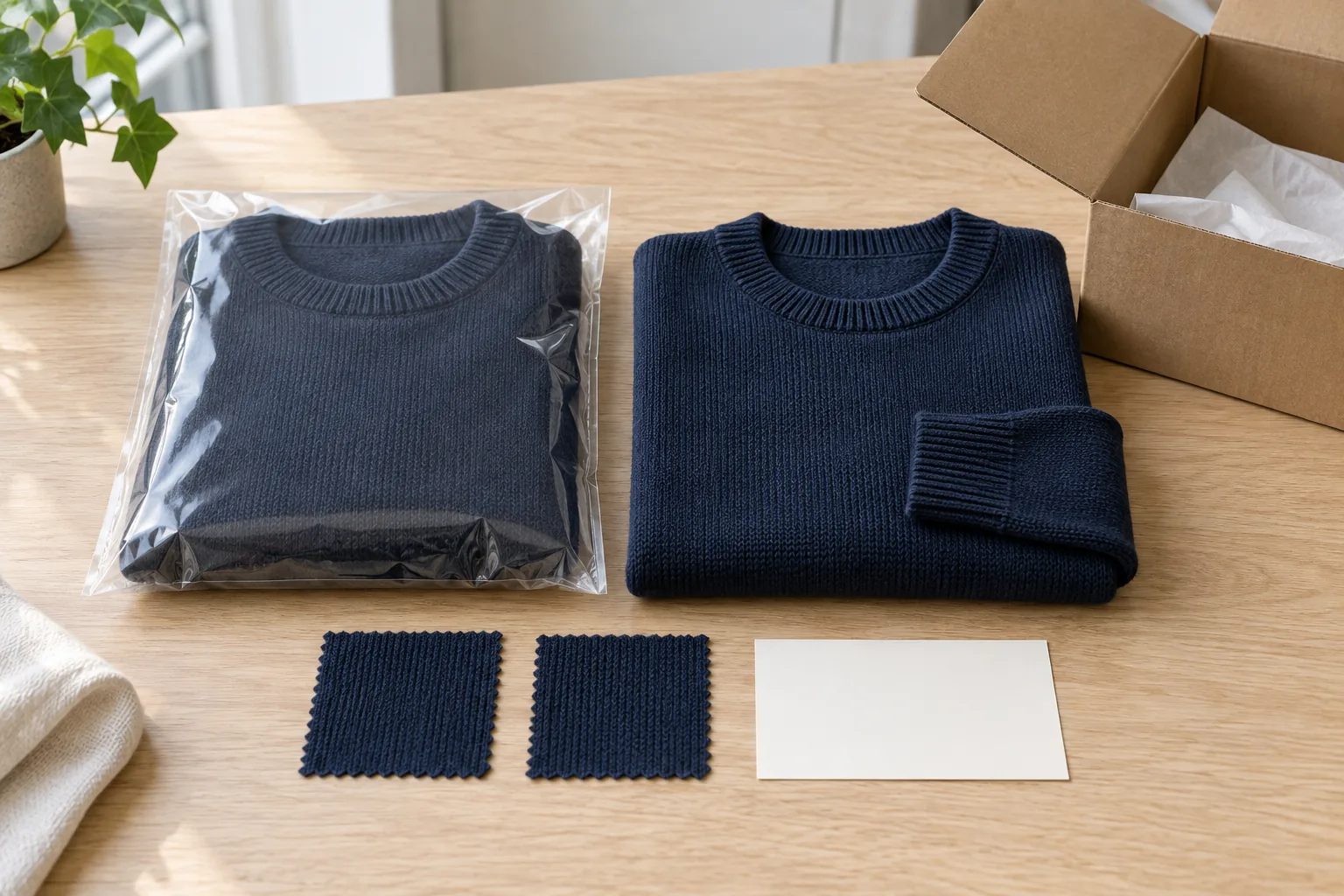
Replenishment reduces speculative inventory only when the repeat route is prepared before the first order. Buyers need a product archive, a current material path, a decision trigger and enough time to release a new lot. An informal promise to “repeat quickly” does not establish any of those conditions.
Build the repeat-order file during the first order
Retain the released tech pack, measurement method, grade, sample identity, yarn article, colour standard, trims, labels, packing, tests, concessions and bulk findings. Record which inputs belong to the buyer, supplier or an external provider. The bulk consistency guide helps connect the first approval with a later production lot.
After delivery, capture sell-through, size gaps, exchanges, defects and remaining stock by product version. Separate demand evidence from quality or fulfilment problems. A returned size does not automatically prove the size curve is wrong, and a slow colour does not automatically justify changing the base construction.
Set a review date and threshold that starts the replenishment decision. Then check current yarn, colour lot, capacity and delivery window. The first order’s quotation and schedule are historical evidence, not standing terms.
Reopen only the affected gates
Ask the supplier to declare changes in yarn source, article, fibre blend, machine route, stitch density, wet finishing, trims, labels, packing and external providers. Match that declaration to the retained file. If inputs are unchanged and evidence is current, the buyer may reuse appropriate approvals. If an input changes, reopen the checks it can affect.
A new dye lot may require shade and finished-construction review. A new yarn article may require identity, hand, performance and dimensional checks. A block change may need fit and size-set approval. A changed production route may need another first-off and inspection plan. This targeted approach protects continuity without repeating unrelated work.
Before selecting sweater manufacturers for a cautious program, compare the evidence behind their replenishment route, not only the first-order offer. The supplier comparison beyond price helps align legal identity, product control, quality release and commercial scope. To review a specific assortment, prepare the garment type, yarn direction, colour and size split, delivery need and unresolved decisions.
Conclusion
When demand is uncertain, sweater manufacturers should be evaluated by how clearly they support a controlled commitment. Buyers need a stable product identity, an assortment with a defined job for every SKU, sample gates that close real decisions and a dated production plan tied to current material and capacity.
Quality and destination requirements remain part of the release even when the order is smaller. Replenishment becomes useful only when the first order leaves behind a complete product archive and a clear change declaration. That evidence lets the buyer reopen only the checks affected by a new yarn lot, production route or product revision.
Do not ask one vague promise to cover MOQ, price, timing and repeatability. Record each condition, owner and hold point separately. To discuss how these controls apply to your next knitwear buy, contact the CNSweaters team with your order brief.
Frequently Asked Questions
Does uncertain demand always mean ordering fewer sweaters?
No. The right quantity depends on the commercial risk and the commitments behind the order. A buyer may narrow colours, protect depth in core sizes, phase delivery or reserve material. Compare the total exposure and the evidence the first order is intended to produce.
What should remain fixed when a buyer reduces an order?
Keep the buyer-facing product identity clear: fit, construction, yarn requirement, colour standard, labels, care route and quality release. If one of those changes to support a smaller buy, record the new version and decide whether existing stock can coexist.
Can a later commitment still protect the delivery date?
Only if the required material, approvals and production window remain available. Ask for a dated stage plan and the decision deadline that protects it. When the deadline passes, request a revised route instead of assuming the factory can compress every stage.
How should a buyer evaluate a refill promise?
Check the retained specification, current yarn and colour route, change declaration, capacity and delivery window. A first-order record helps, but it does not prove that the same inputs or commercial conditions remain available.
Is a smaller order automatically easier to control?
No. It can reduce inventory exposure, but the product still needs complete specifications, samples, inspections and destination checks. With fewer garments, a concentrated fit, shade or packing problem may also affect a larger share of available stock.