 CN Sweaters

If you want to reduce sampling time, the real goal is not to push your sweater factory to move faster at every step. The real goal is to remove the uncertainty that slows sampling down before production even starts.
From a factory perspective, most sample delays come from unclear inputs, late approvals, and too many moving parts in the first round. A faster sampling cycle usually comes from better preparation, tighter feedback, and earlier alignment between sample decisions and bulk feasibility.
This article is for brand owners, sourcing teams, wholesalers, and product developers who work with a sweater factory on OEM, ODM, or private-label programs. If you are developing factory sweaters or planning custom knitwear with a fixed launch window, the points below will help you shorten the path from first brief to approved sample.
Why Sweater Sampling Gets Delayed in the First Place

Sweater sampling often slows down long before the knitting machine starts running. In knitwear, the sample has to confirm more than appearance. It also has to prove that the yarn, gauge, stitch, shape, and finishing can work together in a stable way when you move toward bulk production.
Most delays start with missing inputs, not slow machines
Many buyers assume a late sample means the factory is overloaded. In practice, incomplete information causes more delays than machine capacity. If the factory receives a loose sketch, vague fit comments, or mixed references from different team members, the first sample becomes a guessing exercise.
That usually creates a weak first round. Then the factory waits for more comments, new measurements, revised artwork, or a different hand-feel direction. What looks like a factory delay is often a development delay caused by open questions that should have been closed earlier.
Yarn, gauge, and stitch choices change the calendar fast
A sweater sample is not just a visual mock-up. Yarn type affects weight, recovery, softness, and shrinkage. Gauge affects texture, density, and fit behavior. Stitch complexity changes programming time and can also create extra risk in linking, washing, and final measurement.
That is why a simple jersey pullover can move much faster than a style with jacquard graphics, fancy cables, washed effects, or special trims. The more technical variables you change at once, the harder it becomes to keep the first sample both fast and useful.
Too many revision rounds usually point to a process problem
A second sample is normal in many knitwear programs. A third or fourth round often means the development process is not well controlled. In most cases, the sample is not slow because the factory cannot make it. It is slow because the target keeps moving.
The table below shows where sampling time is usually lost.
| Delay point | Why it slows sampling | What to lock earlier |
|---|---|---|
| Incomplete brief | Factory has to fill gaps and make assumptions | Fit direction, silhouette, target market |
| Unclear yarn choice | Hand-feel, weight, and appearance stay unstable | Fiber direction, target feel, price band |
| Too many design changes | Each revision resets part of development | Separate must-fix issues from nice-to-have changes |
| Late approvals | Factory waits for comments before the next step | Set one decision owner and one comment deadline |
| Complex details in round one | Hard to judge what caused the problem | Test core shape first, then refine trims and effects |
What to Lock Before Your Factory Starts Sampling

If you want a faster first sample, do not try to lock everything at the same depth. Lock the decisions that affect timing the most. That approach is usually faster than treating every detail as equally urgent.
A clear tech pack is helpful, but a clear decision brief matters more
A strong tech pack helps, but a practical decision brief matters just as much. The factory needs to know what the sample must prove in the first round. Is the priority fit, yarn direction, stitch effect, price control, or overall silhouette? Without that hierarchy, the factory may spend time polishing details that are not yet the real decision point.
If you already have a defined OEM/ODM knitwear process, use it to separate RFQ, sample review, PP approval, and bulk alignment. That keeps each stage focused and reduces confusion between a development sample and a pre-production standard.
Fit reference, measurements, and approval priorities should come first
For most sweater programs, fit clarity saves more time than visual mood boards. A clear measurement sheet, a reference garment, or a simple statement like “relaxed but clean shoulder line” is more useful than ten inspiration images that pull in different directions.
It also helps to tell the factory what you will judge first. If the first sample is mainly for body proportion and gauge direction, say so. That prevents long comment lists about packaging, label placement, or minor trim issues before the core garment is even approved.
Keep yarn, color, and trims realistic for the first round
Buyers often want the first sample to look close to the final retail piece. That sounds efficient, but it can slow the project if the yarn is custom, the color needs extra confirmation, or the trims are not yet ready. In many cases, the smarter move is to test structure first with workable materials, then lock decorative details after the body and hand-feel direction are right.
If your program depends on special finishes, unusual textures, or cross-category development, bring that up early as part of custom knit projects rather than treating it like a standard sweater sample. The earlier the complexity is visible, the easier it is to plan around it.
How a Good Sweater Factory Shortens the Sampling Cycle
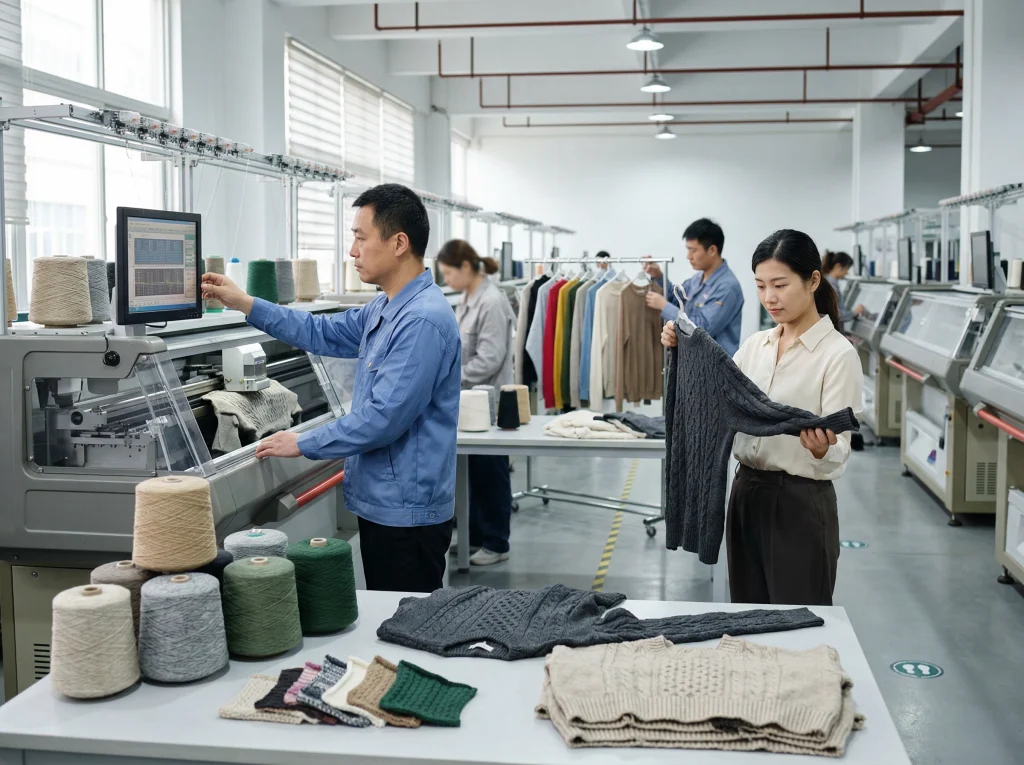
A good sweater factory does not only promise speed. It builds a system that reduces avoidable rework. That difference matters because fast sampling is only useful when the sample also gives you a reliable base for the next decision.
In-stock yarn options and faster color confirmation save real time
One of the fastest ways to shorten sample development is to reduce waiting on materials. When a factory has workable yarn options, shade cards, and a practical way to match reference directions, the sample can move earlier instead of sitting between sourcing decisions.
That is one reason an experienced OEM knitwear service often moves faster than a supplier that only waits for complete final input. The right factory can tell you which yarn direction is realistic now, which one needs extra time, and which one may create risk later in bulk.
Digital programming and experienced technicians reduce avoidable rework
Programming matters more in knitwear than many buyers expect. An experienced technician can spot where a stitch choice may distort shape, where a gauge may fight the intended drape, or where a neckline and placket construction may become unstable after washing.
That does not remove every revision, but it lowers the chance of wasting a full sample round on issues that could have been flagged before knitting. From a factory perspective, the best sample rooms do not just make what the buyer asks for. They also identify where the brief may create trouble in production.
PP approval packages help prevent the same problem from repeating in bulk
Sampling gets faster when each round produces clearer decisions. A proper review package should help both sides lock measurements, stitch direction, color logic, and workmanship standards in a way that can carry into bulk.
This is where a well-structured quality control system also matters earlier than most buyers think. If the factory checks panel consistency, linking quality, dimensional stability, and appearance during development, you are less likely to approve a sample that looks fine at first glance but becomes a problem later.
What Buyers Can Do to Cut One or Two Sample Rounds

Buyers often have more control over sample timing than they realize. The biggest gains usually come from better decision discipline, not more pressure.
Approve with ranked priorities, not scattered comments
A long comment list is not always helpful. When every note sounds equally important, the factory has to guess what matters most. That increases the risk of solving the wrong problem first.
A better method is to rank feedback in three levels: must fix, should improve, and can wait. That gives the factory a cleaner target and helps you avoid spending another round on secondary issues that did not need to block approval.
Avoid changing yarn, fit, and trims at the same time
If you change several major variables in one revision, it becomes hard to see which change improved the sample and which one created a new problem. That is especially risky in knitwear, where yarn, gauge, and finishing all affect the final look.
In most cases, it is faster to lock one layer of decisions before moving to the next. First confirm body shape and knit structure. Then adjust surface details. Then finalize trims and branding. This step-by-step logic may feel slower at first, but it usually removes one avoidable sample round.
Use one decision owner to keep feedback consistent
Internal alignment is a hidden source of delay. A designer may want a softer hand-feel, a merchandiser may push cost down, and a sales team may ask for a different fit after seeing the first sample. If those opinions reach the factory separately, the factory has to wait or rework.
One decision owner does not mean one person makes every call alone. It means one person consolidates the final comments and sends a clear next-step direction. That single habit can speed up sampling more than any rush request.
Build a Faster Sample-to-Bulk Workflow, Not Just a Faster Sample
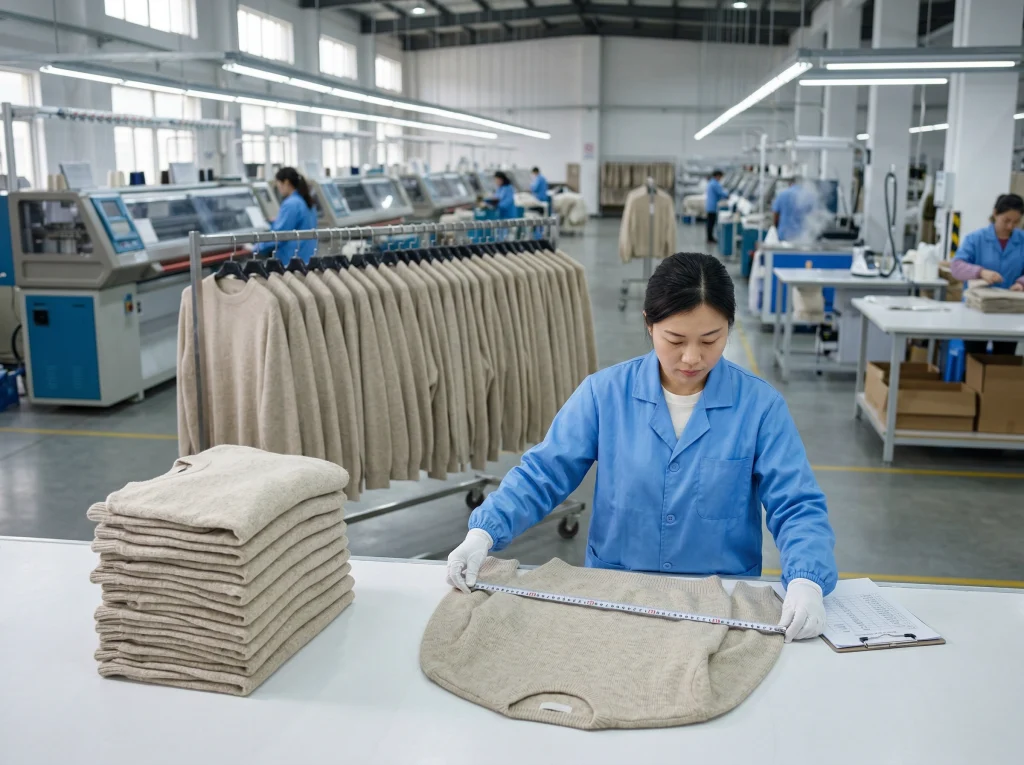
A fast sample is valuable only if it helps bulk move more smoothly. If you rush the sample but leave major decisions open, you often lose the same time later in PP approval, production planning, or rework.
Lock PP early if your launch window is fixed
The closer you are to launch, the more important it becomes to treat the PP sample as a commercial control point rather than a casual revision step. Once the PP standard is locked, both sides can plan bulk with fewer open questions around size, color, trims, and workmanship.
Early conversations about MOQ and lead time help here. A sampling plan that ignores order size, yarn sourcing, or peak-season capacity may look fast on paper but still miss the real delivery window.
Use inline quality checks to catch repeat issues sooner
Sample delays and bulk delays often come from the same root problem: issues are found too late. If a factory checks quality only at the end, the same construction or measurement problem can keep repeating until a bigger correction becomes necessary.
A more reliable workflow uses checkpoints earlier. That is why experienced factories connect sample approval with in-line checks, not just final inspection. In knitwear, this matters for measurements, seam behavior, stitch balance, and general appearance.
Plan repeat orders around the same yarn and spec system
If you expect refill orders or seasonal repeats, think about repeatability during sampling. A sample that depends on unstable materials, late trim sourcing, or loosely defined tolerances may pass once but still create trouble when you reorder.
From a factory perspective, a repeatable program is usually built on fewer variables, clearer standards, and better documentation. That is what turns a fast first sample into a stronger long-term sourcing model for factory sweaters and custom knitwear.
Conclusion
The fastest sampling cycle usually does not come from asking your sweater factory to move faster at every stage. It comes from making better decisions earlier, reducing avoidable revisions, and aligning sample goals with bulk reality.
If you want to cut sampling time, start by locking the brief, clarifying the fit direction, simplifying first-round decisions, and giving cleaner feedback. A sweater factory can move much faster when the path is clearer.
If you are planning a new knitwear program and want a more realistic sampling schedule, share your specs, target window, and sample priorities with our knitwear development team before you lock the full launch calendar.
FAQ
How long should a sweater sample usually take?
A standard sample can move fairly quickly when the style is simple and the inputs are clear. Complex stitches, special yarns, extra trims, and multiple revision rounds usually extend the timeline.
Can a sweater factory work without a full tech pack?
Yes, but only if the buyer still provides enough direction to make decisions. Clear reference images, key measurements, target hand-feel, and fit intent can be enough to start a practical first round.
What usually causes a second or third sample round?
The most common reason is not poor execution. It is changing targets. When buyers revise fit, yarn, stitch, and trims at the same time, the project often needs extra rounds to isolate what actually works.
Does a lower MOQ help speed up sampling?
Not always. MOQ affects bulk planning more than sample speed. Sampling usually depends more on style complexity, material readiness, and approval efficiency than on final order size.
Should buyers approve yarn and fit before trims and packaging?
In most cases, yes. Yarn direction, gauge, and fit shape affect the garment more than small finishing details. Locking the core garment first usually leads to a faster and more useful sampling process.