 CN Sweaters
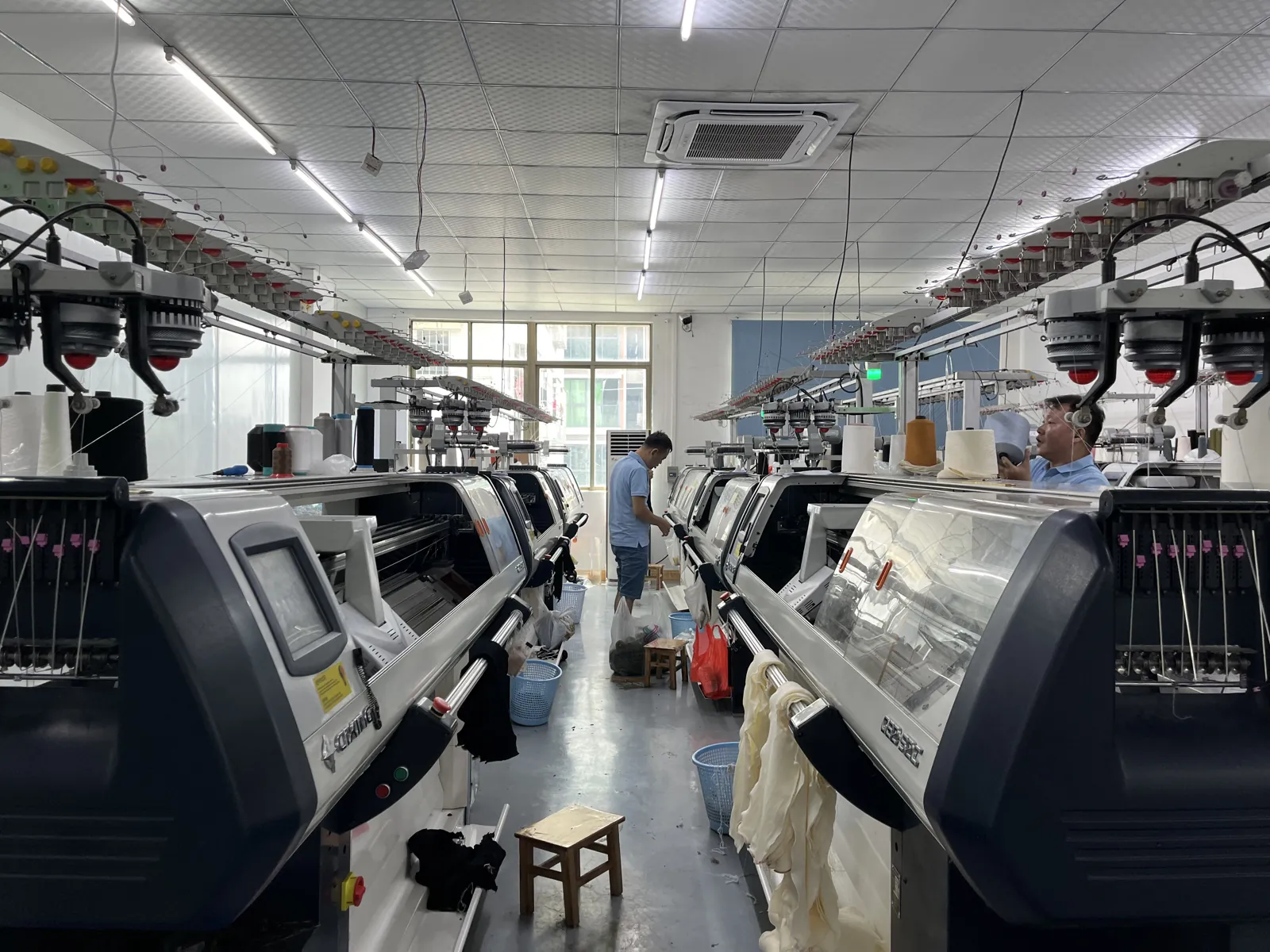
Sweater factory capacity matters only when it is tied to the buyer’s product, materials, approvals and required delivery window. A monthly output figure cannot show whether the required machine gauge is available, whether the selected yarn can arrive on time or whether linking and wet finishing have space for the order.
Buyers should therefore evaluate a factory through a project-specific route. Define the sweater, ask how it will be made, identify the material and process constraints, then request sample and production evidence that uses the same route. The result should be a dated plan with decision gates, not a general capability presentation.
This guide is for brand and procurement teams comparing a sweater factory for a private-label order. It explains how to interpret gauge, construction, sampling, capacity, MOQ, quality and delivery evidence. It does not provide a universal production volume, minimum or lead time. Those values must be confirmed against the current style and factory load.
What Does Sweater Factory Capacity Mean for Your PO?
Capacity is the ability to complete a defined scope within an agreed window. The scope includes more than knitting. Yarn receipt, programming, first panels, linking, washing, finishing, inspection, packing and external processes all need owners and time. A single headline number can hide the stage that actually controls delivery.
Translate headline output into a project window
Ask which machines, gauge and production route are proposed for the style. Then ask what work is already committed during the target period and when the factory will treat the order as ready to schedule. The factory capacity question guide helps buyers connect a general capability claim to the required product.
Separate theoretical output from allocated capacity. A machine may exist but be unavailable, unsuitable for the yarn or dependent on programming that is not finished. Linking, washing or inspection may become the controlling stage even when knitting time is open. Request a plan that shows each handoff and the responsible location.
Ask what evidence supports the proposed window. Useful evidence can include a current material check, planned machine group, approval deadline, stage dates and named external processes. Do not request confidential information unrelated to the order. The goal is to test whether the route is coherent and current.
Define the starting conditions
Capacity cannot be reserved against an incomplete order without conditions. List the purchase order, payment status, approved tech pack, sample decision, yarn and colour confirmation, labels, packing instructions and delivery term required before production begins. The start date should refer to those inputs, not merely the date of an email.
Create a hold rule for missing inputs. If the colour is open, the factory should not proceed with bulk material as though it were approved. If the size grade is open, programming additional sizes may create rework. The bulk production readiness guide provides a practical evidence pack for release.
Record what happens if an input arrives late. The answer may be a shifted slot, a revised sequence or a new material route. Avoid language that assumes every delay can be recovered by accelerating production. A reliable plan shows the consequence before the deadline is missed.
How Does Gauge Affect Sweater Factory Capacity?
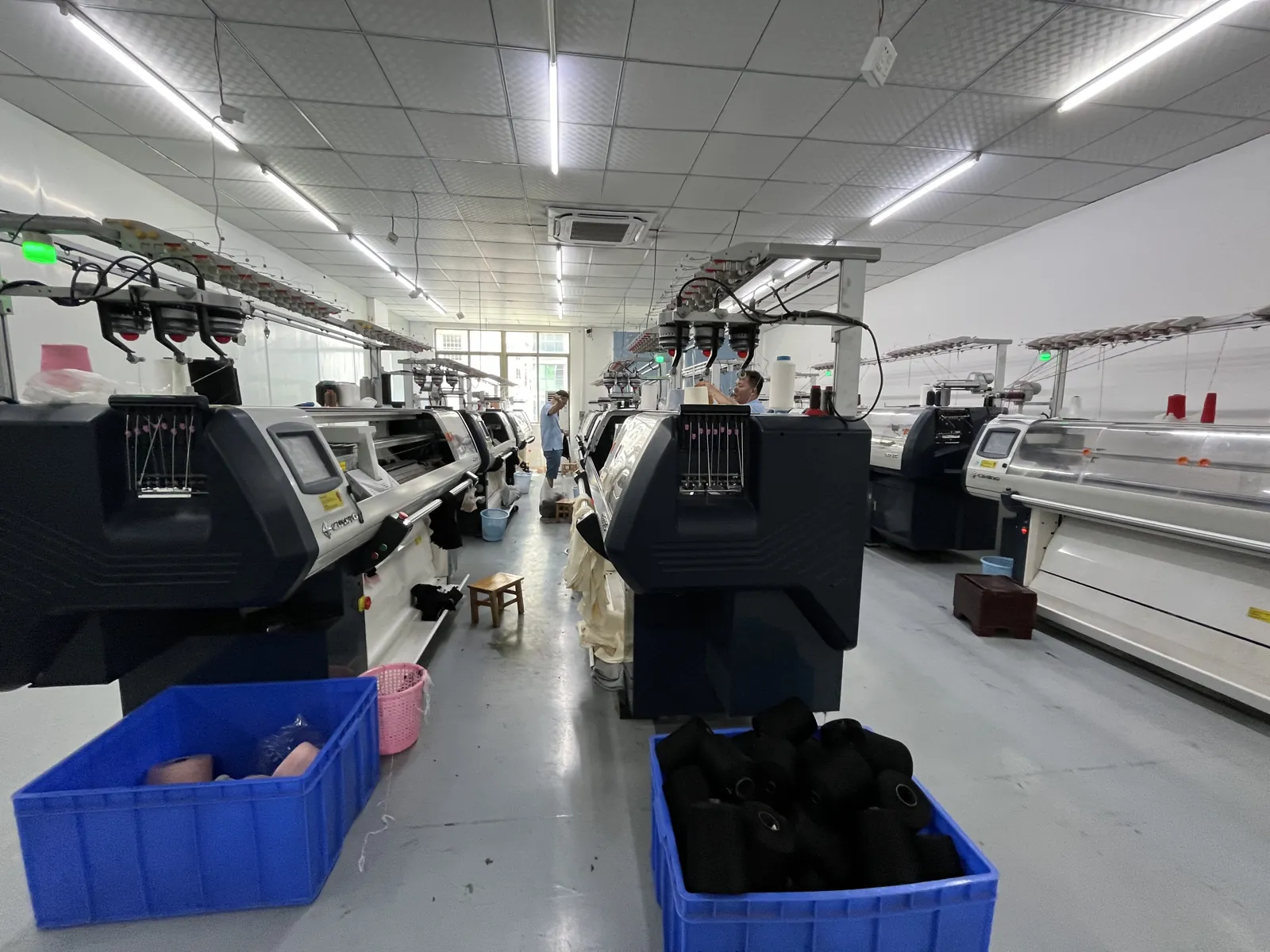
Gauge is one part of the construction decision. It cannot be evaluated without yarn count, number of ends, stitch, density, dimensions and finished hand. Two fabrics made on the same nominal machine gauge can behave differently because the material and settings differ.
Start with the finished product requirement
Describe the layer, silhouette, opacity, drape, surface, weight direction and care route. Then ask the factory to propose yarn and construction inputs. The tech-pack checklist for custom knit sweaters helps the buyer state points of measure, stitch zones, ribs, seams and finishing requirements.
Request a knit-down in the proposed yarn, stitch and density before treating a machine list as evidence. Check visible loop structure, stretch, recovery, hand and opacity under the intended use. A photograph can record appearance, but it cannot prove hand, fibre composition or dimensional performance.
Avoid broad labels such as “all gauges” unless the factory explains the actual equipment and process allocation. Ask which operations remain in-house and which use a disclosed provider. The answer should match the product and the entity that accepts responsibility for changes.
Compare manufacturing routes without stereotypes
Fully fashioned panels, cut-and-sew knit fabric and whole-garment methods have different programming, seam, waste and fit implications. No route is automatically best. The right choice depends on the design, yarn, required appearance, order conditions and available equipment.
Ask the factory to mark the joining method at shoulder, armhole, side seam and neckline. For shaped panels, identify the fashioning and linking requirements. For cut edges, define how they are stabilised and joined. For seamless or whole-garment claims, request a sample showing that the method supports the actual silhouette and openings.
Use the sweater construction comparison to clarify development and execution responsibilities. A capability should become a written construction choice in the approved specification, not remain a sales-page description.
Which Sample Stages Prove Sweater Factory Capacity?
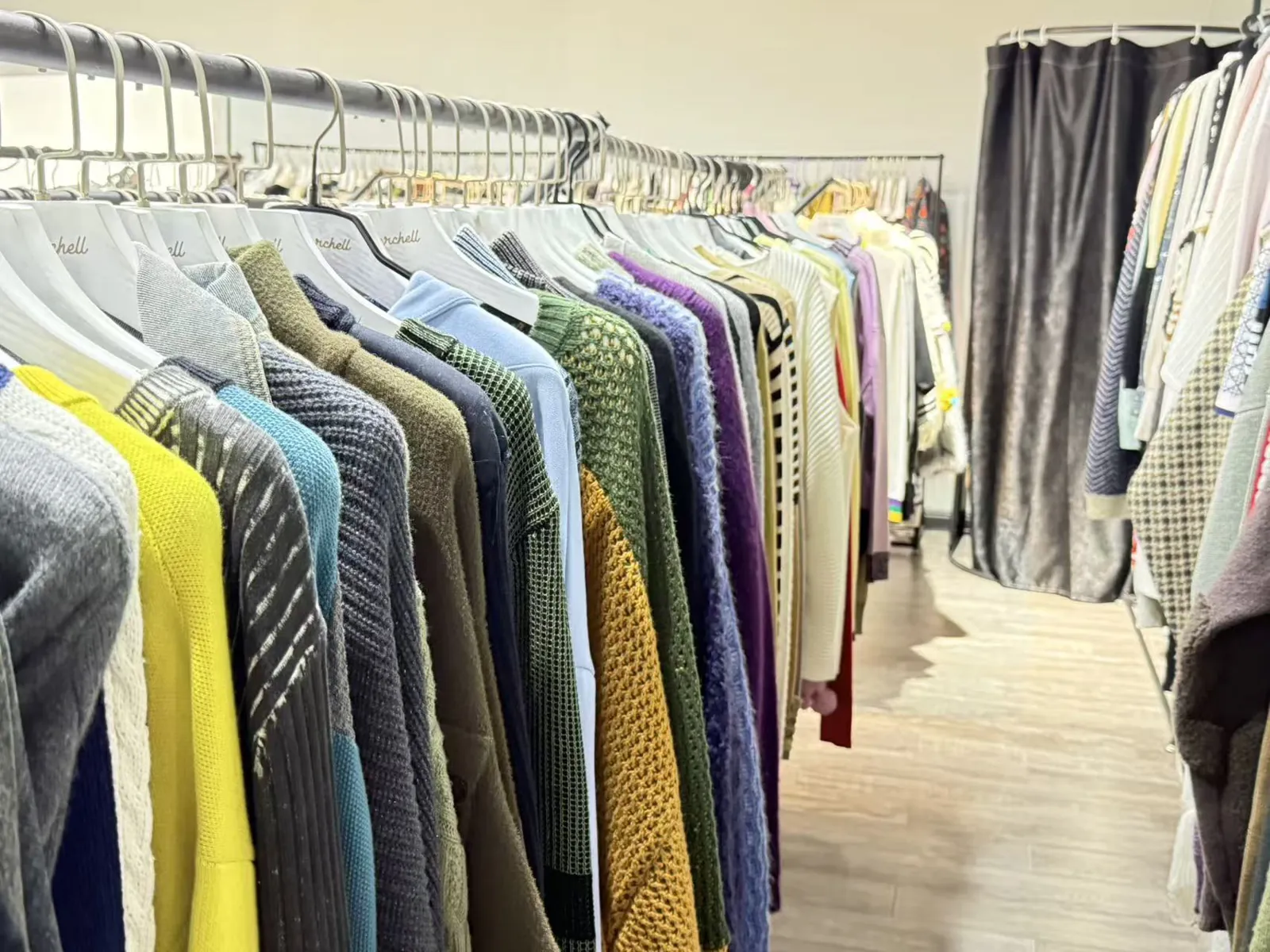
Samples answer different questions. An early prototype can confirm interpretation and silhouette, while a later pre-production or first-off garment should connect the approved design to intended bulk inputs. Calling both “the sample” makes it difficult to know what has been released.
Give every sample a decision contract
For each sample, state the purpose, inputs, known substitutions and required decision. A knit-down may approve stitch direction. A fit sample may approve proportion. A size set may test grade balance. A pre-production sample may close yarn, colour, trims and packing. The fit sample and size-set comparison helps assign these decisions.
Record sample code, revision, yarn identity, colour status, gauge, measurements, construction, trims and finish. Comments should name the required action and approval owner. “Looks good” is not enough to release bulk, and “make softer” is not enough to control a finishing change.
Budget pressure is not a reason to skip an unresolved high-risk decision. Reduce the number of styles entering development, simplify open variables or move the delivery date. The custom sweater sampling checklist helps close questions before they become bulk assumptions.
Connect the approved sample to bulk
Ask what will change between the approved sample and production. Sample yarn may come from available stock while bulk uses a new lot. A sample room may use different machinery or handwork. An external wash or decoration provider may enter only at production scale.
The factory should identify these differences and propose confirmation gates. A bulk yarn approval, first panel, size set, first-off garment or wash trial may be needed. Use the sample-to-bulk stability comparison to document the route.
Keep a retained physical sample with both parties where practical, supported by the written specification. The sample shows appearance and construction at one point in time. It does not replace measurements, test methods, tolerances or approved process settings.
What Must a Production Window Include?
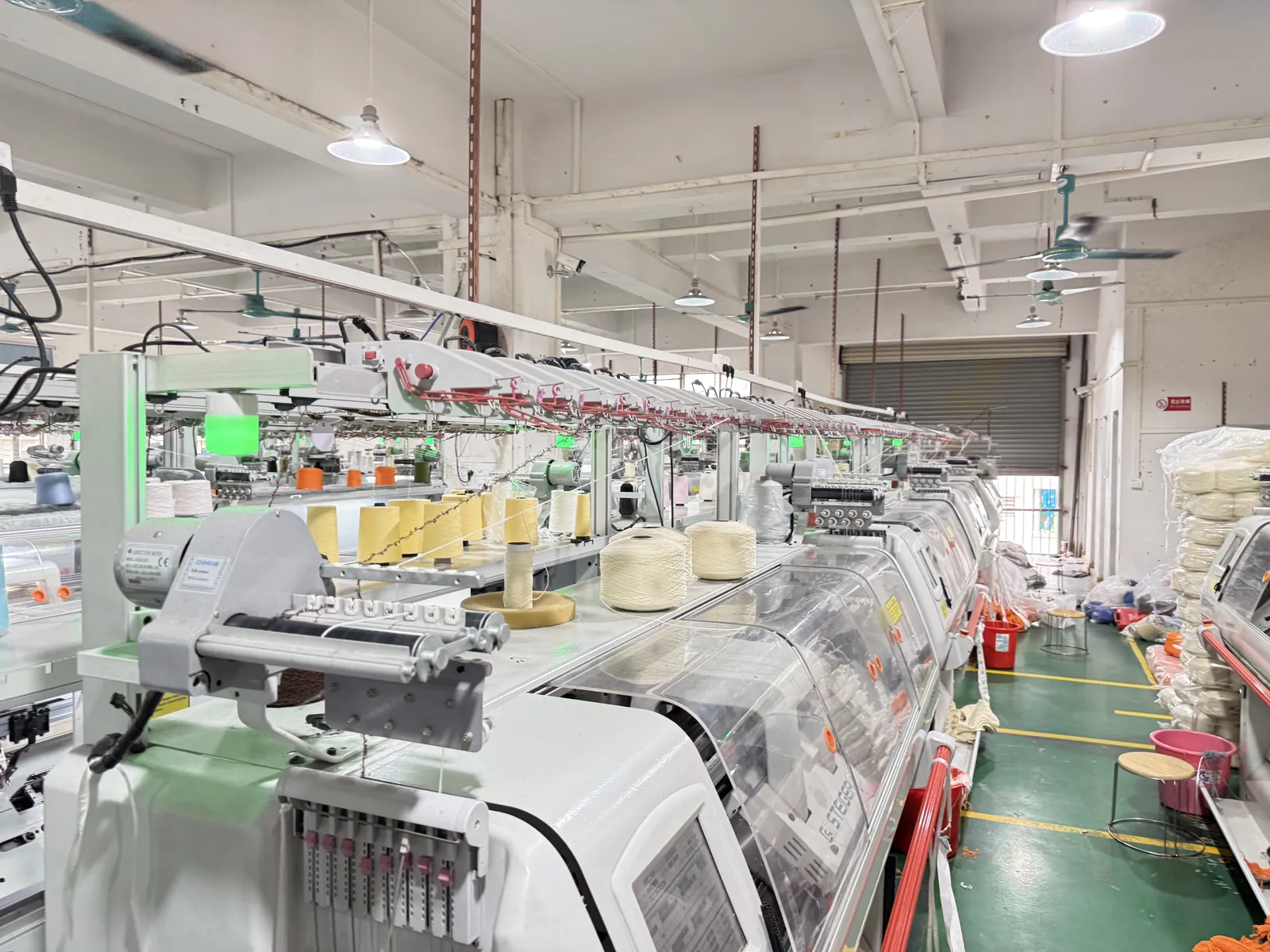
A production window should show the sequence from complete inputs to factory readiness and shipment handoff. It must reflect current material and capacity, not a generic number copied from a capability page.
Build a stage plan with owners
List material confirmation, programming, first panels, bulk knitting, linking, wet finishing, measurements, inspection, packing and dispatch preparation. Add external decoration, testing or specialised finishing when relevant. Each stage needs a proposed window, responsible party and condition for moving forward.
The knitwear lead-time planning guide helps separate dependencies from processing time. Ask which stage is most constrained and when the buyer must approve the preceding input. A plan that names its bottleneck is more useful than one that promises a short total without conditions.
Track changes against the same schedule. When an approval or material date moves, update the affected stages and delivery forecast. Do not edit the original date without preserving the previous version and reason. This prevents the team from combining the price from one revision with the delivery promise from another.
Separate delivery milestones when assessing sweater factory capacity
Factory completion, carrier departure, import clearance and warehouse receipt are different milestones. Record the selected delivery term, named place and version, plus the services and costs outside it. The ICC Incoterms rules overview is a primary reference for delivery obligations. It does not define garment quality, payment terms or every landed-cost item.
If split shipments are proposed, identify how yarn lots, colours, sizes, inspection records and cartons are allocated. Confirm whether the later lot has protected material and capacity. A later delivery without those inputs is a new commitment, not an automatic extension.
Use the last commercially useful arrival date as a decision boundary. If the current route cannot meet it, compare a simplified product, different transport, phased launch or stopped order. The choice belongs to the buyer and should be recorded before rushed production creates another risk.
How Should MOQ and Cost Be Interpreted?
MOQ and capacity answer different questions. MOQ describes a minimum commercial or production commitment under stated conditions. Capacity describes what can be completed in a period. A low minimum does not prove the factory can deliver at the needed time, and high capacity does not prove a small order is commercially workable.
Find the constraint behind the minimum
Ask for the minimum by style, colour, yarn article, size split and trim. Determine whether it comes from material purchase, programming, production efficiency, external processing or supplier policy. The custom sweater MOQ guide provides a structured comparison.
If the supplier proposes an available yarn or combined order, ask which input is shared and what remains separate. Two styles on different gauges may not combine even when their colours look similar. A custom colour may create an unused yarn balance that belongs in the total commitment.
Avoid universal piece or kilogram ranges. The current order should carry a dated material and commercial check. If the style, yarn or colour split changes, reopen the minimum rather than carrying the old number into a new quotation.
Compare the full cost scope when assessing sweater factory capacity
Request material, development, sampling, programming, knitting, linking, finishing, testing, labels, packing and delivery scope. Mark inclusions, exclusions, buyer-supplied items and external charges. The sweater manufacturing cost guide helps prepare comparable RFQ inputs.
Use one table across shortlisted factories:
| Decision area | Evidence to compare | Clarify before approval |
|---|---|---|
| Material commitment | Yarn article, colour route, purchase unit and residual balance | Availability or ownership is unclear |
| Production route | Gauge, program, linking and finish allocation | Quoted method differs from sample route |
| Sample scope | Deliverables, revisions and approval gates | Bulk starts with open decisions |
| Capacity window | Starting conditions, stages and current bottleneck | Delivery has no dated allocation |
| Quality release | References, sampling plan and decision owner | Failed findings have no closure route |
| Delivery basis | Rule, named place and included services | Prices use different endpoints |
The table makes differences visible without assuming that the lowest price or shortest total is the safest offer. Record the accepted trade-off and the person who approves it.
Which Quality Evidence Supports Release?
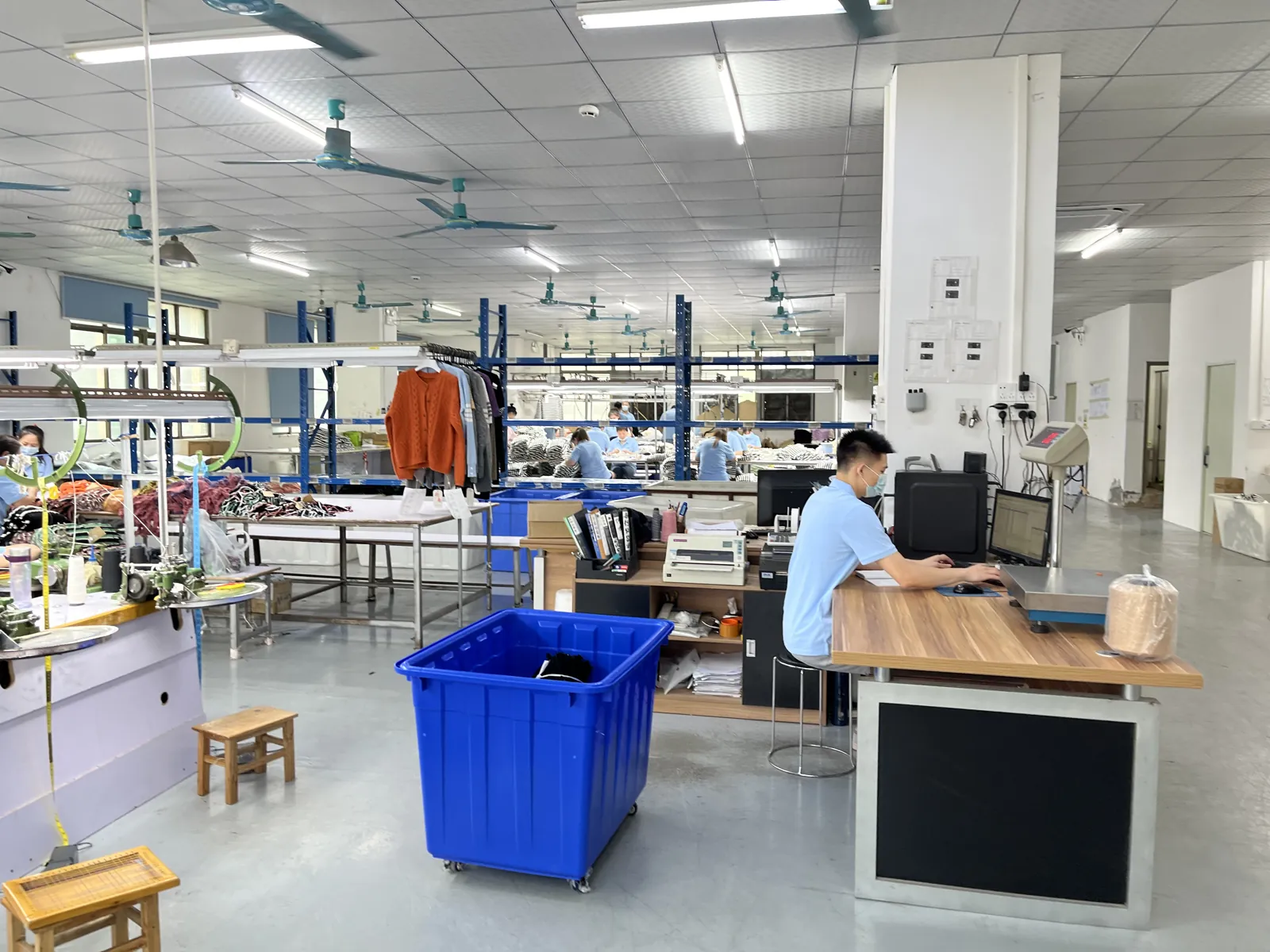
Quality control is a sequence of checks linked to the product and process. A final inspection alone cannot economically recover every yarn, programming, seam or finishing problem. Buyers should choose hold points where evidence can still change the outcome.
Define checks by production stage when assessing sweater factory capacity
Incoming yarn checks can confirm identity, lot and visible condition. First panels can confirm program, measurements and stitch appearance. Linking and assembly checks can find seam and trim issues. Wet-finish checks can identify dimensional and shade movement. Final checks can cover completed garments, labels and packing.
Intertek describes textile inspection across pre-production, production and delivery stages. Buyers can use these stages to organise evidence. Visual inspection still cannot prove every fibre, chemical or performance property, so laboratory testing should remain a separate controlled requirement where applicable.
Agree the lot, sampling approach, defect classes, measurement method, reference sample and release authority before production. The AQL inspection guide explains why an AQL label is incomplete without the associated plan and acceptance rules.
Close findings with traceable action
A report should identify the inspected lot, sample, findings, affected units or batches and decision. For a failed item, record containment, cause review, corrective action and recheck. Do not accept a replacement “pass” label that cannot be connected to the original finding.
Track measurements and appearance by size, colour and finishing batch where the product risk requires it. Averages can conceal drift concentrated in one group. Keep photographs consistent in position and light, but do not treat them as proof of fibre content or test performance.
The OECD garment and footwear due-diligence guidance provides a framework for identifying, addressing, tracking and communicating supply-chain risks. It can structure follow-up, but it does not approve a factory, certificate or order.
How Should Buyers Approve a Sweater Factory?
Factory approval should be scoped to the product and order. A factory may be suitable for one gauge, construction and delivery window but not another. The decision record should show what has been verified, what remains conditional and what would require reapproval.
Rate evidence, conditions and gaps
Classify each key item as confirmed, conditionally confirmed, proposed or missing. Confirmed evidence matches the current entity, site, product and time. Conditional evidence has a named closure item, such as bulk yarn confirmation. Proposed information remains a plan. Missing information has no adequate answer.
Compare legal identity, product route, material, sample-to-bulk continuity, capacity, quality release and delivery basis. The supplier comparison beyond price helps combine these areas without turning one positive signal into blanket approval.
Record rejected options and reasons. If a cheaper quote returns later, the team can check whether the original gap has been resolved. Approval should not be reopened merely because the price changed.
Set change triggers after approval when assessing sweater factory capacity
Require a declaration for changes in production site, yarn source, article, fibre blend, machine route, stitch density, wet finishing, decoration provider, labels or packing. Reopen only the checks affected by the change. A new dye lot may need shade review; a new yarn may need identity, hand and performance checks; a new route may need another first-off and inspection plan.
Keep the final tech pack, grade, samples, material references, test and inspection records, concessions and delivery documents together. This archive supports repeat orders and makes supplier changes visible. It does not guarantee that capacity or commercial terms remain available, so those items must be refreshed.
Approve the factory when the evidence supports the actual order and remaining conditions have owners and deadlines. To review a specific product route, prepare the garment type, yarn direction, colour and size split, sample status and delivery need, then contact the CNSweaters team with your sourcing brief.
Conclusion
Sweater factory capacity should be read as a project-specific production route, not a monthly headline. Buyers need to connect the required gauge and construction with current material, sample decisions, allocated stages and a delivery boundary that serves the commercial plan.
MOQ and cost should be compared on the same scope. Quality release should identify the lot, method, reference and decision owner. A factory is ready only when these pieces agree and open conditions are visible before irreversible work starts.
Keep the evidence after approval. Material, production route and capacity can change between orders, so define the events that trigger reapproval. A clear route protects both the buyer and supplier from relying on incompatible assumptions. For help reviewing a planned sweater program, contact the CNSweaters team with your product and timing inputs.
Frequently Asked Questions
Does a high monthly output prove my order will fit?
No. Ask which gauge, machines and downstream processes are proposed, what is currently allocated and when your complete order becomes schedulable. Headline output does not show material availability or a project-specific slot.
Which sample should be approved before bulk when assessing sweater factory capacity?
Approve the sample or set of samples that closes the actual risks. Fit, size grade, final yarn, colour, trims and packing may require different evidence. Record substitutions and connect the final release to intended bulk inputs.
Can MOQ be combined across several styles?
Only when the proposed styles genuinely share the input or process that sets the minimum. Ask which yarn, colour, program, gauge or finishing work can be combined and which remains a separate commitment.
What should a capacity plan show?
It should show starting conditions, material status, main production stages, external processes, the current bottleneck, approval deadlines and delivery milestones. Changes should create a revised dated plan rather than overwrite the original.
Does final inspection replace inline checks when assessing sweater factory capacity?
No. Final inspection can assess a sample of completed goods, but earlier checks may be needed for yarn identity, first panels, linking and wet finishing. Choose hold points based on when a problem can still be corrected.