 CN Sweaters
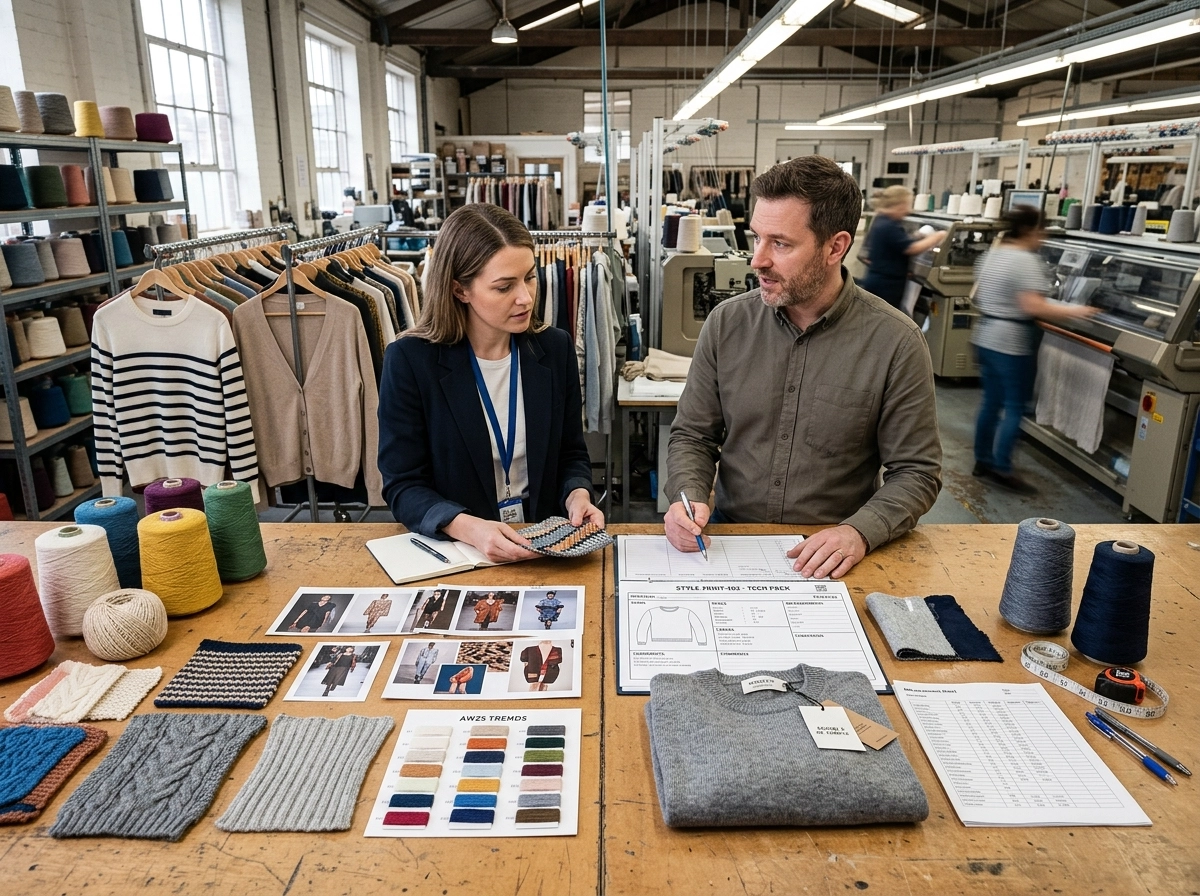
If you are planning a custom knitwear collection, the first decision is usually not color, yarn, or packaging. It is whether your project should run through an OEM model or an ODM model. In simple terms, OEM makes more sense when your team already has a clear product direction, while ODM is often the better path when you need a factory to help turn an idea into a workable product. For knitwear buyers, that choice affects much more than design ownership. It also influences sampling efficiency, MOQ planning, lead time, quality control, and how easily you can reorder after launch.
From a factory perspective, this is where many projects either become efficient or become expensive. A buyer may say they want a custom made sweater, but if the product brief is still loose, the fitting logic is unclear, or the brand has not decided how much development support it needs, the project can slow down before bulk even starts. That is why the OEM vs ODM question matters early. It helps define who owns the product idea, who drives technical development, and how much flexibility exists during sampling and production.
For brands, wholesalers, distributors, and procurement teams, the right choice is usually not about which term sounds more premium. It is about which route fits your current internal capability, your timeline, and your commercial goals. If your brand already works with detailed tech packs and stable fit standards, OEM often gives better control. If your team needs more support on yarn direction, gauge selection, or style development, an experienced OEM / ODM knitwear manufacturing service can often move the project forward faster.
OEM and ODM solve different business problems
Although the terms are often explained in a general manufacturing context, knitwear adds another layer. Unlike basic cut-and-sew categories, knitwear performance depends heavily on yarn behavior, stitch structure, gauge, linking, washing, and finishing. That means the difference between OEM and ODM is not only about design ownership. It is also about how product decisions are made and how much technical interpretation the factory must do during development.
What OEM usually means in knitwear production
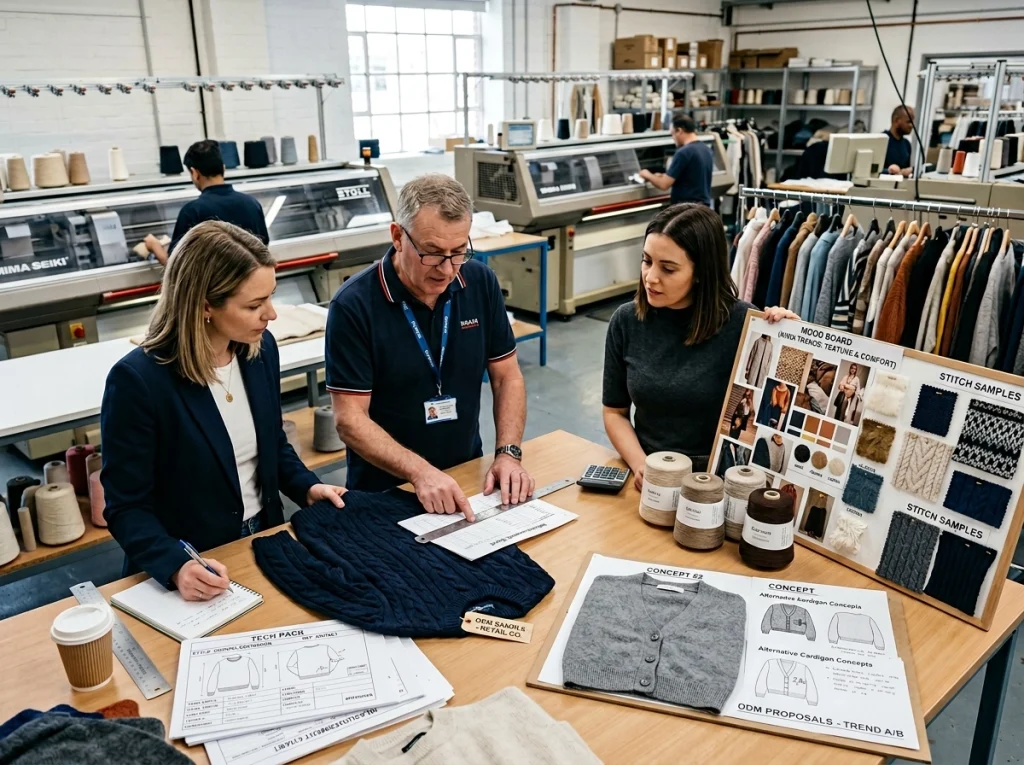
In most knitwear projects, OEM means the buyer provides the product direction clearly enough for the factory to execute it. That may include a tech pack, size chart, artwork, reference garment, approved yarn direction, or at least a very specific fit target. The factory then supports the execution side: yarn matching, stitch feasibility, sample development, PP approval, bulk production, and quality control. A detailed guide on custom knitwear manufacturing shows that OEM works best when the brand already knows what it wants and needs the supplier to deliver it consistently.
This model is especially useful when the product itself is part of the brand identity. If you are building a signature private label knit program with a defined hand-feel, recognizable silhouette, or long-term repeat potential, OEM usually gives you more control over the details that matter. Those details may include neckline balance, placket construction, gauge consistency, wash effect, or how the garment holds shape after production.
What ODM usually means in knitwear production
ODM is usually the better route when the buyer has a market idea but not a fully engineered product. In that model, the factory does more than just manufacture. It helps shape the product direction. That can include recommending yarns, suggesting a workable gauge, adjusting stitch structures, simplifying design risks, or translating inspiration images into a sample plan. The general distinction between ODM and OEM is often explained across many industries, but in knitwear it becomes especially practical because technical details can easily affect fit, cost, and bulk stability.
For example, a buyer may want a chunky cardigan with a premium look, but the initial idea may not yet account for yarn weight, placket stability, or the cost effect of a heavy gauge structure. In an ODM setup, the factory helps bridge that gap earlier. This is why ODM often works well for newer brands, lean product teams, or businesses testing a new category before building a larger line.
Where private label fits
Buyers also often use private label as if it means the same thing as OEM, but that is not always accurate. If the base design already exists and the main changes are branding, color selection, labeling, hangtags, or packaging, the project may sit closer to ODM or a private-label adaptation than a full OEM development model. That does not make it a weak option. In fact, for some businesses, it is a very efficient way to enter the market. But it does mean the level of product ownership and exclusivity is usually lower than in a fully specified OEM program.
In knitwear, this matters because many products that look “custom” from the outside are actually variations of standard structures. If your real goal is speed, test orders, or easier launch conditions, a factory-supported private label route may be the smarter path. If your goal is long-term brand differentiation, then a more controlled OEM development route is usually stronger.
When OEM is the better path for custom knitwear
OEM is usually the better choice when your brand already knows what it wants to make and needs the factory to execute it with accuracy. In other words, OEM works best when clarity exists on the buyer side.
You already have a clear tech pack or fit direction
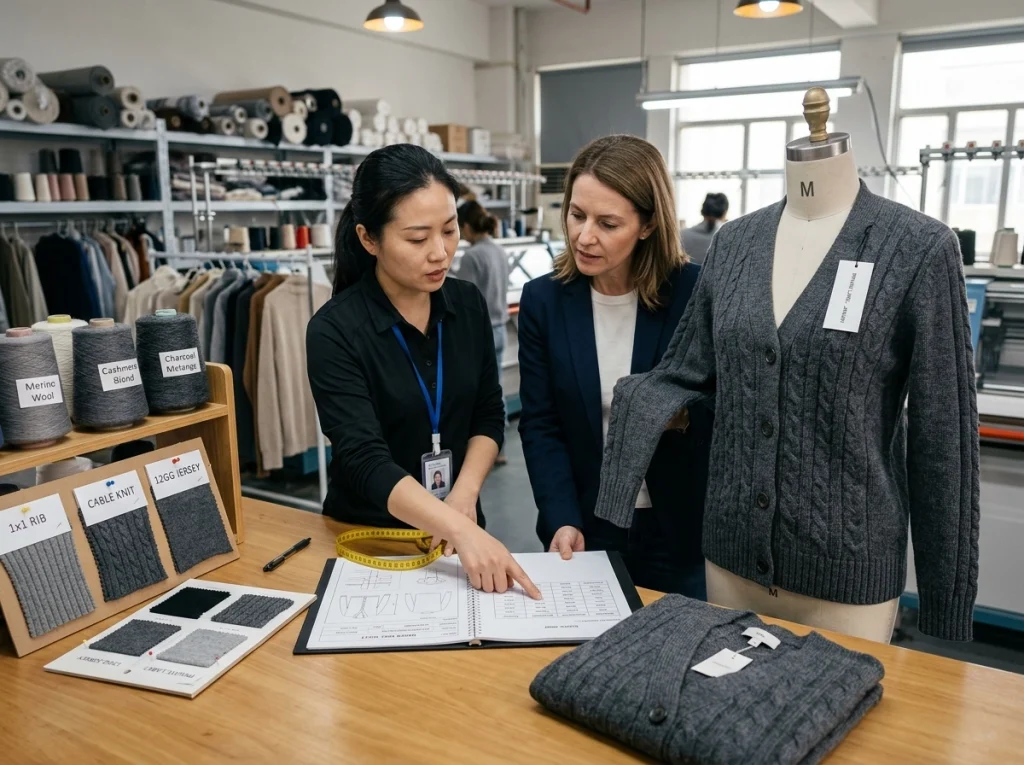
The biggest advantage of OEM is control. If your team has a solid tech pack, clear measurements, reference samples, or a reliable fit block, the factory can work more efficiently and the sample process becomes more focused. Instead of spending time guessing the design intent, the supplier can focus on improving production feasibility, cost balance, and quality stability.
This becomes especially important in categories like sweater manufacturing and cardigan production, where small structural decisions change the final result. A different rib proportion, an adjusted shoulder line, or a cleaner linked placket can noticeably affect how the garment looks, feels, and wears. If those details are central to your brand, OEM gives you the best chance to protect them.
You need more control over yarn, gauge, stitch, and finishing
A strong OEM program is not just about sending drawings to a factory. It is about defining the key variables that shape the final garment. In knitwear, that includes yarn composition, knitting gauge, stitch expression, construction method, trim selection, washing effect, and finishing quality. According to a practical custom knitwear service overview, these elements directly affect development, bulk consistency, and delivery outcomes.
That is why OEM makes sense when your product cannot rely on a generic base style. If you are developing a premium cardigan with strict placket performance, a branded knit hoodie with specific zipper tension control, or a fine-gauge top that depends on a certain drape, you usually need more than a factory’s standard template. You need the product to be built around your direction.
This is also true for more specialized product categories such as hoodies and zip knitwear, where zipper installation, hood balance, and structural recovery matter more than they do in simple jersey tops. In these cases, OEM is not just a manufacturing label. It is a better match for a product that needs more controlled execution.
You are building for repeat orders, not just a first launch
OEM becomes even more valuable when the business plan goes beyond one trial order. If you expect repeat sales, seasonal carryovers, replenishment, or consistent multi-color production, standardized approvals become critical. A clear OEM process helps define what exactly was approved, what yarn lot was used, what measurement tolerances apply, and what quality checkpoints should be repeated in bulk.
From a factory perspective, this reduces noise later. Instead of re-explaining the product each season, both sides work from a more stable standard. That is one reason why brands with repeat programs often prefer OEM, especially when the product itself is meant to support long-term brand positioning rather than short-term trend testing.
When ODM is the smarter choice
ODM is often the smarter route when speed, support, and development efficiency matter more than full design ownership. This is especially true when the buyer knows the business opportunity but has not yet built a fully technical product package.
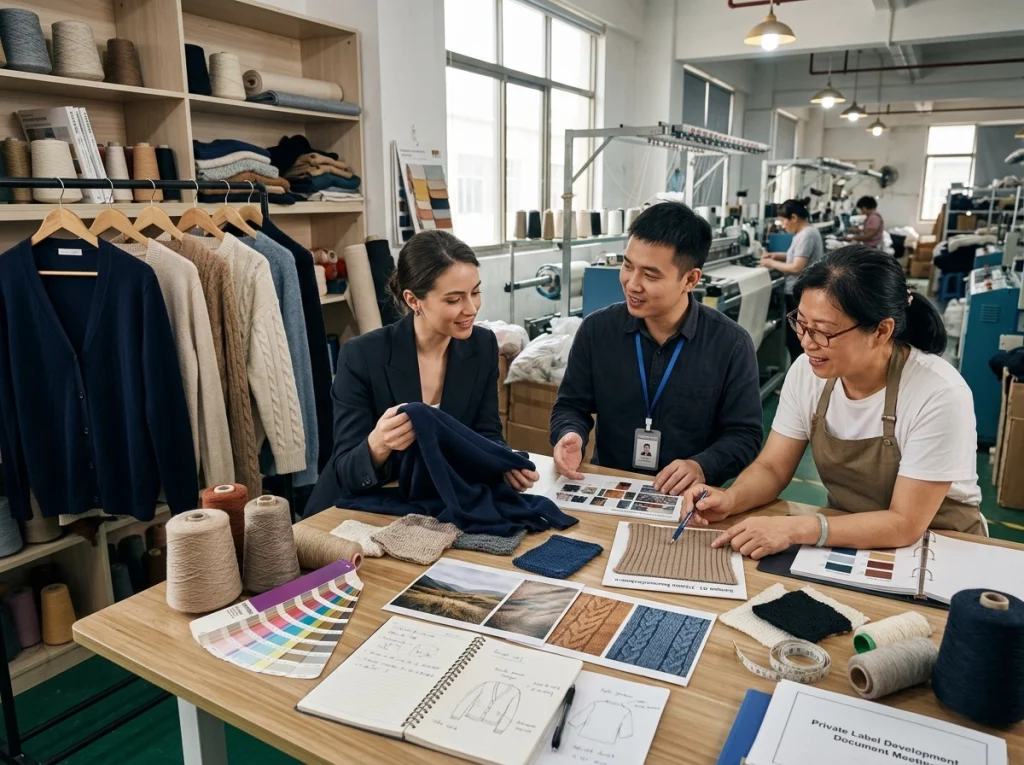
You have a concept, not a complete product file
Many buyers do not start with a finished tech pack. They start with inspiration photos, target pricing, a rough fit idea, competitor references, and maybe one or two key words like “soft,” “premium,” or “retail-ready.” That is not enough for a clean OEM process, but it can be enough for a good ODM partner to begin.
An experienced knitwear supplier can often turn those loose inputs into a more workable development path by suggesting yarn options, stitch directions, construction adjustments, and a simpler sampling route. This is especially useful when the product looks straightforward on paper but actually depends on technical control. Knitwear often behaves that way. What looks like a simple silhouette can hide risks in stretch recovery, panel distortion, spirality, or placket deformation.
You need to move faster and reduce front-end workload
ODM also makes sense when your team does not want to spend too much time building every style from zero. If the goal is to test demand, launch a category quickly, or enter a season with lower development pressure, factory-supported development can save time. A buyer can still guide the commercial direction, but the supplier contributes more actively on the technical side.
This approach often works well for businesses launching a small private label knit line, adding knitwear to an existing collection, or testing adjacent product types. It can also work for companies exploring more complex categories through a supplier’s custom knit project development capability before investing in a larger OEM system.
You want to lower early-stage risk
The biggest risk for many growing brands is not lack of originality. It is committing too much time and cost before the market response is clear. In that situation, ODM can be the more practical first move. It allows the brand to test silhouettes, price points, and buyer response with less development pressure upfront.
Of course, there is a trade-off. The more factory-led the design route becomes, the harder it may be to create strong exclusivity. That is why ODM is usually best when the business priority is validation, speed, or easier launch conditions. If the priority is stronger IP ownership and unique product identity, OEM is usually better.
The real trade-offs buyers should compare before deciding
The OEM vs ODM choice is really a trade-off decision. The question is not which model is universally better. The question is which kind of risk you want to reduce first.
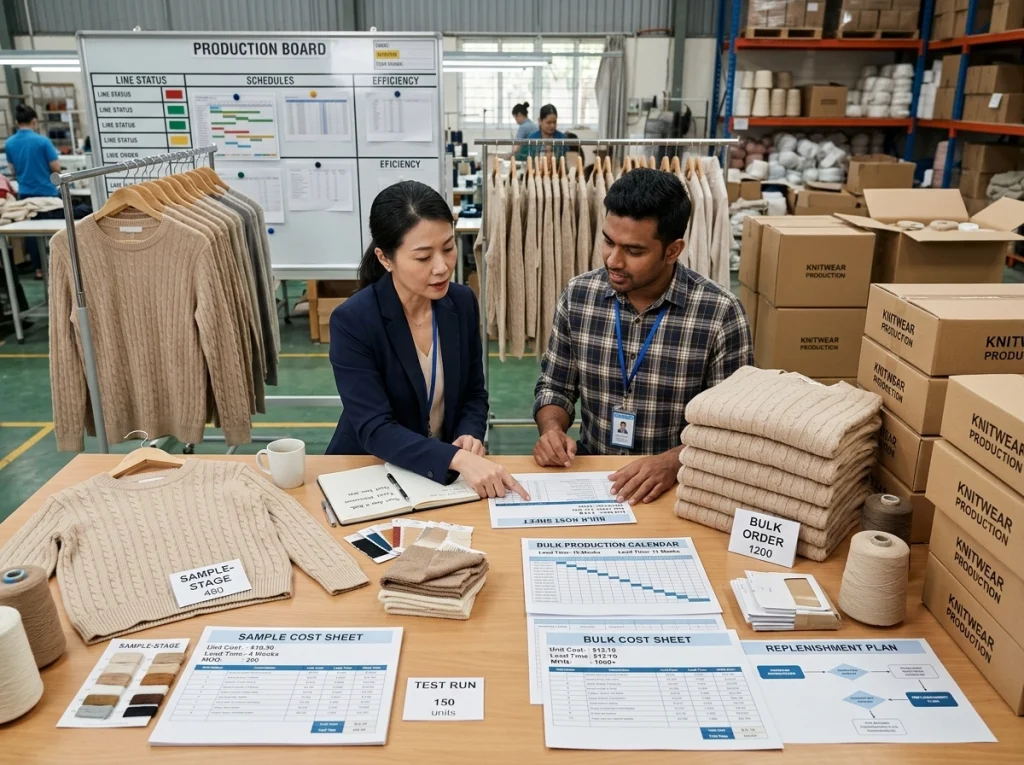
MOQ and cost structure
A common misunderstanding is that ODM is always cheaper and OEM is always more expensive. In reality, both models can work across different budgets. The real difference is where the cost pressure appears. With OEM, the buyer usually invests more in front-end definition, sample refinement, and approval discipline. With ODM, the early development burden is lighter, but the product may be less differentiated and easier to compare with other market options.
In knitwear, costing is also tied closely to yarn choice, gauge, stitch density, trims, packaging, and production organization. A style that looks simple may still become expensive if it requires difficult structures or unstable sampling. That is why MOQ should never be judged in isolation. It should be judged together with the product’s construction logic and commercial purpose.
Lead time and sample rounds
Lead time is another area where OEM and ODM behave differently. OEM can take longer at the front end because custom development often requires more alignment. If the product is highly specific, each detail needs to be checked more carefully before bulk. That may mean more sample comments, more approvals, and more internal coordination.
ODM often shortens this early phase because the supplier begins from structures it already understands well. But “faster” only stays true when the buyer also makes decisions quickly. If color comments remain vague, trim approval is delayed, or packaging details are added late, ODM can lose its timing advantage just as easily.
For knitwear buyers, the better question is not simply “Which model is faster?” It is “Which model lets this product move forward with fewer avoidable corrections?”
Quality control, replenishment, and shipping risk
Quality in knitwear is not only about visible defects. It also includes hand-feel consistency, size stability, panel balance, linking quality, color continuity, and whether repeat orders still match the approved sample. A more structured OEM process often supports stronger repeat consistency, but ODM can also perform well when approvals are documented clearly and the product is not overcomplicated.
Shipping and replenishment should also be part of the decision. If your product is likely to restock, run across multiple colors, or move through different delivery windows, you need a process that can stay stable under pressure. That usually matters more than whether the original launch was fast.
How to choose the right model for your brand stage
In practice, brand stage often matters more than company size. A small but experienced product team may be ready for OEM, while a larger business entering knitwear for the first time may still benefit more from ODM.

Best fit for startups and first-time buyers
If you are still learning how knitwear development works, ODM is often the more realistic choice. It reduces the technical burden, speeds up initial feasibility checks, and allows your team to learn the category without building a complete OEM system from day one. This is especially useful when the business is exploring low-risk entry, pilot runs, or small-volume programs.
Best fit for growing brands
For growing brands, the smartest answer is often not pure OEM or pure ODM. Many successful businesses use both. They may use ODM for trend-sensitive or test-driven styles, while reserving OEM for core products that define the brand. This mixed approach is often more commercially sound than forcing every style into the same development model.
Best fit for mature brands and repeat programs
Once your team has stable fit standards, clearer planning cycles, and repeatable demand, OEM usually becomes the stronger long-term route. It supports product consistency better, makes supplier coordination easier, and helps protect the details that drive brand value. At that stage, the business usually benefits more from control than from development convenience.
What to ask a knitwear factory before you commit
A factory’s website may say it offers both OEM and ODM, but the real issue is whether the supplier can explain how it actually works.
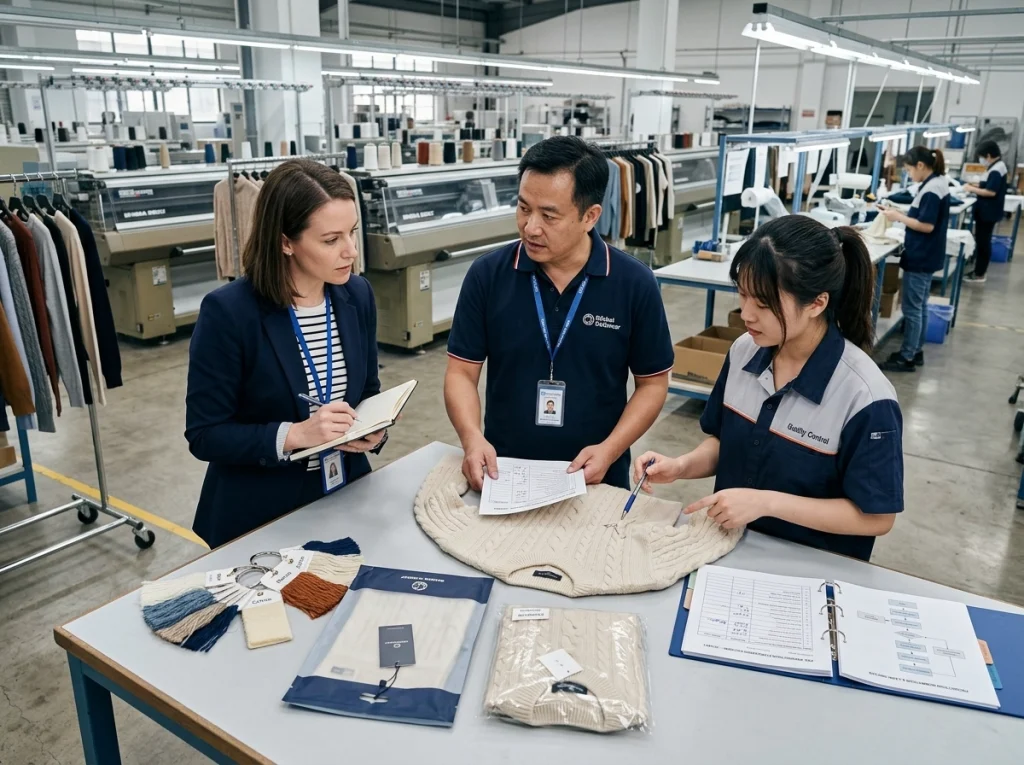
Questions about development capability
Ask whether the factory can work from a full tech pack, a reference sample, or only visual inspiration. Ask how it evaluates gauge, stitch feasibility, yarn matching, and production risk. A capable supplier should be able to explain not just what it can make, but how it decides what is realistic.
Questions about sampling, MOQ, and timing
Ask how many sample rounds are typical, what kinds of changes are likely to affect MOQ, and when yarn booking becomes necessary for your season. You should also ask how the factory handles size ratios, color planning, and machine allocation, because those factors often influence production timing more than buyers expect.
Questions about QC and repeat orders
Ask how PP approval is locked, how inline inspection is handled, and how quality is controlled from sample to bulk. If you expect reorder business, also ask how the factory maintains consistency across different production runs. That usually tells you more about future reliability than any sales promise.
Conclusion
For most custom knitwear buyers, the decision is straightforward once the business goal is clear. If your team already knows the product direction, wants tighter control, and plans to build repeatable styles over time, OEM is usually the better path. If your team needs more factory support, wants to reduce front-end development pressure, or needs to test the market faster, ODM is often the more practical route.
From a factory perspective, the best projects are not the ones with the most complicated briefs. They are the ones where the buyer and supplier agree early on who owns the product decisions, how approvals will work, and what standard the bulk order must match. If you are evaluating your next knitwear program, it is usually worth reviewing your product brief, reference samples, target quantity, and delivery window before deciding how the project should be developed. If you want a practical next step, you can review the CNSweaters homepage first, then send your project details through the contact page for a feasibility discussion.
FAQ
Is ODM always cheaper than OEM for custom knitwear
No. ODM can reduce the early development burden, but final pricing still depends on yarn, gauge, stitch complexity, trims, packaging, and quantity. It is better to compare total project logic, not just service labels.
Can I start with ODM and move to OEM later
Yes. Many brands do exactly that. They use ODM to test the category, then move stronger or repeatable styles into OEM once the fit direction and demand become clearer.
Do I need a full tech pack for OEM sweater production
A full tech pack is ideal, but a strong reference garment, clear measurements, and a specific product direction can also be enough to begin. The real issue is whether the factory can understand your expectations without too much guesswork.
Which model is better for low MOQ or test orders
ODM is often more practical for low-risk tests because it reduces front-end development work. But MOQ still depends on the yarn, structure, machine setup, and finishing requirements of the specific style.
How can I protect quality consistency on repeat knitwear orders
Lock the standard early. That usually means clear PP approval, stable yarn references, defined measurements, approved trims, confirmed packaging details, and a repeatable QC process.
External References
- Guided Imports — ODM vs OEM
https://guidedimports.com/blog/odm-oem/ - Knitwear.io — Custom Knitwear Manufacturer Guide
https://knitwear.io/custom-knitwear-manufacturer-guide/ - Knitseek — Custom Knitwear Service
https://knitseek.com/custom-knitwear-service/