 CN Sweaters
If you are comparing wholesale knitwear suppliers in 2026, the most important question is not who offers the lowest quote. It is who can turn an approved sample into stable bulk production, keep communication clear when problems appear, and support repeat orders without creating new risks each season. That matters even more now, as fashion brands are dealing with sourcing diversification, margin pressure, and the need for more resilient supplier relationships. McKinsey McKinsey
This article is for brand owners, wholesalers, distributors, procurement managers, and product developers who need to evaluate wholesale knitted sweaters suppliers with more discipline. Instead of using a generic vendor checklist, it helps you review a supplier the way a commercial knitwear buyer should: by checking category fit, sample control, MOQ logic, quality risk, compliance readiness, and reorder stability. From a factory perspective, a supplier is only “reliable” if it can keep decisions practical from yarn selection to shipment, not just say yes during quotation.
Prepare Your RFQ Before Contacting Wholesale Knitwear Suppliers
Supplier evaluation works in both directions. A factory can only quote accurately when the inquiry carries the information that drives knitwear cost and development time. A half-specified request usually comes back as a low placeholder price that rises once sampling reveals the real complexity.
Before you send an RFQ, have these inputs ready, even if some are still marked “to be confirmed”:
- Yarn type and composition, or the reference you want matched
- Gauge preference and construction method (fully fashioned, cut-and-sew, or whole-garment)
- Target markets, which determine labeling and compliance requirements
- Expected quantity per style and per color
- Whether you have a complete tech pack or need design development support
You do not need every detail locked in. What speeds things up is being clear about what is decided and what still needs factory input. Every missing input either becomes an assumption, which can mean a re-sample, or a question that pauses development for days.
Start With Product Fit Before You Compare Prices
Product fit should be the first filter when comparing wholesale knitwear suppliers. If a supplier is not technically strong in your knitwear category, a good-looking price sheet will not save the project. Knitwear is not one broad product group. A factory that handles basic pullovers may not be equally strong in linked plackets, zipper installation, heavy-gauge outerwear knits, fine-gauge fashion pieces, or complex custom developments.
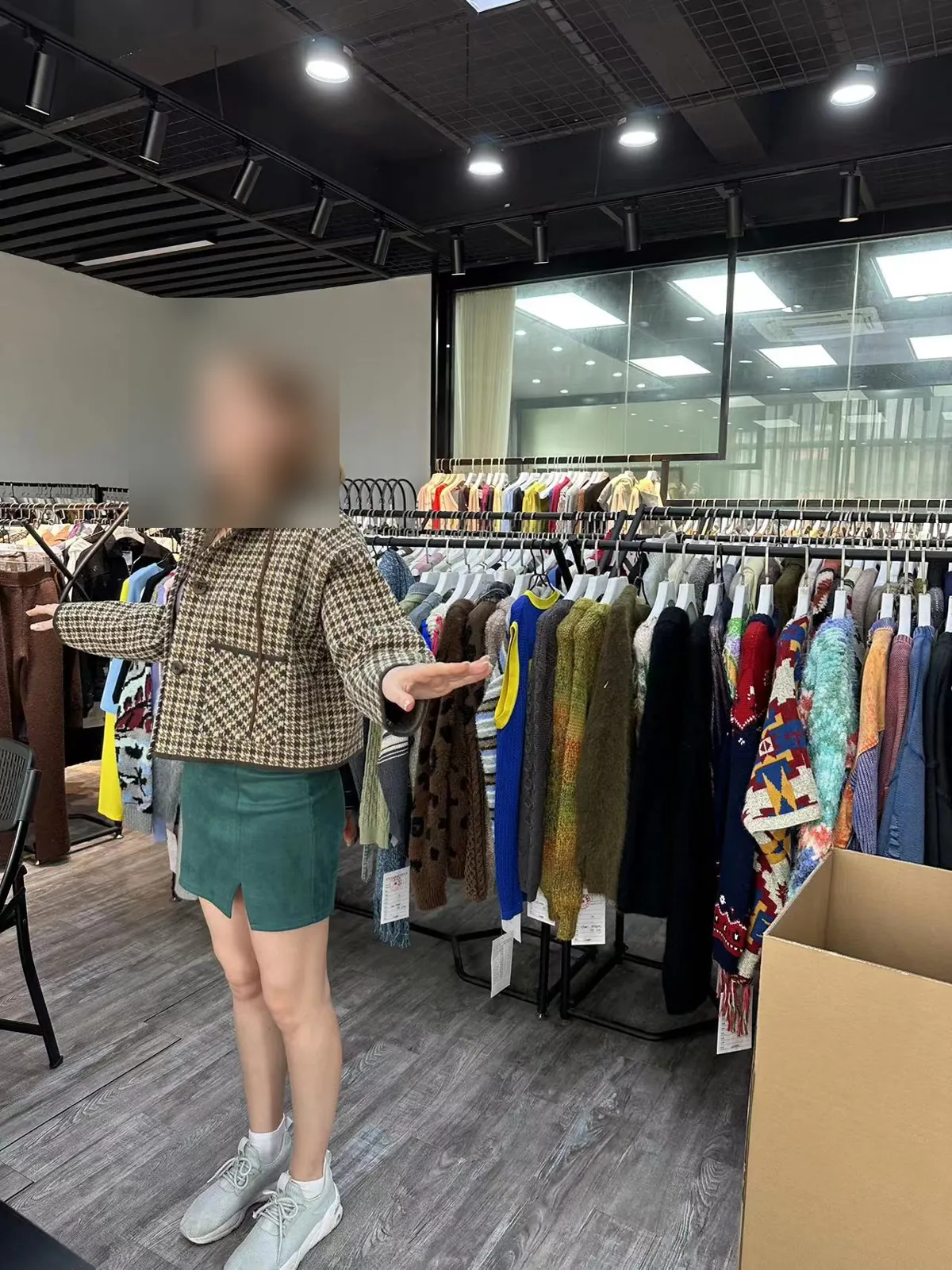
That is why buyers should first confirm whether the supplier’s real production range matches the program they want to launch. For example, if your line includes classic pullovers, finer-gauge basics, or private-label everyday styles, a page like sweater manufacturing is the relevant fit check. If the program is more button-front and structure-sensitive, cardigan manufacturing is the better reference because cardigan quality often fails at the placket, button alignment, and shape retention, not only at body measurements.
For buyers developing more casual or hybrid products, hoodies and zip knitwear can reveal whether the supplier understands zipper waviness, hood balance, stress-point reinforcement, and gauge choices across 3G to 14G. These are not small details. In knitted hoodies, tension control around the zipper and hood construction directly affect whether the garment looks clean in bulk or starts twisting, collapsing, or pulling backward after wear. Source
You should also ask whether the supplier is acting as a real factory partner, an OEM/ODM developer, or mainly a trader. That distinction affects who owns yarn sourcing, who makes technical corrections, who records PP comments, and who takes responsibility when sample approval does not translate into bulk consistency. On the sourcing side, this matters more than before. McKinsey notes that apparel brands are moving toward deeper supplier relationships, with long-term commitments and strategic collaboration representing a larger share of supplier bases than in 2019. In practical terms, that means buyers should prioritize suppliers who can actually co-manage development and risk, not just forward messages between parties. McKinsey
OEM or ODM: Match the Model to Where You Are
Before comparing wholesale knitwear suppliers, decide which service model you actually need. Mixing them up sets the wrong expectations from the first email: a factory quoting OEM work will expect a finished spec, while ODM work needs collaborative development rounds.
| OEM (Original Equipment Manufacturing) | ODM (Original Design Manufacturing) | |
|---|---|---|
| What you bring | Complete or near-complete tech pack | A concept, reference image, or brief |
| What the factory does | Executes your specifications | Develops design and construction with you |
| Best for | Brands with in-house design capability | Brands earlier in product development |
| Sample process | Follows your specs closely | Requires collaborative development rounds |
| Key risk | Output quality depends on spec accuracy | More factory influence over final design |
| Development cost | Generally lower | May involve design or development fees |
If you have a detailed tech pack and confirmed yarn, you are on a well-defined OEM/ODM service path that is fast to quote. If you are starting from a mood board or a competitor reference, look for a supplier that openly supports design development instead of one that only executes specs.
Check MOQ, Sampling, and Lead Time as One System when vetting wholesale knitwear suppliers
Many buyers review MOQ, sample lead time, and bulk lead time as separate items when comparing wholesale knitwear suppliers. That is a mistake. In knitwear, these three factors are connected because yarn booking, gauge selection, stitch complexity, and sample approval all affect how realistic a production plan really is.
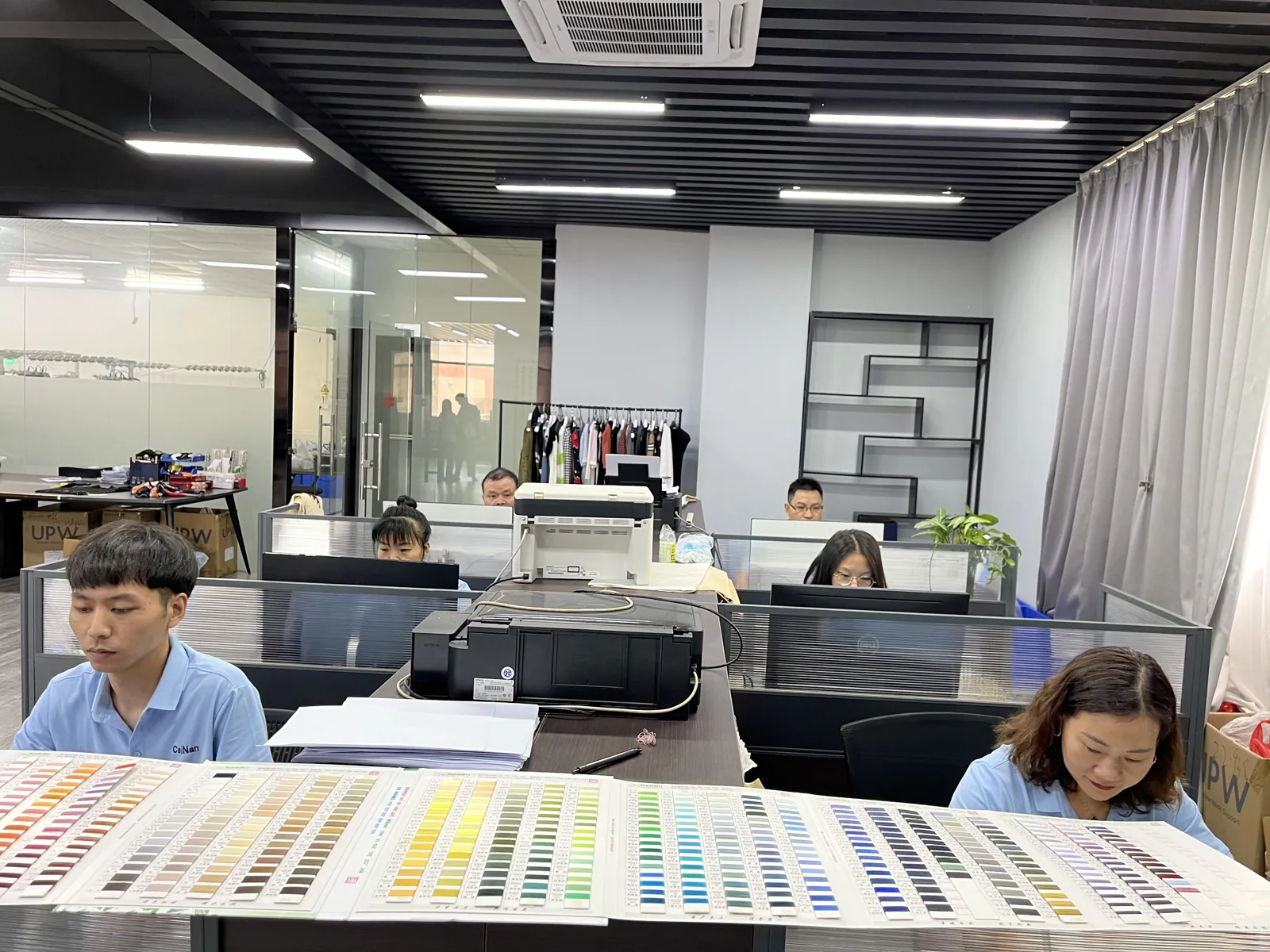
Start by asking how the supplier defines MOQ. A serious sweater factory should explain MOQ by style, color, yarn, and sometimes construction complexity. If the answer is only “our MOQ is flexible,” you still do not know enough. What you want to hear is whether the factory can explain why a certain yarn needs higher volume, why a jacquard cardigan may not run like a plain jersey pullover, or why a fine-gauge program may need tighter planning than a mid-gauge bestseller. On the OEM/ODM knitwear manufacturing side, typical starting points are explained with more transparency: style-based MOQs, color-based MOQs, and the price drivers behind them. That kind of structure usually indicates the supplier has done enough development work to quote responsibly.
Sampling is the next checkpoint. A reliable supplier should be able to explain what happens between proto sample, fit or finish corrections, PP approval, and bulk launch. In knitwear, sample comments often involve more than simple measurements. A supplier may need to adjust yarn count, stitch density, placket structure, zipper installation, sleeve balance, or wash finish to make the style commercially stable. If the supplier cannot describe that approval path clearly, it will be difficult to control bulk later.
The timeline itself should also be evaluated with context. On the OEM/ODM side, sample lead time is often presented as roughly 7 to 14 days for standard developments and longer for more complex stitches or constructions, while bulk timing depends on quantity and season. That is a much more useful answer than a universal promise like “we can ship in 20 days.” Buyers should prefer realistic timing over aggressive timing, especially in peak seasons. Source
One more thing matters in 2026: reorder readiness. A supplier may handle an initial order well and still be a poor long-term fit if every repeat order feels like starting from zero. Ask whether yarn continuity is recorded, whether lab dips and size specs are archived, whether the factory keeps PP references, and whether replenishment programs can be planned before peak season. McKinsey’s sourcing outlook shows that brands are under pressure to build more agile, resilient supply chains while reducing excess inventory and shortfalls. A supplier that cannot support repeatability adds risk even if the first quote looks attractive. McKinsey
Sample Fees, Revision Rounds, and PPS Sign-Off
When vetting wholesale knitwear suppliers, buyers should expect many factories to charge for development samples. What you need to know is whether the fee is credited against a bulk order and at what quantity. Free samples are usually limited to returning buyers or styles close to the factory’s existing range; a supplier offering free development on a complex custom brief is absorbing cost somewhere.
Ask these questions before sampling starts:
- Is the sample fee refundable against bulk, and above what order quantity?
- How many revision rounds are included before extra charges apply?
- Is the pre-production sample (PPS) approved on a physical sample or digitally?
- What records are kept at PPS approval, and who handles spec queries during sampling?
PPS approval is the last checkpoint where construction, yarn, color, measurements, and finish can be changed cheaply. Rushed PPS sign-off is one of the most common causes of bulk quality disputes, so a supplier with clear answers here is usually better organized overall.
Seasonal Timing: When Capacity Is Easier to Book
Lead time from wholesale knitwear suppliers also depends on when you order. Knitwear capacity follows a seasonal pattern:
| Period | Factory Capacity | MOQ Flexibility | Pricing Pressure | Production Lead Time |
|---|---|---|---|---|
| Feb–Jul (off-season) | High | More flexible | Lower | Shorter |
| Aug–Jan (peak season) | Tight | Less flexible | Higher | Longer |
For a fall or winter retail launch, confirming orders before late summer often decides whether you work with your preferred factory or with whoever still has machine time available.
Audit Quality Control at Wholesale Knitwear Suppliers
When buyers ask, “Do you have QC?” most suppliers will say yes. That question is too broad to be useful. A better question is: what knitwear-specific failures do you control before shipment?
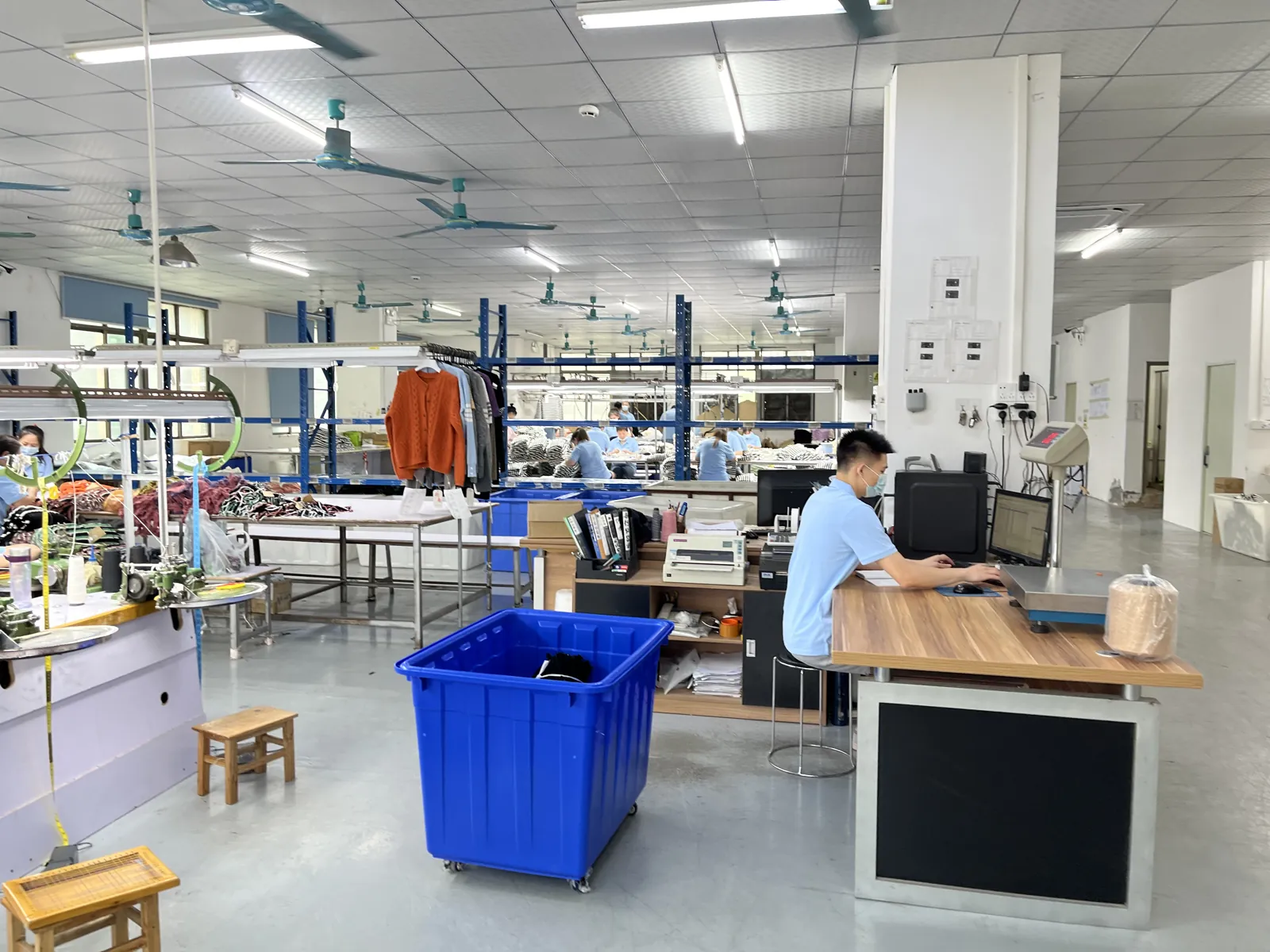
For wholesale knitted sweaters, the biggest risk areas usually include measurement tolerance, pilling behavior, seam or linking integrity, shade continuity, yarn hand-feel consistency, and shape retention after finishing. For cardigans, placket stretch resistance and button alignment are major risk points. For hoodies and zip styles, zipper waviness, hood balance, and reinforcement at stress points matter more than in ordinary pullovers. Good factories know these are not cosmetic details; they are the reasons customers reject bulk or refuse reorders. Source Source Source
That is why your checklist should ask for evidence, not assurances. A capable supplier should be able to show or explain some combination of the following:
| Evaluation Area | What to Check | Why It Matters | Red Flag |
|---|---|---|---|
| Product capability | Category, gauge, stitch, construction experience | Confirms actual fit for your knitwear program | Generic “we can do everything” answer |
| MOQ logic | MOQ by style, color, yarn, complexity | Prevents false assumptions at quotation stage | MOQ not explained clearly |
| Sampling control | Proto, fit revision, PP approval flow | Reduces gap between sample and bulk | Sample process is vague |
| QC focus | Measurements, pilling, shade, seams, plackets, zippers | Targets the risks knitwear actually faces | Only says “final inspection” |
| Documentation | Size spec, stitch card, lab dips, PP records, AQL records | Supports repeatability and issue tracing | No records kept after sample |
| Reorder readiness | Yarn continuity, archived approvals, repeat fit control | Important for replenishment and scaling | Repeat orders treated like new orders |
| Compliance | Labeling, origin, care labels, certificates where needed | Lowers import and retail risk | Supplier is unsure about labeling rules |
| Packaging and shipment | Barcodes, polybags, carton standards, docs, Incoterms | Prevents post-production delay | “We will confirm later” for all shipping details |
From a factory perspective, the best quality control is not only final inspection. It is PP sealing, inline checking, and technical alignment before defects multiply. The OEM/ODM service page emphasizes traceability through yarn lot records, color lab dips, PP sealing, inline inspection, and final AQL on request. That type of process is more meaningful than a generic claim about “strict QC,” because it tells the buyer where consistency is managed. Source
Remote buyers should also ask how the supplier verifies quality before bulk approval. Clear photos are useful, but not enough. Better evidence includes close-up videos of plackets or linking, approval packages with size charts and stitch references, comment tracking, and side-by-side comparison between approved sample and production standard. If a supplier gets defensive when asked for this level of visibility, that is usually a warning sign.
Evaluate Communication, Cost Transparency, and Risk Ownership
A project with wholesale knitwear suppliers can fail long before the first carton is packed. It fails when communication is slow, technical language is unclear, or risks are hidden to protect the quote. In practice, some of the most expensive supplier problems start as communication problems.
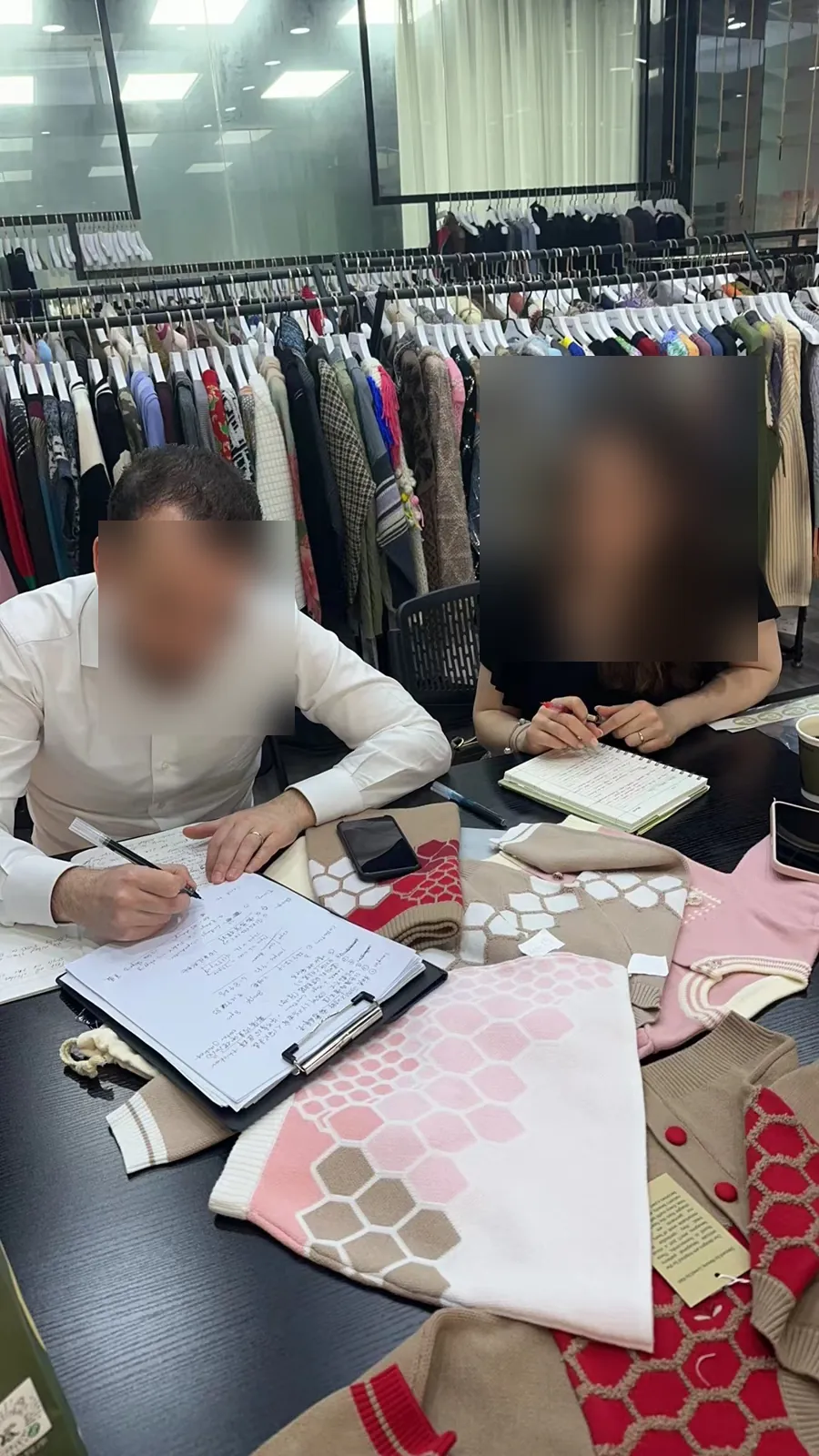
Your evaluation should therefore include how the supplier quotes and how it explains trade-offs. A strong supplier should tell you what is included in the cost and what is not. In knitwear, price can change significantly because of yarn type, gauge, density, stitch complexity, embellishment, finishing, labeling, and packing method. If the factory provides a line-by-line quote or at least explains the main price drivers, the buyer can make better decisions earlier. If the quote is only a single number without structure, you may not discover the true cost until late changes begin.
Communication quality is equally important. Buyers should test how quickly the supplier responds, but speed alone is not enough. The real test is clarity. Can the supplier explain whether a design is feasible? Can it warn you that a certain yarn may create pilling risk, or that a fine-gauge style needs tighter tolerance control, or that a zipper construction may distort the front if the placket is too soft? Those early warnings save more money than last-minute discounts.
Ask which processes are actually handled in-house and which go out to job work, and pay close attention to how quickly and clearly the supplier answers, because production planning depends on it. If a supplier cannot clearly explain who controls knitting, linking, washing, finishing, or trims coordination, you do not yet know where your risk sits.
In 2026, this matters more because brands are not only buying units; they are managing volatility. McKinsey’s broader sourcing view points to reshuffled global trade, supply-chain reconfiguration, and stronger pressure to work with partners that help build resilience, transparency, and agility. A supplier that flags issues early and helps balance cost, speed, and stability is usually more valuable than one that simply chases the order. McKinsey McKinsey PDF
Review Compliance, Packaging, and Shipping Readiness when vetting wholesale knitwear suppliers
For wholesale knitwear suppliers, sample approval does not mean shipment readiness. A knitwear supplier can make a decent garment and still create expensive problems in labeling, packaging, or export coordination. That is why compliance and shipping checks should be part of supplier evaluation, not an afterthought after PO placement.
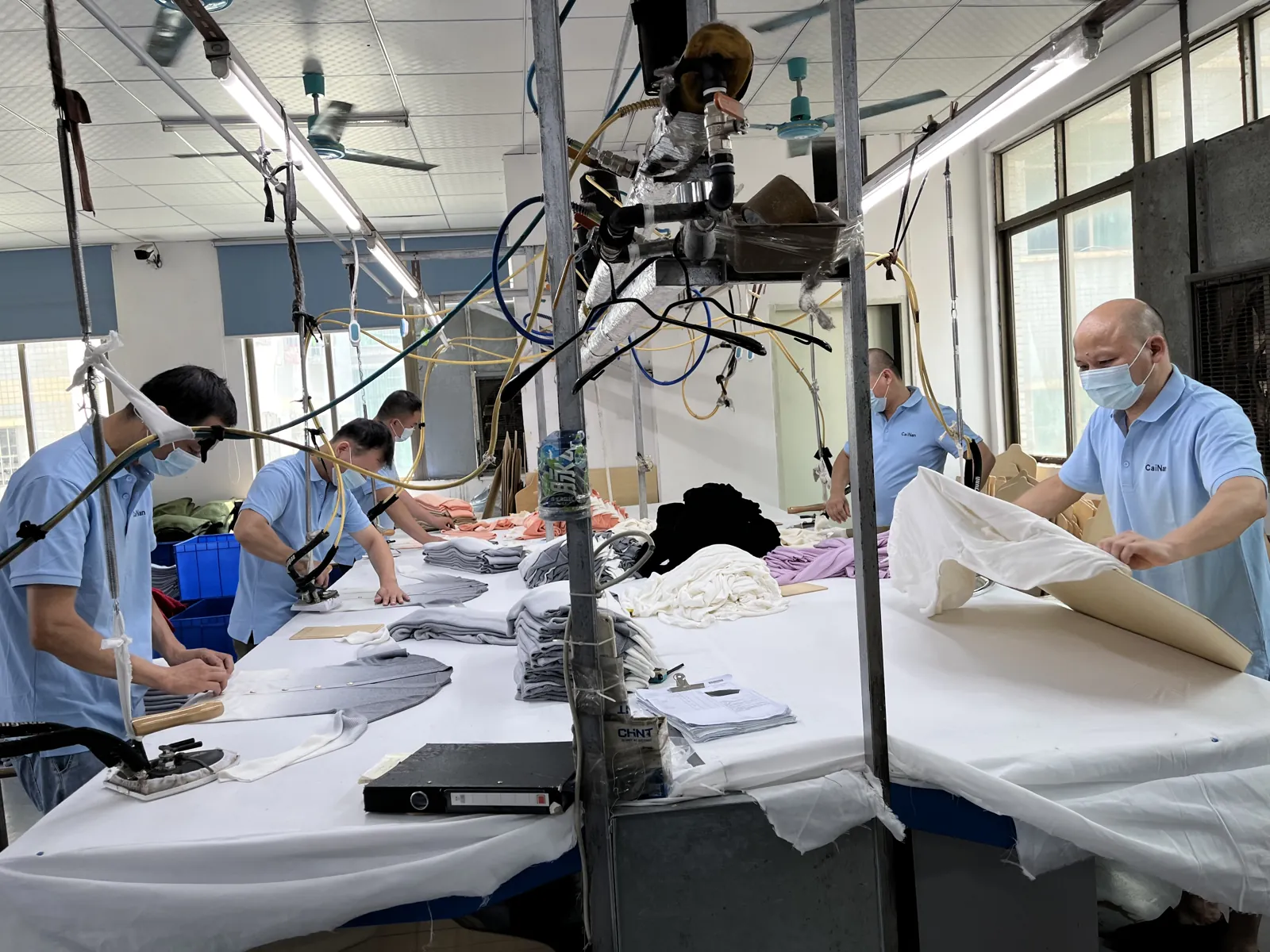
For apparel entering markets such as the United States, buyers should verify practical basics early: fiber content labeling, country-of-origin marking, manufacturer identification, and care instructions. For adult apparel, importers may also need a General Certificate of Conformity where applicable, and for children’s products there can be additional requirements such as Children’s Product Certificates, tracking labels, and product-safety testing depending on category. The point here is not to turn every sourcing manager into a compliance lawyer. It is to make sure the factory understands what information must appear on labels and what documentation may be needed before goods ship. CPSC Guide
The same logic applies to packaging. A commercially ready knitwear supplier should be able to support private-label requirements such as neck labels, care labels, hangtags, size stickers, barcodes, polybags, and carton standards. The homepage and OEM/ODM pages for cnsweaters both emphasize export-grade packing, confirmed packing lists, labeling support, and shipment options such as air and sea with defined Incoterms. Those details may sound operational, but for buyers they are part of supplier reliability, especially when the order is going straight into wholesale or retail programs. Source Source
Shipping readiness should also include practical questions. Can the supplier coordinate with a nominated forwarder? Does it understand the difference between FOB, DAP, and DDP in real execution terms? Can it confirm when export documents are prepared? Can it advise buyers to lock approvals early for peak-season launches? A supplier that thinks only about ex-factory completion and not handover readiness is not yet fully supporting the buyer’s business.
Conclusion
A good shortlist of wholesale knitwear suppliers should be built on product fit, sampling discipline, quality control logic, compliance awareness, and repeat-order readiness, not on price alone. In knitwear, the best supplier is usually the one that can explain trade-offs clearly, control risk before bulk starts, and keep your program stable when timelines tighten or replenishment becomes necessary.
If you are evaluating a new sweater factory, focus on whether the supplier can repeatedly deliver the same standard across samples, bulk orders, and reorders. That is what reduces commercial risk for brands, wholesalers, and procurement teams. If you want a practical next step, review your category needs first, then compare the supplier’s development workflow, QC checkpoints, and shipment support against them. For buyers exploring OEM or private-label knitwear production, it often makes sense to start with the factory’s OEM/ODM service capabilities, then review relevant categories such as sweaters, cardigans, or custom knit projects. If you are ready to evaluate a real project, visit the homepage and send over your tech pack, target quantity, and delivery window.
FAQ
What is a reasonable MOQ for wholesale knitwear suppliers?
There is no single “correct” MOQ for all knitwear programs. A reasonable MOQ depends on yarn type, gauge, stitch complexity, and color count. Buyers should ask for MOQ by style and by color, and also ask what changes if the yarn is custom-dyed or the construction is more technical. A useful supplier will explain the logic, not just quote one number.
How many sample rounds should buyers expect before bulk production?
Most buyers should expect at least a proto stage and then an approval stage before bulk. More complex styles may need extra rounds for fit, placket balance, zipper installation, or yarn and hand-feel adjustment. The key is whether the supplier has a clear approval path, not whether it promises “one-shot” development.
How can I tell whether a sweater factory is suitable for repeat orders?
Look for archived specs, PP records, yarn continuity control, and clear reorder planning. If the supplier treats every replenishment as a brand-new development, repeat orders will be slower and riskier. Reorder suitability is one of the clearest signs of real factory control.
What quality risks are most common in wholesale knitted sweaters?
Common risks include size inconsistency, pilling, shade variation, seam or linking problems, poor shape retention, and weak finishing control. For cardigans, placket stretch and button alignment are key. For zip knitwear, zipper waviness and hood balance are common technical issues. Source Source Source
What documents should I ask for before placing a bulk order?
Buyers should usually ask for size specs, sample comments, PP approval references, yarn or lab-dip records where relevant, and clear packing requirements. If the market requires it, labeling and compliance documents should also be checked before shipment, not after goods are finished. CPSC Guide
Are knitwear sample fees refundable when vetting wholesale knitwear suppliers?
Often, but not always. Many factories credit the development sample fee against a confirmed bulk order above a set quantity. Ask for the refund condition and the number of included revision rounds in writing before sampling starts.
External References
- McKinsey & Company — Apparel brands finally shift to deeper supplier relationships
https://www.mckinsey.com/industries/retail/our-insights/apparel-brands-finally-shift-to-deeper-supplier-relationships - McKinsey & Company — The State of Fashion
https://www.mckinsey.com/industries/retail/our-insights/state-of-fashion - McKinsey & Company — The State of Fashion 2025
https://www.mckinsey.com/~/media/mckinsey/industries/retail/our insights/state of fashion/2025/the-state-of-fashion-2025-v2.pdf - OECD — Responsible garment and footwear supply chains
https://www.oecd.org/en/topics/sub-issues/due-diligence-guidance-for-responsible-business-conduct/responsible-garment-and-footwear-supply-chains.html - U.S. Consumer Product Safety Commission / NIST — A Guide to United States Apparel and Household Textiles Compliance Requirements
https://www.cpsc.gov/s3fs-public/Guide-to-US-Apparel-and-Household-Textiles.pdf