 CN Sweaters

A mens sleeveless jumper sells well in wholesale only when sizing, armhole shape, and market positioning are decided before sampling, not after. From a factory perspective, most reorder problems on sleeveless knitwear come from shoulder width and armhole depth being treated as afterthoughts, not from yarn or color choices. If you are sourcing a mens sleeveless jumper, mens vest jumper, or mens knitted vest for a wholesale program, the first decision is not “what does it look like” but “who wears it over what, in which season, through which channel.”
Buyers who skip this step usually see the same pattern. The sample looks acceptable on a hanger, the first bulk goes out, and then refill orders stall because the fit does not work across a real men’s size run, the armhole pinches the shirt sleeve underneath, or the color set is too scattered for a retail buyer to merchandise. We have seen private label brands rework an entire mens knit sweater vest program after the first season because the size 2 sample was approved without checking how a M, L, XL, and XXL would scale. The cost of that rework is almost always larger than the cost of one extra fit round at sampling.
This guide walks through the sizing, fit, color, and positioning decisions that actually move a sleeveless jumper from “nice sample” to a stable wholesale SKU.
What Defines a Mens Sleeveless Jumper in B2B Buying

A mens sleeveless jumper is a knitted upper-body garment with no sleeves, designed to be layered over a shirt, tee, or lightweight knit. In B2B buying, the definition matters because the same garment is called different things across markets, and naming drives merchandising, pricing, and consumer search behavior.
How the naming changes by market
The UK and Australia mostly use “sleeveless jumper” or “mens vest jumper.” In North America, the same garment is more often listed as “mens knitted vest,” “knitted sweater vest,” or “knit sweater vest mens.” Europe leans toward “knitted waistcoat” for tailored versions and “sweater vest” for casual ones. This is not a cosmetic point. If you are wholesaling into a US buyer’s mens knitwear program, listing the product as “sleeveless jumper” on the line sheet can slow the buy because the merchandiser searches their system for “vest.” We recommend agreeing on the naming convention with your buyer before tech pack signoff.
Where it sits in a mens knitwear range
A sleeveless jumper is a layering piece, not a standalone top. That means it competes for hanger space with cardigans and lightweight crewnecks, and it has to earn its slot by doing something neither of them does, which is adding warmth and structure to the torso while leaving the arms free. For buyers building a full vest and sleeveless knitwear capsule, the practical implication is that the sleeveless jumper carries the layering story, while pullovers carry the standalone warmth story. Pricing and MOQ allocation should reflect this. We typically see buyers allocating 15 to 25 percent of a knit upper-body order to sleeveless styles when the target market supports layering, and closer to 8 percent when the market skews to outerwear-first dressing.
Why Sizing and Shoulder Width Decide Reorder Performance
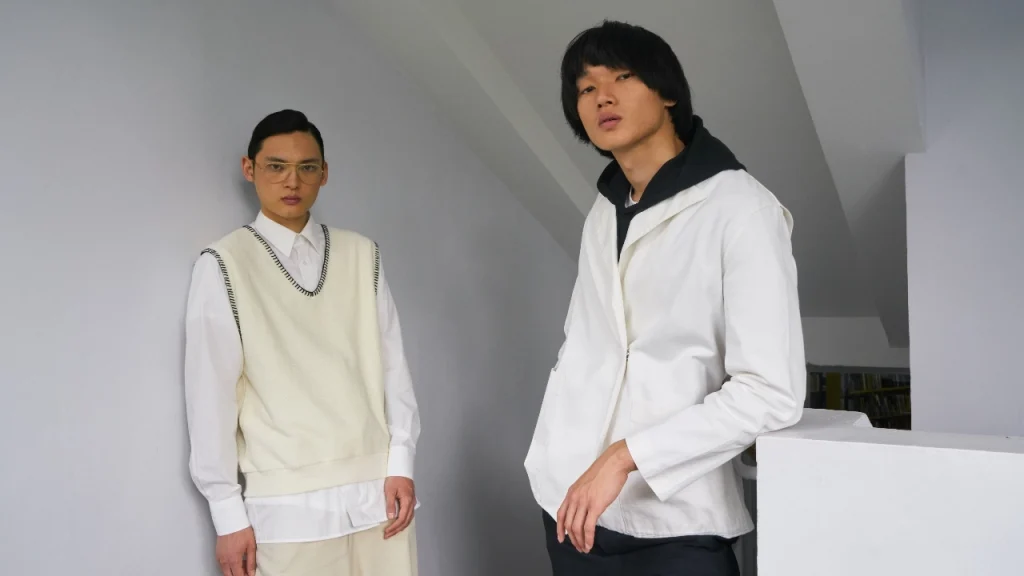
Sizing is the single biggest reason a mens sleeveless jumper program either reorders or stalls. The shoulder seam and armhole on a sleeveless garment are visible from every angle, so any fit issue is obvious to the end consumer and to the buyer doing the fit review.
The shoulder and armhole problem most buyers underestimate
Because there is no sleeve to soften the line, the shoulder seam sits exactly where the wearer’s natural shoulder ends. If the shoulder is 1 cm too wide, the garment looks oversized; 1 cm too narrow, it looks like it shrank. The armhole has the same sensitivity. A standard mens crewneck pullover can carry a 24 to 26 cm armhole depth comfortably because the sleeve hides irregularities. On a sleeveless jumper, the armhole has to clear the shirt sleeve underneath without gaping, which usually means a depth of 25 to 28 cm and a finished armhole circumference that is 4 to 6 cm wider than the bicep measurement of the target wearer. According to Cotton Incorporated’s knit design resources, armhole shaping on sleeveless knits has to account for both fabric drop and layering tolerance, which is why a flat measurement that works on a body block often fails on a real wearer.
Building a size range that actually scales
Most B2B buyers start with an M sample because it is the middle of the run. The risk is that the grading from M to XXL is not linear on a sleeveless garment. Chest, shoulder, and armhole each grade at different rates, and if you do not see a graded XL or XXL before bulk, the larger sizes can come back with the armhole too shallow or the shoulder dropping off the wearer. We recommend asking for two graded sizes at sampling, usually M and XL, on any sleeveless jumper development. This means it directly affects whether your top-end sizes sell through or sit on the shelf.
| Size | Chest (cm) | Shoulder (cm) | Armhole depth (cm) | Body length (cm) |
|---|---|---|---|---|
| S | 96–100 | 39–40 | 24 | 64 |
| M | 100–104 | 41–42 | 25 | 66 |
| L | 104–108 | 43–44 | 26 | 68 |
| XL | 108–114 | 45–46 | 27 | 70 |
| XXL | 114–120 | 47–48 | 28 | 72 |
These are working ranges for a regular-fit mens sleeveless jumper aimed at European and North American markets. Slim-fit and Asian-market ranges run 2 to 4 cm narrower across chest and shoulder, and that adjustment should be locked in before tech pack signoff.
How Style Positioning Shapes Your Wholesale Pricing

The same mens knitted vest can be sold at three very different price points depending on how it is positioned. Positioning is decided at development, not at the showroom, and it dictates yarn choice, finishing, and packaging.
Business casual versus campus versus everyday layering
A business casual mens vest jumper sits closer to tailoring. It usually runs in fine gauge, 12gg or 14gg, in merino or merino blend, with a V-neck, ribbed armhole binding, and a clean finished hem. The target consumer is wearing it over a dress shirt, often under a blazer. Wholesale FOB prices for this build typically land in the higher tier of knitwear pricing because the yarn is the cost driver.
Campus or preppy positioning is where the knitted sweater vest sits, with cable knits, argyle, color blocking, or chest stripes in 5gg to 7gg cotton or cotton blend. The fit is slightly boxier and the yarn is heavier, so the cost per piece is driven more by knitting time than by yarn price. This is the most active segment in mens knit sweater vest wholesale right now, and it is also the segment most exposed to trend cycles.
Everyday layering pieces, usually in 7gg to 12gg acrylic or acrylic blend with a crewneck or shallow V, sit at the entry price point. They have to compete on price and color range rather than on yarn story. For buyers building a full mens knitwear product range, the practical move is to choose one positioning per SKU rather than trying to make one vest work across all three. We have seen buyers try to hit business casual quality at everyday layering pricing, and the result is always a sample that disappoints on both ends.
What this means for MOQ and lead time
Positioning also affects MOQ. Fine gauge merino programs often carry yarn MOQs of 200 to 300 kg per color from the mill, which translates to 300 to 500 pieces per color at the garment level. Acrylic blends are more flexible, with garment MOQs starting around 150 to 200 pieces per color. Lead time runs 45 to 60 days for stock yarn programs and 70 to 90 days when yarn has to be dyed to a custom shade.
Choosing Color Combinations That Sell Through
Color decisions on a mens sleeveless jumper are harder than on a pullover because the garment is almost always seen with another color underneath it. Buyers who pick colors in isolation, looking only at the swatch card, usually end up with a range that does not merchandise on the rack.
The layering color logic
Every color in a sleeveless jumper range should be tested against at least three shirt or tee colors that the target consumer actually owns. Navy, charcoal, ecru, and olive work across almost any base layer, which is why they account for the majority of repeat buys in mens knitted vest programs. Strong colors like burgundy, mustard, forest green, and rust sell well in season but carry higher markdown risk, so they should be the smaller part of the buy.
How wide to make the color range
A common mistake on first orders is requesting eight or ten colors to “give the buyer choice.” In practice, a wholesale buyer will pick three to five colors for their actual buy and the rest of the development time is wasted. For a first season program, we recommend developing four to six colors maximum, with the split weighted toward neutral foundations.
| Color tier | Suggested share of buy | Markdown risk | Typical use |
|---|---|---|---|
| Core neutrals (navy, charcoal, ecru) | 55–65% | Low | Carry-over, year-round program |
| Seasonal naturals (olive, camel, slate) | 20–25% | Medium | Seasonal refresh, in-season buy |
| Statement colors (burgundy, mustard, rust) | 10–20% | Higher | Trend response, social media driver |
This weighting holds across most mens vest jumper programs for European and North American wholesale. Markets with a stronger trend cycle, such as Korea or parts of Southeast Asia, can shift the statement color share upward, but the markdown risk goes with it.
Matching the Sleeveless Jumper to Your Sales Channel
Channel decides specification more than buyers usually realize. The same mens knitted vest spec that performs in independent menswear retail will underperform in marketplace e-commerce, and vice versa.
Independent retail and brand stores
Independent menswear retail rewards yarn story and finishing detail. Buyers in this channel will pay for merino, lambswool, or cotton-cashmere blends, and they expect clean inside finishing, woven branded labels, and consistent steam-finishing. MOQs from this channel tend to be smaller per style but with more SKUs, so the factory side needs to be ready for multi-color, multi-size runs at moderate quantities. Lead times of 75 to 90 days are normal here because development cycles include multiple fit rounds.
Marketplace and pure-play e-commerce
Marketplace channels reward price point and review-driven detail. A sleeveless jumper sold through marketplace typically runs in cotton blend or acrylic blend, with simpler stitch patterns and a tighter color range. The buyer side often wants a faster turn, sometimes pushing for 50 to 60 day lead times, and the size run must cover S through XXL because returns on missing sizes are damaging to seller ratings. Quality control here focuses heavily on dimensional consistency after wash, because customer reviews flag shrinkage faster than any other defect. Independent textile testing programs cover dimensional stability, colorfastness, and pilling, which are the three test points most relevant to sleeveless knitwear sold through e-commerce.
Private label and corporate uniform
Private label is the most demanding channel on consistency. The buyer is rebuying the same SKU year after year, so any drift in measurement, color, or yarn handfeel between production runs becomes a complaint. We typically lock yarn lot, dye lot reference, and a sealed golden sample for private label sleeveless jumper programs, and we run pre-production fit reviews against the sealed sample before every reorder. Budgeting for this level of control is part of the cost structure, and practical production budgeting frameworks point out that the hidden cost is usually in approvals and rework, not in the bill of materials.
Practical Sampling and Quality Control for Sleeveless Knitwear
Sampling on a mens sleeveless jumper has to do more work than sampling on a pullover because the absence of sleeves removes a lot of the visual forgiveness. We treat sleeveless sampling in three stages, and each stage has a specific decision to be made.
Three sampling rounds that actually matter
The first round is a proto sample in stock yarn, close to the target color but not exact. The decision here is silhouette, shoulder width, armhole shape, neckline depth, and body length. Color and exact yarn quality come later. If the silhouette is wrong at this stage, no amount of yarn upgrading will fix it.
The second round is a fit sample in the actual yarn and color, graded in two sizes, usually M and XL. The decision here is grading, finishing, and trim. This is also where we check armhole behavior over a real shirt and tee, not just on a flat board.
The third round is a pre-production sample, often called a size set, covering every size in the run. The decision here is whether bulk can start. Skipping the size set on a sleeveless jumper is one of the most common reasons reorder programs fail, because the XXL or XS only reveals its grading issue in real fabric at real scale.
Quality control checkpoints in bulk
Bulk QC on sleeveless knitwear should include in-line measurement checks at panel knitting stage, before linking, because correcting a panel is much cheaper than correcting a finished garment. Final inspection should cover measurement against the size spec with the agreed tolerance, usually plus or minus 1 to 1.5 cm on body measurements and plus or minus 0.5 cm on neck and armhole. Yarn lot consistency across the order, especially on natural fibers, should be verified by visual handfeel check against the sealed sample under standard lighting.
Conclusion
A mens sleeveless jumper succeeds in wholesale when sizing, armhole geometry, color weighting, and channel positioning are decided before sampling, not corrected afterward. The buyers who reorder are the ones who locked their shoulder and armhole spec at proto stage, kept their color range tight enough to merchandise, and matched the yarn and finishing to the channel that actually carries the product. The buyers who stall are usually the ones who approved a single mid-size sample and discovered the grading issues only in bulk.
If you are developing a mens sleeveless jumper, mens vest jumper, or mens knit sweater vest program for your next season, send us your reference, target market, size range, yarn idea, and order quantity through our knitwear development team so we can advise on sizing and sampling before you commit to bulk. Send your men’s sleeveless jumper reference, target market, size range, yarn idea, and order quantity for sizing and sampling advice.
FAQ
What is the typical MOQ for a mens sleeveless jumper order? For acrylic and cotton blend programs, MOQ usually starts at 150 to 200 pieces per color per style. Fine gauge merino or wool blend programs typically require 300 to 500 pieces per color because of mill yarn minimums. If you are running multiple colors in the same yarn and gauge, the per-color MOQ can be more flexible because the yarn order is combined.
How long does sampling take before bulk production can start? Proto sample takes around 10 to 15 working days. Fit sample in the correct yarn and color adds another 15 to 20 days. Size set takes 10 to 15 days. Including buyer review time between rounds, expect six to nine weeks from tech pack to approved pre-production sample on a new mens knitted vest development.
Can we run a private label program with custom branded labels and packaging? Yes. Woven main labels, care labels, hangtags, and polybag print can all be customized. Custom branded packaging usually carries its own MOQ separate from the garment MOQ, often 500 to 1,000 units per label or hangtag design, so it makes sense to plan packaging across multiple styles rather than per style.
What is the safest yarn choice for a first sleeveless jumper program? For most first-season programs targeting European or North American wholesale, a cotton-acrylic blend in 7gg gauge gives the best balance of price, hand feel, and care performance. It avoids the lot-consistency risk of pure natural fibers while still presenting well at retail. Pure merino or merino blends become worthwhile when the buyer’s price point supports it and the channel rewards the yarn story.
How should we plan reorder timing for a mens vest jumper program? Plan the reorder decision around the size set delivery of the first bulk, not after the first bulk lands at the warehouse. If sell-through indicators from buyer presales or early retail weeks are positive, placing the reorder while yarn is still available from the same lot avoids dye lot mismatch on the second run. Reorder lead time is typically 50 to 70 days when yarn is in stock and 80 to 100 days when yarn has to be redyed.