 CN Sweaters
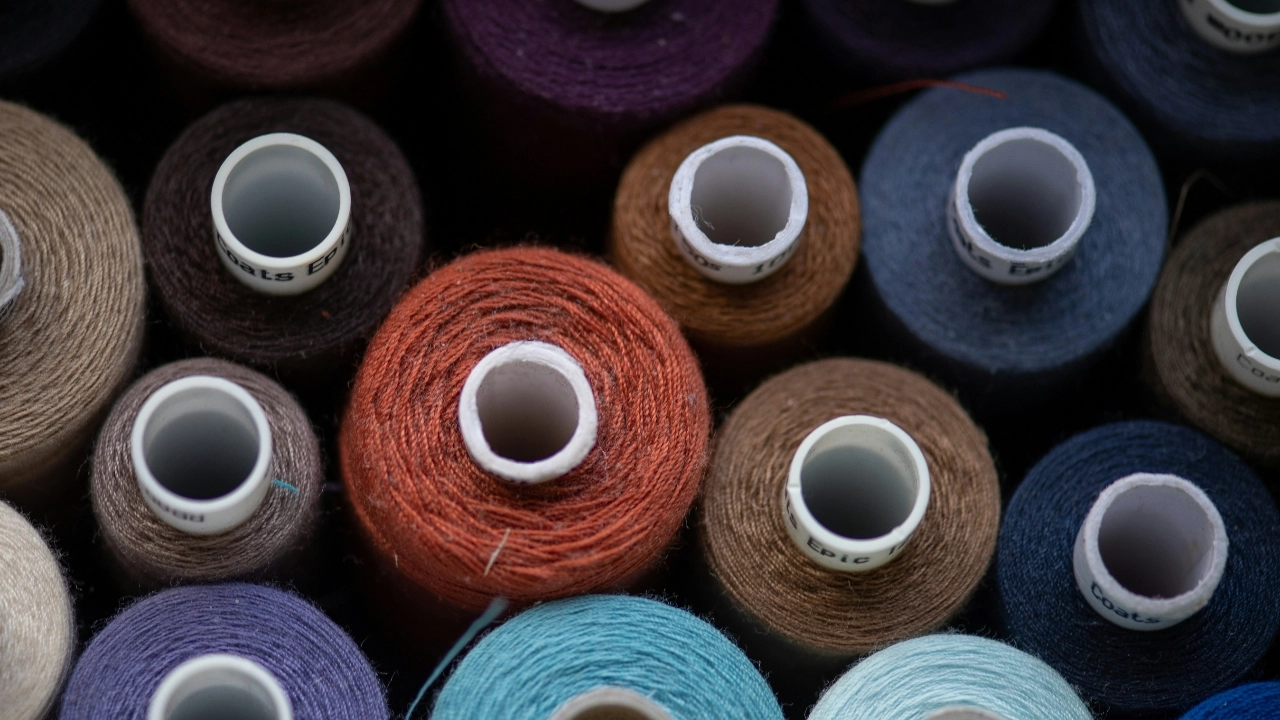
Low MOQ clothing manufacturers can help a new brand test custom knitwear with less inventory risk, but “low MOQ” does not mean every sweater, cardigan, vest, or knit dress can be made cheaply, quickly, and freely customized. For knitwear, MOQ is shaped by yarn sourcing, color planning, gauge, stitch structure, size range, labeling, packaging, sampling, and machine scheduling.
The real question is not only whether a supplier accepts small orders. A buyer needs to know whether the factory understands knitwear production and can explain how a test order will move from sample to repeatable bulk knit sweaters. If that conversation is skipped, two suppliers may both say “low MOQ,” while one is quoting stock yarn in one color and the other is pricing custom-dyed yarn, jacquard artwork, private labels, and export cartons. Those are not comparable offers.
Is the Supplier a Real Knitwear Manufacturer?
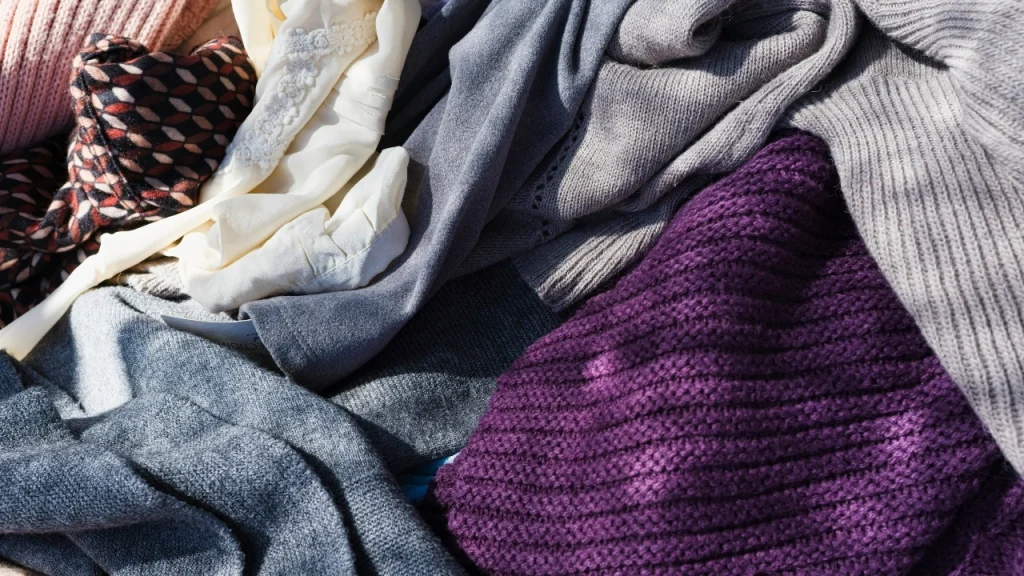
A low MOQ manufacturer is not automatically a knitwear manufacturer. Many clothing manufacturers with low MOQ focus on T-shirts, fleece hoodies, woven tops, simple cut-and-sew garments, or white label products. Knitwear needs different machinery, yarn planning, linking, washing, measurement control, and hand-feel judgment.
Ask what is knitted rather than only what is sewn
The first question should be direct: “Do you knit the panels or finished garments, or do you only sew and relabel existing products?” Sweaters, cardigans, knit dresses, sleeveless vests, and zip knitwear may involve flat-bed knitting, panel knitting, linking, washing, pressing, and size checking. CottonWorks explains that sweater manufacturing commonly uses weft knitting and flat-bed machine gauges, with methods such as cut-and-sew, panel knitting, full fashioning, and whole-garment knitting.
That matters because a general clothing supplier may accept a small order but lack the ability to adjust gauge, yarn count, stitch density, rib tension, neckline structure, or cardigan placket stability. If the project involves custom knit sweaters, cables, ribs, intarsia, jacquard, pointelle, brushed yarn, or wool blends, the buyer should ask which steps are handled by the same knitwear factory and which are outsourced.
Ask which categories match your plan
A factory may be strong in basic pullovers but less suitable for knit dresses or structured cardigans. Before discussing price, share the target category and check whether the supplier has relevant experience with similar construction. For example, the development risk for a boxy cotton vest is different from a long ribbed knit dress or a multi-color cardigan with buttons and custom labels.
For category planning, buyers can review CN Sweaters’ custom knitwear product range and compare whether the requested style type fits the factory’s sweater, cardigan, vest, dress, or custom knit project capability. This helps prevent a low MOQ conversation from starting with the wrong production base.
How Is MOQ Calculated for Custom Knitwear?
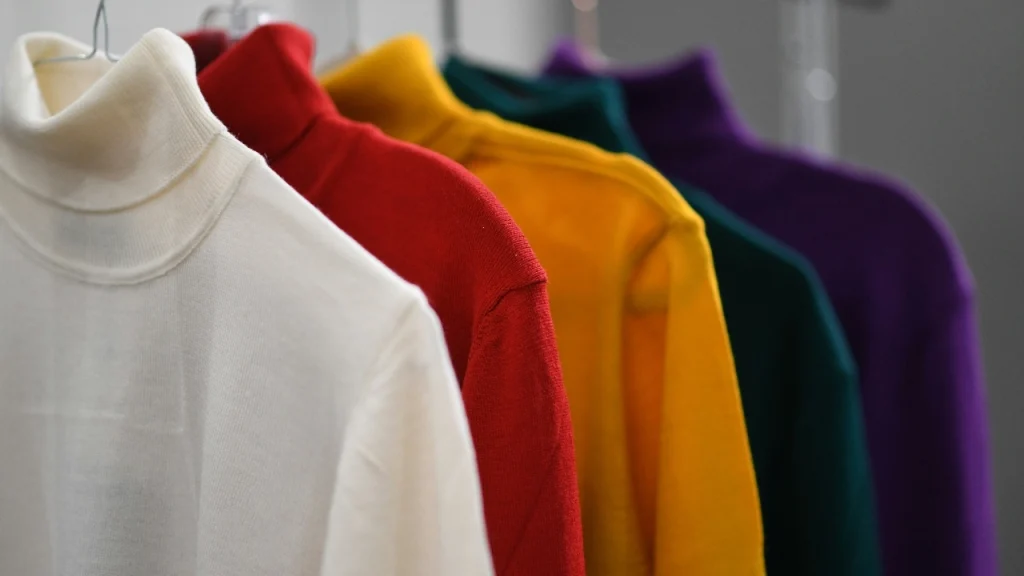
MOQ should be defined before price is trusted. When buyers ask clothing manufacturers low moq questions, the number may refer to total order quantity, one style, one color, one size, one yarn, or one existing stock design. These definitions create very different cost and production outcomes.
Ask whether MOQ is per style per color or total order
A clear question is: “Is the MOQ calculated per style, per color, per size, per yarn lot, or by total order quantity?” A supplier who says 100 pieces may mean 100 pieces in one style and one color. Another may allow 100 pieces split across two colors and three sizes if stock yarn is available. For knitwear production, this distinction affects yarn ordering, machine setup, linking workload, label preparation, packaging count, and final inspection.
Buyers should also ask whether size assortment changes MOQ. A 100-piece order across XS to XXL creates smaller quantities per size, which can increase measurement risk and reduce production efficiency. A narrower size run may be easier for a small moq clothing manufacturers project, especially during first launch testing.
Ask if stock yarn can reduce the first order
Stock yarn can make a low MOQ plan more realistic because the factory does not need to dye or source a fresh yarn lot for every color. However, stock yarn limits color choice, composition, thickness, and reorder certainty. A buyer should ask: “Which yarns are in stock now, how much is available, and can the same yarn be reserved for a reorder?”
Custom-dyed yarn can improve brand color accuracy, but it may raise MOQ because dyeing, shade control, lab dips, and yarn lot management have their own minimums. This is why MOQ and lead time planning should be discussed together, not as separate topics. A low moq manufacturer may be practical for a stock-yarn test, while the same design in a custom-dyed wool blend may need a higher commitment.
Which Product Choices Raise MOQ?
Small quantity does not remove production complexity. A simple ribbed vest in one stock color may fit low MOQ production, while a multi-color jacquard cardigan in custom yarn may not. The buyer should ask which design decisions push MOQ, sample cost, or lead time upward before approving the first quote.
Ask about yarn color stitch and gauge limits
The most common MOQ pressure points are yarn availability, color count, stitch complexity, and gauge. Gauge affects machine selection and fabric density. Stitch structure affects knitting speed and defect risk. Multi-color patterns can require more yarn cones, more programming, more color approval work, and more careful inspection.
A useful question is: “Which parts of this design make the MOQ higher, and what would you simplify if the first order must stay small?” A factory perspective should be specific. If the supplier only says “no problem,” the buyer still does not know whether the risk is yarn, machine time, linking, trims, or finishing.
| Design choice | Why it affects MOQ or lead time | Question to ask before quoting |
|---|---|---|
| Custom-dyed yarn | Dyeing and shade approval may require higher yarn lots | Can stock yarn achieve a close enough color? |
| Many colors in one style | More yarn cones, setup, and color control | Can we reduce to one or two launch colors? |
| Jacquard or intarsia | More programming and slower knitting | Is the artwork suitable for low MOQ production? |
| Wide size range | Lower quantity per size and more measurement checks | Which sizes should be sampled first? |
| Special trims or labels | Supplier minimums may apply to accessories | What is the label MOQ and setup cost? |
| Cashmere or wool blends | Higher yarn cost and stricter handling requirements | Is there a lower-risk blend for testing? |
The table shows why two low MOQ quotes can look different even when the piece count is the same. The more variables a buyer adds, the more important it becomes to ask what the MOQ includes.
Ask when low MOQ is not a good fit
Not every knitwear project should start with the lowest possible quantity. Complex intarsia, large-scale jacquard, novelty yarn, cashmere, mohair blends, heavy-gauge cardigans, and shaped knit dresses may need more sampling and tighter production control. In these cases, forcing the order too low can create a high unit price, limited color choice, unstable lead time, or a sample that cannot be repeated in bulk.
A better approach is to ask the knitwear supplier for two options: a low MOQ test version and a scalable production version. The test version may use stock yarn, fewer colors, a simpler stitch, or a tighter size range. The scalable version can then show what changes when the buyer moves into custom-dyed yarn, broader sizing, and larger reorder quantities.
What Should You Ask About Samples and Lead Time?
Sampling and lead time should be separated in the quotation. A factory may be able to make a sample quickly, but that does not mean bulk knitwear production can start immediately or ship on the same timeline. Knitwear needs time for yarn confirmation, machine programming, panel knitting, linking, washing, finishing, measurement checking, packaging, and final inspection.
Ask which sample stage is being quoted
The buyer should ask: “Is this a development sample, fit sample, size set sample, pre-production sample, or shipment sample?” These sample types serve different purposes. Industry sampling workflows often separate proto, fit, size set and pre-production samples because design review, fit approval, graded sizing, and bulk confirmation are different checkpoints.
For custom knitwear, the first sample may confirm shape, stitch, and hand feel, but it may not prove final yarn color, shrinkage, labeling, packaging, or size grading. A private label knitwear buyer should ask whether the sample uses final yarn or substitute yarn, final trims or available trims, and final packaging or plain packing. Without that detail, a low sample fee may hide later changes.
Ask what can delay a small order
Low quantity does not automatically shorten lead time. A 50-piece order may still need yarn preparation, machine setup, linking, washing, pressing, packaging, and inspection. If machines are scheduled for larger seasonal orders, a small run may wait for an available production slot. The buyer should ask whether the quoted lead time starts from inquiry, deposit, yarn approval, sample approval, label approval, or final purchase order.
For projects handled through OEM/ODM Services, the cleanest timeline usually starts after the factory receives a clear style reference, tech pack or measurement file, yarn requirement, color plan, label details, packaging request, and expected launch date. The more complete the input, the easier it is to judge whether a low MOQ schedule is realistic.
How Will Low MOQ Affect Price Branding and Packaging?
Low MOQ can reduce inventory exposure, but it usually increases unit cost. The buyer is spreading development work, machine setup, sample communication, labels, packaging, and inspection over fewer pieces. A low MOQ price should therefore be evaluated as a test-order cost, not as the final bulk cost.
Ask what is included in the unit price
The buyer should ask whether the quoted unit price includes yarn, knitting, linking, washing, finishing, buttons or zippers, labels, hangtags, packaging bags, carton labels, export packing, and inspection. If these items are separated, the buyer needs a landed cost view before comparing suppliers.
For white label knitwear, the base price may be lower because the factory uses existing yarns, shapes, or trims. For private label knitwear, extra costs can appear through neck labels, wash labels, hangtags, branded polybags, barcode stickers, carton marks, and packaging artwork. The U.S. FTC textile and wool labeling guidance states that many textile and wool products require labels with fiber content, country of origin, and responsible company identity, so label planning is not only a branding detail.
Ask whether branding has its own MOQ
Labels and packaging often have their own minimums. A garment MOQ of 80 pieces may be possible, while custom woven labels, hangtags, or printed bags may have a higher supplier MOQ. The buyer should ask: “Can we use a small-batch branding option for the test order, and will the same label standard be available for repeat orders?”
This is where many small brands misread low MOQ. They assume the garment MOQ covers every accessory. In practice, a sweater factory may support small garment quantities, but accessory suppliers may still charge setup fees. A practical low MOQ plan often uses simpler label execution for the first test, then upgrades packaging once sales data supports a larger repeat.
Can Low MOQ Scale Into Bulk Knit Sweaters?
The best low MOQ plan is one that can become repeatable. A test order is useful only if the second order can keep similar yarn, color, hand feel, measurements, trims, packaging, and delivery performance. Before choosing among small moq clothing manufacturers, buyers should ask how the factory protects continuity.
Ask how yarn color and hand feel will be repeated
The buyer should ask whether the yarn lot can be reserved, reordered, or color-matched later. Stock yarn may lower the first MOQ, but if the stock sells out, the second order may require a new yarn lot or custom dyeing. That can change shade, hand feel, shrinkage, and cost.
For a custom-dyed yarn project, ask whether lab dips, approved color standards, yarn composition, count, and supplier information will be recorded. For custom knit sweaters, this record is important because a repeat order must match the approved sample closely enough for retail consistency. The buyer should also ask how long the factory can hold unused yarn and whether holding yarn requires a deposit.
Ask how quality control protects repeatability
Low MOQ does not remove the need for measurement, appearance, and packaging checks. Knitwear is sensitive to washing, steaming, hanging, and folding. A small change in yarn tension or finishing can affect body length, sleeve length, chest width, rib recovery, and garment weight.
Buyers should ask which checkpoints are used before shipping: yarn inspection, panel inspection, linking review, washing and drying control, measurement check, appearance check, label check, packaging check, and final carton review. If pilling risk is important for the target market, the buyer can reference the ASTM D4970/D4970M Martindale pilling method as one recognized way to discuss pilling resistance testing with a lab or quality team. For CN Sweaters projects, it is also reasonable to align shipment approval with the factory’s quality control process so the buyer and supplier use the same inspection language.
Conclusion
Final buying direction
Low MOQ is useful when it is treated as a controlled product development strategy, not a shortcut around knitwear production realities. Before choosing low moq clothing manufacturers, ask how MOQ is calculated, whether the supplier is a real knitwear factory, what yarn and color limits apply, which sample stages are included, how branding and packaging are handled, and whether the test order can scale into bulk knit sweaters.
Send your style type, target MOQ, color plan, size range, yarn requirement, branding request, packaging details, sample expectation, and expected launch date to the CN Sweaters team to check whether a low MOQ knitwear production plan is practical.
FAQ
What is a realistic MOQ question to ask a knitwear factory?
Ask whether MOQ is calculated by total order, style, color, size, yarn, or stock availability. Then ask what changes if you use stock yarn, custom-dyed yarn, fewer colors, or a narrower size range.
Can stock yarn reduce MOQ for custom knitwear?
Stock yarn can reduce MOQ when the color, composition, thickness, and quantity match the project. It may limit color choice and reorder consistency, so buyers should ask how much yarn is available and whether it can be reserved.
Are low MOQ clothing manufacturers good for private label knitwear?
They can be, if branding needs are simple and clearly quoted. Ask whether neck labels, wash labels, hangtags, polybags, carton labels, and barcode stickers have separate MOQs, setup fees, or lead times.
Why can a small knitwear order still take several weeks?
A small order can still require yarn confirmation, machine programming, knitting, linking, washing, pressing, measurement checks, packaging, and shipping. Machine scheduling can also affect lead time, especially during peak sweater seasons.
How can buyers reduce risk before placing bulk knit sweaters?
Start with a focused style, limited colors, clear measurements, approved yarn, practical packaging, and agreed inspection points. Keep records of yarn, color, sample comments, size specs, and packaging standards for future reorders.