 CN Sweaters
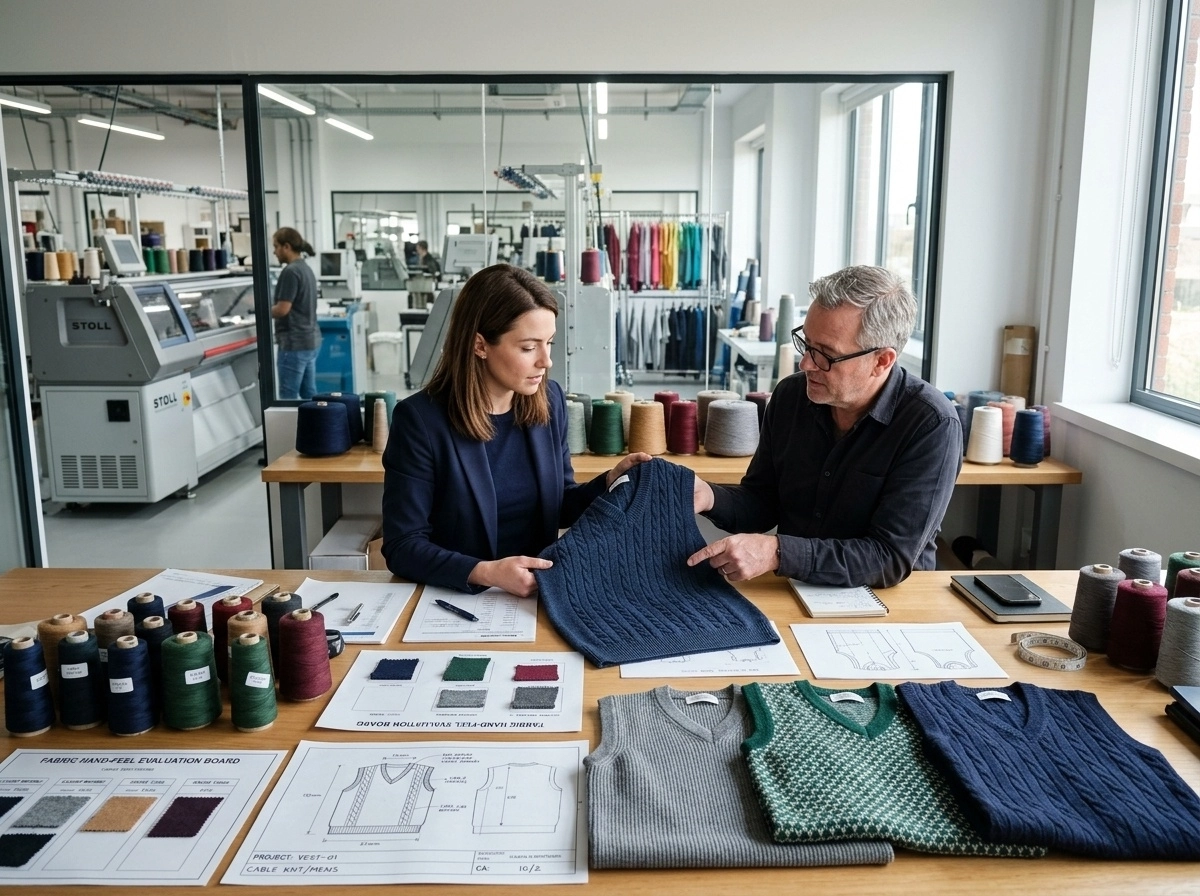
If you are sourcing a high-end custom sweater vest, the biggest decision is not who gives the lowest quote. It is whether the supplier can keep yarn quality, fit balance, sample accuracy, and bulk consistency aligned from development to shipment.
This matters most for brands, wholesalers, and product teams that want premium knitwear with clear commercial logic. A good sourcing plan should help you control material quality, sampling risk, MOQ pressure, lead time, refill potential, and quality consistency before you place the bulk order.
Start With Product Definition Before Supplier Search
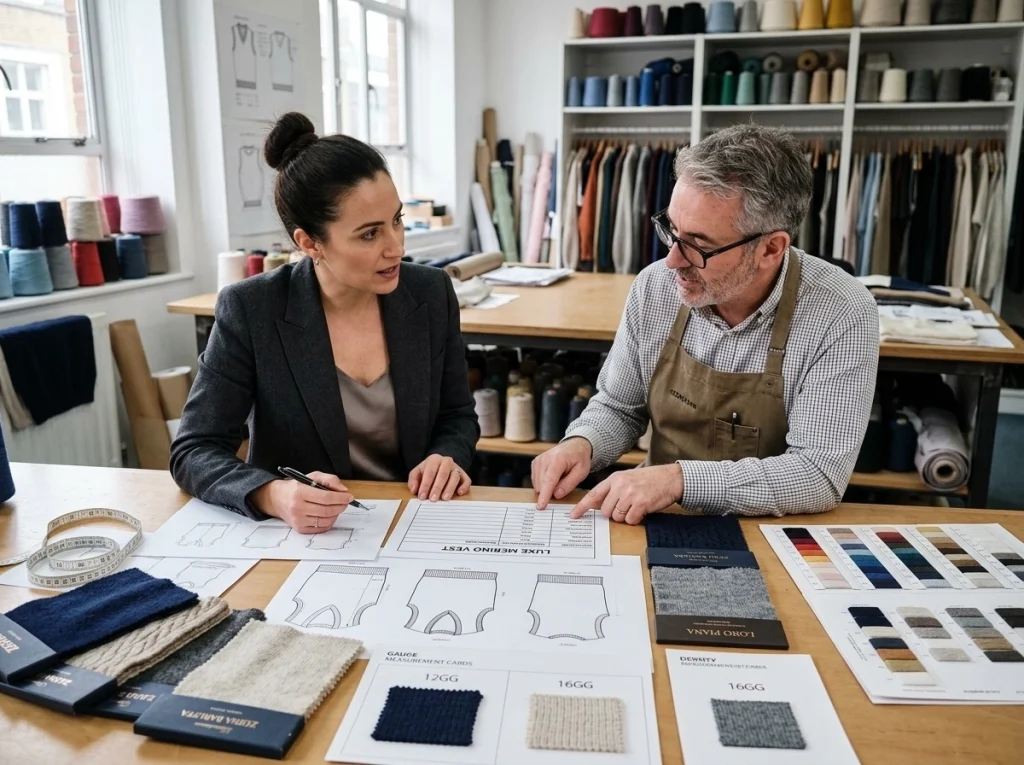
For a high-end custom sweater vest, the first sourcing step is not collecting factory contacts. It is defining the product clearly enough that suppliers can quote the same thing, sample the same thing, and produce the same thing.
When buyers skip this step, they often compare prices that are based on different yarn assumptions, different gauge choices, or different construction methods. That usually leads to slow revisions, unstable quotations, and bulk results that do not match the original expectation.
Define hand feel, gauge, and silhouette first
Before you request quotations, define the hand feel, weight, silhouette, and intended use. A soft brushed autumn vest, a refined fine-gauge office layering piece, and a chunky textured fashion vest are not the same sourcing project even if they share the same category name.
From a factory perspective, the most useful starting brief includes target yarn direction, expected gauge, neckline depth, armhole shape, fit preference, and whether the style should feel classic or fashion-led. If you already know that the product belongs in a broader custom vest and sleeveless knitwear program, suppliers can usually give more realistic development advice earlier.
Define what “high-end” actually means for your market
“High-end” is not a universal technical standard. In one market it may mean better yarn composition and cleaner finishing. In another, it may mean stronger shape retention, better label and packaging execution, or a more refined neckline and armhole finish.
That is why the buyer should decide what premium value really is before sampling starts. If your market sells on softness, fiber choice matters more. If it sells on clean appearance and retail finish, knitting consistency, linking precision, and final finishing matter just as much.
Separate a basic vest from a development-heavy vest
A plain jersey V-neck vest in standard colors is usually a more manageable sourcing project than an intarsia vest, cable structure, contrast tipping, unusual cropped shape, or fashion-led sleeveless knitwear with deeper armhole shaping. The commercial implication is simple: more development usually means more sampling decisions, more production variables, and more room for cost or lead time movement.
That distinction is especially important for brands that also source custom knit sweaters or plan to expand into a broader knit capsule later. A vest can look simple on paper, but once it involves special yarns, premium trims, or fashion construction, it should be treated like a development project rather than a basic reorder item.
Choose Materials and Construction That Match the Price Point
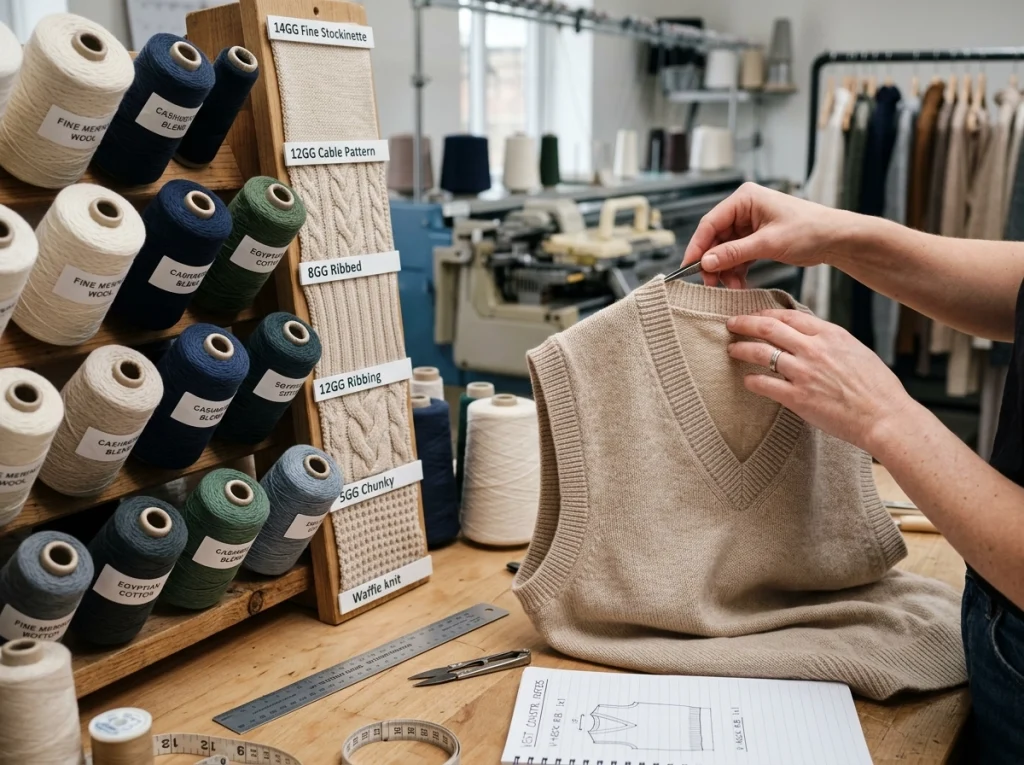
High-end knitwear is not created by expensive yarn alone. In a premium custom sweater vest, the perceived value comes from how fiber, gauge, stitch structure, neckline construction, and finishing work together.
Buyers sometimes overfocus on yarn names and underfocus on how the garment will actually perform in the market. In reality, premium positioning depends on whether the vest feels right, hangs well, recovers after wear, and still looks clean after finishing and packing.
Select yarns by end use, not by trend language
The right yarn choice depends on season, channel, and target price. Cotton or cotton-viscose blends can work well for transitional layering and cleaner drape. Wool blends are often more suitable for autumn-winter warmth and stronger premium positioning. Cashmere blends may improve softness and perceived value, but they also raise expectations around cost control, pilling management, and care requirements. Recycled yarns can support a clearer sustainability story, but they still need to be evaluated for hand feel, consistency, and commercial fit, which is why many brands use broader material frameworks such as the Textile Exchange Materials Benchmark when shaping sourcing priorities.
A good supplier should not push one fiber answer for every project. They should explain the trade-offs between softness, cost, warmth, weight, stability, and bulk feasibility.
Gauge and stitch structure shape the result as much as fiber
Gauge is one of the fastest ways to change the commercial character of a sweater vest. Heavier 3GG or 5GG structures create volume and visual texture, while 7GG or 9GG often suit broader commercial programs. Finer 12GG or 14GG constructions usually feel more refined and can work better for cleaner layering products.
Stitch structure also changes the sourcing logic. Rib, cable, jacquard, intarsia, and mixed stitches do not only affect appearance. They can change yarn consumption, development time, measurement control, and production efficiency. If your range planning may later expand into custom cardigan sweaters, it is worth aligning gauge and yarn direction early so the line feels commercially consistent instead of fragmented.
Neckline and armhole execution often decide whether a vest feels premium
On a sweater vest, the neckline and armhole are usually more exposed than on a standard pullover. That makes construction quality more visible. A premium vest needs balanced V-neck depth, stable rib recovery, clean linking, consistent armhole shaping, and finishing that does not distort the silhouette.
This is where many high-end developments succeed or fail. A strong yarn cannot save a vest with a weak neckline proportion, unstable armhole tension, or poor finishing recovery. From a sourcing standpoint, those details should be tested during sampling, not discovered after bulk packing.
| Decision Area | What It Changes | Common Buyer Mistake | Better Sourcing Move |
|---|---|---|---|
| Yarn composition | Hand feel, warmth, price, care expectations | Choosing fiber by trend name only | Match fiber to season, target margin, and customer use |
| Gauge | Weight, drape, visual texture | Comparing quotes across different gauges | Lock gauge before final quote comparison |
| Stitch structure | Appearance, yarn usage, development complexity | Treating cable or intarsia like a basic program | Build more time for development and PP review |
| Neckline and armhole construction | Premium look, comfort, recovery | Reviewing only flat photos | Check fit, balance, and recovery in physical sample |
| Finishing | Clean appearance and retail readiness | Assuming all factories finish knitwear the same way | Confirm steaming, measuring, mending, and packing standards |
Evaluate Suppliers by Sampling Discipline, Not Sales Language
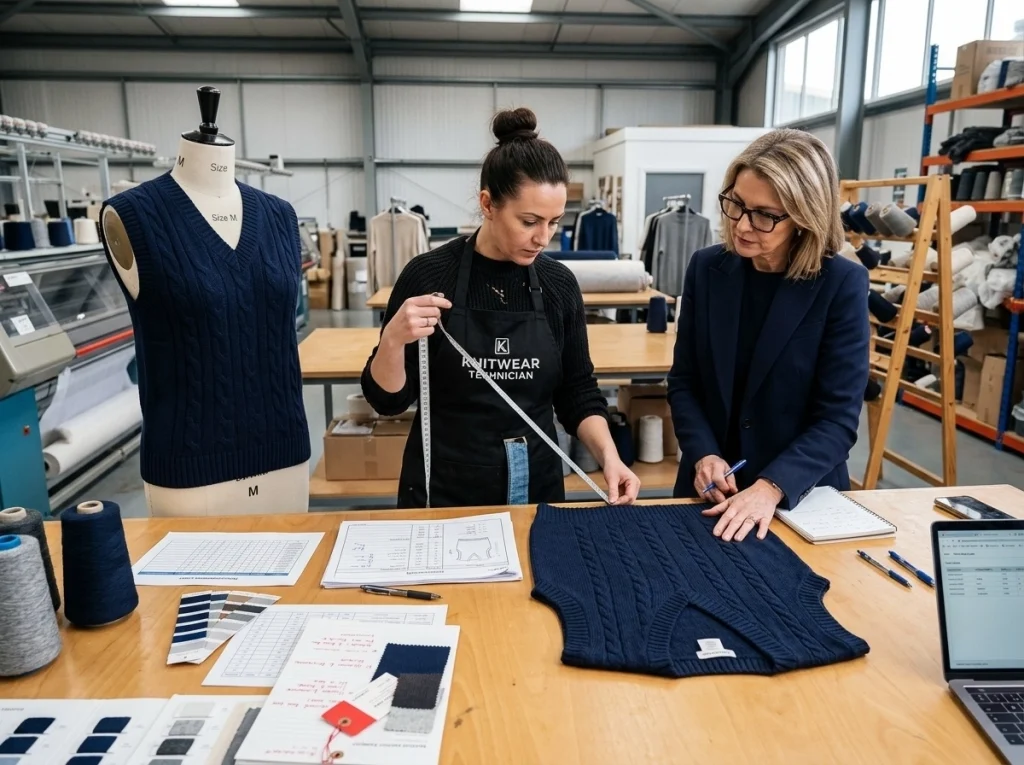
For premium knitwear, a supplier should be judged less by broad promises and more by how they handle the sample process. If the sample stage is loose, the bulk stage will usually become expensive.
That is why experienced buyers pay attention to the factory’s questions, revision logic, and PP approval discipline. A supplier that samples carefully is usually easier to work with than one that offers a fast quote without enough technical review.
A good factory asks better questions before quoting
A serious knitwear supplier usually wants to confirm the tech pack or reference images, size chart, quantity by color and size ratio, target yarn, delivery window, and branding requirements before finalizing a quotation. That is not delay. It is basic risk control.
This is also consistent with a milestone-based OEM/ODM knitwear process where feasibility, yarn direction, sample planning, PP approval, and shipment timing are connected instead of handled as separate conversations. Buyers should be cautious when a supplier quotes quickly but does not clarify the variables that will later affect quality or lead time.
Use the sample to test execution, not just appearance
A sample should answer more than “Does it look close?” It should also show whether the supplier can control measurements, stitch regularity, neckline shape, armhole balance, label placement, and finishing quality.
For a premium custom sweater vest, the sample is also where you test communication quality. Did the supplier identify likely risks? Did they explain trade-offs clearly? Did they revise the pattern or construction intelligently after feedback? Those signals matter far more than polished sales language.
PP approval is what protects bulk consistency
For high-end knitwear, PP approval is the point where the standard becomes real. Once the PP sample is approved, the buyer and factory should be aligned on measurement points, yarn choice, stitch structure, trims, color, and packing expectations.
Without that step, “same as sample” often stays vague. With it, bulk production becomes more controllable. That matters even more for programs that expect repeat business, seasonal carryover, or smaller refills after the first launch.
Plan MOQ, Lead Time, and Refill Strategy Around Real Variables
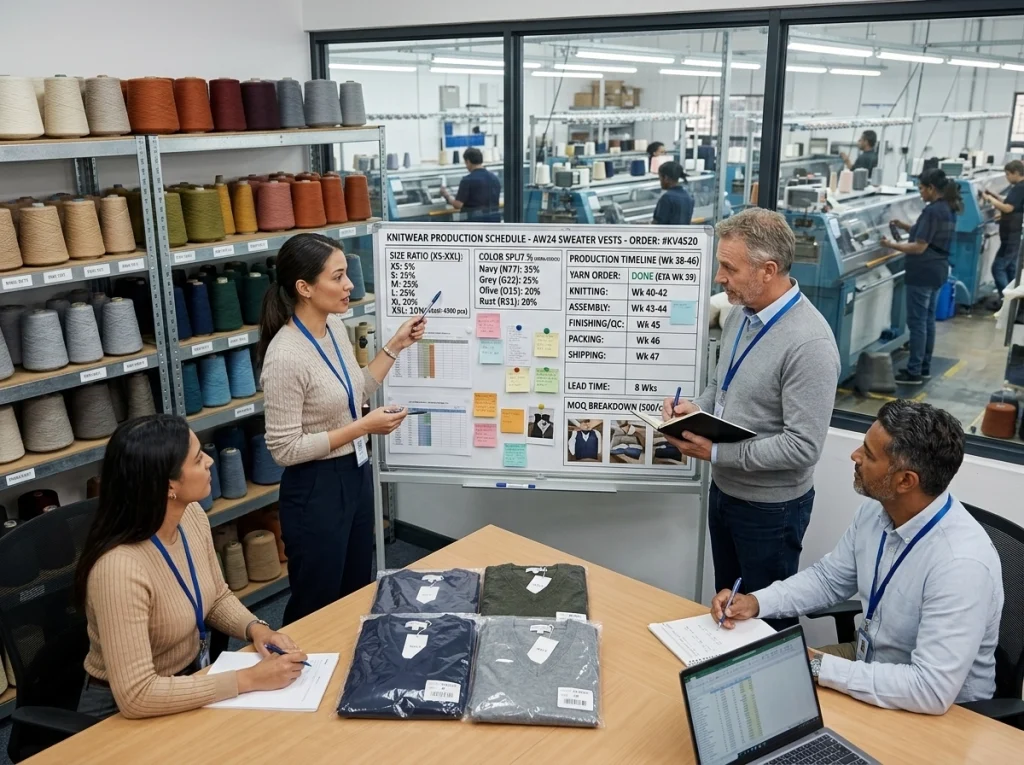
MOQ and lead time in knitwear are driven by structure, splits, and process discipline, not by unit count alone. Buyers who understand this usually make better sourcing decisions and avoid unrealistic launch calendars.
A premium vest program can still be efficient, but only if the buyer plans around color count, size ratio, yarn readiness, revision rounds, and production season. The earlier these variables are discussed, the more reliable the sourcing plan becomes.
MOQ starts with style, color, and size ratio
In practice, MOQ is rarely just one number. It is shaped by how the order is split across colors and sizes, whether the yarn is standard or special, and how complex the construction is. That is why buyers should treat the factory’s MOQ and lead time for OEM/ODM knitwear as a planning framework, not a magic shortcut.
A premium vest with one color and a clean structure is usually easier to place than a smaller order spread across several colors, sizes, and fashion details. If the program includes custom labels, unusual trims, or special packaging, that should also be discussed early.
Small orders do not always move faster
One of the most common sourcing mistakes is assuming that fewer pieces automatically mean a faster calendar. In knitwear, that is not always true. Small orders still require yarn confirmation, machine setup, pattern programming, sample approval, measuring, finishing, and packing.
Larger orders may actually run more efficiently because the factory can assign more machines in parallel. Smaller premium orders may still consume almost the same preparation time, especially if they involve multiple colors, special yarns, or extra revision rounds.
Build more time for revisions, raw materials, and peak-season pressure
Lead time can extend for reasons that are predictable if they are discussed early. Custom-dyed yarns, special blends, cable or jacquard development, multiple sample rounds, and peak-season capacity all affect the calendar.
From a factory perspective, the buyer should also think beyond first delivery. If the style is likely to need refills, it is smarter to source with repeatability in mind from the start. That means confirming stable yarn supply, clear PP standards, consistent color direction, and realistic reorder timing instead of chasing a low first quote that becomes difficult to repeat.
| Variable | MOQ Impact | Lead Time Impact | Premium Risk |
|---|---|---|---|
| More colors | Higher workable minimum | Longer planning and material coordination | Shade inconsistency across colorways |
| More size splits | Raises total order complexity | Slower allocation and packing control | Weaker size balance in bulk |
| Special yarn or dye | May require higher commitment | Can add sourcing time | Hand feel or color mismatch if rushed |
| Complex stitch or construction | Often raises minimum efficiency threshold | Adds development and QC time | More visible quality issues |
| Extra sample revisions | No direct MOQ change | Extends calendar | Better bulk outcome if handled well |
| Peak season booking | Limits flexibility | Longer queue risk | Delayed launch if booked late |
Control Quality Before Bulk Starts, Not After Complaints
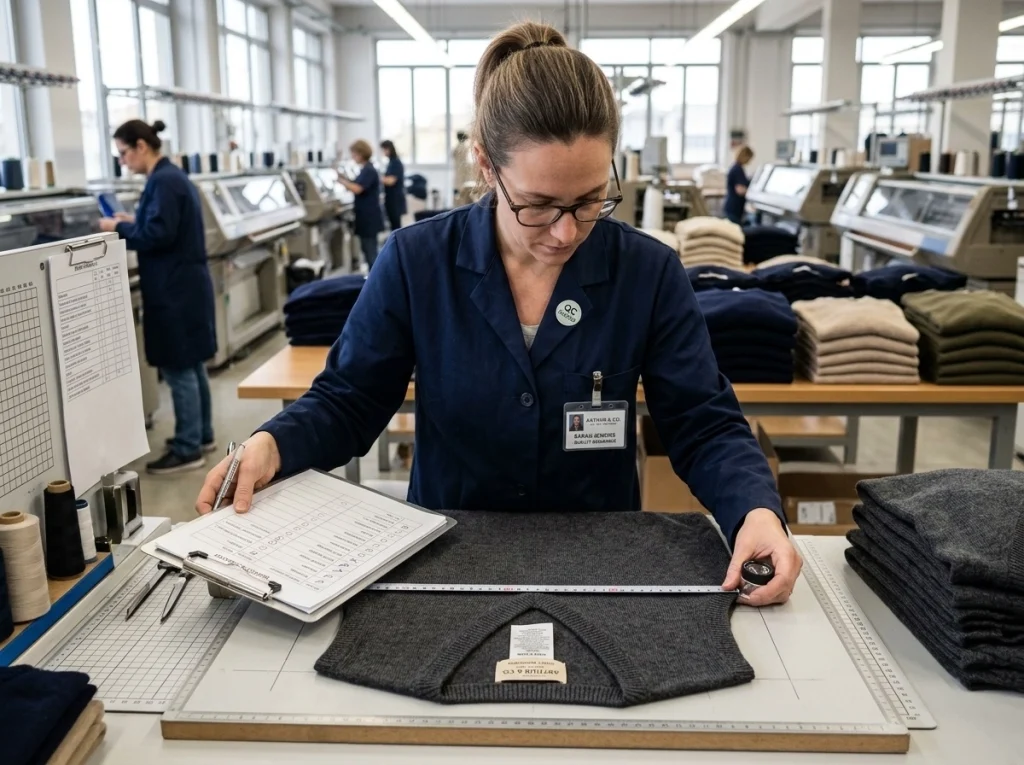
Premium knitwear quality is not built at final inspection alone. It is built through a sequence of checks that starts with materials and continues through knitting, linking, finishing, measuring, and packing.
This matters even more for a sweater vest because the garment often exposes technical details clearly. Neckline balance, armhole shaping, stitch cleanliness, and rib recovery are easy for the customer to notice. If the supplier only checks quality at the end, most of the real risk has already become expensive.
Focus on knitwear-specific quality risks
Buyers should ask about the risks that are specific to knitwear, not just generic apparel defects. For vest programs, the most common issues include dropped stitches, unstable tension, neckline distortion, seam elasticity problems, uneven measurements, and color variation across sizes or lots.
A credible supplier should be able to explain which defects are checked during production and which are checked again after finishing. That is often a better sign of real expertise than broad claims about “strict quality.”
Ask how materials, in-line production, and finishing are checked
A strong knitwear quality control system should cover incoming yarn inspection, in-line checks during knitting and linking, finishing review, measurement control, and final audit. For premium products, buyers should also ask how the factory handles loose ends, appearance cleaning, dimensional stability, and packing accuracy.
This kind of process thinking also reflects the wider sourcing shift described by McKinsey’s analysis of the apparel value chain, where brands are putting more value on supplier collaboration, end-to-end efficiency, and better operational visibility rather than purely transactional buying.
For premium programs, testing and compliance support can matter
Not every sweater vest project needs the same compliance package, but premium buyers often need better visibility into material safety and testing support. If your product will be sold in channels with stronger safety or chemical expectations, it helps to discuss standards such as OEKO-TEX STANDARD 100 and confirm whether the factory can coordinate the right documentation or testing path.
For importers, product classification can also influence planning, especially when the program is part of a broader knitwear range. The official U.S. Harmonized Tariff Schedule Chapter 61 is a useful reminder that knitted apparel should be understood in the right product and import framework from the beginning, not only when goods are ready to ship.
Source for Repeatability, Not Just the First Bulk Order
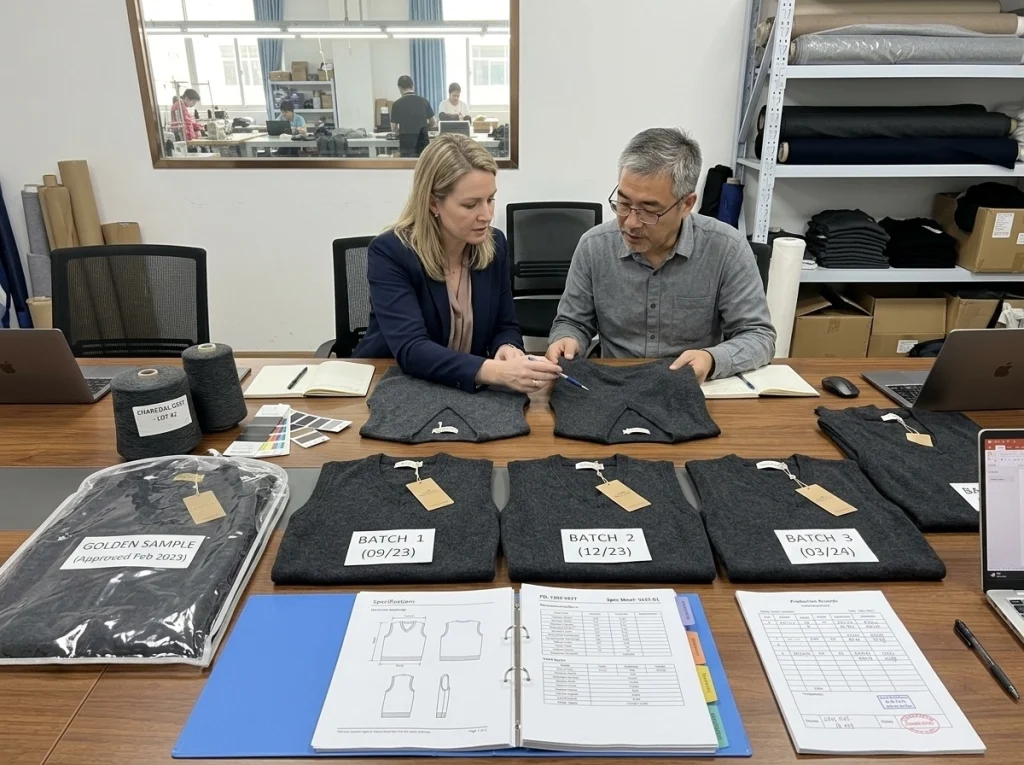
The best supplier for a high-end custom sweater vest is not the one that barely completes a first order. It is the one that can help you repeat the style, adjust it intelligently, and support the next season without rebuilding the process from zero.
That is why sourcing should be evaluated over the full life of the product program. A supplier relationship that is slightly more structured at the beginning is often more efficient over time.
Balance cost control with repeatability
Premium buyers should always ask a practical question: can this vest be repeated with similar hand feel, gauge, and finish if the style sells well? If the answer is weak, the apparent cost advantage of the first order may not be real.
Repeatability depends on yarn availability, machine suitability, pattern discipline, finishing control, and documentation quality. It also depends on whether the supplier is honest about what should stay standardized and what can be changed without affecting the result.
Collaborative suppliers usually create better premium outcomes
For high-end knitwear, the most useful supplier is usually the one that works with the buyer on trade-offs instead of agreeing to everything immediately. That may mean suggesting a better gauge for the target hand feel, recommending a more stable armhole finish, or simplifying one detail to protect bulk consistency.
This more collaborative sourcing model aligns with how many apparel brands now evaluate supply partners in volatile markets. The goal is not only lower cost. It is stronger process efficiency, better material decisions, and fewer expensive surprises later.
Know when a trial order should become a long-term program
A factory becomes a long-term sourcing partner when several things are proven at the same time: the sample reflects the brief well, revisions are handled professionally, PP standards are clear, bulk consistency is stable, and communication remains reliable under deadline pressure.
If those conditions are met, the buyer can start treating the relationship as a program rather than a single transaction. That is usually where premium knitwear sourcing becomes more commercially efficient.
Conclusion
Sourcing a high-end custom sweater vest is not mainly about finding the cheapest supplier. It is about finding a supplier that can align yarn choice, gauge, neckline and armhole execution, sampling discipline, quality control, and production planning into one reliable process.
If you want a better result, define the product before requesting quotes, use the sample stage to test execution instead of appearance alone, and make sure PP approval truly locks the bulk standard. That approach reduces avoidable mistakes in MOQ planning, lead time expectations, and repeat-order consistency.
If you are preparing a new vest development or reviewing suppliers for the next season, the most practical next step is to share your tech pack, target price, and delivery window with our knitwear team so the sourcing discussion starts from feasibility instead of guesswork.
FAQ
What is the best yarn option for a high-end custom sweater vest?
There is no single best yarn for every project. The right choice depends on season, target price, hand feel, care expectations, and how the vest will be sold. Wool blends, cashmere blends, cotton blends, and recycled yarns can all work well if they match the product positioning.
How many sample rounds are usually needed before bulk production?
For a straightforward style, one sample plus one revision may be enough. For a premium vest with special fit, neckline shaping, stitch development, or branding details, more than one revision round can be normal and often improves the final bulk result.
Why can a small custom sweater vest order still have a long lead time?
Because lead time is influenced by yarn confirmation, machine setup, programming, revisions, finishing, and packing, not only by piece count. Small orders with many colors or complex details can still require a full development calendar.
What quality points matter most in sweater vest production?
The most important ones are yarn consistency, stitch regularity, neckline balance, armhole shaping, measurement stability, finishing cleanliness, and packing accuracy. On a vest, these details are highly visible and strongly affect whether the garment feels premium.
Should I choose OEM or ODM for a premium vest program?
If you already have a clear tech pack and product direction, OEM is usually the better fit because it gives you tighter control. If your concept is still early and you need help turning an idea into a workable product, ODM can be useful as long as the supplier can explain development trade-offs clearly.