 CN Sweaters
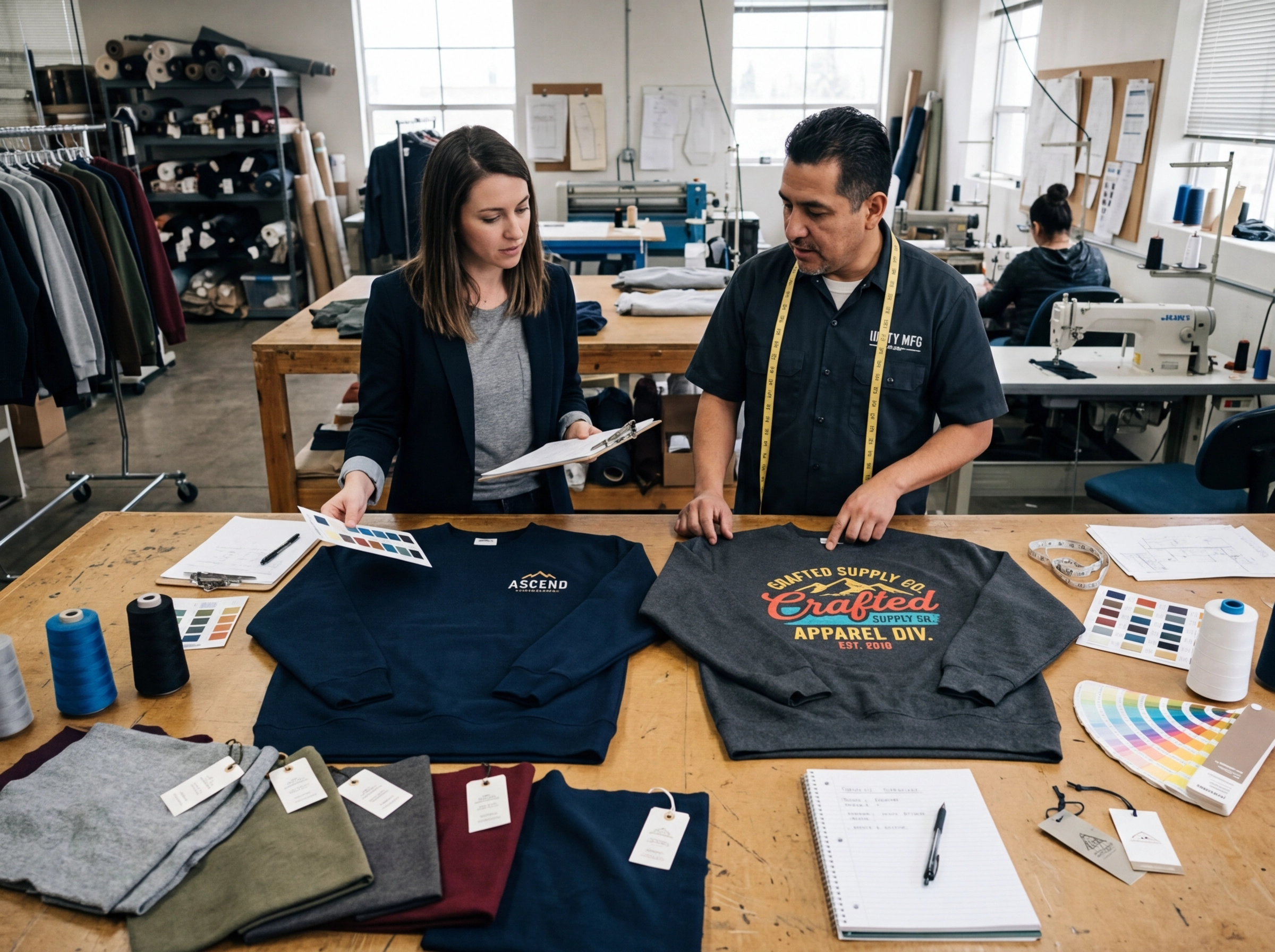
If you are designing a custom embroidered sweatshirt, embroidery is usually the better choice for small logos, premium branding, and understated retail programs. If your design depends on large graphics, multiple colors, or illustration-style artwork, printing is usually the better option.
For buyers, this is not just a style decision. From a factory perspective, the right method also depends on fabric surface, logo size, sampling goals, MOQ, comfort, and how you expect to reorder later. A decoration method that looks good in a mockup can still create avoidable issues in sampling or bulk production if it does not match the sweatshirt base.
Many buyers start by asking which method looks better. A more useful question is this: which method fits your product, your brand position, and your order structure with the least friction? That is the question this guide answers.
If your product direction sits closer to elevated knit casualwear than standard promotional fleece, our pages on knit hoodies and zip knitwear and custom sweater development show how structure, yarn choice, and finishing can change the final result.
| Decision Point | Embroidery | Printing |
|---|---|---|
| Best for | Small logos, subtle branding, premium feel | Large artwork, graphic-heavy designs, bold visuals |
| Surface effect | Raised, textured, tactile | Flat or near-flat, more image-like |
| Artwork complexity | Better for simpler shapes and controlled details | Better for large, colorful, or more complex visuals |
| Fabric sensitivity | Can distort soft or stretchy bases if design is too dense | Usually lighter on the garment surface, but method matters |
| Comfort on inside | May need backing and can feel heavier in some placements | Usually lighter on the inside depending on print method |
| Sampling focus | Stitch density, puckering, backing, placement balance | Color accuracy, print hand feel, cracking or wash behavior |
| Reorder logic | Strong for consistent logo programs | Strong for repeat graphic programs if artwork and color are standardized |
| Common risk | Overly dense logo on the wrong base fabric | Choosing a print method that does not match artwork or order size |
When Embroidery Makes More Sense
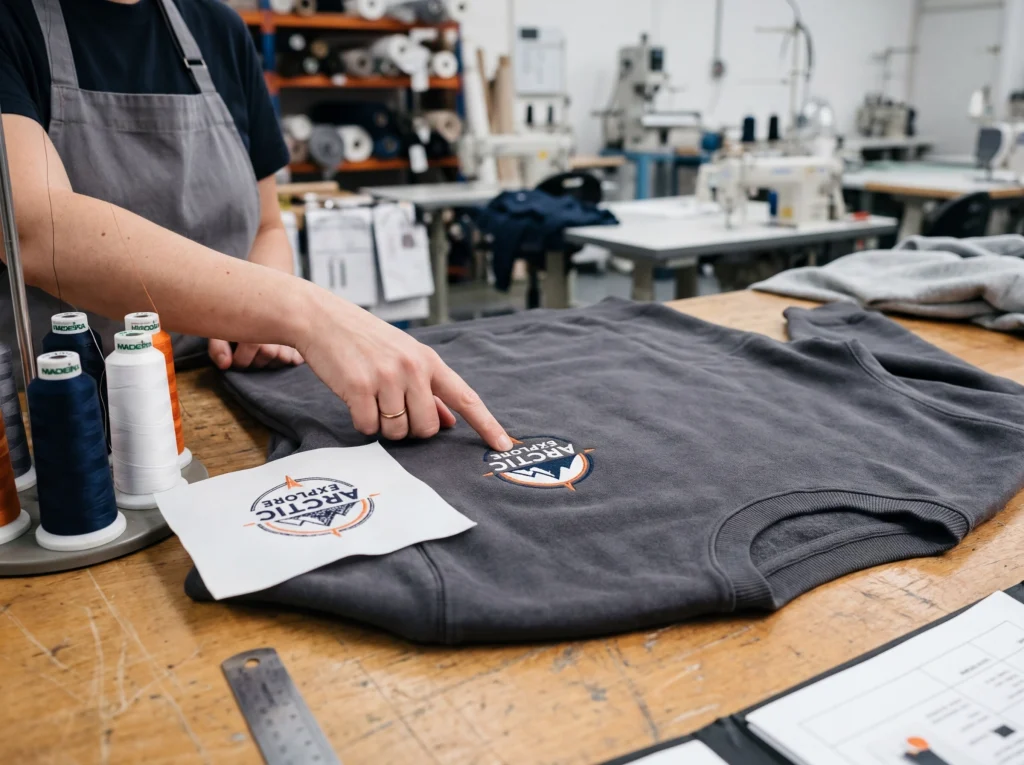
Embroidery makes the most sense when the decoration is part of the brand identity, not the entire visual story. In most B2B programs, that means chest logos, sleeve marks, back-neck details, and other placements where texture adds value without taking over the garment.
Best placements for a custom embroidered sweatshirt
A custom embroidered sweatshirt usually works best when the logo stays relatively compact. Left chest placement is still the safest and most commercially useful option because it gives you branding without making the garment heavy, stiff, or visually crowded.
Sleeve embroidery can also work well when the logo is narrow and clean. Back-neck embroidery is useful for subtle brand recognition, especially for labels that want a more retail-ready finish. Hem details and cuff branding can look strong too, but only when the sweatshirt base is stable enough and the logo does not compete with seam construction.
From a factory perspective, embroidery becomes harder to control when buyers push it into oversized front graphics or dense multi-layer artwork. At that point, the issue is not whether embroidery is “premium.” The issue is whether the design still behaves well in production and wear.
Why embroidery often feels more premium
Embroidery often feels more premium because it adds texture, depth, and a more permanent visual presence. A printed logo can look sharp and modern, but an embroidered logo usually feels more intentional on product lines that lean toward boutique retail, gifting, private label, or understated streetwear.
This is one reason many buyers use embroidery for brand marks and printing for campaign graphics. The two methods communicate different things. Embroidery says brand identity, restraint, and materiality. Printing says graphic expression, visibility, and image impact.
That distinction matters even more if your assortment includes elevated knit casual pieces rather than basic blanks. If your line also includes OEM and ODM knitwear programs or matching custom knit projects, embroidery can help keep branding consistent across categories without forcing every product to carry a large printed statement.
Where embroidery starts to create risk
Embroidery is not automatically the better choice just because it looks expensive. It starts to create risk when the design is too large, too dense, or placed on a base that cannot support the stitch load well.
Soft fleece surfaces can pucker. Lightweight sweatshirt fabrics can show distortion around the logo area. Dense satin borders can pull the fabric inward. Large filled embroidery can create stiffness and visible backing inside the garment. In practical production, these are common reasons a logo that looked fine on screen starts looking less refined in the sample room.
Buyers should also remember that embroidery is not a direct copy-and-paste of a print file. As explained in Printful’s guide to creating embroidery files, embroidery requires digitization, stitch decisions, and sometimes backing to stabilize the design. That means the same artwork may need to be simplified, resized, or rebalanced before it is suitable for embroidery on a sweatshirt.
When Printing Is the Better Choice
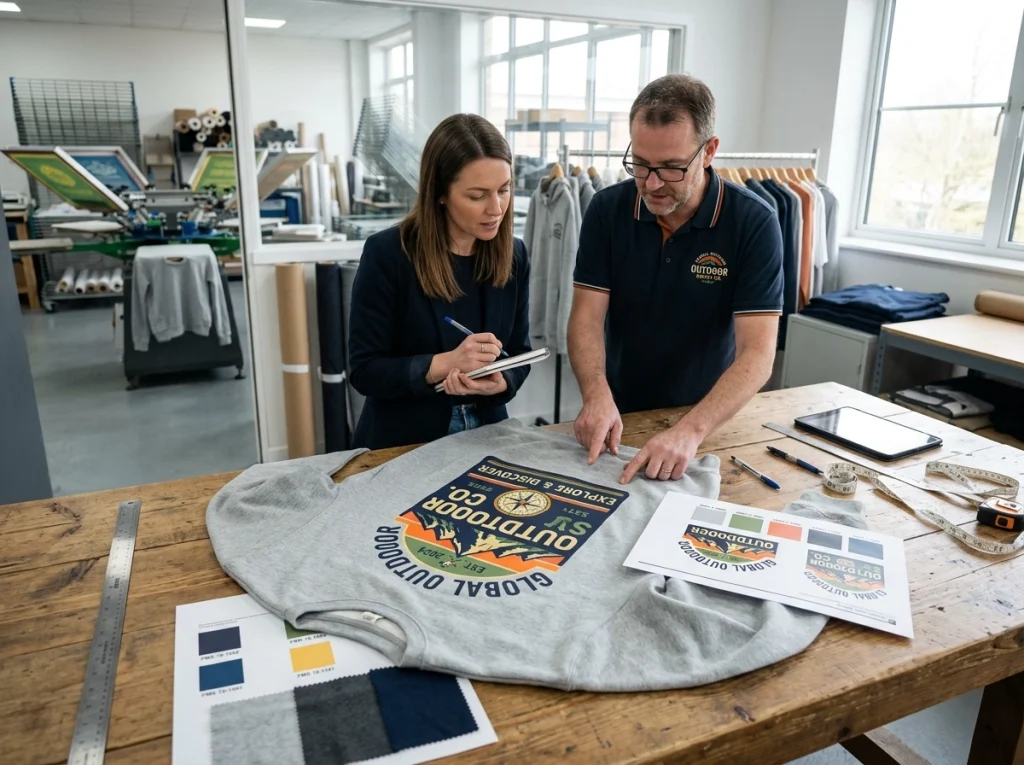
Printing is usually the better choice when the design itself is the hero. If your sweatshirt depends on a large chest graphic, a back print, color gradients, illustration, or bold seasonal artwork, printing gives you more freedom with less structural interference.
Large graphics and complex artwork
Big front visuals are where printing usually wins. Once the design moves beyond a compact logo and becomes a graphic composition, embroidery often starts fighting the garment instead of enhancing it.
Large embroidered areas add weight, restrict softness, and increase the chance of distortion. A printed graphic usually sits more naturally on the garment surface, especially when the artwork includes multiple colors, soft transitions, or shapes that would be awkward to convert into stitches.
For brands building campaign drops, artist collaborations, or statement streetwear capsules, printing often makes more sense because it preserves the visual identity of the artwork. It lets the garment carry the design without turning the decoration into a heavy technical feature.
Why printing gives more design freedom
Printing gives buyers more freedom because it is less constrained by stitch density, thread direction, and backing requirements. That does not mean printing has no limits. It means the limits are different.
A balanced comparison from Printful’s article on embroidery vs screen printing notes that embroidery tends to work well for small text and logos, while screen printing is better suited to larger, bolder visuals and broader color expression. For a buyer, that is the practical takeaway. If the design depends on image reproduction, printing is usually the cleaner route.
Printing also helps when the sweatshirt needs to stay softer and lighter in wear. A large printed area can still affect hand feel depending on the method, but it usually creates fewer inside-garment comfort issues than a large block of embroidery.
Print is not one single method
One mistake many buyers make is treating “printing” as one fixed process. In real sourcing, print method selection matters almost as much as the embroidery-versus-print decision itself.
Screen printing can be strong for cleaner bulk runs and more commercial quantities. Other print methods may work better for certain artwork styles, shorter runs, or more detailed graphics. The point is not to memorize every decoration process. The point is to avoid comparing embroidery to a vague idea of printing.
From a factory perspective, the best workflow is to confirm the artwork first, then choose the decoration method that protects both the design intent and the production result. When buyers reverse that order, they often spend more time correcting samples later.
What Buyers Should Check Before Sampling
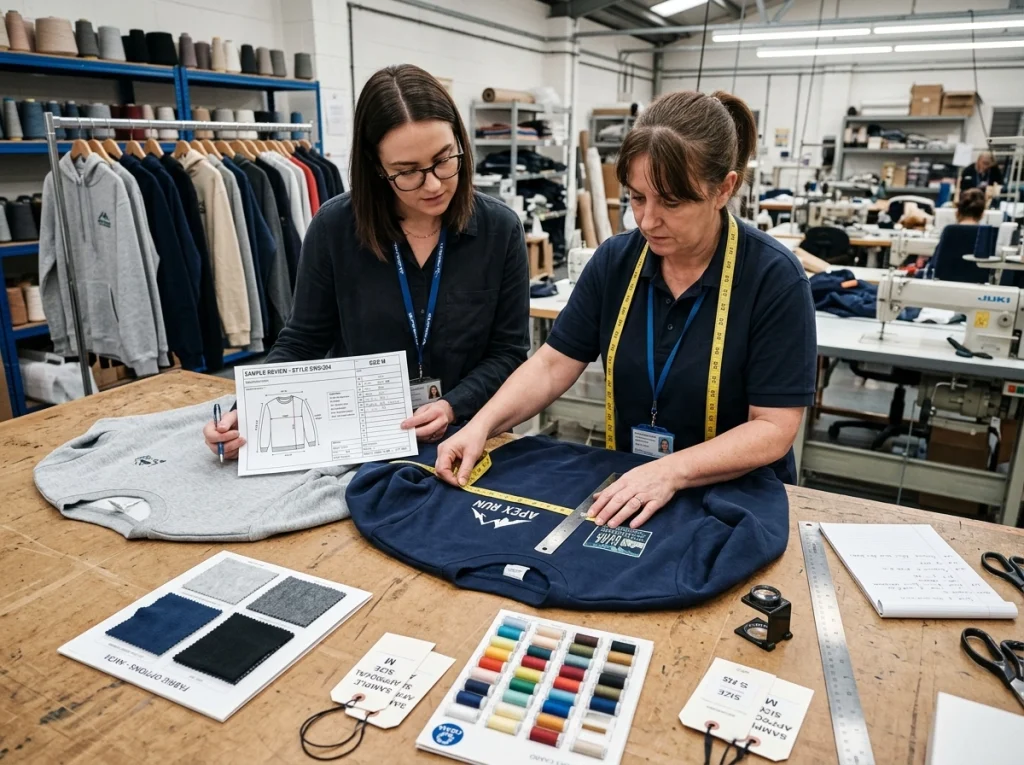
Most decoration problems do not begin in bulk production. They begin much earlier, when the buyer approves the wrong artwork size, ignores the fabric surface, or skips practical checks during sample review.
The sweatshirt base matters more than many buyers expect
A decoration method does not exist in isolation. It sits on a garment base, and that base changes everything.
If the sweatshirt has a brushed or fluffy surface, embroidery may sink in visually or create uneven edges. If the fabric has too much stretch, dense stitching can pull the garment out of shape. If the product is closer to structured knit casualwear, the surface behavior may differ from a standard cut-and-sew fleece sweatshirt.
That is why buyers should review the garment base and the logo method together. The product team should ask whether the decoration supports the fabric, not just whether the design looks attractive by itself. On more developed product lines, this logic is similar to how we plan custom sweater manufacturing and hoodie knitwear development: structure first, decoration second.
Artwork preparation changes the outcome
Artwork approval should never stop at “the logo looks fine.” Buyers need to confirm whether the artwork is technically right for the chosen method.
For embroidery, line thickness, shape spacing, and fill areas matter. Digitization can change how a logo reads on fabric, especially at smaller sizes. For printing, buyers should confirm whether the artwork relies on gradients, distressed textures, very fine detail, or large coverage areas that may change the cost or suitable print process.
The safest sample approval checklist usually includes placement size, artwork scale, color match, edge clarity, overall balance on the actual garment size, and comfort on the reverse side if embroidery is used. Skipping those checks is one of the fastest ways to create avoidable sample revisions.
Comfort, care, and compliance should stay in the discussion
Decoration choice also affects what happens after the garment ships. Care, labeling, and material communication all matter in B2B business, especially for retail programs.
The U.S. FTC apparel labeling guidance notes that most textile and wool products must carry labeling for fiber content, country of origin, and the responsible business, while manufacturers and importers also need care instructions. That does not mean decoration decides the label alone, but it does mean decoration should not be separated from the product compliance conversation.
For aftercare, practical guidance from Spreadshirt’s care instructions for printed and embroidered textiles supports standard advice such as washing inside out, avoiding tumble drying, and handling embroidered areas carefully during ironing. Those points are especially useful for brand teams writing care cards or e-commerce product copy.
If your brand also wants to communicate material safety or tested components, you can refer cautiously to OEKO-TEX STANDARD 100, which covers testing for harmful substances from yarn to finished product. The key is to make only claims your actual materials or trims can support.
MOQ, Lead Time, and Cost Trade-Offs
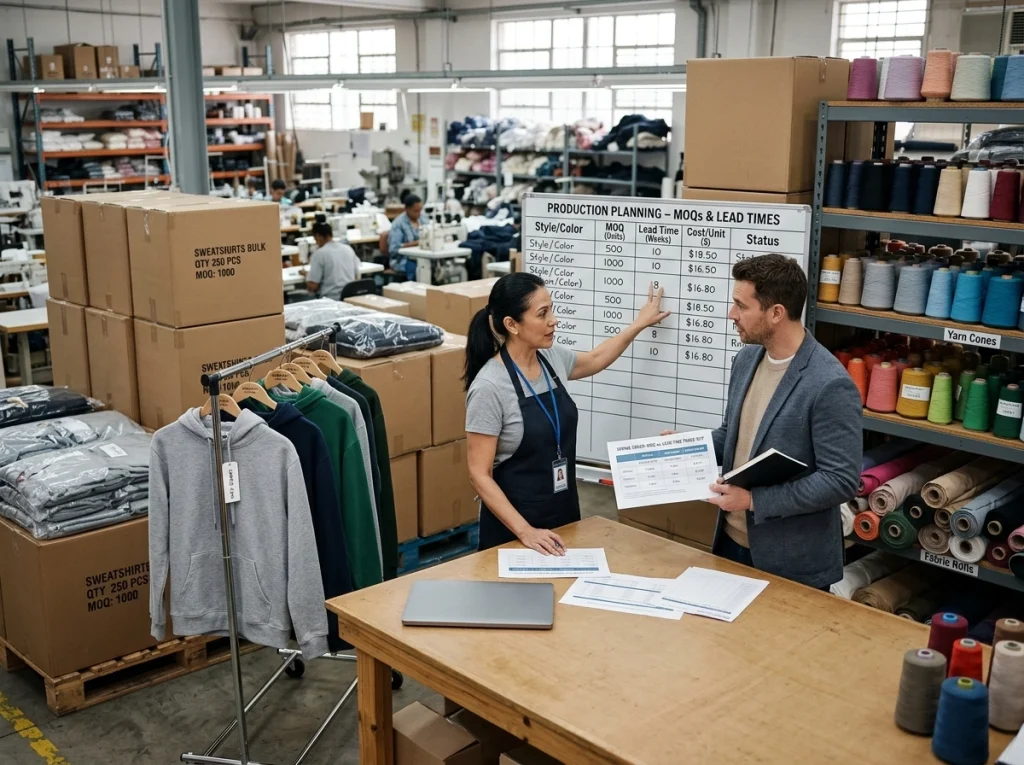
Embroidery is not always more expensive, and printing is not always cheaper. That kind of shortcut causes bad decisions. What matters more is how the cost is created.
What usually drives embroidery cost
Embroidery cost is often driven by logo size, stitch density, number of placements, thread changes, and machine time. A small chest logo may be very manageable. A large dense fill across the front panel is a very different project.
Sampling can also take longer if the logo needs multiple rounds of adjustment. When embroidery is involved, even a simple visual revision can mean changing stitch direction, reducing density, or resizing the file rather than just replacing artwork.
That said, embroidery can become very efficient for repeat brand programs. Once a logo is approved and the placement is stable, reorders often become easier to standardize.
What usually drives printing cost
Printing cost is often driven by print size, color complexity, setup requirements, print method, and order volume. A simple bold print in a steady bulk run can be efficient. A graphic with frequent artwork changes or highly specific color expectations can increase development and approval work.
This is why buyers should not compare embroidery and printing only by first-quote unit price. A lower unit price on paper can still create more cost if the print method is not well matched to the artwork or if sampling keeps getting revised.
Reorders are where many decisions prove right or wrong
A decoration decision should survive the reorder stage, not just the launch stage.
Embroidery tends to work well for ongoing brand identity programs because the design is often simpler and the visual goal is consistency. Printing can also reorder well, but the program is more exposed to artwork changes, method shifts, and color expectations if the graphic system evolves too often.
The best sourcing decision is usually the one that gives you the cleanest repeatability. That is why our OEM and ODM knitwear workflow places so much emphasis on sample approval, bulk planning, and QC checkpoints before shipment.
How to Choose the Right Option for Your Brand
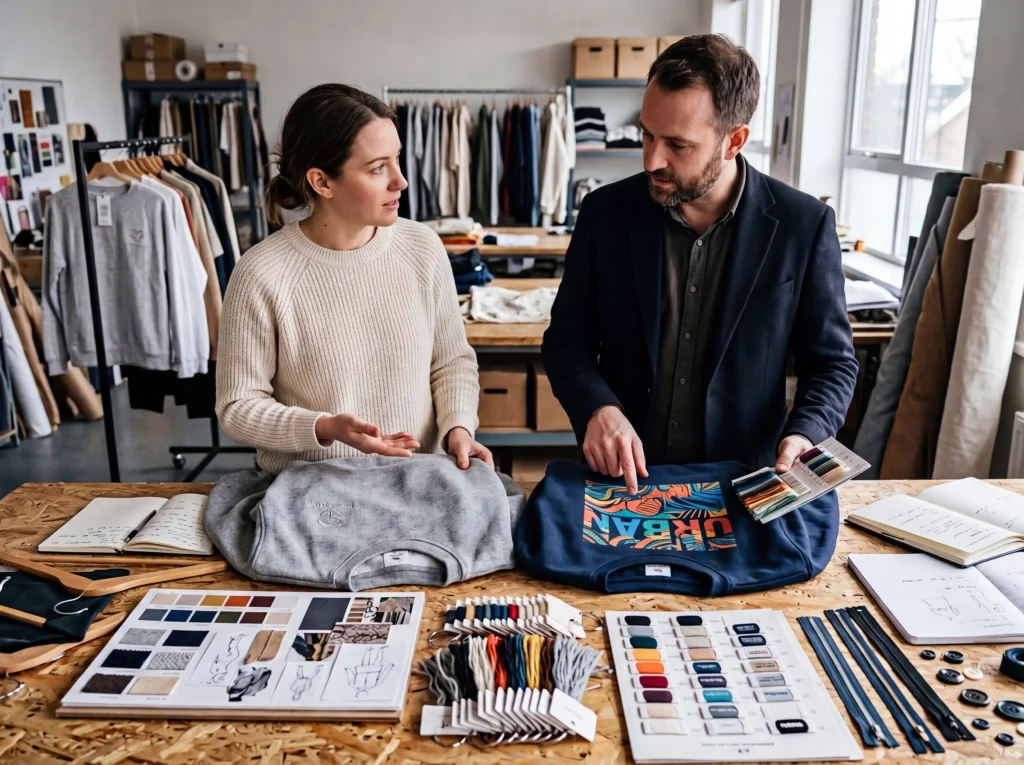
The best choice is not “always embroidery” or “always printing.” The best choice is the one that aligns product identity, production stability, and commercial logic.
Choose embroidery if your brand needs quiet premium branding
Choose embroidery if your brand language is more refined than graphic-heavy. That is especially true for capsule collections, premium basics, private label programs, resort or gifting products, and quieter streetwear where a compact logo carries more value than a loud visual.
Embroidery also works well when you want the branding to feel built into the garment rather than placed on top of it. In those cases, a smaller logo usually looks stronger than an oversized statement.
Choose printing if the design itself sells the product
Choose printing if customers are buying the graphic, not just the garment. If the design depends on visual storytelling, illustration, color transitions, or a large-format statement, printing usually preserves that intent better.
This is often the right choice for fashion graphics, promo campaigns, artist collaborations, and seasonal drops where the image needs room to breathe. Trying to force that kind of artwork into embroidery usually creates a product that feels heavier, less comfortable, and less faithful to the original design.
In some cases, the best answer is both
Some of the most commercially balanced sweatshirts use both methods in a controlled way. A small embroidered chest logo with a printed back graphic can work well. So can a printed main visual with a small embroidered accent if the brand identity needs more depth.
The warning is simple: mixed decoration should solve a problem, not create one. If the garment starts looking overworked, or if the added complexity affects cost and lead time without improving the product meaningfully, the combination is not helping.
Conclusion
For most buyers, the decision is straightforward once the product goal is clear. A custom embroidered sweatshirt is usually the better option for compact logos, a more premium look, and repeat brand programs. Printing is usually the better option for larger graphics, more visual complexity, and artwork-led collections.
From a factory perspective, the safest path is to match the decoration method to the garment base and the business model at the same time. That means checking fabric surface, artwork scale, comfort, sample approval points, and reorder logic before you lock production.
If you are still deciding, the most practical move is to test the artwork on the real sweatshirt base during sampling rather than trying to settle the question in a mockup. If you want support with that process, our team at CNSweaters can review your tech pack, reference images, target quantity, and delivery window to help you choose the most workable direction.
FAQ
Is embroidery always more durable than printing?
Not always in a simplistic sense, but embroidery usually holds up very well for small logos and repeat wear. The more useful question is whether the decoration is right for the garment base and the design size. A badly chosen embroidery application can still create stiffness or distortion even if the stitching itself is long-lasting.
Can I use the same logo for both embroidery and printing?
Sometimes, but not automatically. A logo that looks clean in print may need simplification, resizing, or digitizing changes before it works well in embroidery. Small gaps, thin strokes, and complex fills often behave differently once converted into stitches.
What kind of sweatshirt fabric works best for embroidery?
Stable, smooth, and supportive sweatshirt bases usually work best. Very soft, fluffy, or stretchy surfaces can increase the chance of puckering or unclear edges. The logo size also matters because even a good fabric can struggle if the embroidery is too large or too dense.
Is embroidery always more expensive for bulk orders?
No. Embroidery can be efficient for smaller logos and repeat programs. Printing can be more economical in some bulk situations, especially for large graphics, but setup, artwork complexity, and print method all affect the result. Unit price alone does not tell the whole story.
Should I sample both embroidery and printing before bulk production?
If the design sits in the gray zone between a logo piece and a graphic piece, yes. Sampling both can save time later because it shows the real trade-off in texture, comfort, appearance, and production risk on the actual garment base.
External References
- OEKO-TEX — OEKO-TEX STANDARD 100
- Federal Trade Commission — Apparel Labeling
- Spreadshirt Help Center — Care Instructions for Printed and Embroidered Textiles
- Printful — Creating Embroidery Files
- Printful Blog — Embroidery vs Screen Printing