 CN Sweaters
Buyers sourcing wholesale knitwear from China often lose margin not in the unit price, but in the gap between the factory quotation and the moment cartons reach the destination warehouse. The difference between an EXW, FOB and door-to-door quote is rarely a small line item. It changes who controls the goods, who pays for export clearance, who arranges main carriage, who handles import duties, who absorbs port surcharges, and who carries the risk if a container is delayed at origin or destination. For bulk knit sweaters, that gap is wider than for most categories because knitwear is volumetric, seasonal, and frequently moves during peak shipping windows when ocean and air rates spike.
A wholesale knitwear order is not a single purchase. It is a chain of cost events that begins at the sweater factory gate and ends at your distribution center door. Comparing only the per-piece price across three suppliers tells you almost nothing if one quote is EXW Dongguan, another is FOB Shenzhen, and the third is DDP Los Angeles. The buyer who understands how the Incoterms 2020 rules allocate cost and risk is the buyer who can negotiate honestly with knitwear manufacturers, plan working capital correctly, and avoid the surprise invoices that destroy a season’s margin on wholesale knitted sweaters.
How EXW, FOB, and Door Terms Apply to Wholesale Knitwear

EXW, FOB and door-to-door are not interchangeable shipping methods. They are commercial terms that decide where the seller’s responsibility ends and where yours begins. The U.S. International Trade Administration publishes a buyer-friendly summary of these obligations in its Know Your Incoterms guidance, and any wholesale knitwear buyer placing first orders in China should read it before requesting quotations.
EXW for wholesale knitwear
Under EXW (Ex Works), the seller’s only duty is to make the goods available at a named place, usually the factory in Dongguan, Dalang or surrounding knitting hubs. From the moment cartons are ready, the buyer is responsible for loading, domestic trucking to port, export customs clearance, terminal handling, ocean or air freight, import clearance, duties, taxes, destination handling, and last-mile delivery. EXW gives the buyer the lowest invoice from the factory, but it is the highest-operations option. It only makes sense for buyers who already operate a China-based forwarder relationship or who have a buying office that can handle Chinese export declaration on the buyer’s behalf.
FOB for bulk knit sweaters
FOB (Free On Board) is the most common term for bulk knit sweaters shipped by ocean from China. The supplier delivers the goods on board the vessel at the named port of shipment and completes Chinese export clearance. The buyer takes over from the moment the cargo is loaded, paying for ocean freight, marine insurance, destination terminal handling, import duties and inland delivery. FOB suits batch buyers who want to compare freight rates from multiple international forwarders while still letting the factory handle the local trucking and customs hassles that foreign buyers cannot easily manage.
Door-to-door, DAP and DDP
Door-to-door is a commercial shorthand, not a formal Incoterm. In practice it usually maps to DAP (Delivered at Place) or DDP (Delivered Duty Paid). DHL Global Forwarding’s Incoterms reference defines DAP as delivery to a named destination with import clearance and duties remaining the buyer’s responsibility, while DDP shifts those duties and taxes to the seller. For wholesale knitted jumpers, this is the simplest option to manage, but it is also the option where buyers most often discover hidden costs because every forwarder defines “door” slightly differently.
FCA when cargo is handed over before vessel loading
FOB is a sea and inland waterway rule: delivery happens when the goods are on board the vessel at the named port. Much knitwear does not move that way. Cartons are often received at a consolidation warehouse or container terminal days before loading, and urgent replenishment may fly. In those cases ask the supplier and forwarder whether FCA (Free Carrier) describes the real handover better than FOB. If a supplier quotes FOB for an air shipment, send the quote back for clarification.
Under FCA the named place changes the work. At the seller’s premises, the seller loads the cartons onto the buyer’s collecting vehicle. At another named place, such as a forwarder’s depot, the seller delivers on its own vehicle ready for unloading. In both cases the seller handles export clearance. Ask for the exact handover point and the trucking and handling included between factory and depot, not simply an “FCA price”.
How Wholesale Knitwear Trade Terms Distribute Cost Responsibility

The cost difference between an EXW quote and a DDP quote on the same order can be large enough to change which supplier is actually cheaper, depending on destination, season and product weight. The following table summarises which party typically pays for each cost element in a wholesale knitwear shipment from China.
| Cost element | EXW | FOB | DAP (door, duty unpaid) | DDP (door, duty paid) |
|---|---|---|---|---|
| Carton packing and labeling | Seller | Seller | Seller | Seller |
| Loading at factory | Buyer | Seller | Seller | Seller |
| Domestic trucking to port | Buyer | Seller | Seller | Seller |
| China export declaration | Buyer | Seller | Seller | Seller |
| Terminal handling at origin | Buyer | Seller | Seller | Seller |
| Main ocean or air freight | Buyer | Buyer | Seller | Seller |
| Marine or air cargo insurance | Buyer | Buyer | Optional | Seller |
| Destination terminal handling | Buyer | Buyer | Seller | Seller |
| Import customs clearance | Buyer | Buyer | Buyer | Seller |
| Duties and import taxes | Buyer | Buyer | Buyer | Seller |
| Last-mile delivery to warehouse | Buyer | Buyer | Seller | Seller |
The pattern is straightforward. As you move from EXW to DDP, the seller absorbs more steps and the unit invoice rises. What matters is whether the rise is smaller or larger than what you would pay arranging the same steps independently. For most first-time buyers of wholesale knitted sweaters, FOB plus a trusted forwarder gives the best balance of cost transparency and operational simplicity.
Why Wholesale Knitwear Shipping Behaves Differently
Knitwear is bulkier per kilogram of revenue than woven shirts, denim or accessories. A folded sweater in its polybag takes up far more space than a shirt of similar value, and how many pieces fit in a container depends heavily on construction, gauge, and folding method. Ask the factory for the actual packed carton dimensions and pieces per carton from the approved sample before you compare freight quotes. This volumetric profile changes how freight is charged and how you should compare quotations from wholesale knitwear suppliers.
Volumetric weight versus actual weight
Ocean freight quotes for less-than-container-load shipments and almost all air freight quotes use the higher of actual weight or volumetric weight. For wholesale cashmere jumpers and chunky merino styles, cartons are light but voluminous, so volumetric weight almost always governs the freight cost. When you receive an FOB or door-to-door quote, ask whether the freight calculation uses chargeable weight at the standard 1:6000 or 1:5000 ratio, and confirm the carton dimensions used in the calculation.
Packing density and carton planning
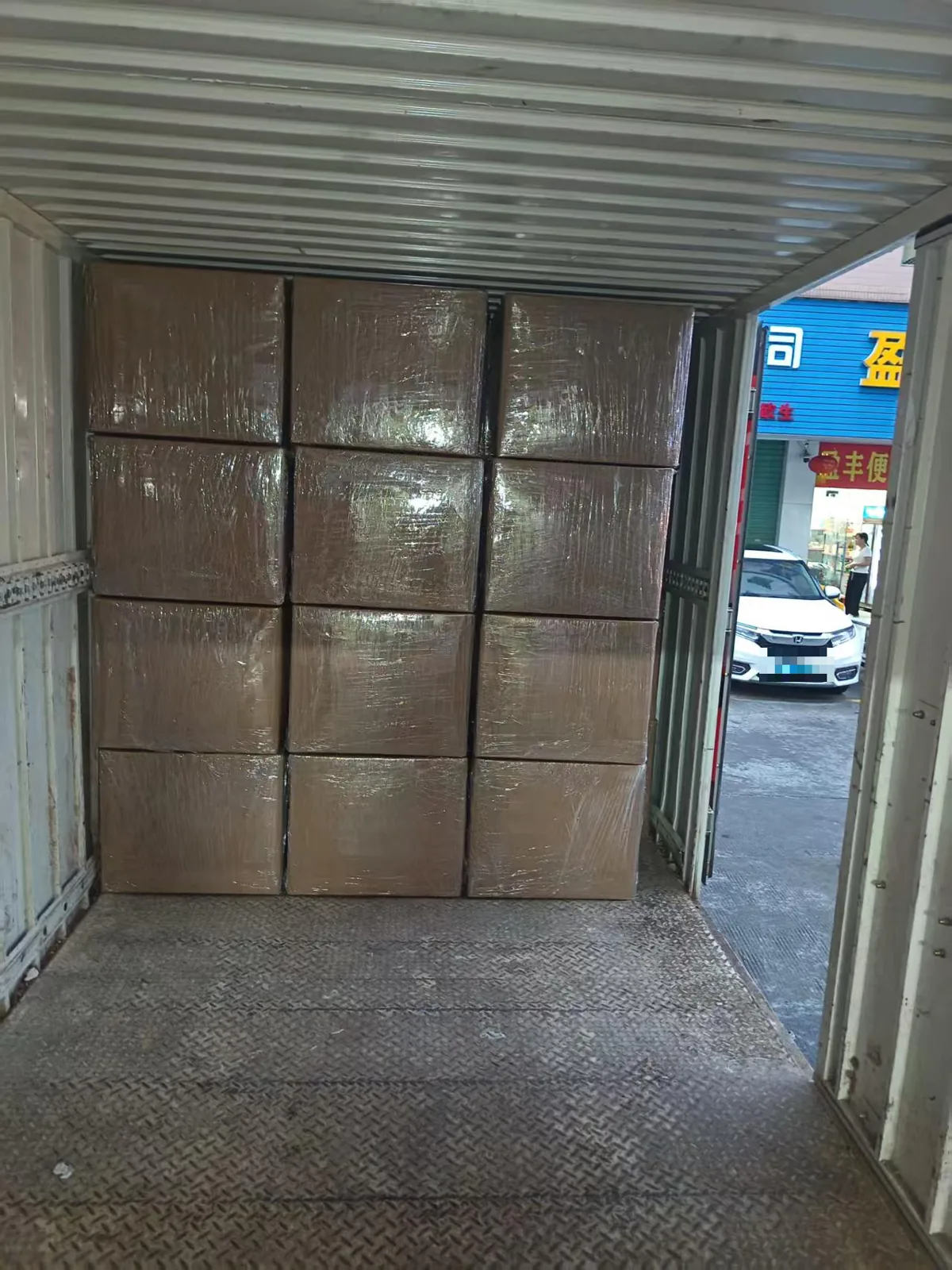
A well-planned bulk knit order specifies inner polybag size, hangtag placement, folding pattern, pieces per inner, inner per outer carton, and outer carton dimensions. Maker’s Row’s production budgeting guide explains why packaging and freight planning belong in the costed sample stage, not at booking. Even a small change in carton height, multiplied across a bulk order, can change the container load plan and shift a quotation from LCL to FCL economics.
Common Hidden Costs in Door-to-Door Wholesale Knitwear Quotes
Door-to-door quotations look attractive because they reduce the number of vendors a buyer must manage. They also hide a longer list of variable charges than EXW or FOB quotes, and these charges almost always appear after the goods have shipped, when negotiation leverage is gone.
Destination surcharges and last-mile fees
A typical DAP or DDP quotation may exclude residential delivery fees, lift-gate service, inside delivery, appointment scheduling, fuel surcharges, peak season surcharges, port congestion surcharges, ISF filing penalties at U.S. ports, customs examination fees, and demurrage if your warehouse cannot receive the container within the free time window. Ask the supplier or forwarder to list every excluded item in writing before signing.
Duties, taxes and HS code accuracy
Even a DDP quotation can become a dispute if the wrong HS code is declared. Knitwear classification depends on fiber blend, knit construction, gender, and whether the garment is finished. A wool-blend pullover declared at the wrong tariff line can attract a higher duty rate or trigger antidumping scrutiny in some markets. Independent inspection bodies such as Intertek’s textile and apparel inspection services can verify fiber composition and labeling before shipment, which protects both the declared HS code and the duty calculation.
Charges quoted twice
The opposite of a hidden cost is a duplicated one. When a factory quotes FOB and a forwarder quotes door-to-door from the factory gate, origin trucking, export declaration or terminal handling can appear in both offers. Similar labels can describe different handling events, so ask both parties to confirm the overlap in writing before deleting either line. Avoid a single “miscellaneous” allowance as well: if an operator cannot price a charge before booking, record how it will be charged and who must approve it.
Building a Comparable Landed Cost Sheet for Wholesale Knitwear Orders
The only fair way to compare quotations from different knitwear manufacturers is to rebuild every offer into the same landed cost format. Even when a buyer asks for “EXW price” or “FOB price” only, the supporting freight, insurance and duty assumptions must be aligned before the numbers mean anything.
What to request from every supplier
Ask each factory for unit price, packing specification, inner and outer carton dimensions, gross weight per carton, total cartons for the order, total CBM, named place of delivery, Incoterm version, export documents included, payment terms and validity. For door-to-door offers, also request the named destination address or port, mode of transport, transit time range, insurance scope, declared value, duty assumption, and a written list of excluded fees.
How to normalise the comparison
Once the data arrives, convert every offer to a per-piece landed cost at your warehouse. Add factory unit cost, packing, domestic trucking, export charges, freight, insurance, destination terminal handling, duties, customs brokerage and last-mile delivery. Small differences are usually within negotiating range. A large gap usually means either missing scope in one quote or a real cost advantage in another, so check the inclusions line by line before deciding. Buyers ordering through structured OEM/ODM services should also fold sampling, tech pack revisions and tooling into the landed cost when the order is the first in a program.
How Wholesale Knitwear Trade Terms Interact With MOQ, Lead Time, and Production Risk
Shipping terms do not exist in isolation. They interact with the production calendar, the MOQ and lead time commitments a supplier makes, and the seasonal demand window the buyer is targeting. A favorable FOB price loses its value if the supplier cannot meet the cutoff date for the chosen sailing.
Booking discipline and peak season
Ocean rates from South China to North America and Europe typically rise between July and October as retailers stage autumn knitwear inventory. Buyers placing orders for wholesale mens knitwear or wholesale womens knitwear in this window must align production completion dates with vessel cutoff dates well in advance. Under FOB terms the factory books the vessel, so the buyer must commit early. Under DDP or DAP, the forwarder books, and any change to production timing cascades into the door-to-door price.
Risk of part shipments
When part of a wholesale knitwear order finishes early and the rest is delayed, buyers face a decision: ship in two parts and absorb double freight, or hold the early production until the full order is ready. The right answer depends on selling season, the air-versus-sea cost differential, and whether the customer will accept partial deliveries. Build this scenario into the contract before the order is placed, not after the delay is reported.
Confirming the Handover Before the First Shipment
A landed cost sheet shows what each option costs. For a first order it is just as important to confirm who will actually perform each task on the chosen route, because a buyer’s spreadsheet can assign work that the supplier or forwarder has never accepted. Use a short responsibility record alongside the cost comparison:
| Task to confirm | Evidence to request | Record owner | Decision if unresolved |
|---|---|---|---|
| Collection and loading | Pickup address, vehicle needs, accepted loading plan | Supplier and origin operator | Rework the pickup arrangement |
| Export formalities | Named exporter and agent, document needs, confirmed acceptance | Responsible party and its agent | Keep the trade term under review |
| Carrier handover | Receiving point, booking reference, receipt event | Transport coordinator | Reconcile the term with the movement |
| Destination receipt | Broker inputs, delivery appointment, unloading needs | Import and warehouse teams | Do not assume arrival readiness |
Circulate the record to the people who will do the work, mark which owners have confirmed rather than merely been proposed, and keep their replies with the accepted quote version.
Reconcile final cartons with the booking
Freight quotes are usually built on preliminary carton counts, dimensions and gross weights. Before collection, compare them with the completed packing list and ask the forwarder whether any change affects the vehicle, booking or price. Do not fold tighter or compress sweaters harder just to meet an early freight estimate: crushed hand feel and set creases cost more at the receiving end than the freight saved. Cartons should be checked against the packing list at final inspection, with each carton number linked to its order, style, colour and size contents.
Separate product release from collection release
“Ready” means different things to different parties: the factory may mean knitting is finished, the forwarder that vessel space is booked. Issue a firm collection instruction only when product acceptance, final packing, route confirmation and shipping documents are all closed, and name the person authorised to release the cartons. Confirm with the insurer when cover starts rather than assuming the trade term has arranged it.
Conclusion
Comparing wholesale knitwear quotations only on EXW, FOB or door-to-door unit price almost always leads to the wrong supplier decision. The right method is to rebuild every offer into a landed-cost-per-piece figure, with the same Incoterm assumptions, the same carton plan, and the same insurance and duty scope. The buyers who do this consistently negotiate from a clearer position and avoid the surprise invoices that follow vague shipping terms. To compare options for your next program against our products range, send your destination country, delivery address or port, product type, order quantity, estimated carton volume, target delivery date, preferred shipping method, and importing experience so we can prepare aligned EXW, FOB and door-to-door scenarios for your wholesale knitwear order.
FAQ
Is EXW always the cheapest option for wholesale knitwear?
EXW shows the lowest factory invoice, but it transfers all loading, trucking, export, freight, insurance, import and last-mile costs to the buyer. Without an existing China forwarder relationship, the all-in cost is usually higher than a comparable FOB quotation because foreign buyers cannot directly handle Chinese export declaration and rely on appointed agents who charge service fees.
How do I know if a door-to-door quote includes duties and taxes?
Door-to-door is informal language. Ask whether the offer is DAP or DDP under Incoterms 2020. DAP excludes import duties and taxes; DDP includes them. Request a written list of inclusions and exclusions covering destination terminal handling, customs brokerage, duties, taxes, fuel surcharges, peak season surcharges, residential or lift-gate fees, and demurrage.
What documents should the supplier provide regardless of shipping term?
Standard documents include the commercial invoice, packing list with carton dimensions and weights, bill of lading or air waybill, certificate of origin where applicable, fiber composition declaration, and any preshipment inspection certificate. Door-to-door shipments add the import declaration package prepared by the destination broker.
How far in advance should I book shipping for bulk knit sweaters?
For sea freight from South China to North America or Europe, confirm the production completion date with a clear buffer before the target vessel cutoff, and allow a longer buffer during the July-to-October peak. Booking windows change with the season and the route, so ask your forwarder for the current lead time before you fix the ex-factory date. Air freight for high-value cashmere or urgent replenishment also needs to be booked ahead of the required departure, not on the day the cartons are ready.
Do wholesale knitwear orders need cargo insurance?
Cargo insurance is strongly recommended for most bulk knitwear orders, and especially for cashmere or wool-rich programs. Under EXW and FOB, insurance is the buyer’s responsibility unless arranged separately. Under DDP the seller usually carries insurance, but always confirm the scope, declared value basis, and claims process before shipment.