 CN Sweaters
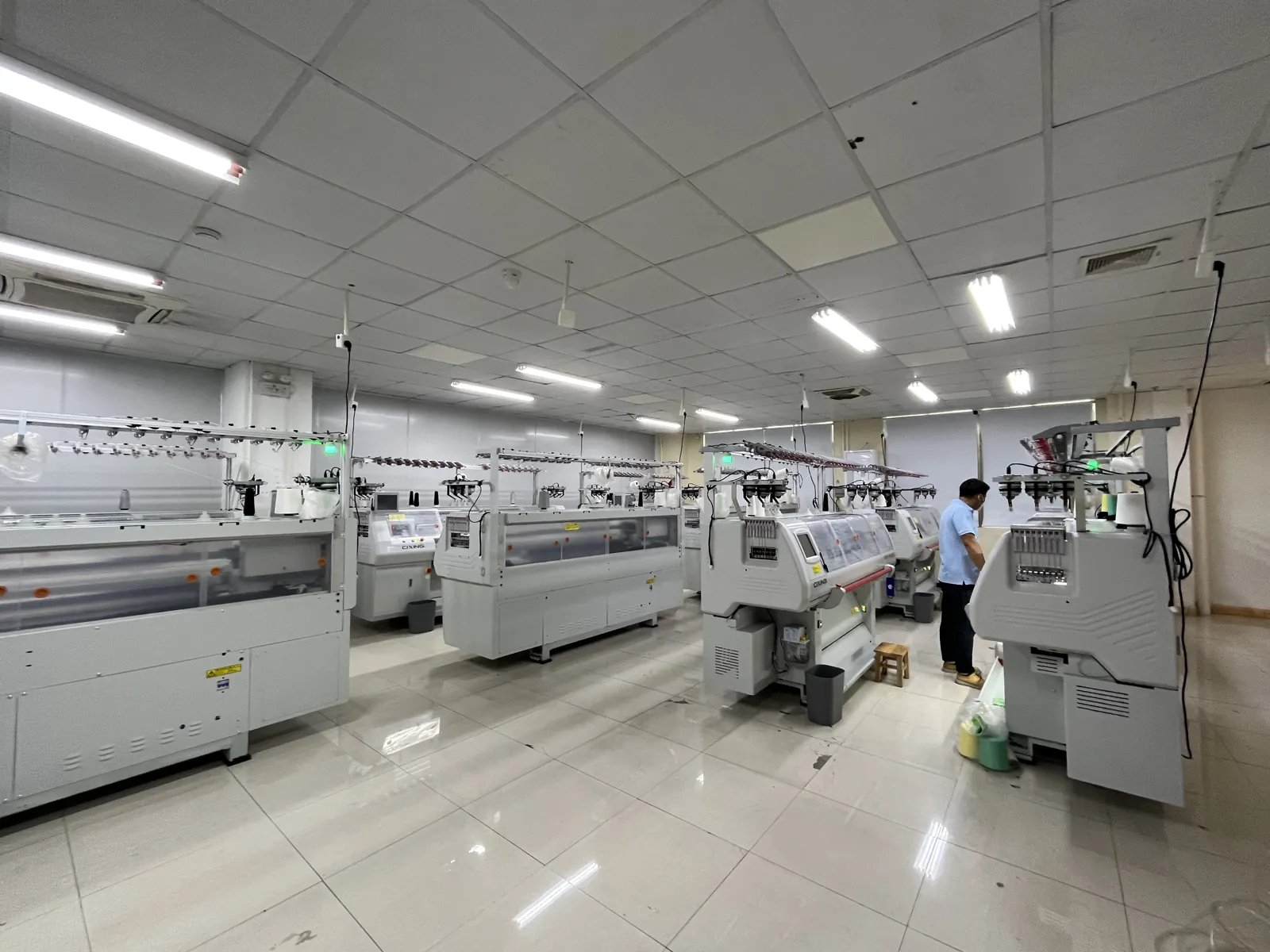
If you’re reconsidering China vs nearshoring for knitwear sourcing this year, you’re not alone. Tariff
uncertainty, Red Sea shipping disruptions, and a louder conversation around supply chain
resilience have pushed many buyers to ask the question: should we move production closer to
home?
This article is for brand owners, wholesale buyers, and procurement managers who work with
knitwear — specifically those trying to decide whether a China sweater factory still makes
sense for their business, or whether nearshoring deserves a more serious look. We’ll work
through what each model actually delivers, where each falls short, and how to frame the
decision based on your product type and business requirements.
When Does China vs Nearshoring Change the Knitwear Decision?
What Drives the China vs Nearshoring Debate
The push toward nearshoring isn’t new, but it has intensified. McKinsey’s State of Fashion
report notes that retailers are accelerating supply chain reconfiguration, with increasing
focus on nearshoring and sourcing from geopolitically aligned countries. The reasons are
familiar: shorter shipping lanes, lower inventory risk, and greater responsiveness to demand
shifts.
At the same time, consumer price sensitivity is rising. Brands are under margin pressure
from both ends — consumers unwilling to absorb cost increases, and input costs that remain
elevated. That context matters, because nearshoring solves some problems while creating
others.
What major brands are actually doing
The Mango example is instructive. The Spanish retailer sources from roughly 3,000 factories
across China, Turkey, India, Bangladesh, Spain, Italy, and Portugal — and does not treat
this as an either/or decision. CEO Toni Ruiz put it directly: “We have the ability to work
in two parallel worlds, depending on the needs and the nature of the product.” Trend-driven
pieces go to nearby European manufacturers for speed; functional wardrobe staples are
produced in Asia. Despite 40% of their supplier base being in Europe, more than 80% of
production volume still runs through Asia.
That split tells you something important. Nearshoring is real, but it hasn’t replaced volume
manufacturing in Asia — it supplements it for specific product needs.
What Must Each Route Deliver in a China vs Nearshoring Comparison?
Cost structure and material access
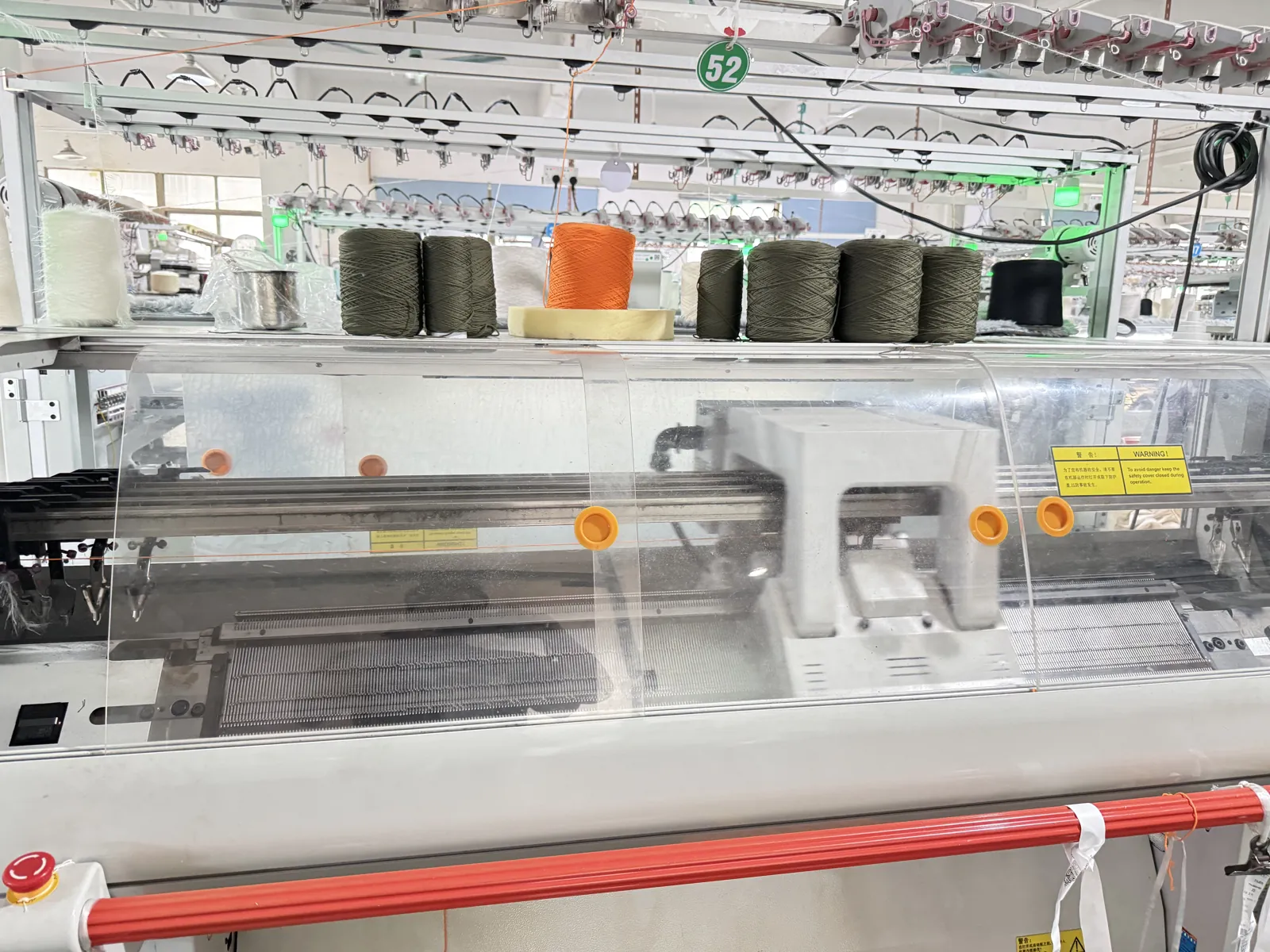
The cost of manufacturing in China depends on more than labour alone. China has a mature
knitwear supply chain — from yarn mills to finished garments — that took decades to build.
That vertical integration means broad access to materials: merino, acrylic, cotton blends,
recycled yarns, specialty fibers, all at competitive prices, with suppliers close enough to
the factory to keep material lead times manageable.
From a factory perspective, this matters when clients want to compare yarn options, test
different gauges, or adjust fiber blends to hit cost targets without starting from scratch.
The ecosystem supports that kind of iterative development. A buyer sourcing in Turkey or
Portugal will find fewer options at the specialty or technical end of the yarn spectrum — and
often at a higher cost per kilo.
Where does a nearshore factory’s yarn come from?
In a China vs nearshoring decision, moving knitting closer to the market does not always move the yarn supply with it. Many nearshore knitting units still buy a large share of their yarn, dyed colours and trims from Asian mills, so the material crosses the same long route before production starts. That can reduce the lead-time and cost benefit a buyer expects from proximity.
For China vs nearshoring, ask each supplier where the specified yarn is spun and dyed, how long a lab dip takes, what happens if the shade needs to be re-dyed, and which trims are imported. If the answer depends on an overseas mill, the nearshore calendar should include that material lead time, not just the transit time of the finished garments.
Development capability and low MOQ flexibility
One underappreciated strength of established Chinese knitwear factories is their development
depth. Custom knit projects — intarsia
patterns, multi-gauge constructions, partial-seamless designs, specialty linking — are
genuinely difficult to execute well. Factories that have been doing this work for years carry
the machinery, programming knowledge, and technical staff to handle complex specs without
excessive rework cycles.
MOQ is another practical factor. At 50 pieces per color per size,
sweater manufacturing at this scale is accessible to
brands at earlier stages or those testing new styles. That flexibility isn’t always available
from nearshore manufacturers, whose cost structures often push minimums higher.
Lead time: the real picture
Lead time from a China sweater factory is regularly cited as a disadvantage, but the picture
is more nuanced than it appears. Sample production — 3 to 5 working days for most standard
styles — is fast. Bulk lead time from PO confirmation depends on order size, product
complexity, and where you land in the production calendar. Orders confirmed before peak
season (August through January) typically move more smoothly; capacity and raw material
pricing both tighten when the market heats up.
The longer variable is transit, not production. Sea freight adds weeks to door-to-door
windows. For buyers who need in-season replenishment, that’s a genuine constraint. For those
planning seasonal collections four to six months out, it’s manageable — and expected.
When Is Nearshoring Better in a China vs Nearshoring Decision?
Speed advantages that matter in-season
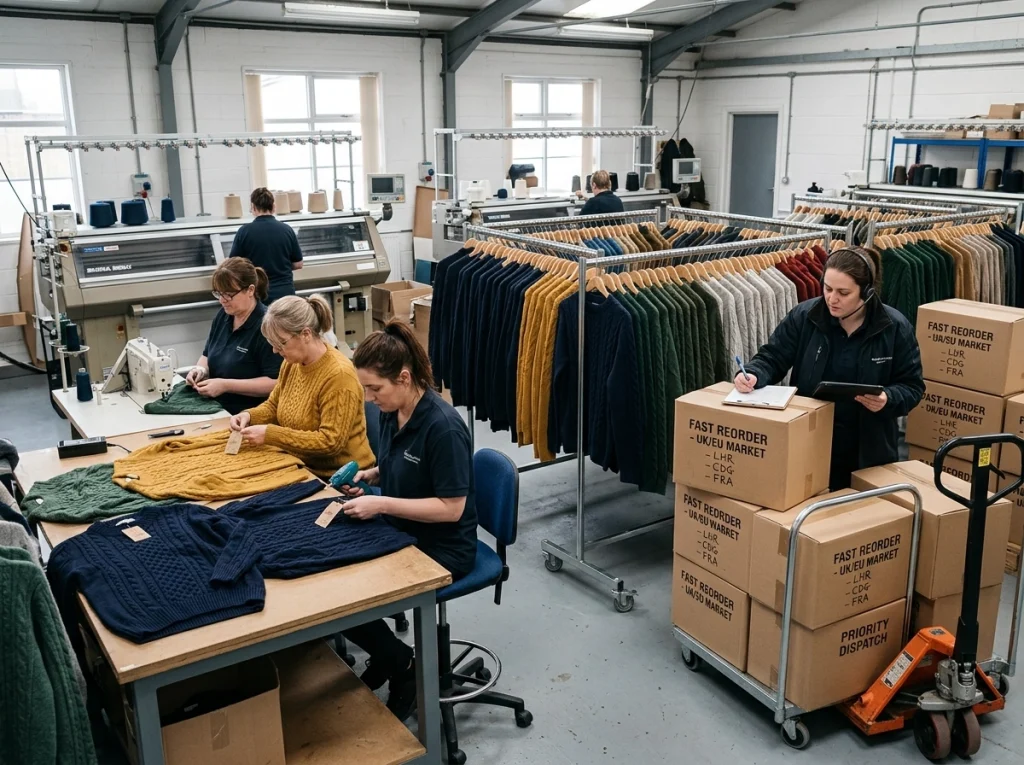
The real strength of nearshoring is responsiveness. For trend-reactive categories — pieces
that need to hit retail floors within weeks of a trend emerging — proximity to the selling
market creates a meaningful operational advantage. A factory in Turkey, Portugal, or Romania
can turn around a reorder significantly faster than a shipment coming from China.
For fashion-forward womenswear or fast-moving streetwear labels, that speed can translate
directly into revenue: fewer stockouts, fewer markdowns, less cash tied up in inventory
hedges. The agility argument is legitimate, and it shouldn’t be dismissed.
Name the event the speed premium pays for
In China vs nearshoring planning, speed is only worth a price premium when the buyer can name the commercial event it protects: a confirmed replenishment window, a smaller committed inventory position, a later buying decision, or a fixed market-entry date. Record the event, who owns it, and the latest acceptable delivery date. If the benefit can only be described as general flexibility, it cannot be weighed fairly against a measured cost difference.
The cost and complexity trade-off
That speed comes at a cost. Unit costs from nearshore knitwear manufacturers are typically
meaningfully higher than equivalent production in China — not by a trivial margin. For
margin-sensitive products or bulk commercial programs, that gap is hard to absorb without
adjusting retail pricing or accepting lower margins.
Beyond cost, complexity is a genuine limitation. Nearshore manufacturers are well-suited to
medium-complexity products: standard rib structures, basic intarsia, conventional
constructions. The range narrows when you get into specialty gauge work, complex jacquard,
or technically engineered constructions. The machinery, technical workforce, and supplier
ecosystem simply aren’t as deep in most nearshore markets as they are in China’s established
knitwear clusters. That’s not a criticism — it’s a structural reality of where the industry
developed.
Which Risks Can Block Routes in a China vs Nearshoring Decision?
When China Sourcing Creates Problems in a China vs Nearshoring Decision
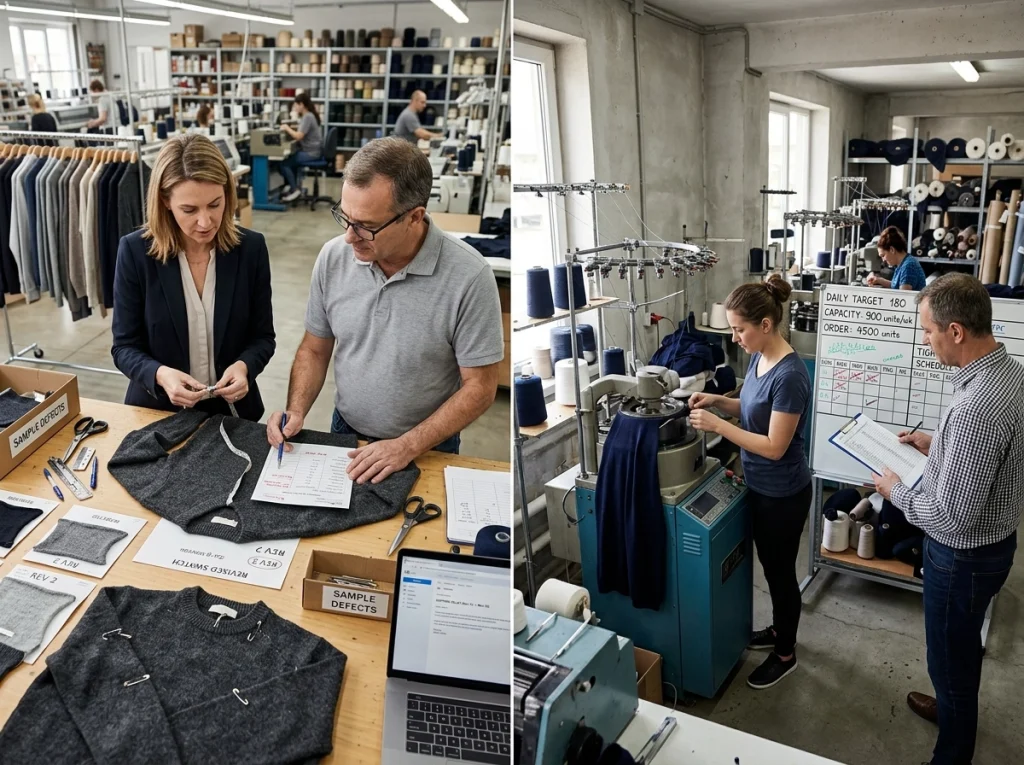
Sourcing from a China sweater factory is not without risk, and it’s worth being clear-eyed
about where things go wrong.
Communication gaps during development. When spec interpretation breaks down early —
garment measurements, yarn substitutions, construction details — corrections are costly and
time-consuming. Strong tech packs and a structured approval process before bulk confirmation
aren’t optional; they’re how you avoid expensive late-stage surprises.
Transit disruption. Red Sea route disruptions have created real delivery headaches for
brands relying on standard sea freight lanes. That risk hasn’t fully resolved. Brands with
tight delivery windows need calendar buffer built in, particularly for peak season programs.
Concentration risk. Placing your entire supply with one factory or one country creates
exposure. That’s as true in China as anywhere else, and it’s a reason why multi-source
strategies matter for brands at scale.
When Nearshoring Fails in a China vs Nearshoring Comparison
Nearshoring gets positioned in some discussions as a near-universal fix for supply chain
risk. In knitwear specifically, there are structural constraints worth understanding.
Knit hoodie and zip knitwear constructions,
specialty gauge work, or technical linking are difficult to source in markets without mature
knitwear industries. Quality in Turkey or Portugal for standard styles is solid — but if your
product requires complex machinery or finishing, the available factory pool narrows
significantly.
Cost pressure is also real for volume buyers. A modest unit-cost premium compounds quickly
across a large program, and the business case can unravel fast if margins were already tight
to begin with. And not every nearshore market has the private label and packaging
infrastructure that retail-ready delivery requires — correct labeling, hangtags, and barcode
compliance aren’t always a given.
How Should Buyers Match Their Line Plan to China vs Nearshoring?

The most practical approach is to filter by product type first, then layer in volume and
timeline considerations.
| Factor | China Sweater Factory | Nearshoring |
|---|---|---|
| Unit cost | Lower | Higher |
| Typical MOQ | Lower (50 pcs/color/size) | Higher |
| Production complexity | High capability | Medium capability |
| Sample-to-bulk lead time | Longer (transit adds weeks) | Shorter |
| Yarn and material range | Broad | More limited |
| Best suited for | Planned seasonal programs, complex styles, volume | Trend-reactive replenishment, simple to medium constructions |
Use product type as the primary filter
Core knitwear styles — sweaters, cardigans, basic
pullovers, ribbed knit dresses — that are planned seasonally, carry meaningful construction
complexity, or run in larger quantities almost always favor China on cost and capability
grounds. The planning horizon accommodates the transit window, and the cost savings are
real.
Products that are trend-reactive, low-complexity, and tied to fast-moving demand signals are
better candidates for nearshoring — if the margin structure supports it.
Volume, margin, and timeline as secondary filters
In a China vs nearshoring decision, once you’ve sorted by product type, three secondary filters sharpen the choice.
Volume. Higher-volume programs benefit more from China’s cost structure. Smaller,
test-and-react programs can sometimes absorb a nearshore premium if the speed benefit is
genuine and the margin allows it.
Margin. If your retail price leaves enough room, a nearshore premium might be a
workable trade-off for better in-season sell-through. If you’re already running lean, it
probably isn’t.
Timeline. A buying calendar with a five-to-six-month horizon makes China sourcing very
workable. If you’re regularly asking for eight-to-ten-week door-to-door delivery, you’re
working against China’s geography regardless of how good the factory is.
For many brands, the answer isn’t choosing one model — it’s segmenting the line. Core and
complex styles move through a well-vetted OEM/ODM knitwear service
in China; reactive or smaller trend pieces might go through a nearshore partner. That’s
essentially what sophisticated operators are already doing, as Mango’s structure illustrates.
Which Evidence Should Decide the Sourcing Route?
Use a decision file for China vs nearshoring, not a country preference. Start with a style-level cost sheet that separates yarn, knitting, linking, trims, packing, testing, freight, duty and contingency. For China vs nearshoring, ask both suppliers to price the same locked specification, the same size ratio, the same colour count and the same delivery term. A factory quote is not a landed-cost decision. The buyer must record what changes when the delivery country, tariff treatment, route or payment term changes.
Next, make the development evidence comparable. Send both candidates the same measurement chart, yarn standard, gauge, stitch map, trim list and packaging brief. The useful comparison is the returned question list, sample risk register and approval sequence, not a promise that a supplier can make the style. Buyers preparing this pack can use a knitwear tech pack checklist and then compare how each supplier records exceptions before sampling.
For the destination market, check the official import route before treating a nearshore location as an automatic duty or lead-time advantage. The European Commission’s import guidance directs buyers to tariffs, origin rules, import procedures and product requirements. UK guidance also makes clear that origin is not simply the country from which goods are shipped; the applicable agreement and product-specific rule determine the evidence needed for a preference claim. Use the HMRC rules-of-origin guidance with your broker or customs adviser.
Finally, define the release evidence. For a China route, request the current facility identity, material traceability record, sample comments, bulk measurement plan and booking confirmation. For a nearshore route, request the same evidence plus the stated origin route and capacity allocation. If the product is US-bound, the importer should also assess the supply-chain evidence relevant to the UFLPA resources published by U.S. Customs and Border Protection. These documents do not prove compliance by themselves; they define what the buyer must verify before approval.
Ask for a cost-change log with each quote
A single total price hides the assumptions behind it. Ask every supplier to return, alongside the quote, a short list of the inputs that would change the price and by roughly how much, so two routes can be compared on the same basis. You can ask for it with any OEM/ODM quotation. Typical items include:
- Yarn substitution or a change of yarn supplier
- Gauge and stitch density
- Colour count and size ratio
- Packaging, labels and hangtags
- Test methods required by the destination market
- Additional sample revisions
- Late booking or a change of transport mode
In a China vs nearshoring comparison, if one route leaves out an item the other has priced, such as a required test or a trim, correct it before it reaches the landed-cost sheet.
When Does a Hybrid Knitwear Plan Work?
A China vs nearshoring hybrid plan works when each source has a defined product job and the buying team can maintain two approval paths. Do not split an identical style between countries merely to create a backup. Start with a clear division: a planned core programme with a stable yarn and approved construction in one route; a genuinely reactive capsule, a small test or a speed-sensitive replenishment in the other. The rule must be visible in the line plan so merchandise, development and logistics teams do not make different assumptions.
Keep the sample criteria identical where the same brand standard applies. Measurement points, fibre declaration, wash testing, needle-damage review, trim approval and packing marks should be controlled through one versioned record. A buyer can use the production controls in sample-to-bulk knitwear consistency planning to decide which sign-off is needed before a source receives bulk release.
Set a financial stop condition as well. A nearshore order should remain in the plan only when its verified landed cost, achievable delivery date and expected sell-through justify the premium. A China order should remain in the plan only when the sample, routing buffer and documentation path leave enough time for a controlled release. If neither route can meet the decision file, simplify the style, reduce colour splits or move the launch window. The custom sweater MOQ guide explains why order splits and technical inputs must be assessed together.
Review the China vs nearshoring plan after the first bulk delivery. Compare the promised and actual sample dates, yarn substitutions, rejection reasons, factory communication, transit handover and selling response. That review determines whether the next season should increase volume, retain two routes or return to one. It is a procurement decision based on records, not a permanent statement that one country is better than another.
Conclusion
The nearshoring conversation reflects genuine and lasting shifts in how brands think about
supply chain resilience. But for knitwear specifically, the case for China sourcing remains
strong for most planned, volume-driven, or technically complex programs. The cost, material
access, and development capability advantages are not easily replicated elsewhere —
especially at the specialty end of the product range.
The better question for most buyers isn’t “China or nearshore?” It’s “which products belong
where, and does my planning process actually support that?” If you’re building seasonal
collections with a reasonable lead time built in, a China sweater factory will almost always
win on value. If you need reactive speed on fast-moving styles, a hybrid approach is worth
the added management overhead — once you have the scale to run it well.
If you’re working through this evaluation for your knitwear range,
cnsweaters.com is a practical starting point. Share your tech
pack, target price, and delivery window, and you’ll get a clear, honest picture of what’s
workable.
FAQ
Q: Is China still cost-competitive for knitwear in 2026 given tariff changes?
For most markets outside the US, China’s cost advantage on knitwear remains meaningful.
For US-bound programs, tariff impact varies by product classification and how your supply
chain is structured. The right approach is always a landed cost calculation — factoring in
duties, freight, and compliance costs — rather than comparing factory prices in isolation.
Q: What MOQ can I realistically expect from a China sweater factory?
It varies by factory and product. At 50 pieces per color per size, smaller brands and
development-stage programs can access China production without large upfront commitments.
Higher quantities reduce unit cost and typically improve scheduling priority, which matters
more for complex styles than for basics.
Q: Can nearshore suppliers match the construction complexity of Chinese factories?
For standard and medium-complexity styles — basic ribs, clean intarsia, conventional
cut-and-sew — nearshore factories in Turkey or Portugal can produce well. For complex gauge
work, specialty linking, or technically engineered knitwear, the available factory pool in
nearshore markets is significantly smaller. It’s a capability gap, not merely a cost gap.
Q: How should I manage lead time risk when sourcing from China?
Build calendar buffer in from the start. Confirming orders before the August–September peak
season is generally safer for both capacity and pricing. Air freight is worth using for
urgent salesman samples. For first bulk orders with a new factory, plan conservatively until
you’ve validated their reliability across a full production cycle.
Q: Is running a dual supply chain worth the added complexity?
It depends on your team’s capacity and your order volume. For brands with enough scale to
segment the line meaningfully, the combination of cost efficiency on planned programs and
speed on reactive styles can justify the overhead. For smaller operations, simplicity
usually wins: start with one reliable partner, optimize that relationship, and add a second
source when you have the volume to manage two without losing control of either.
References
- McKinsey & Company. The State of Fashion 2025. https://www.mckinsey.com/industries/retail/our-insights/state-of-fashion
- Pons, Corina. “Mango adapts to climate change, makes fashion less seasonal.” Reuters, March 12, 2024. https://www.reuters.com/sustainability/mango-adapts-climate-change-makes-fashion-less-seasonal-2024-03-12/